Why Netflix Sci-Fi Keeps You Awake in Perimenopause
Sci-fi binge-watching can disproportionately disrupt sleep during perimenopause because three mechanisms converge: cognitive arousal from suspense, heightened cortisol sensitivity from hormonal changes, and compounded blue-light melatonin suppression. This article explains why the effect is stronger now—and what you can do about it.
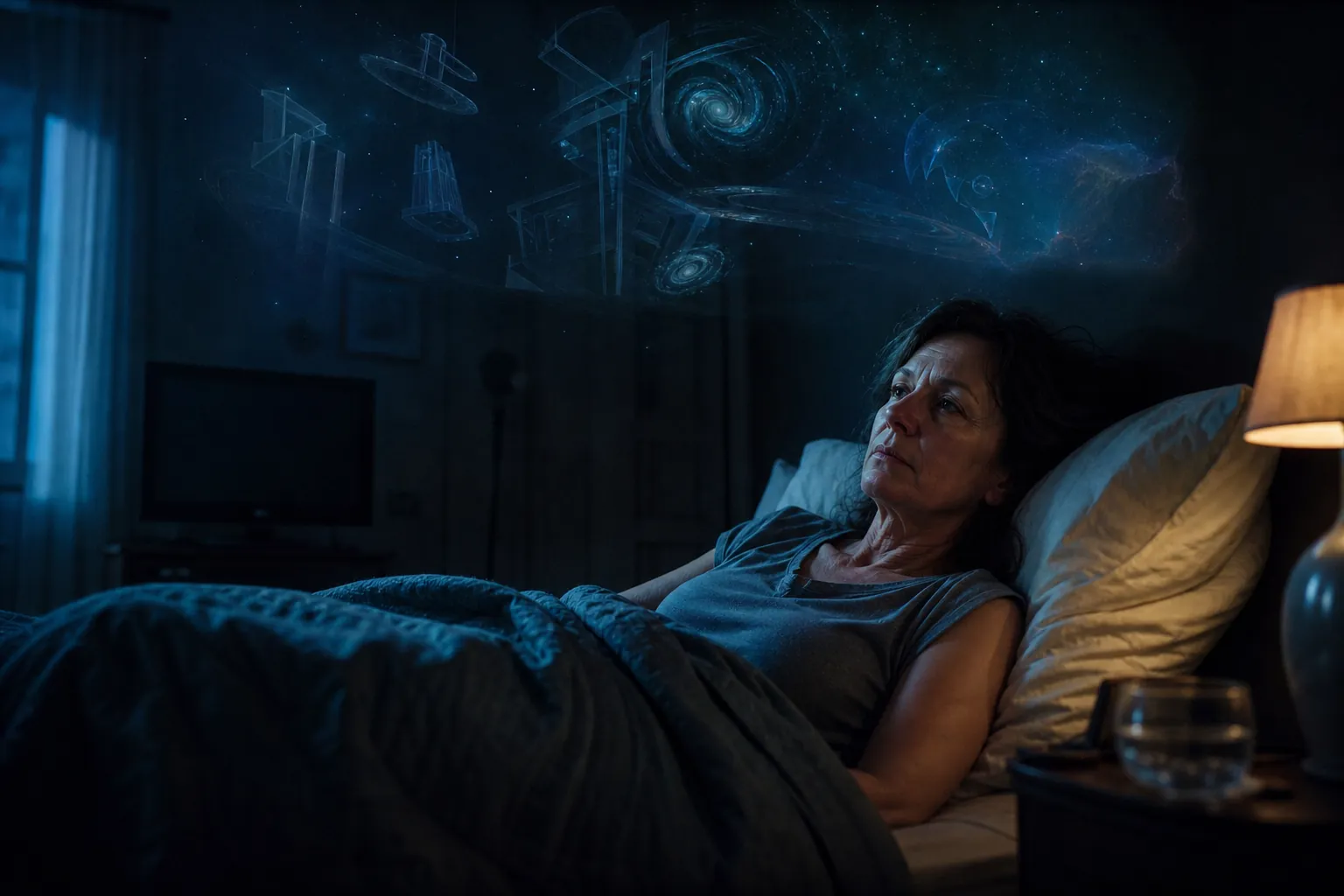
You turn off Netflix, the room goes quiet, and the episode is technically over. Your body is tired. Your brain, however, is still aboard the ship, sorting the timeline, worrying over the cliffhanger, and trying to predict what the showrunners are doing with that suspiciously meaningful scene from three episodes ago.
If a sci-fi Netflix binge is keeping you awake in perimenopause, the answer is probably not as simple as “screens are bad.” The more useful explanation is that three things are stacking: suspense-driven cognitive arousal, a stress system that may be more reactive during the menopausal transition, and evening light exposure that can further weaken melatonin signaling. Any one of those can be manageable. Together, they can make the same late episode land very differently than it did a few years ago.
The show ends before your brain is done with it
Binge-watching is not just ordinary TV watched for longer. In one study of 423 young adults ages 18 to 25, binge-viewers had a 98% higher likelihood of poor sleep quality. The important part is what explained that link: cognitive pre-sleep arousal fully mediated the relationship between binge-viewing and poor sleep. Regular television viewing did not show the same association with sleep outcomes in that study.[1]
That finding matters because it moves the problem away from simple guilt about watching something and toward what your mind is doing after you watch it. Cognitive pre-sleep arousal is the mental activation that keeps going when the lights are out: replaying scenes, anticipating consequences, solving unresolved story logic, and staying emotionally attached to what might happen next.
Sci-fi is unusually good at creating that kind of carryover. It asks you to hold unfamiliar rules in mind, track factions and timelines, notice world-building clues, and tolerate unanswered questions. A low-stakes sitcom may close a loop before bed. A sci-fi episode often opens three more.
There is also evidence that suspense can keep the body activated beyond the moment of watching. A 2023 sleep-lab study of 50 young healthy adults found that suspenseful series episodes with cliffhangers kept heart rate elevated through the first two sleep cycles. The study’s objective sleep effects were described as minor, and the participants were much younger than a typical perimenopausal viewer, with a mean age of 22.6.[2]
So the careful version is this: we do not have direct proof that perimenopausal women watching sci-fi cliffhangers have larger sleep disruptions than the young adults in that lab study. What we do have is a plausible convergence. Suspense can keep the mind and body activated after the episode, and perimenopause can reduce some of the hormonal buffering that used to help that activation settle down.
Why the same episode can hit harder in perimenopause
Perimenopause is not just “being busy in midlife” with worse sleep hygiene. Sleep disturbance becomes more common during the menopausal transition: the SWAN data summarized in a 2025 review reported clinically significant sleep disturbances in 37% to 56% of perimenopausal women, and the same review notes that perimenopausal women are 1.5 times more likely to experience insomnia than men.[3]
Those numbers are useful context, but they are not the mechanism. The mechanism is the shift in the systems that help you come down from stimulation.
As estrogen declines and fluctuates, cortisol reactivity can increase. Cortisol is not simply a “stress hormone” in the cartoon sense; it is part of the alerting system that helps the body respond to demands. When that system is more reactive in the evening, suspense, emotional investment, and unresolved narrative tension may be more likely to feel physically activating instead of pleasantly absorbing.[3]
Progesterone changes add another layer. Progesterone is converted into allopregnanolone, a neurosteroid that acts on GABA-A receptors. GABA is one of the brain’s main inhibitory systems; it helps quiet neural activity. With declining progesterone and less allopregnanolone support, the brain may have less of its usual braking signal available at the exact moment you are asking it to stop processing a complicated story world.[3]
This is the “wired but tired” feeling many women recognize: exhausted enough to want sleep, activated enough that sleep will not arrive cleanly. It can show up as lying awake after the last episode, waking in the early morning with a jolt of alertness, or sleeping for enough hours but waking up as if the night never fully restored you. The binge did not create perimenopause insomnia by itself. It may have pressed on a system that is already easier to rouse and harder to settle.
Blue light still matters, but it is not the whole story
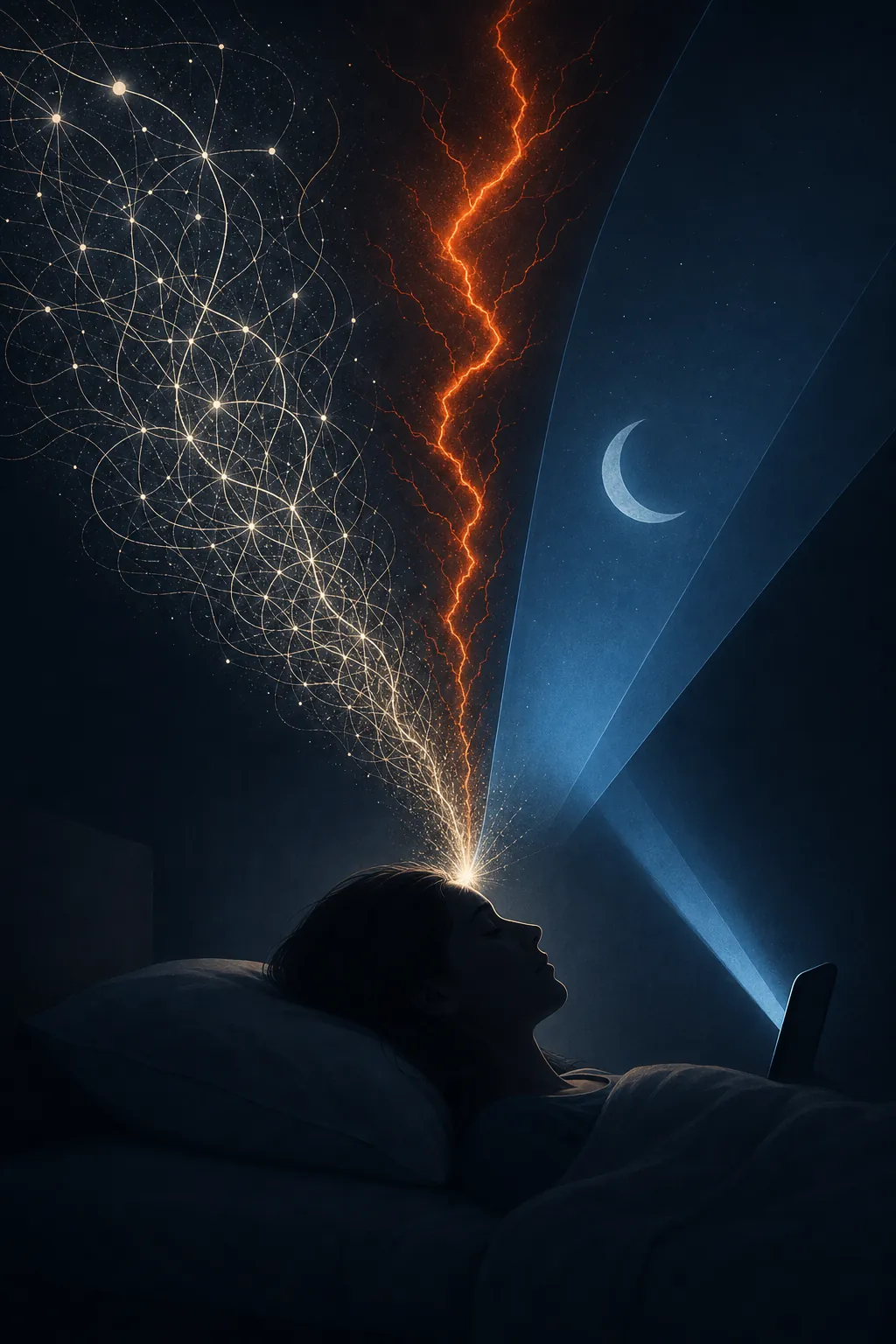
Blue light deserves a place in the explanation, just not the starring role it is often given. Evening light exposure can suppress melatonin, and menopause-related sleep literature describes changes in circadian and melatonin signaling during the transition.[3] One screen-focused source notes that blue light can suppress melatonin for twice as long as green light.[4]
That matters more when the rest of the system is already strained. If your brain is still narratively activated, your cortisol rhythm is less forgiving, and your melatonin signal is weaker than it used to be, then the screen light is not acting alone. It is adding weight to an already-loaded side of the scale.
This is also why blue-light glasses or night mode may help some women without solving the whole problem. They may reduce one input, but they do not resolve the cliffhanger your brain is still chewing on, and they do not directly rebuild the hormonal braking systems that are changing during perimenopause.
Match the fix to the mechanism
The useful question is not whether you are “allowed” to watch sci-fi at night. The useful question is which part of the stack is most active for you: the story keeps running, your body stays keyed up, the light delays sleepiness, or all three.
| If this is what happens | The likely pressure point | What to test |
|---|---|---|
| You lie awake replaying scenes or predicting the next episode | Cognitive pre-sleep arousal | Stop at a more resolved point, avoid beginning a new arc late, and add a buffer activity that is not story-based |
| You feel sleepy on the couch but alert once you get into bed | Arousal plus stress-system reactivity | Use a down-regulating routine before bed rather than moving straight from suspense to sleep |
| You fall asleep but wake in the early morning feeling suddenly alert | Evening arousal and cortisol-pattern vulnerability | Move the most suspenseful viewing earlier and protect the last part of the evening from intensity |
| You feel less sleepy after watching on a bright screen | Melatonin suppression | Dim the room and screen, use warmer settings, and avoid close-range bright devices near bedtime |
Change the last episode, not necessarily the whole habit
The final episode before bed carries more sleep risk than the first one because it is the one your brain takes into the bedroom. If you want to keep watching, consider making the last thing a rewatch, a slower episode, or something with a cleaner emotional landing. The goal is not to drain pleasure out of the evening. It is to stop handing your brain an unsolved puzzle at the exact point when you need it to power down.
Autoplay is worth interrupting because it removes the natural decision point. A cliffhanger followed immediately by the next episode does not just extend screen time; it keeps the arousal loop intact. Turning off autoplay, or deciding on the stopping point before you start, gives you a chance to end before the show chooses the most activating possible moment.
Give the nervous system a non-narrative landing strip
A wind-down routine after sci-fi should be deliberately boring in one specific way: it should not ask you to keep interpreting plot. Folding laundry, stretching, taking a warm shower, tidying the kitchen, listening to familiar calm audio, or reading something low-stakes can all work if they shift you away from prediction and emotional suspense.
What tends to backfire is replacing one cognitive hook with another. Reading fan theories, checking episode recaps, texting a friend about the twist, or searching cast interviews may feel like decompression, but for sleep they can keep the same neural loop open.
Treat light as one lever, not the moral of the story
If you watch at night, reduce the light burden where you can: lower screen brightness, use warmer display settings, avoid holding a bright phone close to your face afterward, and keep the room lighting gentle. These changes are not magic, but they make sense when melatonin signaling is already part of the vulnerability.
The most informative experiment is to change one variable at a time. Move suspense earlier without changing total viewing. Keep the show but add a non-narrative buffer. Keep the schedule but reduce brightness and avoid the phone afterward. If your sleep improves only when the cliffhanger moves earlier, cognitive arousal is probably doing more than blue light. If brightness changes help noticeably, light exposure may be a bigger part of your pattern.
Perimenopause can make sleep feel newly fragile, but fragility is not failure. It means the margin has changed. You may not need to give up the genre, the couch, or the pleasure of being pulled into a good speculative world. You may need to stop asking a hormonally shifting nervous system to exit a cliffhanger, metabolize stress chemistry, restore melatonin, and fall asleep all in the same breath.
References
- Binge Viewing, Sleep, and the Role of Pre-Sleep Arousal. Journal of Clinical Sleep Medicine, 2017.
- Effects of suspenseful series with cliffhangers on sleep. Sleep Medicine, 2023.
- Sleep Disturbances in the Menopausal Transition: A Narrative Review. 2025.
- Hormonal Impact of Screen Time on Women. Samphire Neuroscience.
Explore the mechanism
Next step
Spot an error or have clinical feedback?
Because this article covers clinical, medication, or safety information, we use a moderated correction channel instead of open public comments. Let us know if something about “Why Netflix Sci-Fi Keeps You Awake in Perimenopause” needs a closer look.
Send feedback on this article