How to Build Sleep Habits That Actually Work for Perimenopause
Standard sleep hygiene often fails in perimenopause because it targets generic disruptors rather than the hormonal drivers behind sleep disruption. This article explains what changes in your sleep physiology during perimenopause and offers an evidence-informed framework of three mechanism-targeted habits to try before considering clinical options.
If you are searching for how to form better sleep habits in perimenopause, there is a good chance you have already done the ordinary things. You cooled the room. You stopped scrolling in bed. You bought the breathable sheets, kept a consistent bedtime, cut back on wine, and tried to “wind down.” Then you still woke at 3 a.m. hot, soaked, alert, anxious, or simply done sleeping.
That does not mean your body has become unreasonable. It usually means the advice is aiming at the wrong layer of the problem. Standard sleep hygiene was built for common sleep disruptors: noise, light, irregular schedules, caffeine, late stimulation. Perimenopause adds drivers that are more specific: unstable temperature regulation, a drop in progesterone’s sleep-promoting effect, and a tighter loop between poor sleep, mood, and nighttime arousal.
The scale matters, if only because it should end the private suspicion that this is a personal failure. Stanford Lifestyle Medicine summarizes Lancet-cited estimates that 40% to 60% of perimenopausal women experience sleep difficulty, while CDC data found that 56% of perimenopausal women reported sleeping less than seven hours, compared with 32.5% of premenopausal women.[1][2] A 2025 meta-analysis reported that perimenopausal women were 1.3 to 1.6 times more likely to have sleep disorders than premenopausal women.[3]
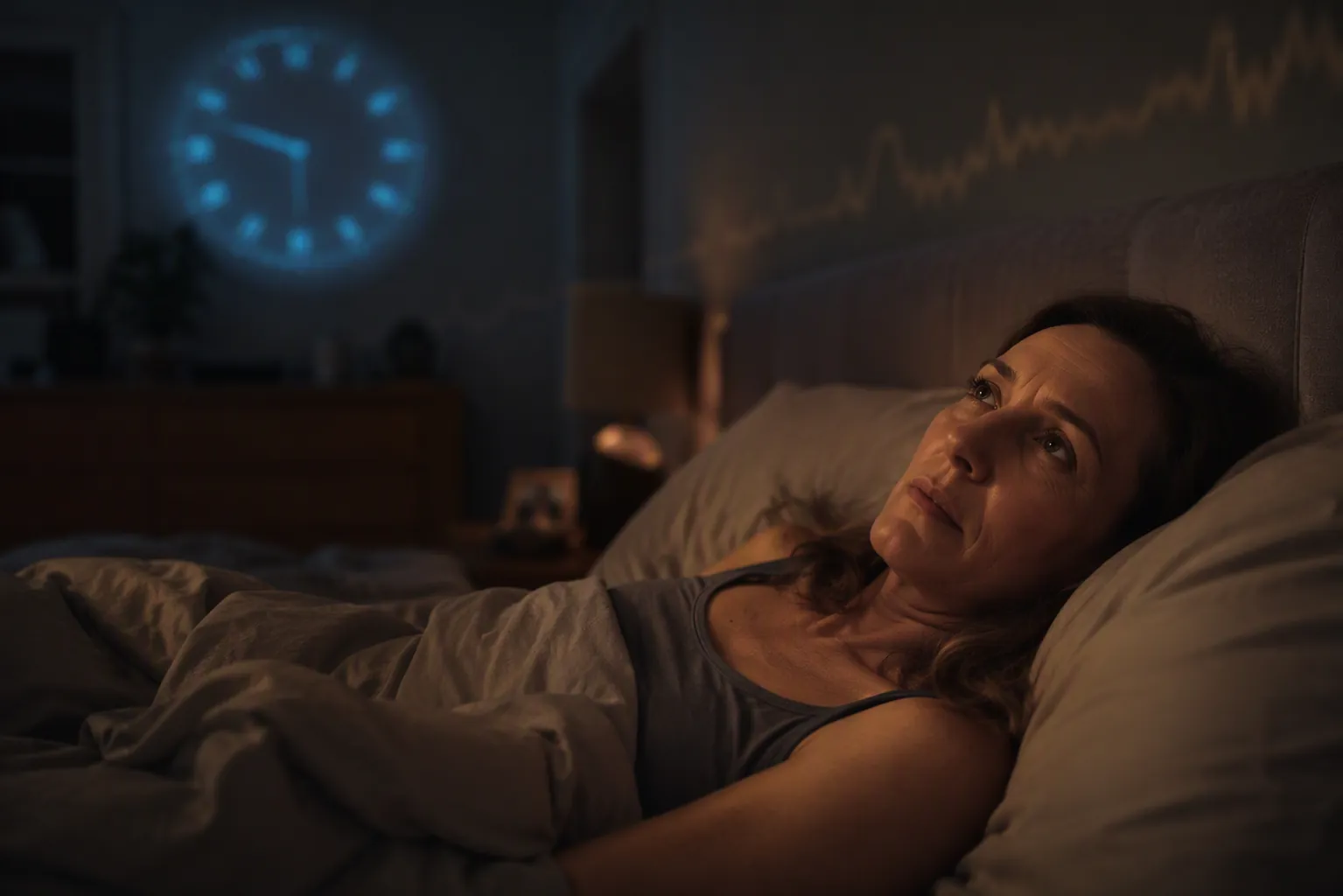
Why the usual sleep rules start missing the target
A cool bedroom can help. A regular schedule can help. Morning light can help. The problem is not that these habits are silly. The problem is that, in perimenopause, they are often under-designed for the physiology disturbing sleep.
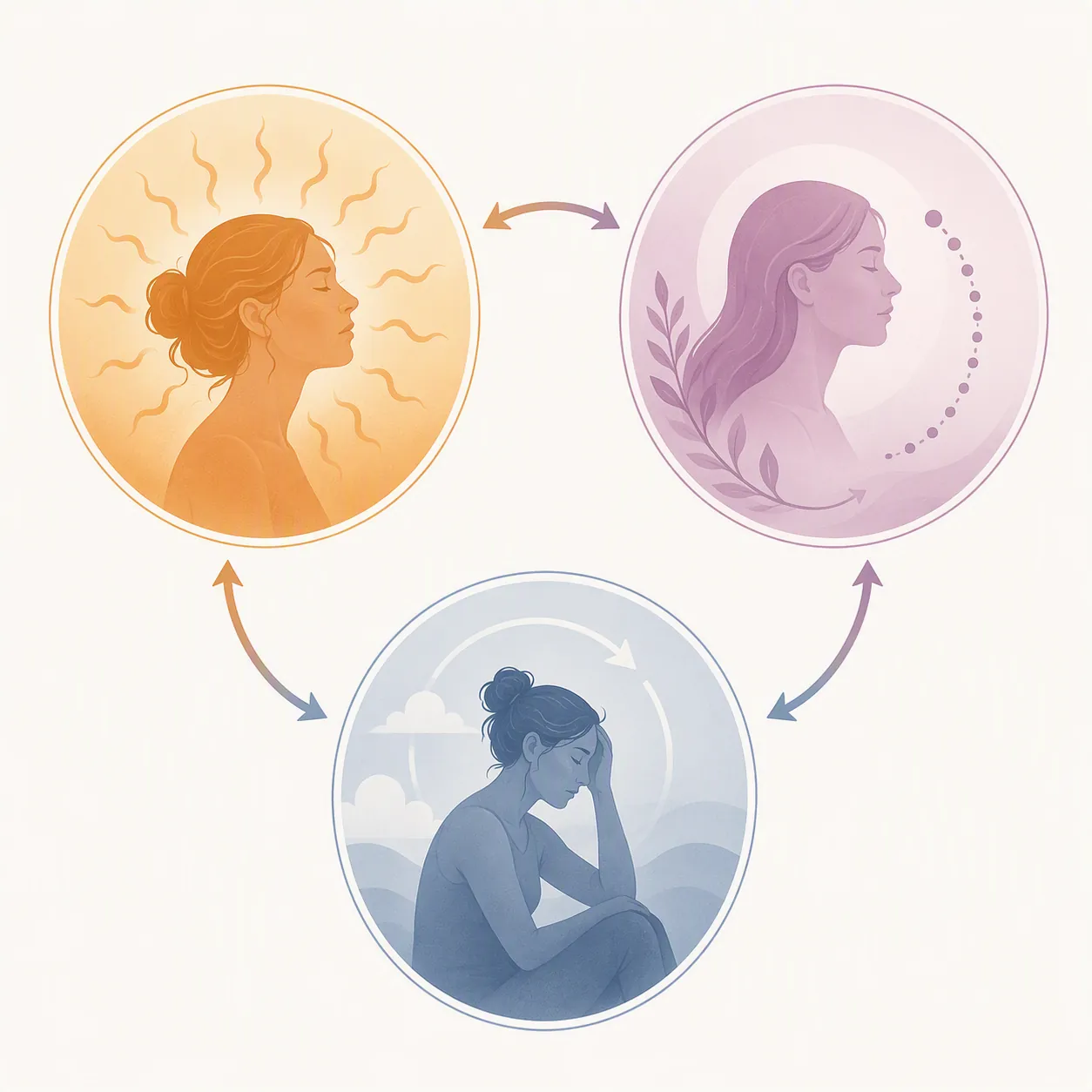
Three changes deserve most of the attention:
- Estrogen fluctuation can narrow the body’s thermoneutral zone, making smaller temperature shifts more likely to trigger heat, sweating, and awakenings.
- Declining progesterone removes some of the calming, GABA-ergic sleep support that may have helped sleep onset feel more automatic earlier in life.
- Sleep loss and mood symptoms can amplify each other through pre-sleep arousal and nighttime stress signaling, so a bad night is not always over when morning arrives.
These mechanisms can overlap, but they do not have to arrive together. Some women have unmistakable night sweats. Some wake without any obvious hot flash. The Northwestern Medicine nuance summarized by Stanford is useful here: midlife sleep disruption may be a marker of the transition itself, not only a side effect of vasomotor symptoms.[1] That matters because a woman who wakes dry but wired should not be told she is outside the perimenopause sleep story.
The temperature problem is more precise than “your room is too warm”
During stable sleep, the body normally moves heat outward and allows core temperature to fall. That cooling shift is part of sleep initiation and sleep maintenance. In perimenopause, estrogen fluctuation can make the thermoregulatory system more reactive. The body may behave as if a tolerable internal shift has crossed a threshold, producing a hot flash, sweat response, or abrupt awakening.
This is why “keep the room cool” can be both correct and insufficient. A thermostat setting addresses the air around you. It does not always address the heat trapped under a comforter, the delayed warmth from a late meal, the temperature rebound after an evening bath, the insulating effect of certain sleepwear, or the way a partner’s body heat changes the microclimate of the bed. The relevant environment is not the bedroom. It is the bed-body climate across the night.
Night sweats also create a second insult. Once the sweat cools, damp fabric can chill the skin, and the body may cycle from too hot to too cold. The awakening then becomes easier to remember, easier to dread, and easier to repeat. That is not a character flaw. It is a body trying to regulate with a narrower margin for error.
The progesterone shift can make sleep feel less automatic
Progesterone is not just a reproductive hormone in this conversation. Its metabolites interact with GABA-A receptors, one of the brain’s major calming systems. As progesterone declines and fluctuates, some women lose a background sedative effect they never had to consciously create.
This is one reason generic relaxation can feel strangely weak. A breathing exercise may still help lower arousal. It cannot fully replace a neurosteroid environment that has changed. That distinction matters because it keeps the habit conversation honest: behavioral strategies can reduce competing signals, but they may not recreate the exact hormonal conditions that used to make sleep come easily.
Micronized progesterone is sometimes considered clinically for menopausal sleep symptoms. A 2021 systematic review and meta-analysis reported improvement in sleep onset latency; bedtime dosing in this clinical context is commonly discussed in the 100 to 300 mg range, not as a self-directed recommendation.[4] The practical point is narrower: if the problem is partly loss of a GABA-ergic sleep promoter, it is unfair to judge yourself as undisciplined because lavender tea did not perform like physiology.
Mood, cortisol, and sleep start borrowing trouble from each other
The mood-sleep loop is often described too softly. “Stress affects sleep” is true, but it does not capture what many perimenopausal women report: the body wakes as if something is wrong before the mind has found a reason. Or the mind arrives first, reviewing a parent’s illness, a teenager’s problem, a work conflict, a marriage strain, a grief that behaves worse in the dark.
Poor sleep increases next-day emotional reactivity. Higher emotional load then increases pre-sleep cognitive arousal. That arousal can make sleep lighter, shorter, and easier to interrupt. If hot flashes are also present, each awakening becomes a chance for the brain to check the room, the clock, the sheets, the body, and tomorrow’s obligations. The nervous system learns the night as a monitoring task.
This is where “just wind down” becomes too vague. A woman who binge-watches until midnight, watches a horror movie, answers conflict-heavy texts, or lies in bed rehearsing the next day is not failing a moral test. She is adding arousal to a system that may already be easier to activate. The right habit is not a prettier bedtime routine. It is a way of lowering the number of arousal signals the brain must ignore.
A better habit framework starts with the mechanism
The framework below is evidence-informed synthesis, not a validated named protocol. It is meant to make a fair home trial more targeted: thermoregulation first, then circadian anchoring, then cortisol and arousal management. Four to six weeks is a reasonable practical window because it is long enough to see patterns and short enough not to postpone care indefinitely.
| Driver | Habit target | What changes in practice |
|---|---|---|
| Thermoregulatory instability | Bed-body cooling | Design the whole night environment, not only the thermostat |
| Circadian disruption | Morning anchoring | Use light, wake timing, meals, and movement to stabilize the rhythm |
| Mood-cortisol amplification | Arousal reduction | Move demanding activation earlier and make nights less cognitively loaded |
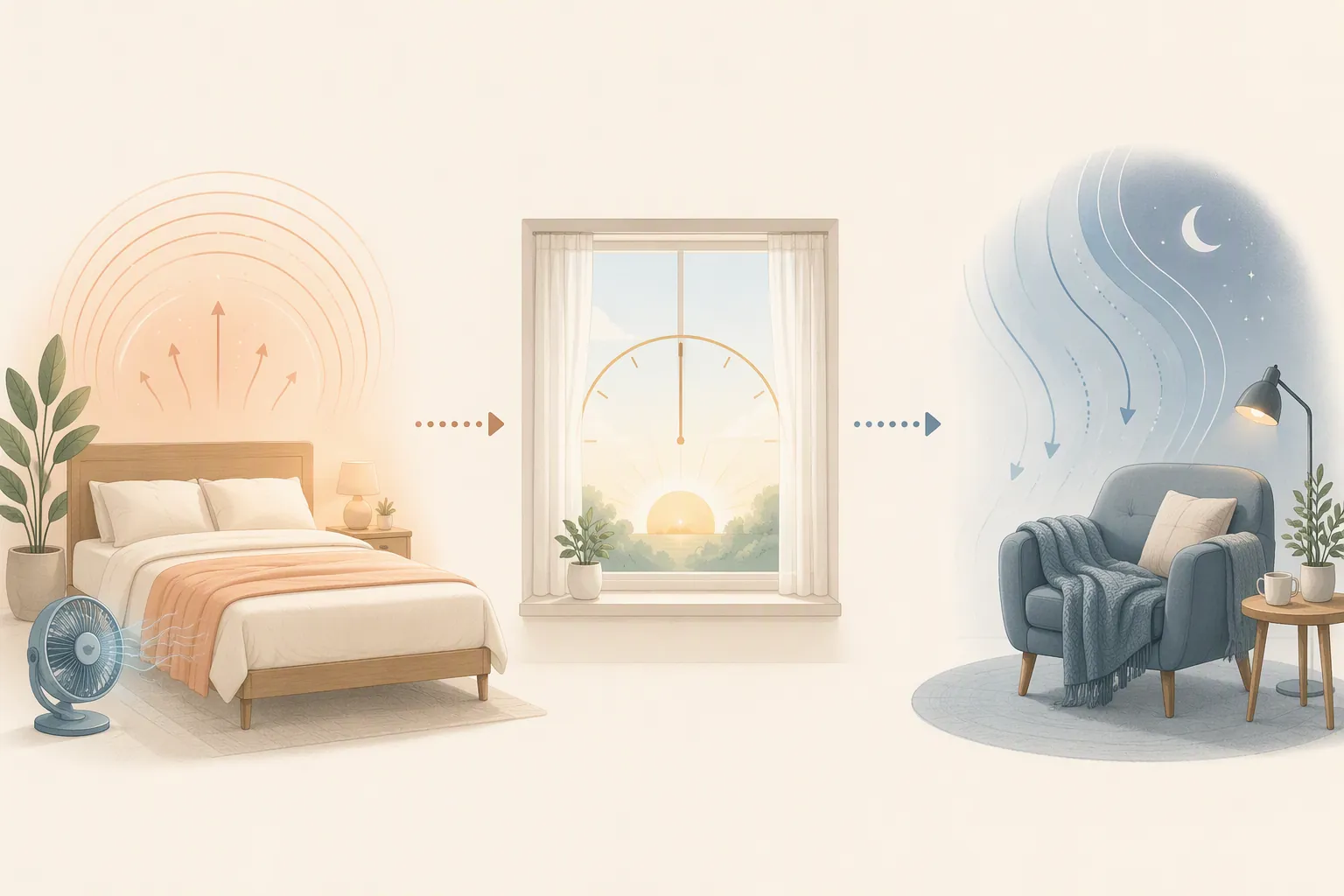
Start with thermoregulation, because heat can override everything else
If you wake hot, sweaty, flushed, or suddenly uncovered, build the first habit cluster around heat movement. Do not stop at “cool room.” Track the full sleep climate: air temperature, bedding weight, fabric, mattress heat retention, pajamas, partner heat, late meals, alcohol, and whether you wake hot early in the night or closer to morning.
- Keep the bedroom cool enough to support sleep, but test bedding changes separately so you know what actually helps.
- Use layers that can be removed without fully waking; avoid a single heavy comforter if it traps heat.
- Choose sleepwear that moves moisture away from the skin, especially if sweating leads to chills later.
- Avoid heat-loading late in the evening: heavy meals, alcohol, very hot baths close to bed, or intense late workouts may be worth testing one at a time.
- If a fan, cooling pad, mattress topper, or wearable cooling device helps, judge it by awakenings and recovery time, not by whether it feels impressive at bedtime.
The useful question is not “Am I cool enough when I fall asleep?” It is “Can this setup absorb a temperature surge at 1 or 3 a.m. without requiring a full awakening?” That is a different design standard.
If heatwaves or seasonal heat make this worse, a deeper cooling strategy may help; the guide to why heatwaves wreck perimenopause sleep explains why the same bedroom can suddenly become intolerable. If you are comparing gadgets, recovery devices for perimenopause sleep are worth evaluating by mechanism rather than marketing language.
Anchor the morning instead of policing bedtime harder
A consistent bedtime can become another way to feel blamed when sleep will not arrive. In perimenopause, it is often more productive to stabilize the morning signal first. Wake time, outdoor light, breakfast timing, and early movement tell the circadian system where the day begins. A clearer day signal can make the night signal easier to read.
- Get bright outdoor light as early as practical after waking, even on imperfect sleep.
- Keep wake time steadier than bedtime; let bedtime respond to sleepiness rather than the clock alone.
- Place caffeine in the earlier part of the day and avoid using it to fully compensate for every bad night.
- Use meals and movement as rhythm cues, especially if work, caregiving, or insomnia has made days irregular.
This is not a demand for a perfect routine. It is a way of giving the brain repeated evidence that daytime and nighttime are still distinct. For readers who want the broader physiology, the article on sleep and biological aging in women over 40 goes further into circadian and cortisol rhythms.
Treat evening arousal as a sleep input, not a personality problem
The cortisol-management habit cluster starts earlier than bedtime. Exercise is a good example. Daytime exercise before 2 p.m. is described in the research as a way to reduce evening cortisol, which makes timing part of the sleep intervention rather than a minor scheduling detail. For some women, a late hard workout is fine; for others, it adds heat and activation to a nervous system that is already too easy to wake.
Resistance training, walking, and other daytime movement can still be protective, especially when they are placed where they support the day-night rhythm. If you want a concrete strength-training example, the piece on Jessica Biel’s dumbbell workout for better perimenopause sleep is most useful when read through that timing lens.
Evening arousal is not only exercise. It is also the grief email you open at 10:30 p.m., the binge-watch that keeps your reward system engaged past sleepiness, the scary movie that leaves your body scanning the hallway, or the panic spiral that starts with one strong heartbeat. These may look like different problems, but they share a pathway: the brain is being asked to downshift while evidence of threat, novelty, conflict, or unfinished business is still arriving.
- Move emotionally loaded conversations, planning, and problem-solving earlier when possible.
- Create a written off-ramp for recurring thoughts: one page for tomorrow’s tasks, one page for what cannot be solved tonight.
- Stop judging the wind-down by how calm you feel immediately; judge it by whether it reduces inputs that keep the brain monitoring.
- If you wake in panic, treat the episode as a nervous-system event first: orient to the room, slow the exhale, cool the body if needed, and postpone interpretation.
For more specific versions of this pattern, the guides to nighttime panic during perimenopause and grief-related insomnia in perimenopause are more relevant than another generic relaxation list. If entertainment is the trigger, the same arousal pathway shows up in perimenopause binge-watching sleep problems and scary movies keeping you awake.
What a fair 4–6 week trial looks like
A fair trial is not trying every sleep tip at once. It is choosing a small set of habits that match your dominant pattern and applying them consistently enough to learn something.
| If your main pattern is... | Prioritize... | Track... |
|---|---|---|
| Waking hot, sweating, throwing covers off | Bed-body cooling and heat-trigger testing | Number of heat awakenings, time to resettle, dampness or chills |
| Falling asleep later and later, irregular nights | Morning light, steady wake time, earlier caffeine and movement | Sleepiness timing, bedtime drift, morning alertness |
| Waking panicked, ruminating, or emotionally activated | Daytime exercise timing and evening cognitive off-ramp | Pre-sleep arousal, panic episodes, clock-checking, next-day mood |
| Dry awakenings without clear heat or panic | Circadian anchoring plus a simple awakening log | Wake time, duration awake, triggers, whether the pattern clusters by cycle or stress |
The log should be boring and brief. You are looking for cause-and-effect clues, not creating another nightly performance review. Note bedtime, wake time, heat symptoms, alcohol or late meals, exercise timing, major stressors, and whether you used the cooling, light, or arousal plan. If the habit helps, you should usually see fewer awakenings, shorter awakenings, less panic about awakenings, or better recovery the next day. Total sleep time is not the only useful measure.
Also leave room for partial success. If cooling reduces the drenched awakenings but you still wake at 4 a.m. with dread, the heat piece may be real and the arousal piece may still need attention. If morning light improves sleep timing but night sweats continue, rhythm was part of the story but not the whole story. This is what mechanism-targeted habits are good for: they clarify the problem instead of blaming the person.
When habits are not enough
If you have applied thermoregulation, circadian anchoring, and arousal management consistently for 4 to 6 weeks and sleep is still significantly disrupted, escalation is not defeat. It is appropriate matching. CBT-I has stronger clinical footing than most wellness sleep routines, and pooled menopause sleep findings reported by secondary sources have favored CBT-I over several other interventions, though the MsFLASH pooled analysis itself should be treated carefully because the primary Oxford Academic article is access-restricted.[1][3]
CBT-I is not simply “better sleep hygiene.” It works with sleep scheduling, conditioned arousal, time awake in bed, beliefs about sleep, and the behavioral patterns that keep insomnia going. For readers dealing with heat-related awakenings, the article on why CBT-I helps perimenopause sleep during heat dome night sweats explains how that approach differs from another list of bedtime tips.
Medical options may also deserve discussion when hot flashes, mood symptoms, or prolonged insomnia are driving impairment. Progesterone is one example with evidence context, not a universal answer. The right threshold is not “have you tried hard enough?” It is “have the habits been targeted to the biology, and is the remaining disruption still costing you safety, mood, work, relationships, or health?”
Standard sleep hygiene still has a place. It removes avoidable friction. But perimenopause often requires habits built around the mechanisms actually disturbing sleep: heat regulation across the night, a stronger morning circadian signal, and a deliberate reduction in cortisol-linked arousal. That is a more respectful starting point for a body that has changed, not failed.
References
- Sleep and Perimenopause, Stanford Lifestyle Medicine.
- Sleep Duration and Quality Among Women Aged 40–59, by Menopausal Status, CDC National Center for Health Statistics, NCHS Data Brief No. 286, September 2017.
- Sleep disorders among women during the menopausal transition: a systematic review and meta-analysis, Frontiers in Neurology, 2025.
- Efficacy of micronized progesterone for sleep: a systematic review and meta-analysis of randomized controlled trial data, PubMed, 2021.
Explore the mechanism
Next step
Spot an error or have clinical feedback?
Because this article covers clinical, medication, or safety information, we use a moderated correction channel instead of open public comments. Let us know if something about “How to Build Sleep Habits That Actually Work for Perimenopause” needs a closer look.
Send feedback on this article