
How to Sleep in a European Heatwave as an Older Traveler
Why standard heat-sleep advice is insufficient for older adults during a European heatwave, and an evidence-based framework for accommodation selection, room-level cooling, and medication management to protect sleep health.
The European heatwave of 2026 has already moved past the category of uncomfortable travel weather. EuroMOMO data reported by Reuters in mid-July showed more than 10,000 excess deaths across 27 European countries during the week of June 22-28, with more than 9,000 of those deaths among people 65 and older.[1] That number should change the first question older travelers ask before a summer trip to Europe. Not “What sleep mask should I pack?” Not “Will the room have a fan?” The question is: what room are you actually going to be sleeping in?
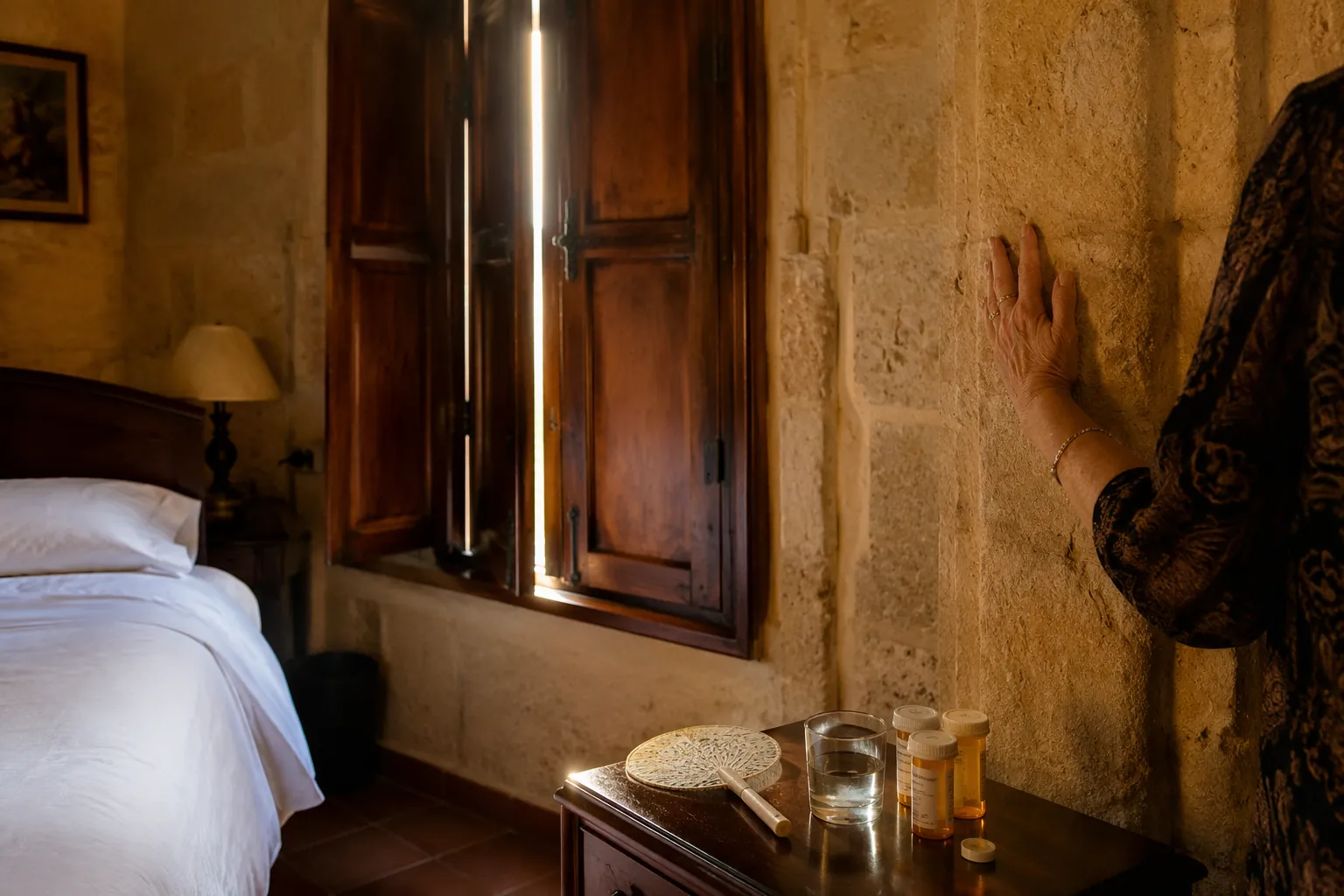
For adults in their late 60s, 70s, and beyond, sleeping during a European heatwave starts with the building. Many European hotels, guesthouses, and vacation rentals were designed around shade, masonry, shutters, and cross-breezes, not mechanical cooling. That can work beautifully in ordinary summer weather. It can fail badly when daytime heat loads the walls, the shutters stay open for the view, and the bedroom never releases enough heat after sunset.
Air conditioning cannot be assumed. International Energy Agency data cited by TIME put air-conditioning penetration at about 20% of European homes, with estimates around 7% in the United Kingdom, 25% in France, and 50% in Italy.[2] Hotels are not homes, and a specific property may be better equipped than the country average. Still, those figures explain why “book a charming room in the old center” is not a complete plan for an older traveler in a record heat season.
Screen the Room Before You Pack the Fan
The safest heat-sleep decision may happen weeks before departure, while you still have choices. A useful booking page is not the one with the prettiest breakfast terrace. It is the one that tells you what keeps the bedroom from becoming a heat box at midnight.
| What to Look For | Why It Matters at Night | What to Ask or Search |
|---|---|---|
| Traditional stone or brick construction | Thermal mass can slow indoor temperature swings when the building is managed well. | Look for older masonry buildings, not lightweight top-floor rooms under the roof. |
| North-facing or shaded bedroom | Less direct solar gain during the day means less stored heat released after dark. | Ask which direction the bedroom faces, not only whether the property has “views.” |
| Ground-floor or lower-floor room | Upper floors and attic rooms often hold more accumulated heat. | Request ground floor or the lowest available sleeping level. |
| External shutters, persianas, or volets | Exterior shade blocks heat before it passes through the glass. | Confirm that shutters are functional and can stay closed during the day. |
| Hilltop or higher-elevation location | A modest elevation advantage may help nighttime cooling when valley or city rooms stay hot. | Ask whether the property sits above the town center, especially in inland areas. |
Those features are not quaint architectural details. In a room without reliable air conditioning, they are the cooling system. A white cotton sheet and a bedside fan can only help with the heat that reaches your body. Stone walls, shade, shutters, and elevation help decide how much heat reaches the bedroom in the first place.
Use Local Search Terms, Not Just “Has AC”
If you are searching in Italy, Spain, or France, English-language booking filters may miss the buildings most likely to help with heat. Andrea Moradei’s accommodation keyword guidance in Tom’s Guide points travelers toward terms such as “casa colonica,” “masseria,” and “trullo” in Italy; “casa rural” and “finca” in Spain; and “maison en pierre” and “bastide” in France.[3] These words do not guarantee a cool room. They do, however, point you toward traditional building types where thick walls, shade patterns, and older heat-management habits may be part of the property.
- Italy: search terms such as “casa colonica,” “masseria,” and “trullo,” then confirm bedroom orientation and shutter function.
- Spain: search “casa rural” or “finca,” then ask whether the sleeping room has external shutters or shaded windows.
- France: search “maison en pierre” or “bastide,” then verify whether the bedroom is north-facing, lower-floor, or protected by volets.
Do not stop at the property description. Send a direct message before booking or while you can still cancel: “During a heatwave, does this bedroom stay cool at night? Is it north-facing or shaded? Are there external shutters, and may guests keep them closed during the day? Is the room on the top floor?” A host who answers specifically is worth more than a listing that says “airy” or “typical local charm.”
External Shutters Matter More Than Interior Curtains
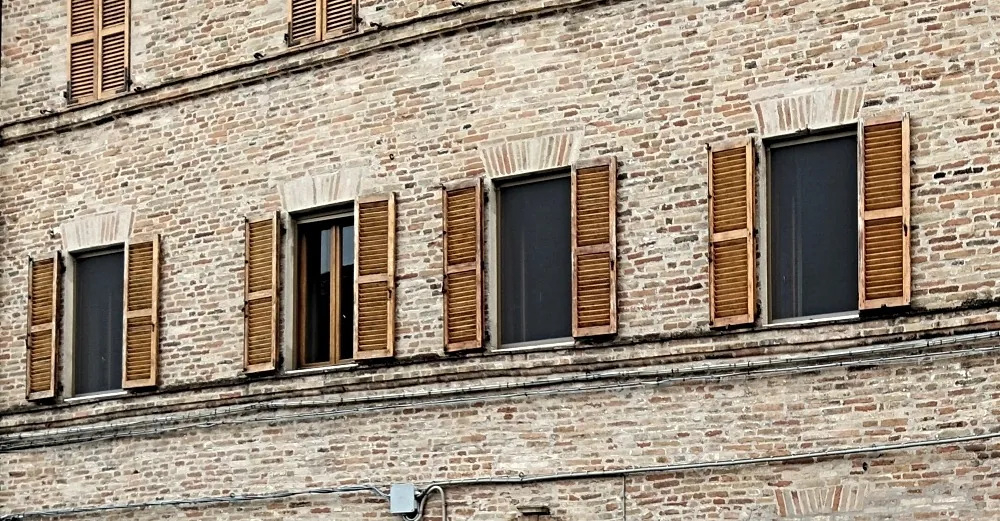
Interior curtains make a room feel dim. Exterior shutters reduce the heat before sunlight passes through the window. Bringing Europe Home describes persianas and external shutters as capable of blocking up to 90% of solar heat and recommends keeping them closed through the main heat of the day, roughly 9 a.m. to 7 p.m.[4] That daytime discipline can decide whether the room is merely warm at bedtime or still radiating heat into the early morning.
This is where travel habits can work against sleep. Guests leave shutters open because they want light, fresh air, or a view. By evening, the room has absorbed the cost. If you are out sightseeing, the better routine is often the local one: close the shutters before leaving, keep direct sun off the glass, and ventilate later only if the outside air has cooled enough to help.
Beware the Pretty Top-Floor Room
A top-floor room under the roof can be lovely in April and punishing in July. Heat rises through the building, roof surfaces absorb sun all day, and older properties may not have insulation or cooling sized for 2026 extremes. Gamintraveler’s discussion of European AC habits and traditional thermal-mass design makes the same broad point: many buildings were intended to manage heat through construction, shading, and timing, not through whole-room mechanical cooling.[5]
When given a choice, an older traveler should usually take the lower, shaded bedroom over the romantic attic. If stairs, nighttime bathroom trips, or balance are already concerns, the lower room solves more than one problem.
Why Older Bodies Need a Different Heat-Sleep Plan
Sleep is not just a matter of feeling comfortable. To initiate and maintain sleep, core body temperature needs to fall by roughly 1-3°F.[6] In a cool room, the body gets help from the environment. In a hot room, it has to work harder. In an older body, that work may be slower and less reliable.
With age, sweat output, blood-vessel dilation, and thirst response can become less robust. The body may not shed heat as quickly, and the signal to drink may arrive late. That matters at night because the traveler is not monitoring symptoms actively. They are trying to sleep, getting up to urinate, finding the room still hot, and deciding whether to wait it out or act.
Medications can complicate the same pathways. Diuretics can affect fluid balance. Beta-blockers can blunt heart-rate response. ACE inhibitors can influence blood-pressure regulation. Anticholinergic medications can interfere with sweating. The American Geriatrics Society Beers Criteria framework is one reason clinicians pay close attention to medication effects in older adults; in a heatwave, that attention belongs in the travel plan, not just the clinic visit.[7]
This does not mean canceling every summer trip. It means the standard advice to “drink more water,” “take a cool shower,” and “use a fan” is incomplete. Hydration can worsen nighttime bathroom trips if it is mistimed. A cold shower can provoke a stress response instead of steady cooling. A fan can help in moderate heat and become the wrong tool when the air is extremely hot.
The Fan Boundary Is Real
A fan is useful when it helps sweat evaporate and moves cooler air across the skin. It is not a substitute for a room that never cools. WHO heat-health guidance warns against relying on electric fans when temperatures exceed 40°C, a threshold also highlighted in heat coverage by AccuWeather and CNN.[8] That warning is not theoretical in the 2026 European heatwave context: reported June highs included 44.3°C in France, 41.5°C in Germany, and 40.9°C in Czechia.[9]
The practical rule is simple enough to remember at 2 a.m.: if the air itself is dangerously hot, blowing more of it across an older body is not a rescue plan. At that point, the decision shifts from bedside comfort to relocation, cooling access, or medical judgment.
Room-Level Tactics Still Help, But They Are Secondary Defenses
Once the building and room have done as much as they can, smaller measures can lower the body’s heat burden. They should be treated as supports, not proof that the room is safe.
- Take a warm-cool shower before bed, not an icy one. The goal is gradual heat release, not a cold shock that can raise heart rate.
- Use damp cloths on pulse points such as the neck, wrists, and behind the knees when the room is warm but not above the fan-safety boundary.
- Choose cotton or linen sheets and loose sleepwear so sweat can evaporate rather than being trapped against the skin.
- Time fluids earlier in the evening when possible, especially if diuretics or nocturia already make nighttime bathroom trips likely.
- Carry low-sugar electrolyte packets if your clinician has not restricted fluids, sodium, or potassium; travelers with heart, kidney, or blood-pressure conditions should ask before relying on electrolytes.
The nighttime bathroom trip deserves more respect than most travel advice gives it. Heat, unfamiliar rooms, low lighting, dehydration, blood-pressure medication, and a tiled bathroom floor are not separate issues when someone is half-awake. A clear path to the bathroom, water within reach, a small light, and a plan for when to call the front desk are part of sleeping safely.
Medication Planning Before Departure
A heatwave travel plan should include a medication review before the trip, especially for travelers taking diuretics, beta-blockers, ACE inhibitors, anticholinergics, sedatives, or multiple blood-pressure medicines. The question is not whether to stop anything on your own. Do not. The question is what your prescriber wants you to do if appetite drops, diarrhea develops, dizziness appears, ankles swell, urine output changes, or the room remains hot overnight.
Bring a current medication list in your carry-on and on your phone. Include doses, timing, prescribing clinician, and major diagnoses. If you are traveling with another person, make sure they know where that list is. In a hotel room at night, the person making the decision may not be the person who packed the pill organizer.
If you normally take a diuretic in the evening, ask before the trip whether timing should be reviewed for travel days. If you take medication that affects blood pressure or alertness, ask what symptoms should trigger medical advice rather than another attempt to sleep through the heat. The useful plan is specific: who to call, what symptoms matter, and whether any medication timing deserves advance adjustment.
When a Hot Night Becomes a Room Failure
Meteorologists use “tropical night” for a night when the temperature does not fall below 20°C, or 68°F.[10] For sleep, that matters because the body is waiting for an environmental assist that may never arrive. If the outside air stays warm, the walls stay warm, and the room cannot release heat, the traveler is not failing at sleep hygiene. The room is failing at cooling.
That is the threshold where older travelers need permission to stop improvising. Ask for a lower or north-facing room. Ask whether there is an air-conditioned common area where you can cool down. Move to a different accommodation if you can. Change towns or elevation if the forecast makes several nights unsafe. If symptoms such as confusion, faintness, chest discomfort, shortness of breath, severe weakness, or stopped sweating appear, treat the situation as medical, not merely inconvenient.
The most effective sleep intervention for an older traveler in a European heatwave is not a clever bedside trick. It is choosing the sleeping room before departure with the same seriousness you would give to stairs, medication access, or travel insurance: thick walls if possible, shade, external shutters, a lower or north-facing room, and a medication-aware plan for the night the room never cools.
References
- EuroMOMO excess deaths report on June 22-28, 2026 European heatwave, Reuters, July 2026, link
- Europeans are buying air conditioners as heat waves intensify, TIME, link
- Andrea Moradei accommodation keyword guidance for cooler European stays, Tom’s Guide, link
- Persianas and exterior shutters for summer heat control, Bringing Europe Home, link
- Why Europeans don’t use air conditioning and how traditional buildings manage heat, Gamintraveler, link
- Best Temperature for Sleep, HealthPartners, link
- American Geriatrics Society Updated Beers Criteria for Potentially Inappropriate Medication Use in Older Adults, American Geriatrics Society, link
- WHO heat-health guidance on electric fan use above 40°C, World Health Organization, link
- 2026 European heatwave, Wikipedia, link
- Tropical nights temperature definition, The Weather Channel, link
Safety & eligibility read
Cross-check against other interventionsExplore the mechanism
Next step
Spot an error or have clinical feedback?
Because this article covers clinical, medication, or safety information, we use a moderated correction channel instead of open public comments. Let us know if something about “How to Sleep in a European Heatwave as an Older Traveler” needs a closer look.
Send feedback on this article