
Tropical Storm Bertha Sleep for Pregnancy, Perimenopause, and ADHD
Generic storm-sleep tips assume normal sleep biology. This article provides specific modifications for sleeping during Tropical Storm Bertha when you are pregnant, perimenopausal, or have ADHD — covering safety, medication, heat, and sensory adjustments tailored to each group.
If you are searching for how to sleep during Tropical Storm Bertha, start with the unglamorous rule: storm alerts, evacuation orders, flash-flood warnings, and carbon monoxide safety outrank sleep. Bertha was an active Gulf Coast storm as of July 23, 2026; Yale Climate Connections reported landfall near St. Bernard Parish, Louisiana, around 2 p.m. CDT on July 22, with 45 mph sustained winds and movement west-northwest toward Texas. The same update noted heat advisories affecting more than 55 million people at the same time.[1] Conditions can change faster than any sleep plan.
That matters because the hard part is not merely being nervous in a loud room. A tropical storm piles noise, heat, pressure changes, disrupted routines, and alert vigilance onto bodies that may already be sleeping badly because of pregnancy, perimenopause, or ADHD. The goal tonight is not normal sleep. It is a few usable hours without creating a safety mistake.
One boundary is absolute: never run a generator inside, in a garage, on a porch, or near open windows, doors, or vents. CDC carbon monoxide guidance says generators should be kept at least 20 feet from windows, doors, and vents, and carbon monoxide cannot be seen or smelled.[2] If the choice is between a cooler room and unsafe generator placement, the cooler room loses.
The Baseline Plan, Before You Modify It
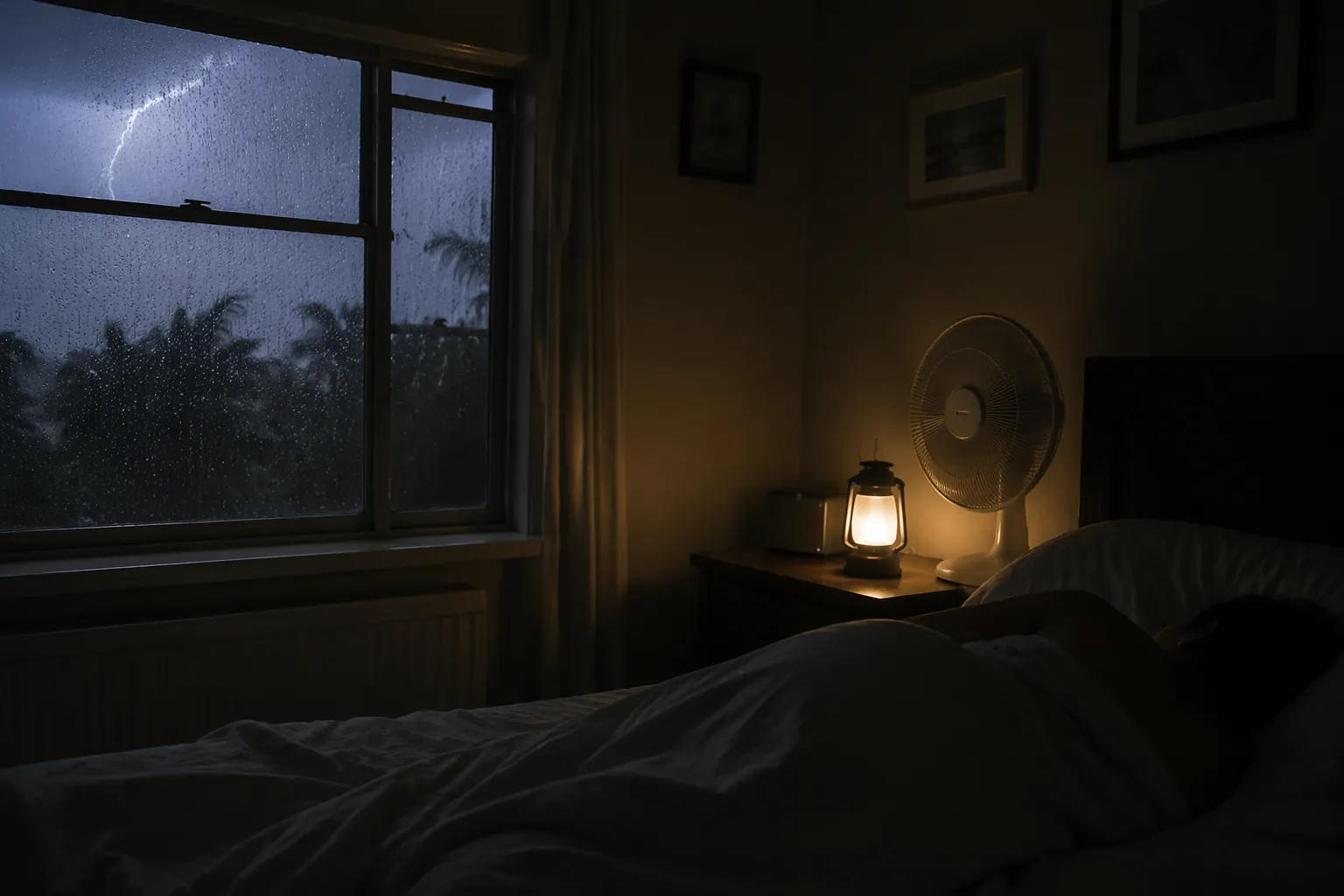
Use the standard storm-sleep setup as the floor, not the whole plan: move to the safest interior sleeping area you can use, keep emergency alerts audible, charge devices while power is available, reduce video news before bed, and accept that sleep may come in fragments. Baylor College of Medicine’s guidance on pre-storm anxiety recommends limiting video news and using the 5-4-3-2-1 grounding technique when anxiety spikes.[3]
Amerisleep’s hurricane sleep guide frames 3 to 5 hours of broken sleep as a practical storm-night target rather than a normal night’s rest, and it notes that hurricane winds can exceed 100 decibels, comparable to a motorcycle or chainsaw.[4] Treat that as triage advice, not as a clinical sleep prescription. If you can protect one longer sleep block safely, protect it. If you cannot, protect the body system most likely to fail first: temperature, hydration, medication safety, positioning, or sensory overload.
For the general protocol, use Target Noise, Light, and Anxiety to Sleep During a Tropical Storm as the companion guide. The rest of this article is for the point where that baseline stops fitting your body.
Pregnancy: Change the Room Setup Around Position, Hydration, and Medication Safety
Pregnancy is the group that needs the least tidy advice. “Go sleep in the hallway” may be safer from windows, but it may also leave you flat on your back, overheated, underhydrated, and unsure whether you can take anything for nausea, headache, or insomnia. The safer version is to make the interior sleeping place compatible with pregnancy before you are exhausted.
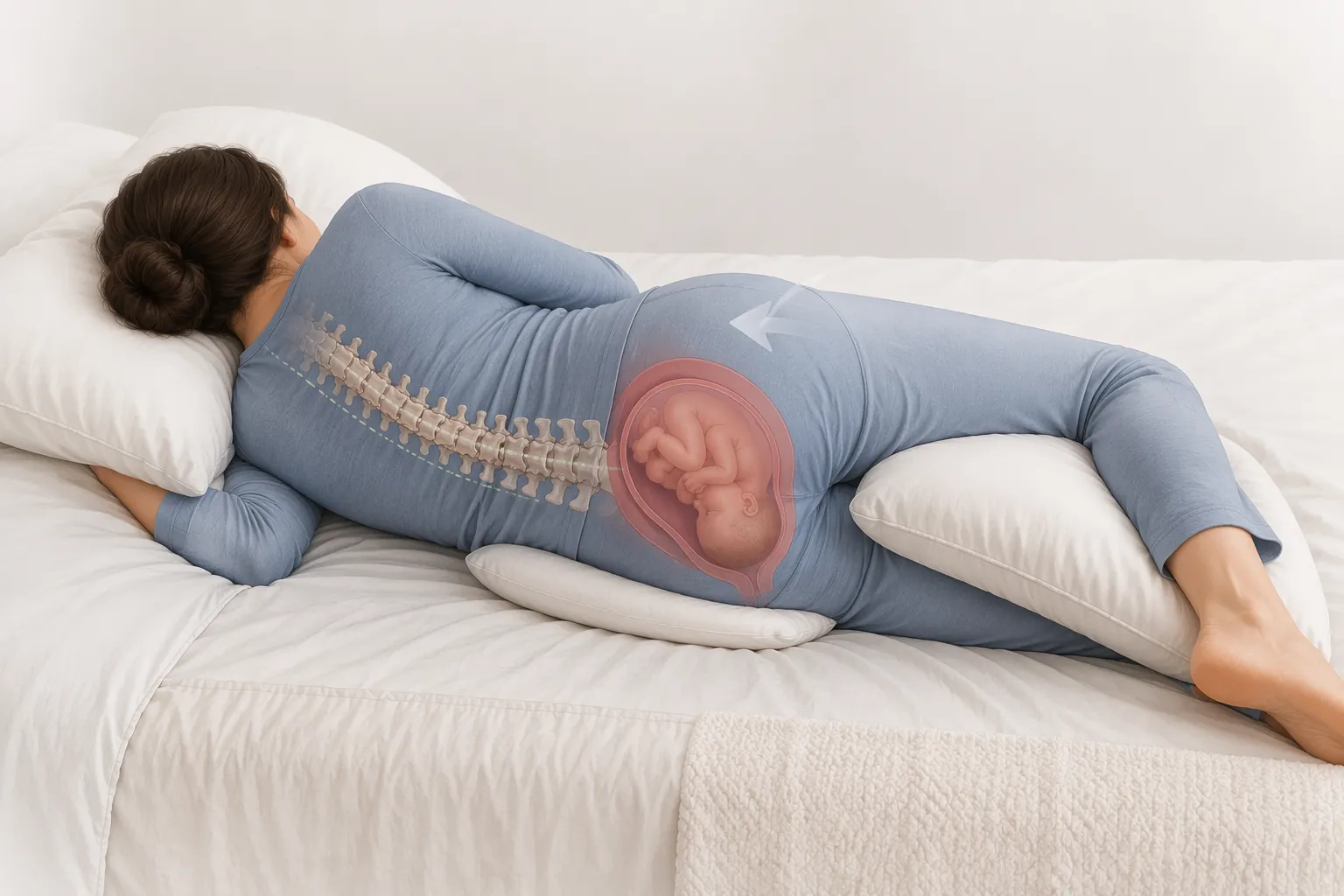
Start with position. If you are far enough along that lying flat on your back makes you lightheaded, short of breath, nauseated, or uncomfortable, do not force a supine storm setup just because the floor is the safest place in the house. Build a left-side sleeping nest in the safest available interior area: pillow between knees, small support under the belly if needed, and enough head elevation to reduce reflux or congestion. If your only protected area is a closet or hallway, a folded blanket or firm cushion can help create a side-lying surface without turning the spot into a trip hazard.
Headache deserves separate attention. Cleveland Clinic explains that barometric pressure changes can trigger headaches or migraines through pressure and fluid shifts in sinus cavities and stimulation of pain-sensitive nerves.[5] During Bertha, that mechanism may sit on top of dehydration, poor sleep, skipped meals, heat, and pregnancy-related congestion. Do not treat a severe, unusual, or persistent pregnancy headache as ordinary storm anxiety. Follow your clinician’s instructions for pregnancy headache warning signs, especially if you have high blood pressure, visual symptoms, swelling, abdominal pain, or any concern for preeclampsia.
Hydration is not optional comfort care here. Heat advisories and power outages can turn an interior room into a stagnant room. Keep water within reach of the left-side setup, but also plan the bathroom path: shoes or hard-soled slippers, a working flashlight, and nothing loose on the floor. If you are rationing movement because the house is dark or noisy, you may also ration water without meaning to. That is a bad trade in pregnancy.
Medication needs the most conservative framing. Doxylamine is commonly used in pregnancy-related nausea and is generally the first OTC sleep-adjacent option to discuss when a clinician has already said it is appropriate for you. Diphenhydramine may be acceptable for occasional use for some pregnant people, but it can cause next-day grogginess, dry mouth, urinary retention, or paradoxical restlessness. Melatonin has unresolved pregnancy safety questions and should not be treated as a harmless storm-night shortcut. If you are comparing options, use Comparing Safe Sleep Aids for Pregnancy Insomnia and clinician guidance rather than improvising at 2 a.m.
- Protect: left-side rest in the safest interior area you can realistically use.
- Avoid: taking a new sleep aid during the storm without prior pregnancy-specific guidance.
- Escalate: severe headache, visual changes, reduced fetal movement, faintness, chest pain, shortness of breath, bleeding, contractions, or unsafe heat exposure.
Perimenopause: Treat Heat as the Main Sleep Threat, Not a Side Issue
For perimenopausal women, storm sleep advice often fails because it assumes the room is merely uncomfortable. Hot flashes, night sweats, and fragmented sleep can make a power outage feel like the body has lost its thermostat. With Bertha overlapping heat advisories across a large part of the country, cooling is not a luxury layer after earplugs and breathing exercises. It is the condition that may make sleep possible at all.[1]
Move lower if you can do so safely. Nest Bedding’s storm-season sleep guidance notes that upper and lower floors can differ by 10 to 15 degrees Fahrenheit during power outages.[6] That is a commercial bedding source, not a clinical trial, but the practical implication is sound: during a hot outage, sleeping downstairs or in a lower interior room may reduce heat load more than changing sheets in an upstairs bedroom.
Layer cooling so you can adjust without fully waking. Use breathable clothing, a light sheet rather than a heavy comforter, a cooling towel on pulse points, and a battery fan placed where it cannot fall into water. Keep a dry shirt nearby if night sweats leave you chilled after the flash passes. The mistake is dressing for the first hot minute and then spending the next two hours damp, cold, and awake.
A weighted blanket may be the wrong tool during a hot outage, even if it usually calms you. If pressure helps, try a small lap weight, a folded blanket across the hips, or firm pillows along the body instead of trapping heat from shoulders to feet. This is where sleep advice has to stop treating every calming object as interchangeable. In perimenopause during Bertha, heat management comes first.
Pressure-triggered headaches can also show up here. Cleveland Clinic’s barometric-pressure explanation is especially relevant for people with migraine sensitivity, sinus pressure, or weather-linked headache patterns.[5] Keep your usual clinician-approved migraine or headache plan accessible, along with water and a small snack if your medication requires food. Do not bury medications in the emergency bag if you may need them before dawn.
For more on why the power going out can wreck sleep even before fear enters the picture, see Power Outage Sleep — Why You Can't Sleep When the Power Goes Out.
ADHD: Drop the Fake Early Bedtime and Control the Monitoring Loop
Adults with ADHD often get handed the least useful storm instruction: go to bed early before the weather gets bad. If your sleep rhythm already runs late, a 9 p.m. bedtime may become three hours of waiting, scrolling, alert-checking, and self-blame. During Bertha, a better plan is to choose a realistic sleep window and make the monitoring rules explicit before the loop starts.
Decide who checks alerts, what source counts, and when the next check happens. If you are alone, set one reliable alert source loud enough to wake you and put the radar app outside arm’s reach between planned checks. If you are with another adult, assign shifts so one person is not half-sleeping while repeatedly “just checking” the same storm track. Sleep deprivation can amplify amygdala reactivity, which is one reason the anxiety loop feels worse after each lost hour.[3]
Sensory tools can help, but pick them by function. Earplugs or noise-reducing earbuds blunt sound. A hoodie, eye mask, or cap can reduce lightning flashes and visual startle. A weighted blanket may give proprioceptive grounding if the room is cool enough and the weight is safe and comfortable for you. If the power is out and the room is hot, use pressure in smaller zones: a weighted lap pad, firm pillow against the back, or a tucked sheet around the hips.
Rigid breathing scripts work for some people and aggravate others. If counting breaths turns into performance monitoring, try cognitive shuffling instead: silently name unrelated, emotionally neutral images in loose sequence, such as “lamp, apple, mailbox, blue towel,” and let each image appear briefly without building a story. This gives the mind a low-stakes task that competes with radar replay without demanding stillness or perfect attention.
If ADHD medication timing is part of your sleep problem, do not change dosing because of a storm article. Use your prescriber’s plan. For a broader treatment ladder, see What Actually Works for ADHD and Insomnia.
Choose the Longest Safe Sleep Window, Not the Perfect Routine
A storm night is not the time to defend your normal sleep routine as if consistency itself were the emergency. The useful question is narrower: what is the longest safe sleep window your current body can use without missing alerts, overheating, lying in a risky position, taking an unsafe medication, or getting trapped in a monitoring loop?
| If this is the main problem | Protect this first | Let this be imperfect |
|---|---|---|
| Pregnancy discomfort or concern about position | Left-side rest, hydration, clear path to bathroom, clinician-approved medication choices | Exact bedtime or ideal mattress setup |
| Perimenopausal heat and night sweats | Lower/cooler room, breathable layers, cooling towels, safe fan placement | Total darkness or heavy calming blankets |
| ADHD alert-checking and sensory overload | Reliable alert plan, realistic sleep window, sensory grounding, reduced radar access | Early bedtime or perfect breathing practice |
The evidence behind these modifications is stitched from separate sources: storm guidance, heat and carbon monoxide safety, barometric-pressure headache explanations, anxiety guidance, and population-specific sleep physiology. It is not a trial-tested “Bertha sleep protocol.” That distinction matters. It keeps the advice practical without pretending that a cooling towel, a weighted blanket, and doxylamine carry the same kind of evidence or the same risk.
If anxiety is the dominant problem after the safety plan is in place, use the storm-specific strategies in How to Sleep During a Tropical Storm When Anxiety Strikes or Thunderstorm Anxiety Is Wrecking Your Sleep. If medication is the question, start with Which sleep aids are safe during a tropical storm? and defer to your clinician for pregnancy, chronic conditions, sedating medications, or ADHD prescriptions.
During Bertha, success may look modest: a pregnant person staying on the left side in a safe interior space with water and a clear path; a perimenopausal woman choosing the cooler lower room before the bedroom becomes unbearable; an adult with ADHD setting alert rules and using sensory pressure without overheating. Storm conditions are still changing as of July 23, 2026. If official instructions, clinician advice, severe symptoms, pregnancy complications, medication uncertainty, carbon monoxide risk, or unsafe heat exposure conflict with sleep advice, sleep advice steps aside.
References
- Tropical Storm Bertha makes its first landfall in southeastern Louisiana, Yale Climate Connections.
- Carbon Monoxide Poisoning Prevention, Centers for Disease Control and Prevention.
- Navigating pre-storm anxiety, Baylor College of Medicine.
- Hurricane Preparedness and Sleep, Amerisleep.
- Barometric Pressure Headache: What To Know, Cleveland Clinic.
- Storm-Season Sleep Prep for Power Outages, Nest Bedding.
Explore the mechanism
Next step
Spot an error or have clinical feedback?
Because this article covers clinical, medication, or safety information, we use a moderated correction channel instead of open public comments. Let us know if something about “Tropical Storm Bertha Sleep for Pregnancy, Perimenopause, and ADHD” needs a closer look.
Send feedback on this article