
Tylenol PM's Two Ingredients and Pregnancy Sleep Safety
Separates the two ingredients in Tylenol PM—acetaminophen and diphenhydramine—to assess each for sleep safety during pregnancy, including the Penn State 2022 study linking prenatal acetaminophen to childhood sleep problems, and provides a framework for weighing risks against the known harms of untreated insomnia.
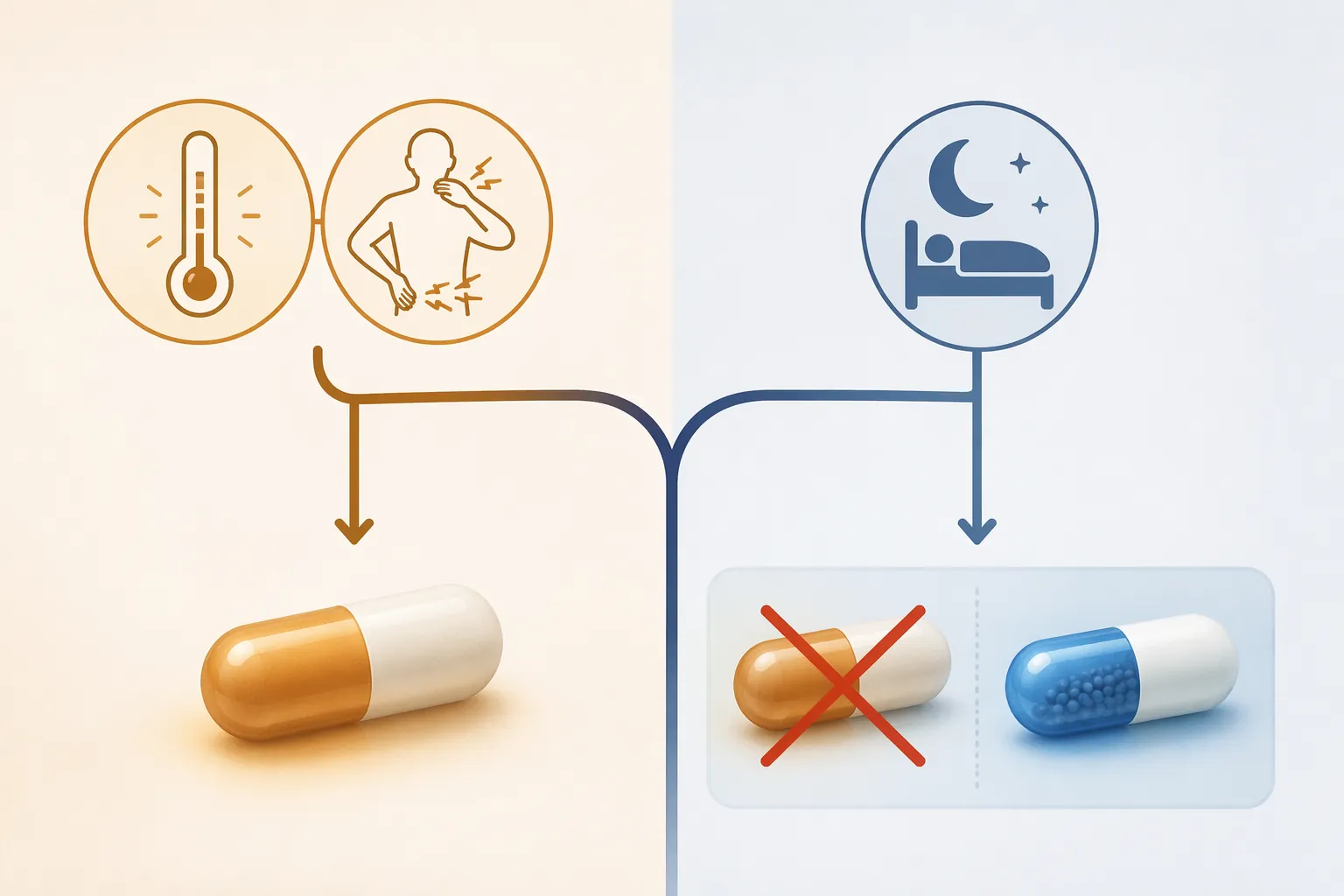
Tylenol PM is not one pregnancy sleep question. It is two questions in the same bottle: acetaminophen, included for pain and fever, and diphenhydramine, included because it causes drowsiness. That split matters more than the brand name. If you are pregnant and taking it because you have a headache, body aches, or fever that is keeping you awake, acetaminophen may be doing a job. If you are taking it only because you cannot sleep, the acetaminophen is extra exposure attached to the sedating ingredient.

That does not turn Tylenol PM into a forbidden product. It does make routine, sleep-only use harder to justify without a prenatal clinician involved. Pregnancy sleep decisions are rarely clean yes-or-no decisions; they are usually about avoiding unnecessary ingredients while also not pretending that severe insomnia, untreated pain, or untreated fever is harmless.
Start With the Ingredient You May Not Need
Acetaminophen is the part of Tylenol PM that has generated the loudest pregnancy headlines. It is also the part that is easiest to misunderstand. ACOG reaffirmed in September 2025 that acetaminophen remains the “analgesic/antipyretic of choice in pregnancy” and said the HHS announcement behind the FDA label move was “not backed by the full body of scientific evidence.”[1] That is not the same as saying pregnant people should take acetaminophen casually for reasons unrelated to pain or fever.
The distinction is practical. Fever in pregnancy is not a cosmetic symptom, and untreated fever has been associated with serious fetal risks, including neural tube defects. Pain can also affect sleep, stress, hydration, movement, and the ability to function. In that setting, acetaminophen has a pregnancy-relevant purpose, and the decision is about using the lowest effective dose for the shortest reasonable time under the advice you have been given.
Sleep-only use is different. If there is no pain and no fever, acetaminophen is not treating the symptom that brought you to the medicine cabinet. That is why Tylenol PM deserves more scrutiny than plain acetaminophen used for a clear medical reason.
The Penn State Sleep Signal Is Real, but Bounded
The most relevant acetaminophen study for this exact question is not the broad autism-or-ADHD debate. It is a 2022 Penn State prospective cohort study that looked at prenatal acetaminophen exposure and child sleep problems at age 3. In that cohort of 2,422 mother-child pairs, 41.7% of women reported acetaminophen use during pregnancy, and exposed children had higher adjusted odds of sleep problems at age 3, with an adjusted odds ratio of 1.23 and a 95% confidence interval of 1.01 to 1.51.[2]
That finding deserves attention because it is sleep-specific. It is also not proof that acetaminophen caused sleep problems. The study was observational, relied on self-reported acetaminophen use, did not provide dose or timing detail, and has not become the kind of replicated trial evidence that would let anyone make a clean causal claim.[2] The confidence interval barely clears 1.0, which is a reminder to read the result as a modest signal, not as a prediction about an individual child.
For a pregnant person considering one dose because pain is keeping them awake, that signal sits inside a larger risk-benefit calculation. For someone taking Tylenol PM repeatedly when the only target is sedation, the same signal becomes more uncomfortable, because the acetaminophen is not clearly needed.
Why the FDA-ACOG Disagreement Does Not Give You a Simple Answer
The 2025 controversy added noise to an already difficult decision. The FDA took a precautionary communication step around acetaminophen use in pregnancy, including label-related action tied to neurodevelopmental concerns.[3] ACOG pushed back, arguing that the announcement did not reflect the full scientific record and reaffirming acetaminophen’s role when an analgesic or antipyretic is needed in pregnancy.[1]
That disagreement is not best read as one side caring about safety and the other dismissing it. It is partly a communication problem: observational associations can justify caution without proving causation, and public warnings can easily flatten that distinction. The strongest counterweight to causal claims comes from sibling-controlled research, including a 2024 Swedish study of about 2.5 million children that found no causal association after controlling for familial and genetic confounding.[4] A Norwegian sibling-controlled study reached a similar direction of caution against simple causal interpretation.[5]
So the reasonable takeaway is narrower than many headlines suggest. Acetaminophen is still treated by major obstetric guidance as the preferred over-the-counter option for pain and fever in pregnancy when medication is needed. It is not therefore an ideal add-on ingredient for insomnia when there is no pain or fever to treat.
Diphenhydramine Is the Sedating Ingredient, Not a Pregnancy Sleep Cure-All
Diphenhydramine is the ingredient in Tylenol PM that makes people sleepy. It is also sold on its own, commonly recognized through products such as Benadryl. Sleep Foundation describes diphenhydramine and doxylamine as among the most commonly used over-the-counter sleep aids in pregnancy.[6] Cleveland Clinic also discusses diphenhydramine as an occasional option while advising pregnant patients to talk with their clinician before using sleep medications.[7]
Common use is useful information, but it is not the same thing as robust pregnancy-specific sleep trial evidence. Much of the comfort around older antihistamines in pregnancy comes from long clinical experience and data from use for nausea, allergies, or occasional sedation, not from large randomized trials designed around insomnia outcomes in pregnant patients.
If sedation is the only goal, though, diphenhydramine alone avoids the extra acetaminophen component. That is the core difference between taking a sleep-targeted antihistamine and taking Tylenol PM. It does not make diphenhydramine risk-free, and it does not make nightly use a casual decision. It simply removes an ingredient that is not serving the sleep problem.
For readers comparing straight antihistamines, a more detailed side-by-side discussion of doxylamine and diphenhydramine belongs in this OTC sleep aid comparison. The short version for this decision is that either option should be discussed as a medication, not as a harmless shortcut, especially if you are using it repeatedly or with other sedating drugs.
A More Useful Way to Decide Tonight
The cabinet-level question is not “Is Tylenol PM safe in pregnancy?” It is “Which ingredient am I taking, and why?”
| Tonight's problem | Ingredient logic | Better question for your prenatal provider |
|---|---|---|
| Fever, body aches, headache, or pain is keeping you awake | Acetaminophen may have a clear pain- or fever-related purpose | What dose and duration are appropriate for my pregnancy and symptoms? |
| No pain or fever; the only problem is sleep | Tylenol PM adds acetaminophen that is not treating the symptom | Would diphenhydramine alone, doxylamine, or another plan be safer for occasional use? |
| Insomnia is frequent, severe, or affecting daytime functioning | Repeated sedating medication use deserves a broader plan | Should we treat this as pregnancy insomnia and consider CBT-I or other care? |
| You are already taking acetaminophen in another product | Tylenol PM can increase total daily acetaminophen exposure | How do I avoid doubling up on acetaminophen? |
Cleveland Clinic notes a maximum of 3,000 mg of acetaminophen per day in its pregnancy guidance.[7] That number matters because acetaminophen appears in many cold, flu, headache, and pain products. The risk with Tylenol PM is not only the pregnancy controversy; it is also the ordinary medication-safety problem of accidentally stacking products with the same active ingredient.
Occasional Use, Routine Use, and the Problem of Severe Insomnia
Occasional use is the kind of question a prenatal provider can often help individualize: trimester, other medications, liver disease, blood pressure concerns, nausea treatment, mental health, work safety, and how often sleep is failing all change the answer. First-trimester decisions may feel different because organ development is underway; third-trimester decisions may feel different because reflux, pain, fetal movement, and breathing discomfort can make sleep collapse night after night. The label “pregnancy” is not specific enough.
Routine sleep-only Tylenol PM use is a harder case. The acetaminophen component has no sleep job, the Penn State sleep finding is not strong enough to prove harm but is relevant enough to avoid unnecessary exposure, and the diphenhydramine component still deserves the same caution as any repeated sedating medication.
At the same time, severe insomnia is not a neutral alternative. Pregnancy sleep problems have been linked in the research literature with outcomes such as preeclampsia, gestational diabetes, and cesarean delivery.[6] That does not mean one bad night is dangerous. It means that persistent, severe sleep loss deserves treatment rather than moral endurance.
If you are choosing among options, the broader safety hierarchy is covered in this pregnancy sleep aid guide and in this comparison of pregnancy sleep aids. If medication is becoming a pattern, CBT-I is worth raising early; pregnancy trials have reported remission rates in the 44% to 64% range, and the approach avoids fetal drug exposure entirely. This CBT-I overview explains how that works in pregnancy insomnia.
The Bottom Line on Tylenol PM for Pregnancy Sleep
If you have pain or fever, acetaminophen may be the ingredient that gives Tylenol PM a medical reason to be in the conversation, though dosing and duration still belong with your prenatal guidance. If the only problem is sleep, Tylenol PM gives you acetaminophen you may not need, plus diphenhydramine, the ingredient actually responsible for sedation.
That makes the more rational next question fairly concrete: ask your prenatal provider whether diphenhydramine alone, doxylamine, CBT-I, or another insomnia plan fits your pregnancy better than a two-ingredient pain-and-sleep product. Occasional use is a discussion. Routine sleep-only use deserves a stronger reason than convenience.
References
- Response to HHS Announcement on Acetaminophen Use During Pregnancy, American College of Obstetricians and Gynecologists, September 2025.
- Prenatal acetaminophen use and sleep problems in preschool-aged children, PLOS ONE, 2022.
- FDA Responds to Evidence of Possible Association Between Acetaminophen Use During Pregnancy and Autism, U.S. Food and Drug Administration, September 2025.
- Acetaminophen Use During Pregnancy and Children’s Risk of Autism, ADHD, and Intellectual Disability, JAMA, 2024.
- Acetaminophen use during pregnancy and offspring attention deficit hyperactivity disorder — a longitudinal sibling control study, European Journal of Epidemiology, 2021.
- Sleep Aids and Pregnancy, Sleep Foundation.
- What Medicine Can I Take While Pregnant?, Cleveland Clinic.
Safety & eligibility read
Cross-check against other interventionsExplore the mechanism
Next step
Spot an error or have clinical feedback?
Because this article covers clinical, medication, or safety information, we use a moderated correction channel instead of open public comments. Let us know if something about “Tylenol PM's Two Ingredients and Pregnancy Sleep Safety” needs a closer look.
Send feedback on this article