
Heatwave Sleep Tips for Older Adults
The usual advice on how to sleep during a heatwave often sounds harmless: open a window, run a fan, wear lighter pajamas. That advice can be fine for a healthy adult on a muggy night. It is not enough for an older adult lying awake in a hot apartment while taking a diuretic, managing cardiovascular disease, or waking less often to drink water.
Older adults account for more than 80% of the estimated 12,000 annual heat-related deaths in the United States, so a hot bedroom is not just a comfort problem for this age group.[1] Sleep loss is one of the ways heat shows up early: the room feels airless, the body cannot shed heat efficiently, and the night becomes a long stretch of sweating, thirst, bathroom trips, shallow sleep, and worry.
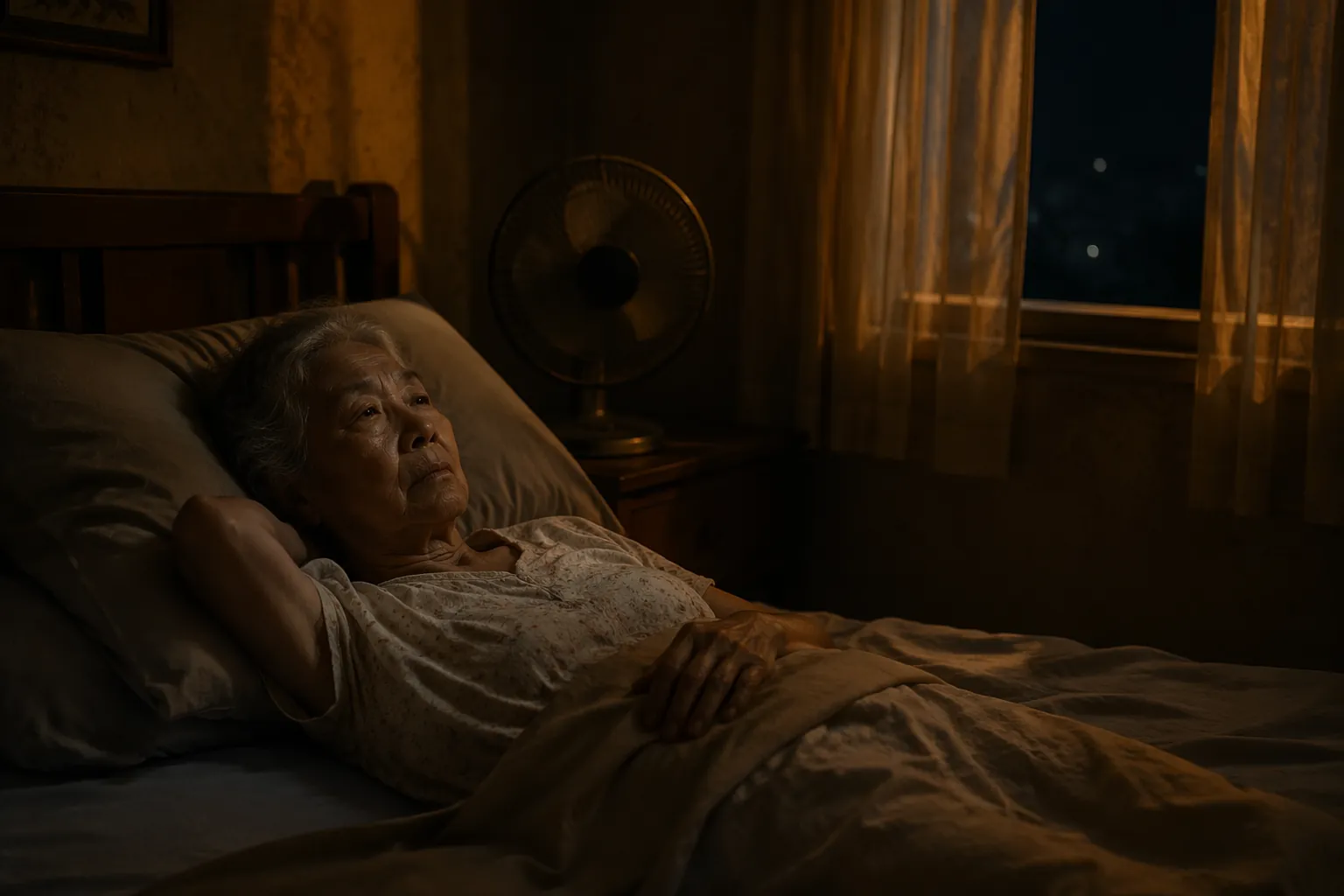
The plain answer is this: heatwaves cost older adults more sleep because aging makes heat dissipation harder, several common medications can interfere with cooling, and chronic conditions make hot nights more disruptive. That changes the advice. During extreme heat, air conditioning or access to a cooled space moves from “nice to have” to a health intervention.
Why a hot night hits older adults harder
Aging changes the body’s heat defenses in several ways at once. Sweat output tends to fall. Thirst signals can become less reliable. Blood vessels may not widen as efficiently to move heat toward the skin. None of this means an older adult is fragile by default; it means the margin for error is smaller when the bedroom stays hot into the early morning.
That smaller margin shows up in sleep measurements. A 2023 study in Science of the Total Environment found that sleep efficiency in older adults dropped by about 5–10% as nighttime temperature rose from 77°F to 86°F.[2] Sleep efficiency is the share of time in bed actually spent asleep. A fall in that range can mean more awakenings, longer periods staring at the ceiling, and less recovery even if the person went to bed at the same time.
The strongest recent population evidence is larger. Liao et al. analyzed 14,232 adults across 12.5 million nights and found that heat-related sleep loss was not evenly distributed. People with cardiovascular disease lost 24.3% more sleep per 10°C increase in nighttime temperature, people with obesity lost 24.0% more, and people with depression lost 23.3% more.[3] Those figures describe extra vulnerability per temperature increase, not proof that heat caused every poor night in every person, but they are enough to reject one-size-fits-all advice.
The study also has limits worth keeping in view: its sample was predominantly female, White, and non-Hispanic, so it should not be treated as a perfect map of every community.[3] Still, its scale makes the main point hard to dismiss. When the overnight temperature rises, chronic health status changes who loses sleep first and how much sleep is lost.
For a deeper look at the body-temperature side of this problem, Restful Ground’s guide to hot weather sleep disruption explains why the normal nighttime drop in core temperature matters for sleep.
Medications belong in the heatwave sleep plan
This is the part many generic heatwave checklists skip. The person who cannot cool down at 2 a.m. may also be taking medication that changes fluid balance, sweating, blood vessel response, alertness, or thirst. CDC clinical guidance flags several medication groups that can increase heat vulnerability, including diuretics, beta-blockers, anticholinergics, some antidepressants, and antipsychotics.[4]
| Medication group | Why it can matter during a heatwave |
|---|---|
| Diuretics | Can increase dehydration risk by changing fluid and electrolyte balance |
| Beta-blockers | Can make it harder for the cardiovascular system to support heat loss through the skin |
| Anticholinergics | Can reduce sweating, one of the body’s main cooling mechanisms |
| Some antidepressants and antipsychotics | Can affect sweating, alertness, temperature regulation, or fluid intake |
This is not a reason to stop a prescription on a hot day. It is a reason to ask a clinician or pharmacist, before the next heatwave if possible, which medicines raise heat risk and what warning signs should trigger a call. The practical question is simple: if the apartment is hot for three nights in a row, does this medication plan need any temporary monitoring, hydration guidance, lab awareness, or symptom threshold?
Medication review is especially important when the older adult already has cardiovascular disease, kidney disease, diabetes, obesity, depression, cognitive impairment, limited mobility, or a history of dehydration. A spouse or adult child can help by bringing the full medication list—including over-the-counter sleep aids, allergy pills, and bladder medications—to the conversation. Many anticholinergic drugs are not recognized by families as heat-relevant because they are not labeled as “heat medicines.”
For broader context on how medications can disturb sleep differently by life stage, see Restful Ground’s medication-sleep discussion in How the Levothyroxine Recall Disrupts Sleep Differently by Life Stage.
What changes in the usual cooling advice
A cool shower, a damp cloth, lighter bedding, and a quieter bedtime routine can help. They are not the center of the plan when an older adult is spending the night in dangerous indoor heat. The plan should first reduce heat exposure, then use smaller comfort measures to support sleep.
Prioritize air conditioning or a cooled place to sleep
During extreme heat, air conditioning is not just about making the bedroom pleasant. It is the most direct way to lower heat exposure through the night. If the home has central air, the bedroom of the older adult should be the priority zone, not the last room to cool after the rest of the house.
If there is no working AC, the next best answer may be leaving the home for part of the evening or night: a cooling center, a relative’s home, an air-conditioned lobby, or another safe cooled space. That can feel like an overreaction when the complaint is “I can’t sleep,” but the risk profile is different for an 82-year-old with cardiovascular disease than for a healthy 30-year-old who is annoyed by a stuffy bedroom.
Make one cool corner if whole-home cooling is unrealistic
When cost, wiring, rent rules, or equipment shortages make whole-home cooling impossible, shrink the problem. Choose one small room, preferably the bedroom or a room where the older adult can safely sleep. Close the door. Block hot air from the hallway with a rolled towel. Use curtains, shades, or temporary coverings to reduce heat gain from windows. Run a window unit or portable AC there if one is available and safe to use.
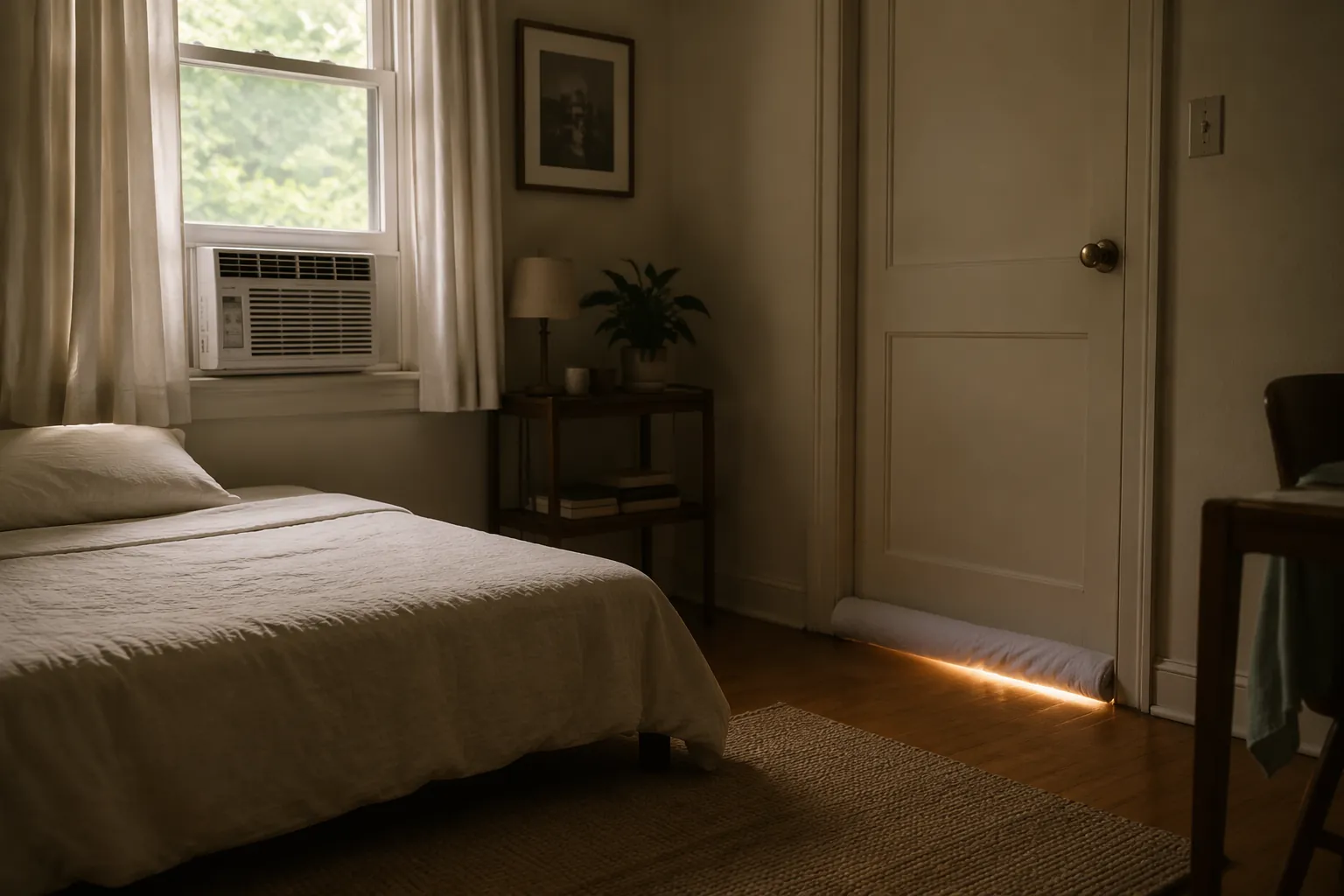
A cool corner is not elegant, but it solves the correct problem: it lowers the temperature around the person who is most vulnerable. It also makes caregiving easier. Instead of trying to cool every room, someone can check one sleeping space, one water bottle, one medication list, and one exit plan if the room does not cool enough.
For more practical room-by-room ideas, see How to Stay Cool at Night in Extreme Heat — by Life Stage.
Be careful with fans when the room is very hot
A fan can help when it moves cooler air across the skin or improves ventilation in a mildly warm room. It can become a problem when the indoor air is very hot. Guidance commonly warns that fans alone may increase heat stress for older adults above about 95°F/35°C because they can blow hot air across the body rather than cool it.[5]
That threshold is a guideline, not a magic line. Humidity, hydration, medications, illness, and whether the person can sweat all matter. The useful rule for a caregiver is stricter than “any fan is better than no fan”: if the room is approaching dangerous heat, do not rely on a fan as the main cooling plan for an older adult. Pair it with AC, a cooler room, a cool shower, damp cloths, or relocation to a cooled space.
Cool the body without pretending one trick is enough
Small measures still matter, especially when they are used early in the evening instead of after hours of overheating. A lukewarm or cool shower before bed can lower skin heat. A cool, damp cloth on the neck, wrists, or chest can provide short-term relief. Light bedding reduces trapped heat. Sipping fluids earlier in the evening may help, though people with heart failure, kidney disease, or fluid restrictions should follow their clinician’s instructions rather than generic hydration advice.
- Before sunset: close blinds or curtains on sun-facing windows and start cooling the sleeping room if possible.
- Evening: eat lighter if heavy meals worsen heat discomfort, prepare water within reach, and set up a cool cloth or shower plan.
- Bedtime: use the coolest safe room, light bedding, and AC or cooled-air access as the priority.
- Overnight: if confusion, dizziness, faintness, chest discomfort, unusual weakness, or worsening shortness of breath appears, treat it as a health problem, not just bad sleep.
Bedroom temperature: do not get trapped by one perfect number
Sleep-temperature recommendations do not all use the same target. Cleveland Clinic lists 60–67°F as a commonly recommended bedroom range for sleep.[6] Other published sleep advice often lands in the upper 60s or low 70s. For older adults in a heatwave, the practical consensus is more useful than arguing over a single number: cooler is generally better, and sustained hot indoor air is the problem to solve.
If the room can safely be cooled into a comfortable range, do that. If it cannot, focus on reducing exposure: a cooled room, a cooling center, a family member’s home, or a temporary sleeping arrangement. Linen sheets and summer pajamas can make a tolerable room nicer. They cannot compensate for a dangerously hot room in someone whose body cannot shed heat well.
Older adults who already have lighter, more fragmented sleep may notice heat sooner because there is less deep sleep to buffer disruption. Restful Ground’s guide to how aging changes sleep for women over 50 covers that age-related sleep context in more detail.
A caregiver’s heatwave sleep check
The person solving the problem may be the older adult, a spouse, a daughter checking in by phone, or a neighbor who notices the apartment is hotter than the hallway. The check does not need to be complicated. It does need to ask the right questions before midnight.
- Is the sleeping room actually cooler than the rest of the home, or just where the bed happens to be?
- Is AC available, working, and directed toward the room where the older adult will sleep?
- If there is no AC, what cooled place is available tonight—not in theory, but with transportation and access worked out?
- Is the plan relying on a fan alone in very hot indoor air?
- Are medications on board that could increase dehydration, reduce sweating, or affect cardiovascular response?
- Does the person have cardiovascular disease, obesity, depression, limited mobility, cognitive impairment, or another condition that makes heat harder to tolerate?
- Are fluids, a phone, a light, and a way to call for help within reach?
This kind of check is not overprotective. It matches the evidence that heat-related sleep loss concentrates in people with health vulnerabilities, and it catches the common failure point: advice that assumes the sleeper can sweat normally, drink when thirsty, move rooms easily, and tolerate a fan blowing warm air all night.
Heat is becoming a sleep issue, not just a weather issue
Liao et al. projected that, under high-emission scenarios, U.S. adults may lose an additional 8.5–24 hours of sleep per person-year during summer months by 2099.[3] The same study notes that residents in marine climate zones may face steep losses, with AC adoption reported at 51% compared with 89% nationwide.[3] That matters because the places least accustomed to night cooling can be the places where older adults and caregivers are least prepared.
For a wider view of who loses sleep during heat streaks, see Who loses the most sleep during a heat streak? Restful Ground’s companion guide, Heatwave Sleep Tips for Pregnancy, Menopause, and Older Adults, compares heat vulnerability across life stages.
But tonight’s decision is narrower. If an older adult is trying to sleep through dangerous heat—especially with cardiovascular disease, obesity, depression, fluid-sensitive conditions, limited mobility, or medications that affect cooling—the priority is not better ambiance. It is lowering heat exposure. Use AC if available. Create one cool room if that is all that is possible. Do not depend on a fan alone in very hot air. Review heat-relevant medications with a clinician or pharmacist. Treat cooling as part of the care plan.
References
- The Effects of Heat on Older Adults, Harvard Medicine, 2021.
- Science of the Total Environment study on nighttime temperature and sleep efficiency in older adults, Science of the Total Environment, 2023.
- Impact of heat exposure on sleep health and its population vulnerability in the United States, PMC, 2025.
- Heat and Medications – Guidance for Clinicians, CDC.
- Eight ways to sleep well in hot weather, The Conversation.
- The Best Temperature for Sleep, Cleveland Clinic.
Read the full guide: How travel weather delays affect sleep and stress