
How to Stay Cool at Night in Extreme Heat — by Life Stage
Quick answer: how to stay cool enough to sleep tonight
If your bedroom is stuck in extreme heat, the goal is not to force a perfect sleep-lab temperature. A commonly recommended sleep range is about 60–67°F, but in a heat wave that may be unreachable. Tonight’s job is smaller and more urgent: lower the heat your body has to carry, help sweat evaporate, keep bedding from trapping warmth, and change the plan if pregnancy, perimenopause, ADHD, older age, or medication makes overheating harder to notice or recover from.
- Reduce the room’s heat load: close blinds before the room heats up, block direct sun, open windows only when the outdoor air is cooler than the room, and sleep on a lower floor if you can.
- Support evaporative cooling: use a fan safely, keep air moving across damp skin or a damp cloth, and consider a fan blowing across a bowl or bucket of ice for short-term relief.
- Cool your body before bed without overheating it first: a lukewarm shower can help more than a cold shock or a hot soak. Avoid saunas, hot tubs, and very hot baths in extreme heat.
- Use bedding that releases heat: choose cotton, linen, or muslin layers over dense synthetics. Thin cotton pajamas can wick sweat better than bare skin against a mattress.
- Avoid adding heat at night: skip alcohol, very spicy late meals if they trigger flushing, hard exercise close to bed, and late caffeine if it delays sleep.
- Build in checks if you may not notice overheating early: set hydration reminders, keep water within reach, pre-cool a scarf or cloth, and ask someone to check in during severe heat if you are pregnant, older, medically fragile, or taking medications that affect sweating, urination, blood pressure, or alertness.
If you feel confused, faint, unable to cool down, unusually weak, or if pregnancy or a heart condition is part of the picture, treat the night as a heat-safety problem, not just a sleep problem. Sleep advice stops being enough when the body cannot shed heat.

Why extreme heat steals sleep instead of merely making you uncomfortable
Sleep depends on a controlled drop in core body temperature. In a cool enough room, heat moves away from the body through the skin and, when needed, through sweating. In a hot, humid, or poorly ventilated bedroom, that temperature drop becomes harder. The brain may still be exhausted, but the body is being asked to sleep while continuing heat-defense work.
Two large 2025 datasets make that burden visible. In a Nature Communications study using about 23 million nights of wearable data from China, each 10°C increase in nighttime temperature was associated with 9.67 fewer minutes of total sleep, 20.1% higher odds of sleep insufficiency, and a 2.82% drop in deep sleep — the largest proportional decline among the sleep stages reported in the study.[1]
A separate U.S. analysis from USC and the All of Us Research Program examined 12.5 million nights from 14,232 adults. It found a smaller average loss — 2.63 fewer minutes per night for each 10°C increase — but the average hides important unevenness. People with cardiovascular disease lost 24% more sleep per degree than people without cardiovascular disease. Adults in marine climate zones, including much of the West Coast, lost about twice as much sleep per degree, a pattern the researchers linked to lower air-conditioning penetration: about 51% in those zones compared with 89% nationally.[2][3]
A few minutes may sound small until the heat lasts for weeks, or until the sleep stage being clipped is deep sleep. Deep sleep is not decorative rest. It is part of the night when the body does some of its most important recovery work. If heat repeatedly fragments the early part of the night or keeps the body from settling into deeper sleep, the next day can feel worse than the clock suggests.
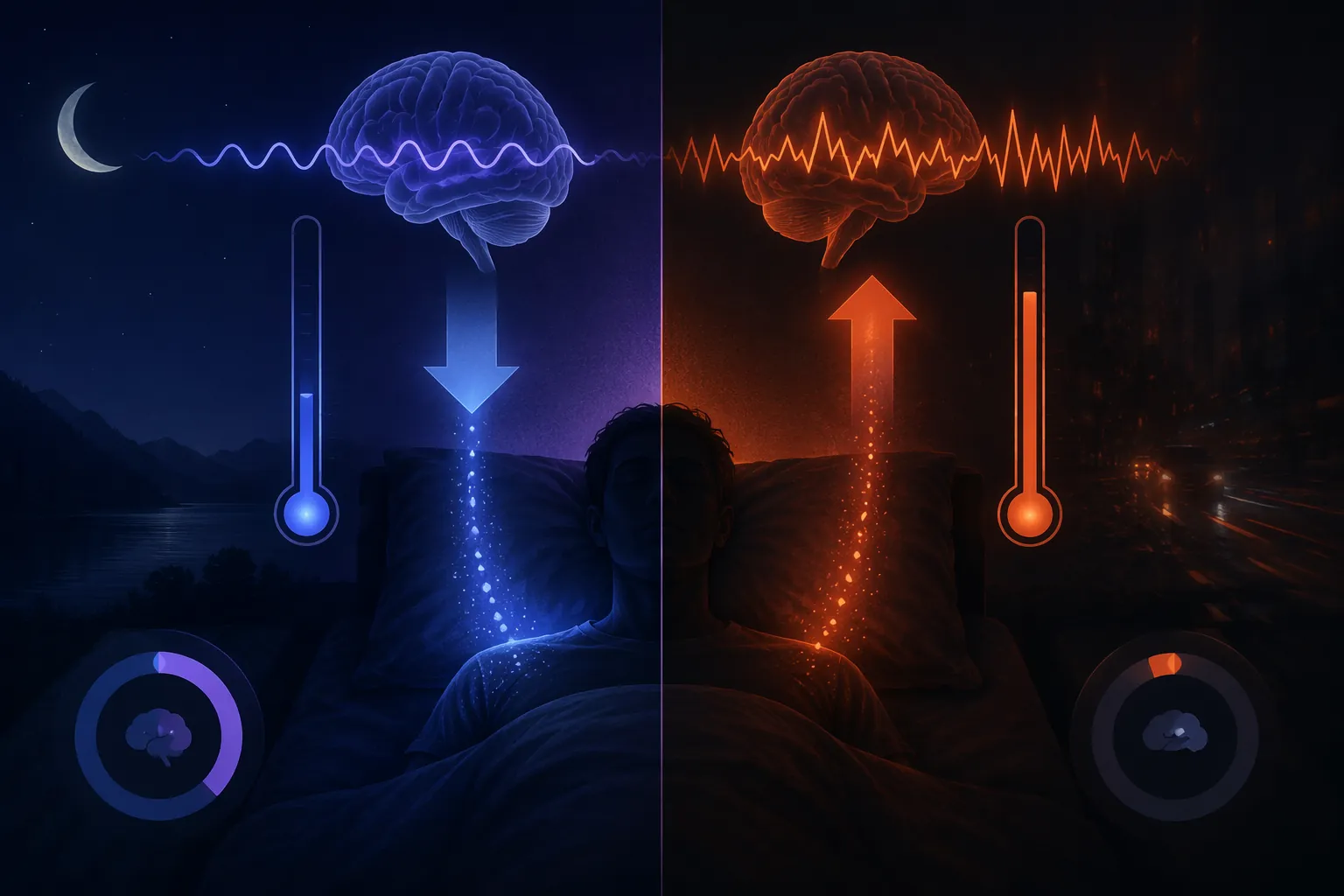
The studies are strong because they converge, not because either one can speak for everyone. The China dataset came from Huawei wearable users, so it should not be treated as a perfect mirror of U.S. sleepers. The U.S. All of Us sample was predominantly female, White, and college educated, which matters because the study also points toward unequal vulnerability. Still, taken together, these studies support a narrow but useful conclusion: hotter nights measurably reduce sleep, and the loss is not distributed evenly.[1][2]
The U.S. researchers also projected that by 2099, rising nighttime temperatures could cost U.S. adults roughly 8.5–24 hours of sleep per year. That number is not the most urgent fact if you are awake in a hot room tonight. The urgent fact is that the body in the bed — its hormones, medications, cardiovascular status, pregnancy status, age, sensory processing, and access to cooling — changes what “cool enough” means.[2]
Work with the room you have, not the thermostat you wish you had
When air conditioning can hold the room near the low-to-mid 60s°F and that feels good to you, use it. When it cannot, prioritize the parts of cooling that still work: shade, airflow, evaporation, lighter bedding, humidity control, and reducing internal heat load before bed.
- Keep heat out early. A bedroom that bakes all afternoon is much harder to rescue at midnight. Close curtains, shades, and doors to hotter rooms before the room peaks.
- Move down if possible. Heat rises. A couch, guest room, or temporary floor setup on a lower level may be safer than an upstairs bedroom during a heat dome.
- Use fans for evaporation, not false security. A fan helps when it moves air across skin or a damp cloth. If the room is dangerously hot and you are not sweating well, a fan alone may not be enough.
- Choose breathable layers. Cotton, linen, and muslin let sweat spread and evaporate. Dense foam, heavy comforters, and tightly woven synthetic layers can trap heat close to the body.
- Use short-lived cold tricks honestly. A chilled pillowcase, frozen cloth, or ice scarf can help you fall asleep, but it will not keep a room cool all night. Pair it with airflow, lighter bedding, and a plan for waking hot.
- Control humidity when you can. Sweat cools you by evaporating. Humid air slows that process. If you own a dehumidifier, using it in a muggy bedroom may make the same temperature feel more tolerable.
For a fuller ranking of no-AC options, see The Best Ways to Cool a Bedroom Without AC, Ranked. For the body-temperature mechanism behind these steps, see How extreme heat hijacks your body's sleep cooling system and How humidity affects sleep through your body's cooling system.
Change the cooling plan for the body you are in
The basic physics of cooling does not change, but the risk profile does. A perimenopausal sleeper who wakes drenched at 2 a.m. does not need the same plan as a pregnant person avoiding overheating, an ADHD adult who notices body signals late, or an older adult taking a diuretic.
Perimenopause and menopause: plan for heat surges, not just a hot room
During the menopause transition, hot flashes and night sweats can turn a warm bedroom into a repeated wake-up cycle. Johns Hopkins Medicine describes menopause-related sleep disruption as closely tied to hot flashes, mood changes, and other hormonal shifts; the practical consequence is that the room does not have to be objectively extreme for the body to experience a heat alarm.[4]
This is where “just use fewer blankets” becomes insulting. The plan needs quick heat release and dry replacement layers. Keep a breathable top layer within reach, use cotton or moisture-managing sleepwear that does not cling when damp, and avoid personal triggers you already know are reliable — commonly alcohol, spicy late meals, or an overheated evening routine. Bed-cooling systems or phase-change toppers can be useful tools if they fit your budget and sensory preferences, but they are not the only legitimate answer.
If the pattern is repeated drenching, insomnia, palpitations, or daytime impairment, it deserves medical attention rather than dismissal as ordinary discomfort. For a more detailed heat-wave plan, use How to Sleep in a Heat Wave Without AC During Perimenopause. For clothing and fabric choices during night sweats, see Choosing Sleepwear That Works With Menopause Night Sweats.
Pregnancy: cool down early and avoid heat exposure you cannot easily reverse
Pregnancy raises the stakes because the body is already doing more circulatory and temperature-regulation work. Healthline’s pregnancy heat explainer notes that blood volume rises substantially during pregnancy, reaching about 50% more by week 34, which can contribute to feeling hotter than usual.[5]
In extreme heat, make the cooling plan boring and conservative. Avoid hot tubs, saunas, and very hot baths. Use breathable muslin or cotton bedding, keep water nearby, cool the room before you are already overheated, and use a lukewarm shower rather than a heat-heavy bath. A commonly cited pregnancy heat threshold is core temperature above 102°F/39°C, but that number should not become a home experiment; if you are pregnant and worried about overheating, fever, dizziness, reduced fluid intake, or heat exposure, contact your OB/GYN or maternity care team.[5]
ADHD and neurodivergence: make cooling visible, timed, and sensory-safe
For some ADHD and neurodivergent adults, the problem is not only getting cool; it is noticing overheating early enough to act. Interoceptive lag — delayed awareness of internal body signals — can mean thirst, heat stress, or exhaustion registers late. A 2025 Neurodiverse You review also discusses stimulant medication effects on heat regulation and cites 1.65× higher odds of heat-related emergency department visits during heat waves among people taking stimulants; that should be read as a specific cited finding, not a universal prediction for every ADHD adult.[6]
The sleep setup should remove decisions from the overheated part of the night. Put a water bottle where your hand naturally reaches. Set phone reminders for fluids earlier in the evening if you forget to drink. Pre-chill an ice scarf, soft gel wrap, or damp cloth before bedtime. Choose bedding that is both cool and tolerable: a fabric that is technically breathable but unbearable on your skin will not help you sleep. If stimulant timing seems to worsen heat, sweating, appetite, hydration, or insomnia, review timing and dose questions with the prescriber rather than improvising medication changes during a heat wave.
Older adults: review medications and make the room safer before bedtime
Older adults are more vulnerable during heat events because thermoregulation can become less efficient, thirst may be less reliable, and medications may interfere with cooling. CDC clinical guidance on heat and medications flags several medication categories that can increase heat risk, including diuretics, anticholinergics, and some antihistamines, because they can affect hydration, sweating, blood pressure, or alertness.[7]
This is the group where “take something to sleep through it” can be especially risky. A sedating sleep aid may reduce the ability to wake, drink, move to a cooler room, or notice heat illness. Before a severe heat night, move sleeping arrangements to the coolest safe room, ideally lower in the home if that is possible. Keep water and a light source within reach. Ask a clinician or pharmacist which medications require extra caution during heat, especially if there are diuretics, blood pressure medications, antihistamines, bladder medications, antidepressants, or heart medications in the routine.
For a deeper older-adult plan, use Heat Dome Sleep Tips for Older Adults.
The practical rule
In extreme heat, “stay cool at night” is not one instruction. It is a match between the room, the humidity, the bedding, and the body trying to sleep there. Lower the heat load, help sweat evaporate, avoid adding internal heat, and adjust the plan for pregnancy, perimenopause, ADHD, older age, cardiovascular disease, and medications. The right cooling strategy is the one that helps your body shed heat safely in the actual conditions you have tonight.
References
- Nature Communications 2025 wearable study on nighttime temperature and sleep — Nature Communications, 2025.
- All of Us study on ambient temperature and objectively measured sleep — PMC, 2025.
- Study links rising temperatures to reduced sleep in U.S. adults — Keck School of Medicine of USC.
- How Does Menopause Affect My Sleep? — Johns Hopkins Medicine.
- Hot Pregnant: Why You’re Feeling Hot and How to Cool Down — Healthline.
- Why Neurodivergents Overheat: ADHD, Autism, and the Science of Heat Sensitivity — Neurodiverse You, July 16, 2025.
- Heat and Medications – Guidance for Clinicians — CDC.
Read the full guide: How to Sleep Well During Extreme Heat Alert When Pregnant