How Aging Changes Sleep for Women Over 50
This article explains the three distinct physiological changes—hormone withdrawal, a circadian phase advance, and loss of deep sleep—that drive sleep disruption in women over 50, and why these differ from generic age-related sleep problems or primary sleep disorders.
The change many women notice after 50 is not simply that sleep gets shorter. It feels different. You may wake earlier than you used to, sleep closer to the surface, or find yourself suddenly hot and alert at 3 AM in a way that has very little in common with staying up too late in your 30s. The frustrating part is that ordinary explanations often blur together several separate events: a heat-driven arousal, an aging circadian clock, and lighter sleep architecture.
That distinction matters. How aging affects sleep for women over 50 is not one mechanism wearing three disguises. It is usually three physiological shifts converging: withdrawal of estrogen and progesterone, an earlier circadian rhythm, and the gradual loss of deep slow-wave sleep. They can all show up in the same night, but they do not ask for the same response.
The three changes often arrive together
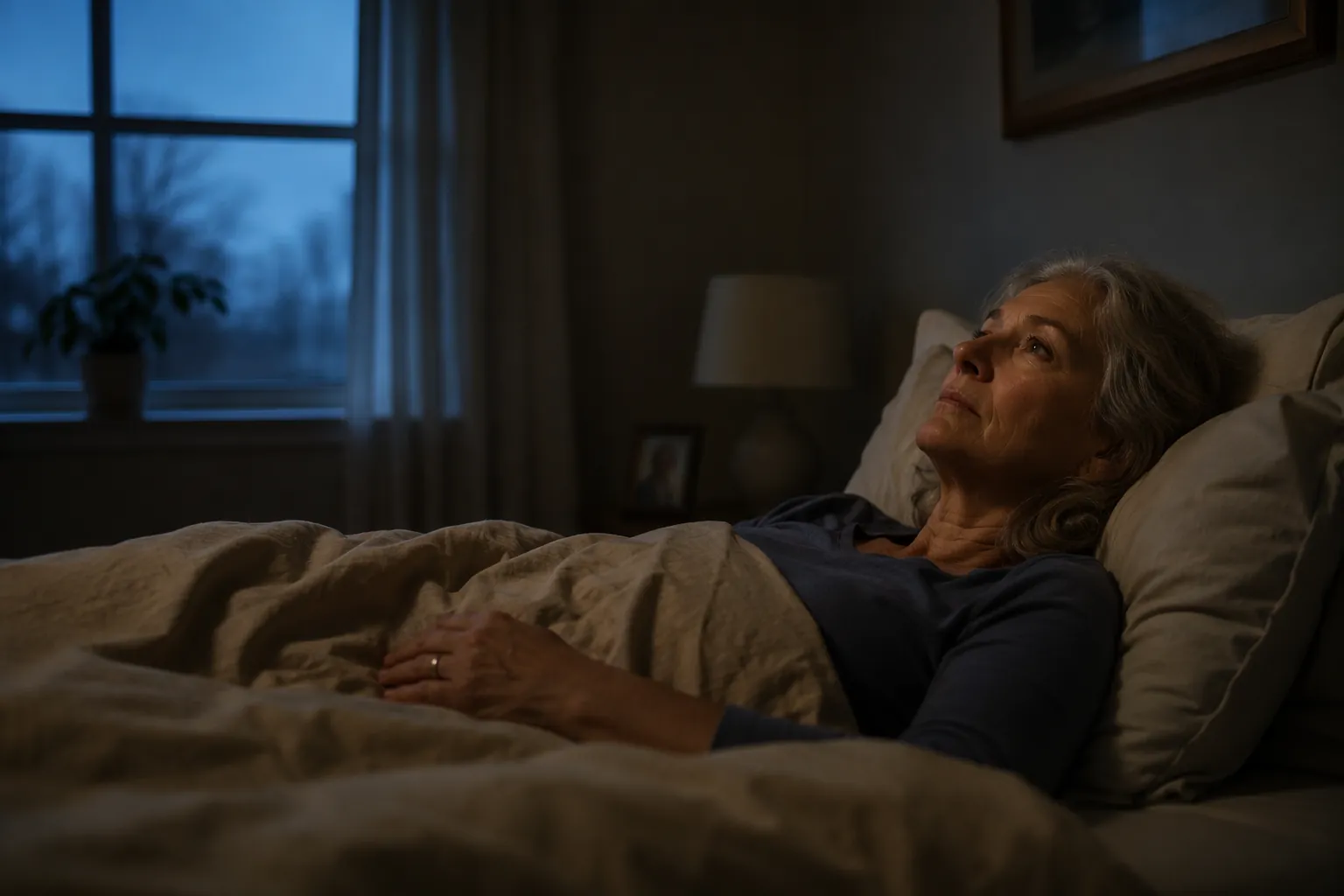
A woman can go to bed tired, fall asleep normally, wake drenched in heat, cool down, then discover that her mind and body are no longer interested in sleep. By morning, the story may be reduced to “insomnia.” But the night itself had stages: heat first, then fragile sleep continuity, then a body clock that may have already moved toward morning.
| Driver | What changes | What it may feel like |
|---|---|---|
| Hormone withdrawal | Estrogen and progesterone decline, affecting thermoregulation, GABA-related sleep support, and airway stability | Hot awakenings, night sweats, more abrupt arousals, new or worsening snoring or breathing disruption |
| Circadian phase advance | The internal clock shifts earlier, with age-related and menopause-related changes in melatonin signaling | Sleepiness earlier in the evening and waking around 5:30 or 6:00 AM with a sense that sleep is over |
| Slow-wave sleep loss | Deep sleep and homeostatic sleep pressure weaken with age | Lighter sleep, more awakenings, less resilience after one disruption |
Normal aging research does show broad sleep architecture changes in later life, including reduced total sleep time and slow-wave sleep. In women, total sleep time has been reported to decrease by about 10 minutes per decade, and sleep efficiency may continue a slow decline even after some other sleep parameters plateau around age 60.[1] That is real aging physiology. It still does not explain every soaked pillowcase or every sudden 4 AM awakening.
Hormone withdrawal changes the temperature rules
The most overlooked part of post-50 sleep is that the body’s temperature control can become less forgiving. Estrogen withdrawal is associated with a narrowed hypothalamic thermoregulatory zone, meaning a modest internal temperature shift can be treated by the brain as if it requires a full heat-dissipation response: vasodilation, sweating, and arousal from sleep.[1][2]
This is why “keep the room cool” can be both useful and inadequate. A cooler bedroom may reduce one trigger, but the underlying problem is not just a warm room. It is a narrower comfort zone. The body has less margin before it reacts. For some women, that means the first half of the night is stable and the second half becomes a series of heat spikes, sheet adjustments, and attempts to calm down after the body has already been jolted awake.
Heat-related waking also behaves differently from worry-related insomnia. A woman may not be lying there rehearsing tomorrow’s problems. She may wake because her body has mounted a thermoregulatory response, and only afterward does the mind arrive, irritated and fully conscious. That sequence matters because blaming the whole episode on stress misses the first event.
This is also where heat waves, bedding, alcohol, late meals, and a warm sleeping partner can become amplifiers rather than root causes. They do not have to create the vulnerability to make it worse. For a closer look at heat vulnerability during sleep, see who loses the most sleep during a heat streak.
Progesterone loss can reduce sleep continuity even without a hot flash
Hot flashes get the attention because they are dramatic. Progesterone decline is quieter, but it may matter just as much for women who say their sleep became thinner. Progesterone has sleep-promoting effects through GABA-related pathways, and its decline after the menopausal transition can remove part of the chemical support that helped sleep stay continuous.[1][3]
That helps explain a common mismatch: one woman has obvious night sweats; another says she is not especially hot but wakes repeatedly and cannot hold sleep the way she used to. Both may be living with hormone-related sleep disruption, but the outward signs differ. Treating the second woman as if she simply needs better discipline around bedtime is too crude.
Airway stability can also change
Estrogen and progesterone are also relevant to breathing during sleep. Clinical menopause guidance notes that hormone changes may affect upper airway patency, which is one reason sleep apnea can become more visible or more severe around and after menopause.[2] That does not mean every postmenopausal awakening is apnea. It means new snoring, gasping, witnessed pauses, morning headaches, or persistent daytime sleepiness deserve a different level of attention than ordinary light sleep.
This boundary is important enough not to bury. If the night includes breathing symptoms, the question is no longer only “Is this menopause?” It may be “Is this a primary sleep disorder appearing at the same life stage?” The difference is discussed more directly in Sleep Apnea or Perimenopause? How to Spot the Difference.
The body clock often moves earlier, whether your plans do or not
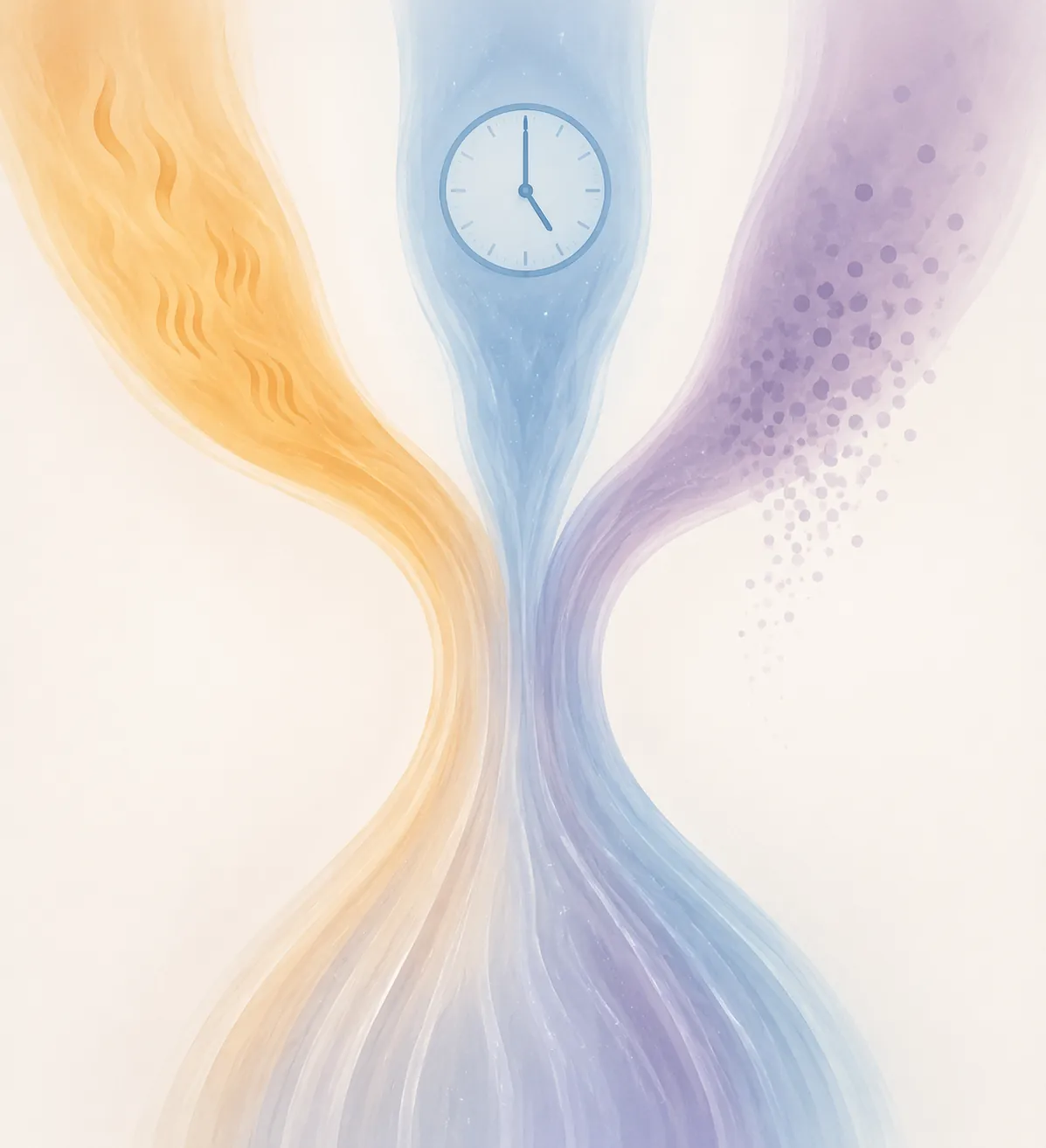
Early waking after 50 is often mistaken for insomnia, poor willpower, or a bedtime mistake. Sometimes it is. But aging is also associated with a circadian phase advance, meaning the biological night shifts earlier. Research reviews describe this phase advance at roughly one hour, alongside age-related weakening of circadian amplitude and declining melatonin secretion.[4]
That one hour is not trivial. If your younger body treated 11 PM to 7 AM as its sleep window, an older circadian system may begin acting more like 10 PM to 6 AM. For some women, 5:45 AM does not feel like a premature awakening. It feels biologically final. The eyes open, the mind switches on, and the body does not respond to negotiation.
This is different from waking early because anxiety has hijacked the last part of the night. It is also different from waking because a hot flash forced an arousal. Circadian early waking has a particular signature: sleepiness arrives earlier in the evening, morning alertness arrives earlier than desired, and sleeping later may remain difficult even after a reasonable bedtime.
Retirement can complicate this. Without work schedules, commuting light, or consistent morning obligations, some women get less bright outdoor light and less rhythmic pressure on the day. The clock may drift into a pattern that looks like “I am aging badly,” when part of the problem is weaker timing input. That does not make it imaginary. It makes the clock more sensitive to daily structure.
Deep sleep becomes harder to protect
The third driver is less dramatic than a night sweat and less obvious than waking at dawn: the gradual breakdown of sleep architecture. With aging, slow-wave sleep tends to decline, awakenings become more common, and the homeostatic pressure that helps a person stay asleep can weaken.[1][4]
This is why one disruption can now ruin a night. At 38, you might have woken to use the bathroom and dropped back into sleep without much memory of it. At 58 or 68, the same interruption may land in a lighter sleep system. The bladder event is real, but the reason you cannot return to sleep may involve reduced sleep depth and weaker sleep pressure.
The architecture change also helps explain why women can adapt to poor sleep until they stop naming it. In one finding cited in normal aging sleep research, 33% of healthy older women who reported no sleep complaints still had impaired objectively measured sleep.[1] That is not a reason to panic over every wearable graph. It is a reminder that “I guess this is just how I sleep now” can sometimes hide measurable impairment.
For readers interested in how repeated sleep disruption may intersect with broader aging biology, perimenopause sleep loss and biological age is the more appropriate next stop. The point here is narrower: lighter architecture makes the night less resilient.
Women’s decline may be sharper than men’s, but the evidence has limits
A global meta-analysis reported that 50.8% of menopausal women experienced poor sleep quality, with a 95% confidence interval of 45.4% to 56.3%.[5] That number is useful because it makes the problem harder to dismiss as a handful of unusually sensitive sleepers. Still, prevalence does not tell you which mechanism is driving one woman’s night.
Objective wearable data also point toward a sex-specific pattern. Reporting on SleepImage Ring data from 1,444 adults described a more rapid decline in sleep quality after age 50 in women, compared with a more gradual decline in men.[6] That finding fits what many women describe: the change does not feel like the same slow aging curve their husbands report.
But proportionality matters. A wearable-based sample is not the same as a large population sleep lab study, and it should not carry the whole argument. Its value is that it aligns with known mechanisms and lived patterns. It suggests that women’s post-50 sleep deserves sex-specific attention; it does not prove that every woman’s bad night has the same cause.
One night can contain more than one driver
The clean categories are useful only if they help interpret the messy night. Imagine a hypothetical evening: a woman has wine with dinner, feels sleepy by 9:30 PM, goes to bed at 10, wakes hot at 2:40, uses the bathroom at 3:10, then lies awake until 5:20, when she finally gives up. No single label explains that sequence well.
Alcohol may have reinforced heat and fragmentation; hormone withdrawal may have narrowed her thermoregulatory margin; lighter sleep architecture may have made the bathroom trip harder to recover from; and an advanced circadian clock may have treated the last hour as morning rather than salvageable sleep. The practical question is not “Which one is the only cause?” It is “Which driver is dominant enough to address first?”
This is where generic sleep hygiene becomes both familiar and insufficient. Regular wake times, morning light, cooler rooms, less evening alcohol, and attention to medications can help. But they are not moral tests. If alcohol reliably worsens hot awakenings, that is useful information; alcohol and perimenopause sleep goes deeper into that particular amplifier. If symptoms remain severe, the answer is not another round of vague advice.
What counts as aging, and what deserves a workup?
Some change after 50 is physiological. Lighter sleep, somewhat earlier waking, and less tolerance for heat can all fit the life-stage pattern. That does not mean they are harmless, and it certainly does not mean they should be waved away. It means the first job is sorting the pattern accurately.
- Heat-dominant pattern: awakenings start with warmth, sweating, flushing, or sheet removal, often followed by alertness.
- Circadian-dominant pattern: sleepiness comes earlier, morning waking feels final, and sleeping later remains difficult even after an adequate bedtime.
- Architecture-dominant pattern: many small interruptions become hard to recover from, and sleep feels shallow or easily broken.
- Disorder-suggestive pattern: loud snoring, gasping, witnessed breathing pauses, restless legs, major daytime sleepiness, severe mood changes, or safety risks appear alongside the sleep change.
Other factors can reinforce any of the three main drivers: depression, anxiety, nocturia, chronic pain, medication effects, caregiving stress, reduced daylight exposure, and the looser rhythms that sometimes arrive with retirement. These are not side notes. They can determine whether a manageable life-stage shift becomes a sustained sleep problem.
The clinical boundary is crossed sooner when sleep loss causes major daytime impairment, when breathing symptoms are present, when awakenings are accompanied by panic-like symptoms or severe mood changes, when pain or urinary symptoms dominate the night, or when a medication change lines up with the sleep change. At that point, the next step is assessment, not self-blame.
The first management decision is identification
The useful question is not whether your sleep is “just aging” or “just menopause.” Those phrases are too blunt. A better first decision is to identify the leading driver: heat and hormone-related arousal, circadian timing, lighter sleep architecture, or a possible primary sleep disorder.
If heat leads the night, the next conversation may center on vasomotor symptoms and thermoregulation. If the clock leads, light timing and schedule may matter more than simply going to bed earlier. If light sleep leads, the focus may be reducing avoidable interruptions and looking for pain, nocturia, alcohol, or medication contributors. If breathing symptoms or severe impairment lead, clinical evaluation comes before another supplement, gadget, or generic bedtime checklist.
References
- Sleep in Normal Aging, PMC
- How Does Menopause Affect My Sleep?, Johns Hopkins Medicine
- Insomnia in Postmenopausal Women, PMC, 2024
- Aging and Sleep: Physiology and Pathophysiology, PMC
- Global poor sleep prevalence in menopausal women meta-analysis, Jia, Zhou, Cao, 2024
- SleepImage Ring data reporting on sleep quality decline after age 50, Rheumatology Advisor / Sleep Wake Advisor
Explore the mechanism
Next step
Spot an error or have clinical feedback?
Because this article covers clinical, medication, or safety information, we use a moderated correction channel instead of open public comments. Let us know if something about “How Aging Changes Sleep for Women Over 50” needs a closer look.
Send feedback on this article