How to Sleep Better During a Full Moon
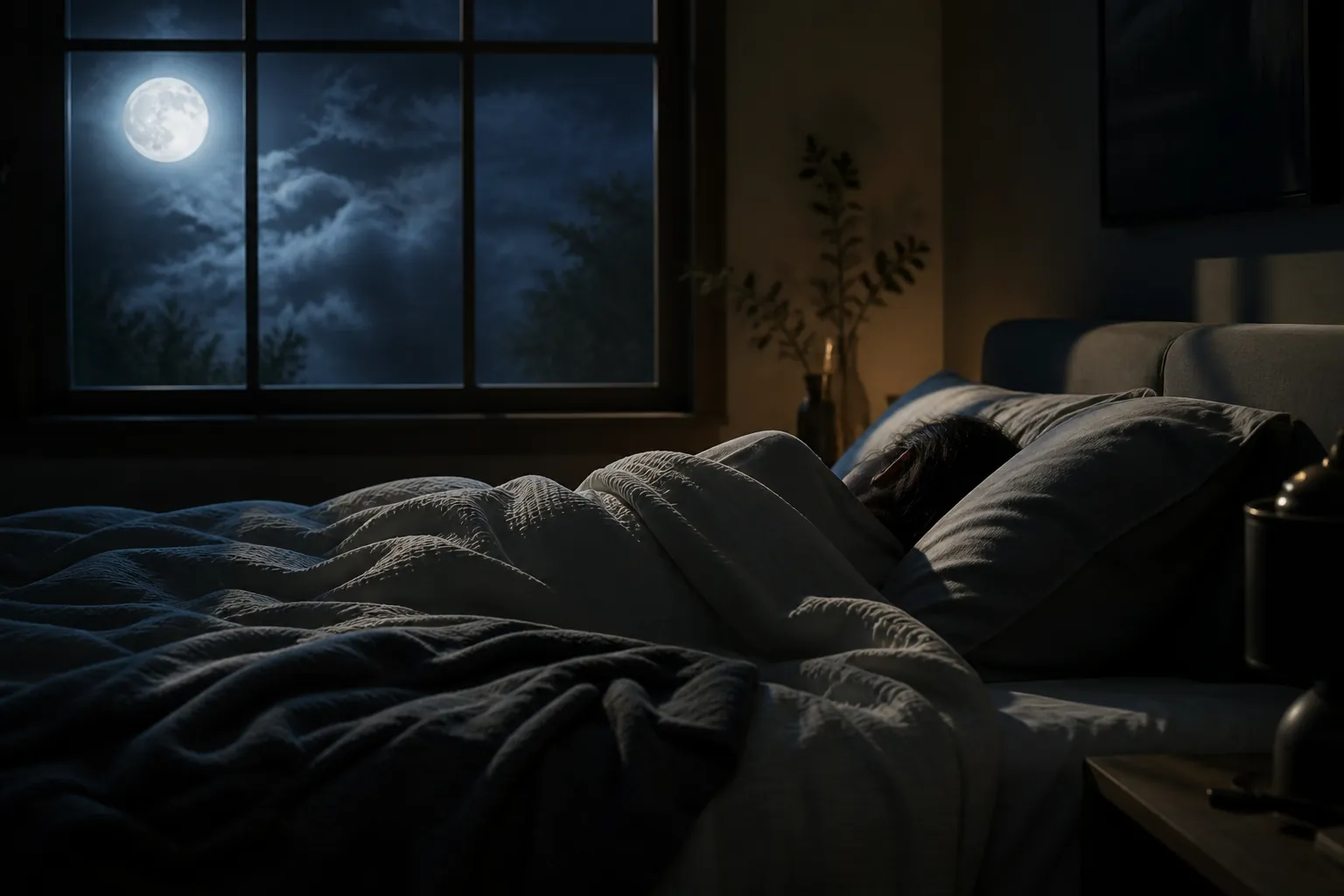
Yes, some people really do sleep worse around a full moon. The best evidence suggests the effect is usually modest: in one controlled lab study, people slept about 20 minutes less, took about 5 minutes longer to fall asleep, and had about 30% less deep sleep near the full moon compared with other lunar phases.[1] That is enough to make a tired person feel it the next day. It is not enough, by itself, to explain weeks or months of poor sleep.
So if you are searching for how to sleep better during a full moon, the useful starting point is not astrology, tides, or a dramatic new diagnosis. It is light. Moonlight can add enough brightness in the evening or bedroom to push sleep later, especially when the room is already only partly dark. The practical fix is to treat the full moon as a predictable light-management problem.
What the Full Moon Seems to Change
The 2013 Current Biology study is often cited because it measured sleep in a lab rather than asking people how they felt afterward. The researchers analyzed 33 participants who had not been told their sleep was being evaluated for lunar effects. Around the full moon, participants had shorter total sleep, took longer to fall asleep, and showed less NREM delta activity, a marker used for deep sleep.[1]
That matters because the complaint many people describe is not always “I was awake all night.” It is often “I slept, but it felt thin,” or “I was just off.” A reduction in deep sleep is a plausible way for a small change in the night to feel larger than it looks on paper.
There are limits. Thirty-three people is a small sample, and the study does not prove that every full moon will disturb every sleeper. It gives a scale: noticeable, measurable, and usually not huge.
The Most Plausible Reason Is Light, Not Gravity
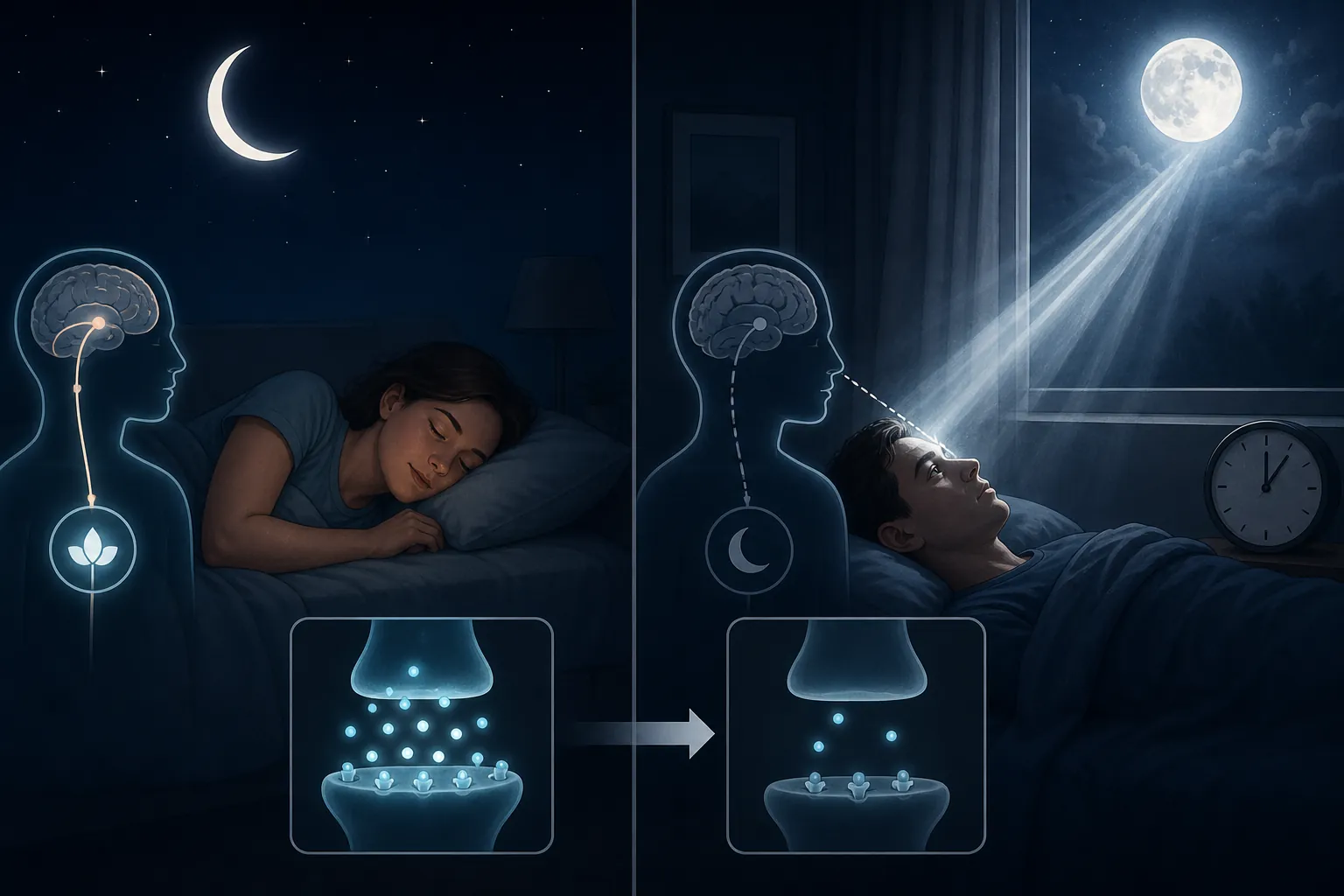
Sleep timing is sensitive to light in the evening. Light can suppress melatonin and shift circadian timing later, which makes it harder to feel sleepy at the usual hour. A neurologist review in The Conversation describes melatonin suppression as the most plausible biological explanation for full-moon sleep changes.[3]
A larger 2021 Science Advances study makes that explanation feel more grounded in ordinary life. Researchers studied sleep across Toba indigenous communities, a small town, and university students, with 464 people in all. Sleep onset shifted later in the 3 to 5 days before the full moon, by about 46 to 58 minutes, and the effect was strongest in communities without electric light.[2]
That pattern points toward evening moonlight as a real exposure. It also explains why modern sleepers may have mixed experiences. If your evenings already include bright overhead lights, bathroom lights, kitchen lights, and screens, moonlight may be only one small part of a much brighter environment. Cleveland Clinic makes this proportion check plainly: artificial light generally has a much larger effect on people than moonlight.[4]
What to Do on Full-Moon Nights
The most targeted changes are the ones that reduce light at the right time. You do not need a complicated full-moon ritual. You need a darker evening, a darker bedroom, and a wake time that does not drift because one night felt strange.
| Adjustment | Why it helps during a full moon |
|---|---|
| Close blackout curtains before the room gets bright | Reduces moonlight entering the bedroom during the hours when sleep pressure should be building |
| Use a comfortable sleep mask | Protects sleep when curtains leak light or when you cannot control the room |
| Dim indoor lights earlier than usual | Prevents household lighting from overwhelming the same melatonin pathway you are trying to protect |
| Keep bedtime and wake time steady | Limits the chance that one later night turns into several shifted nights |
| Avoid checking the moon repeatedly | Reduces monitoring and worry, which can become its own reason to stay awake |
Make the Bedroom Dark Enough That the Moon Stops Mattering
Blackout curtains are the cleanest answer when moonlight falls directly across the bed or ceiling. Hang them wide enough to cover side gaps, and check the room from the pillow, not from the doorway. A thin line of light near the curtain edge can land directly across your face once you are lying down.
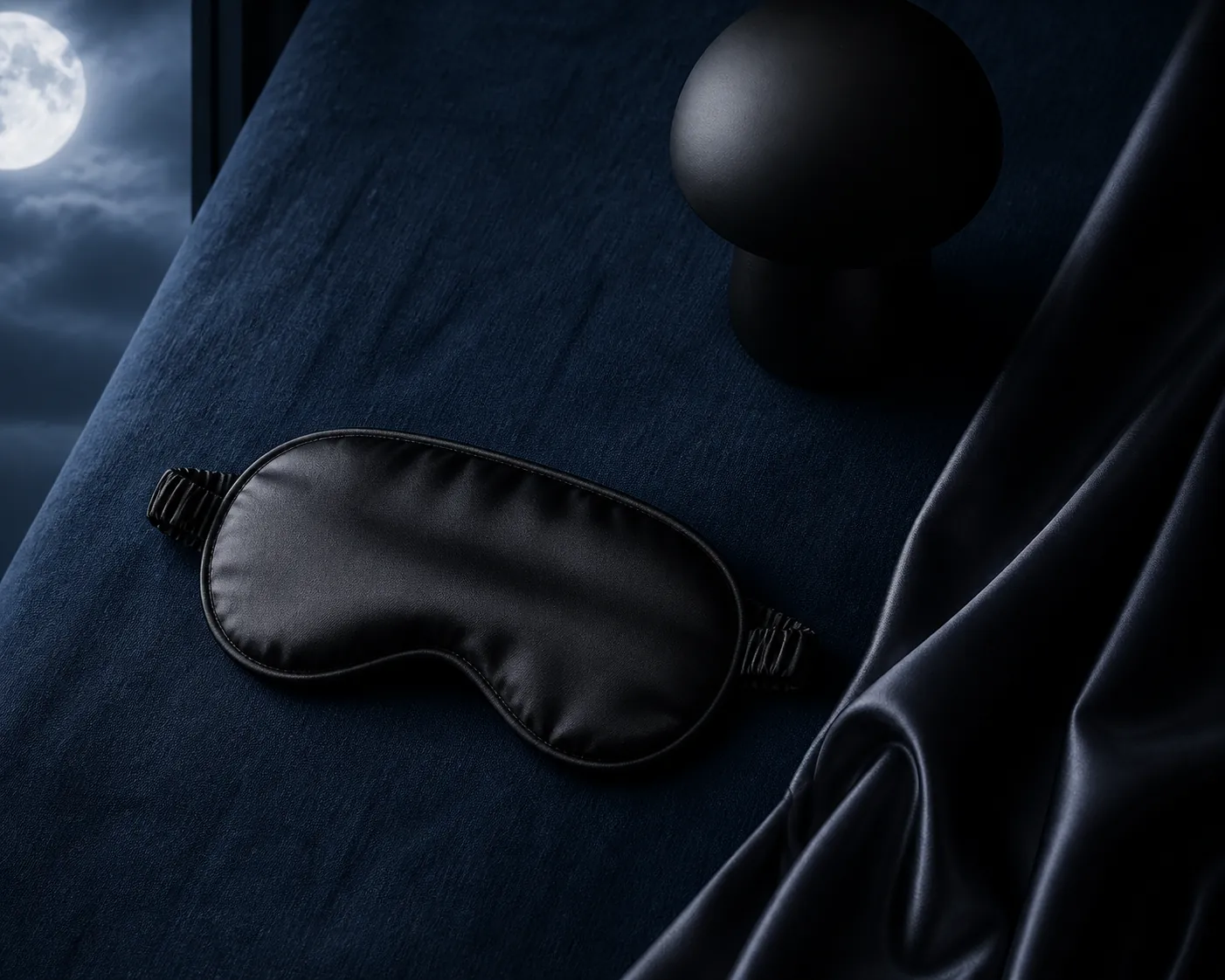
A sleep mask is the lower-effort option, and for many people it is enough. The mask needs to be comfortable enough that you do not notice it at 2 a.m.; otherwise it becomes another sleep interruption. Look for a shape that does not press on the eyelids and a strap that stays in place without needing to be tight.
Dim the House Before Bed, Not Just the Window
If the likely pathway is light-sensitive circadian timing, the bedroom is only part of the exposure. Bright indoor lighting in the hour or two before bed can be more important than the moon outside. On the nights leading into a full moon, lower overhead lights, use warmer lamps, and avoid turning the bathroom into a bright white box right before sleep.
Screens belong in the same category. The point is not to panic about every photon. It is to stop adding strong artificial light on top of a night when outdoor light may already be nudging your timing later.
Protect the Wake Time
After a lighter full-moon night, sleeping in can feel like the obvious repair. Sometimes a little extra rest is humane and necessary. But if your goal is to keep the next night stable, the wake time matters more than the perfect bedtime. A large shift in wake time can make you less sleepy the following evening, which turns one lunar-related night into a longer rhythm problem.
If you had a rough night, aim for a normal wake time or only a small delay, then get morning light soon after getting up. That morning light helps anchor the circadian clock in the opposite direction from late-evening brightness.
What Probably Will Not Solve a Full-Moon Sleep Problem
The evidence does not support treating full-moon sleep disruption as a gravitational or zodiac problem. The sleep studies that are most useful here point toward timing and light exposure, especially in the days before the full moon.[1][2]
Magnesium is also not a full-moon-specific fix. Some people use magnesium as part of a broader sleep routine, but there is no good evidence that it prevents lunar sleep disruption. If the suspected trigger is light, the first intervention should be darkness and schedule stability, not a supplement cabinet.
Moon tracking can be useful for a short time if it helps you see a pattern. It becomes less useful if it makes you dread a date on the calendar. A simple sleep diary for one or two lunar cycles is enough for most people: bedtime, wake time, major light exposure, caffeine or alcohol, night sweats if relevant, and how rested you felt in the morning.
Who Should Look Beyond the Moon
A full moon may be part of your pattern without being the main cause of your sleep trouble. If poor sleep shows up across the month, or if it comes with loud snoring, gasping, restless legs, panic at night, frequent hot flashes, medication changes, or daytime sleepiness that affects driving or work, it deserves a broader look.
It is also worth being careful with vulnerable-group claims. The studies cited here do not prove that perimenopausal people, older adults, adults with ADHD, or pregnant people have a larger lunar effect. If you already know perimenopause is part of your sleep picture, especially with night sweats or hormonal sleep disruption, it may be more useful to read guidance written for that situation, such as What the Buck Moon Means for Your Perimenopause Night Sweats or the 5-day Buck Moon sleep protocol for perimenopause. Those routes make more sense than assuming the moon is doing all the work.
A Practical Rule for the Next Full Moon
Start 3 to 5 days before the full moon, because the larger field study found later sleep onset in that window.[2] Close the curtains early, dim the house, keep screens and bathroom lights modest, and use a sleep mask if any light reaches your face. Keep your wake time close to normal the next morning.
If your sleep only gets slightly worse around the full moon, this is probably enough. If you are repeatedly losing sleep outside that window, treat the moon as one clue, not the explanation. A full moon may cost some people 15 to 30 minutes of sleep or make sleep feel lighter, but persistent insomnia needs a broader review of sleep timing, light exposure, stress, health changes, and the bedroom environment.
References
- Evidence that the Lunar Cycle Influences Human Sleep, Current Biology, 2013.
- Moonstruck sleep, Science Advances, 2021.
- Does the full moon make us sleepless? A neurologist explains the science behind sleep, mood and lunar myths, The Conversation, 2025.
- Does The Moon Affect Humans?, Cleveland Clinic, 2022.
Read the full guide: What to Do Tonight During a Full Moon for Better Sleep