What to Do Tonight During a Full Moon for Better Sleep
Start with the room, not the moon
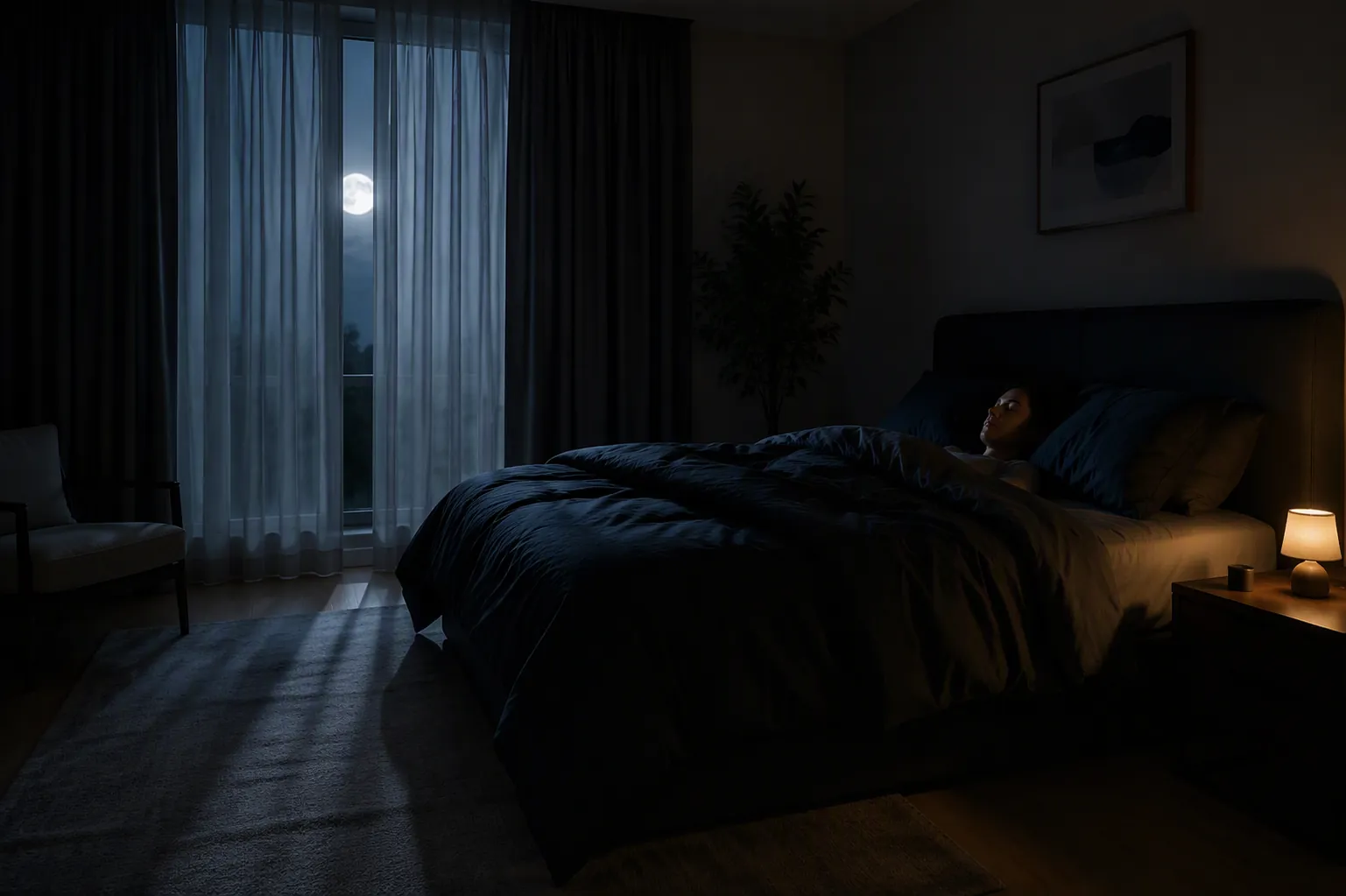
If you are wondering what to do tonight during a full moon to sleep better, the highest-yield move is simple: make the room darker than the moon can make it bright, then stop adding stronger artificial light on top of it. The goal is not to win an argument with the lunar cycle. It is to reduce the light signal your brain is receiving in the next 60 to 90 minutes.
Full-moon sleep effects are usually measured in minutes, not disasters. In a controlled Basel laboratory study of 33 adults, participants took about 5 minutes longer to fall asleep, slept about 20 minutes less, had roughly 30% less deep-sleep brain activity, and showed lower endogenous melatonin around the full moon.[1] Larger field work has found people going to bed later and sleeping less in the nights before a full moon, with delays that can reach about 25 minutes in some groups.[2]
That is enough to respect. It is not enough to let the clock become an emergency. Tonight’s protocol is meant to remove the most controllable signal first: light.
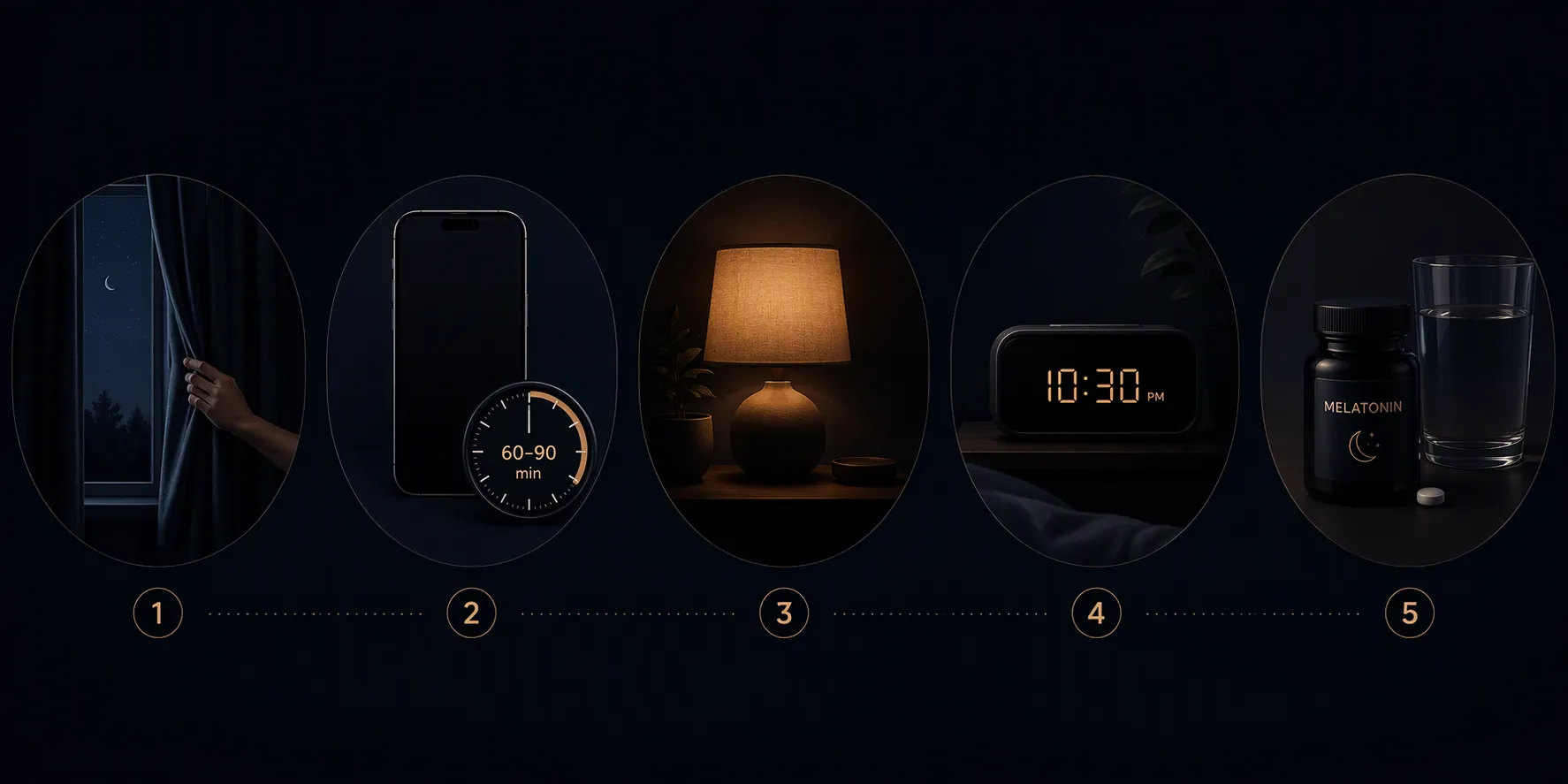
The 60- to 90-minute full-moon sleep protocol
Do these in order. If you are already in bed, start at the first step you can still do without fully waking yourself up.
| When | Action | Why it matters tonight |
|---|---|---|
| Now | Block moonlight completely | Reduces the lunar-specific light exposure most directly tied to melatonin timing |
| 60–90 minutes before bed | Put away bright screens or make them functionally dark | Prevents phone, tablet, and TV light from overwhelming the smaller moonlight effect |
| 1–2 hours before bed | Lower indoor ambient light | Helps the evening look like night to the circadian system |
| At your usual bedtime | Keep the bedtime anchored | Avoids turning a modest delay into a later-night pattern |
| 30–60 minutes before bed, only if appropriate | Consider low-dose melatonin only if you already tolerate it | May help circadian timing, but it has not been specifically tested as a full-moon antidote |
1. Make the bedroom fully dark
This is the part worth doing carefully. Close blackout curtains if you have them. If you do not, layer what you have: pull the curtains tight, close blinds behind them, clip gaps with clothespins or binder clips, and cover the strip of light at the side of the window with a towel or extra fabric. If the moon is landing directly on your pillow or across the floor, rearrange the exposure before you get into bed.
A fitted sleep mask is not a small detail here; it is a direct intervention. Choose one that seals around the nose and cheekbones without pressing on your eyes. A loose satin mask that lets light leak upward may feel pleasant, but it does not solve the main problem.
Harvard Health’s practical guidance on moonlight and sleep points in the same direction: reduce nighttime light exposure and keep the sleeping environment dark when lunar brightness may be shifting sleep timing.[3] The mechanism is not exotic. Light at night can delay melatonin timing, and the Basel study’s lower melatonin finding is the reason room darkening deserves more attention than full-moon folklore.[1]
- Cover or turn away LED indicators on chargers, humidifiers, alarm clocks, and air purifiers.
- Keep the bathroom light off for overnight trips; use the dimmest warm night light that lets you move safely.
- If a child, partner, or pet needs the door cracked, block the direct line of light from the hallway rather than debating the door.
- If you wake and notice moonlight, fix the light leak once, then return to bed without checking the time.
2. Stop adding brighter light than the moon
Moonlight can matter, but a phone in bed is usually a louder circadian signal. Joanna Fong-Isariyawongse, a sleep neurologist writing in The Conversation, puts it plainly: “screen-time habits are far more likely to have detrimental effects on sleep than a full moon.”[4]
That sentence is useful because it prevents a common mistake: blaming the moon while scrolling under it. If you are checking lunar charts, weather, messages, or sleep scores at 10:45 p.m., the phone may now be doing more work than the sky.
For the next 60 to 90 minutes, use the strict version rather than the perfect version:
- Put the phone outside arm’s reach, face down, with notifications off.
- If you need an alarm, set it once before the wind-down starts.
- If you must use a screen, lower brightness fully, use night mode, and keep the session task-based and short.
- Do not use a sleep tracker score, moon-phase app, or search results to decide whether the night is already ruined.
Television deserves the same caution. It may feel passive, but a bright screen across the room still tells the brain that the evening is not yet dark. If you need sound, choose audio without a lit display.
3. Make the rest of the evening look dim
After the window and screens, look at the room you are sitting in. Overhead lights are often the forgotten exposure. Switch from ceiling lights to one or two low, warm lamps. If the kitchen or bathroom is bright, finish those tasks early and stop walking back into fully lit rooms.
This does not need to become theatrical. You are trying to give the brain a consistent message: the day is ending. Dim light, ordinary quiet, and a dark bedroom are enough for most people. The more complicated the ritual becomes, the easier it is to start monitoring whether it is working.
4. Keep bedtime anchored, even if sleep feels a little delayed
The field studies are especially useful here because they show timing shifts, not an all-night catastrophe. In the Science Advances study, sleep onset was latest and sleep duration shortest in the 3 to 5 days before the full moon, with people going to bed later and sleeping less under field conditions.[2] A University of Washington summary of that work described the same pattern: on nights before a full moon, people went to bed later and slept less.[5]
So if tonight is the exact full moon, you may already be slightly past the peak window reported in that study. If you are in the few nights before it, a modest delay is plausible. In either case, moving bedtime much later is usually the wrong repair. It can teach your body that the full moon is also a schedule change.
Keep the usual bedtime as the anchor. If you are not sleepy at that time, make the room dark and quiet anyway. Resting in the dark is not the same as losing the night; it is how you avoid adding another hour of bright input and clock-watching.
If you are already awake in bed
Do not keep testing whether sleep has arrived. If you feel alert and frustrated, leave the bed briefly only if you can keep the lights very dim. Sit somewhere boring. No phone. No bright kitchen. No moon inspection at the window. Return when your body feels less activated.
5. Treat melatonin as optional, not the main plan
Melatonin belongs late in this protocol because the most direct same-night move is environmental. The Basel study found lower endogenous melatonin around the full moon, which makes melatonin biologically relevant to the discussion.[1] But that is different from saying a supplement has been proven to cancel full-moon sleep disruption. The 0.5 to 1 mg range is a low-dose circadian-timing approach used in general sleep practice; it has not been directly tested as a full-moon-specific treatment.[6]
If you already use melatonin safely and know how you respond, a low dose 30 to 60 minutes before bed may be reasonable tonight. If you have never taken it, tonight is not the best night to experiment, especially if you are already anxious about sleeping.
- Avoid melatonin during pregnancy unless your clinician has specifically advised it.
- Ask a clinician or pharmacist first if you take sedatives, seizure medications, blood thinners, immune-suppressing medications, or other drugs that may interact.
- Do not combine melatonin with alcohol as a sleep strategy.
- Do not take more because the moon is full; more is not automatically more circadian.
Do not let the explanation become another stimulant
There is a useful middle ground between dismissal and panic. Controlled and field studies support a lunar sleep effect, but the effect is variable and usually modest. The original lab study was small, with 33 participants, even though its findings were statistically significant and later field work supported a similar timing pattern.[1][2]
Individual differences also matter. One Uppsala study reported sex-related differences, with women showing slightly less deep and restful sleep around the full moon and men losing more sleep during the waxing phase, but the authors cautioned against firm conclusions about mechanisms.[7] Interesting, yes. Not something that changes what you do tonight.
Other factors may be doing more than the moon: heat, perimenopause, pregnancy, ADHD, medication timing, pain, alcohol, late caffeine, or ordinary evening screen habits. If one of those is loud tonight, treat it directly rather than making the moon carry the whole explanation.
Perimenopausal readers who notice a stronger pattern around lunar brightness may want the more specific guide to full moon sleep during perimenopause. If tonight’s problem is partly a hot room, use the practical guide to sleeping during a heat wave. If thunder or weather anxiety is keeping your body on alert, the thunderstorm anxiety sleep tips will be more useful than another article about moon phase.
What to expect tonight
A good result tonight may be quiet and unremarkable: you fall asleep a little closer to normal, wake less irritated by the light, or stop checking whether the full moon is “working” on you. The target is not perfect sleep. It is fewer extra minutes awake, less light in the room, and less bargaining with the clock.
If you want the broader evidence before or after tonight, read the general FAQ on whether the full moon affects sleep. If you came to this through an astrology lens, the Aquarius full moon sleep article can sit alongside this protocol. For tonight, keep the aim smaller: dark bedroom, dim evening, steady bedtime. If sleep still takes longer, that does not mean the night is lost.
References
- Evidence that the lunar cycle influences human sleep, Current Biology, 2013
- Moonstruck sleep: Synchronization of human sleep with the moon cycle under field conditions, Science Advances, 2021
- Moonlight may affect sleep cycles, Harvard Health
- Does the full moon make us sleepless? A neurologist explains, The Conversation, 2024
- On nights before a full moon, people go to bed later and sleep less, University of Washington, 2021
- Do Moon Phases Affect Your Sleep?, Sleep Foundation
- Sex-specific association of the lunar cycle with sleep, Science of the Total Environment, 2021
Read the full guide: Can't Sleep After a Storm? Here's What to Do Tonight