
Is It Shift Work Disorder or Just Shift Work Fatigue? A Diagnostic FAQ
What’s the Difference Between Normal Shift Work Fatigue and Shift Work Disorder?
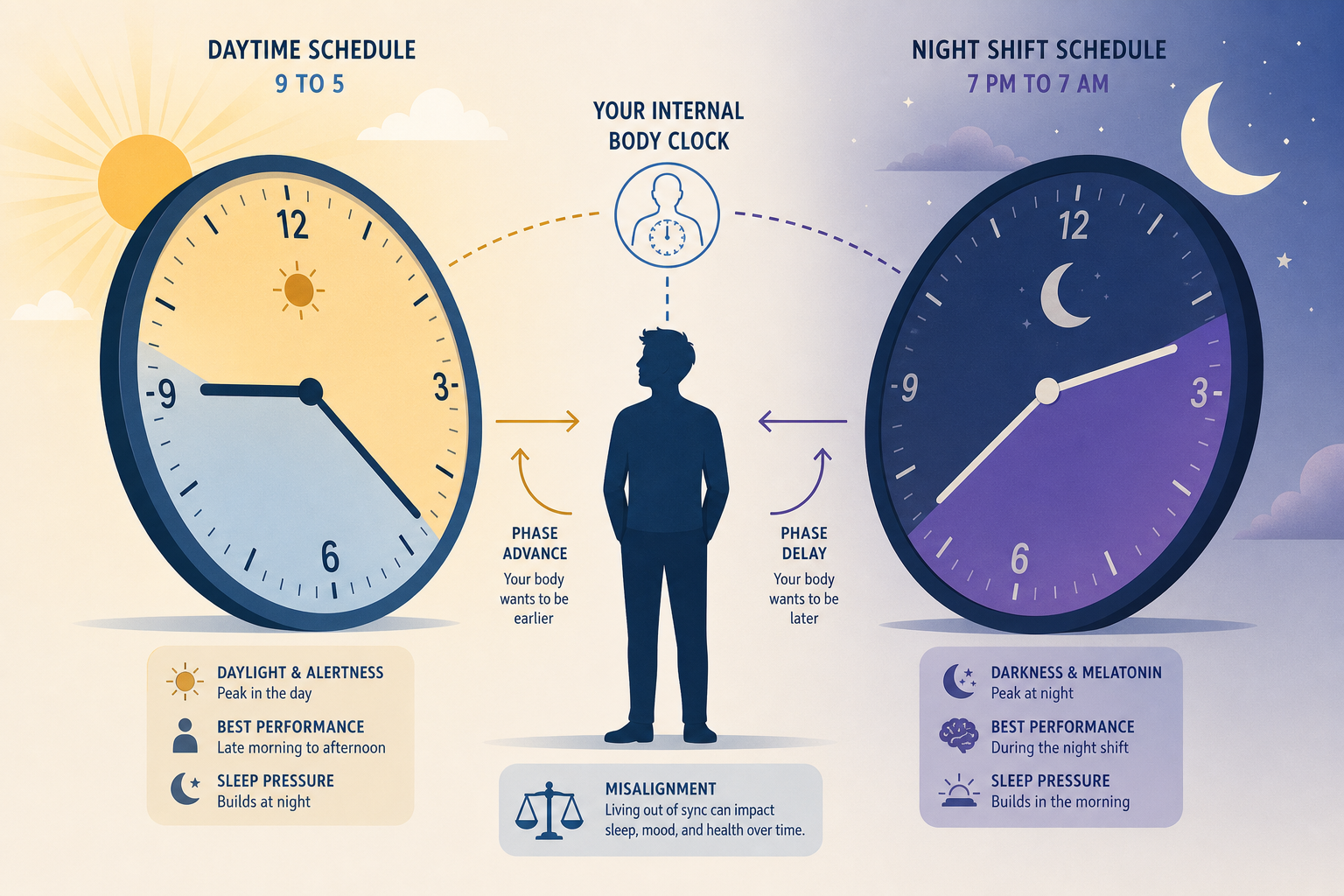
If you work nights, early mornings, or rotating shifts, you’ve probably experienced that bone-deep tiredness that seems impossible to shake. That alone doesn’t mean you have a clinical disorder. Shift work disorder (SWD) is a circadian rhythm sleep disorder, not a synonym for being tired after a shift. According to a meta-analysis of 29 studies published in Frontiers in Psychology, the overall prevalence of SWD among shift workers is 26.5% (95% CI: 21.0–32.8). However, the Cleveland Clinic reports that only 10–40% of shift workers actually meet the full diagnostic criteria. The wide gap exists because many shift workers experience temporary fatigue, but SWD requires persistent, clinically significant symptoms. The core of SWD is a chronic mismatch between your internal body clock and your work schedule—a concept sleep scientists call circadian misalignment. To understand the biology behind this, read our deep dive on circadian rhythm mechanisms.
How Long Must Symptoms Last to Be Considered Shift Work Disorder?
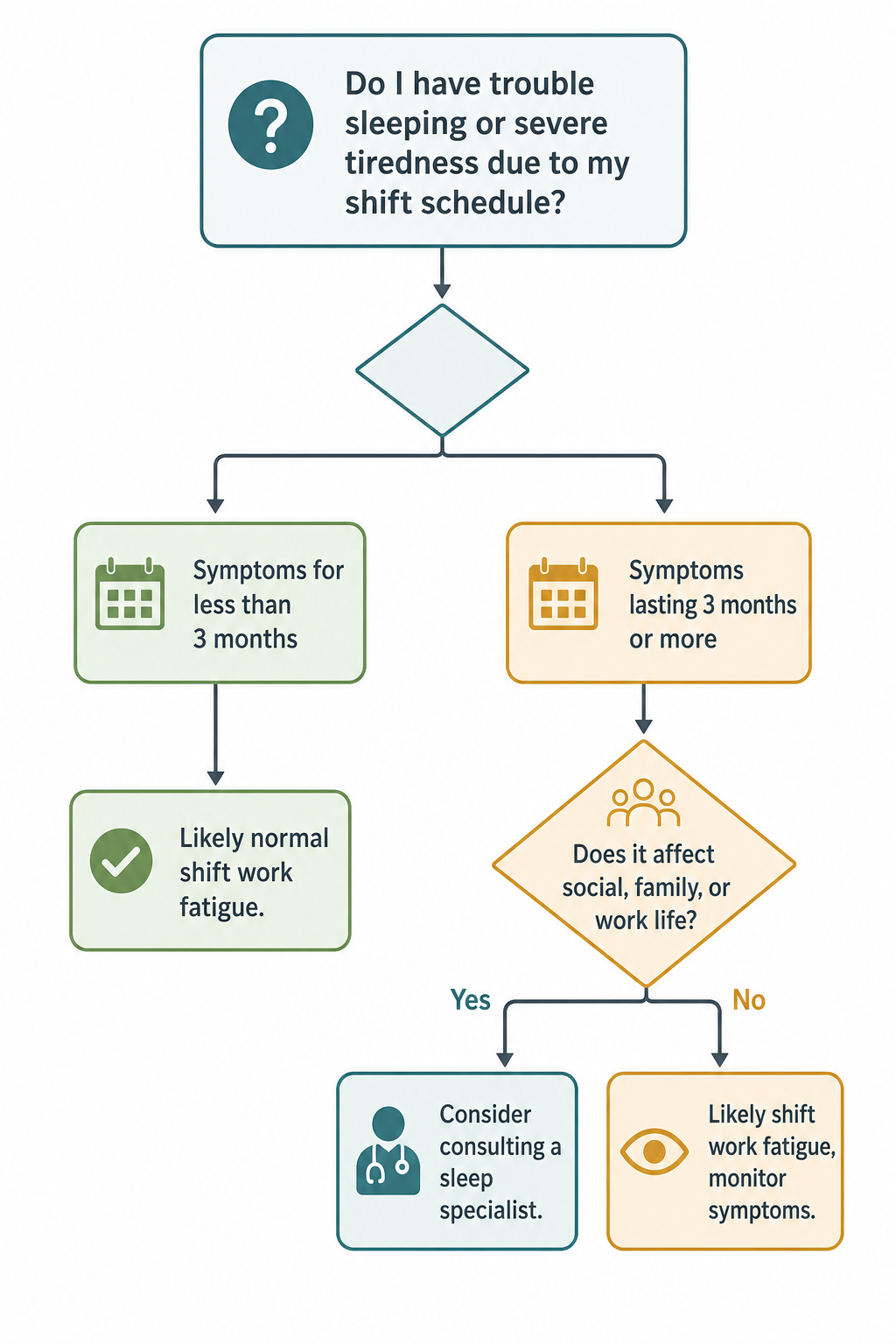
The International Classification of Sleep Disorders, third edition (ICSD-3), requires that symptoms be present for at least three months before a diagnosis of SWD can be made. This is a change from the earlier edition (ICSD-2), which only required one month of symptoms. The stricter threshold was introduced to reduce overdiagnosis and to separate transient adjustment to a new schedule from a chronic disorder. The meta-analysis confirmed that this change matters: studies using ICSD-3 criteria reported a significantly lower prevalence compared to those using ICSD-2 (b = −0.914, p = 0.027).
What Self-Screening Questions Can Help Me Decide?
The American Academy of Sleep Medicine (AASM) provides four self-screening questions. Answer them honestly:
- Do you have a schedule that requires you to work when you would normally sleep?
- Do you have trouble sleeping or are you severely tired because of your work schedule?
- Have you had this work-related sleep problem for at least one month?
- Does this problem hurt your social, family, or work life?
Answering yes to all four questions suggests that you may have shift work disorder and should consider formal evaluation. Note that the self-screening uses a one-month threshold as a prompt, but the clinical diagnosis still requires three months of symptoms.
How Is Shift Work Disorder Formally Diagnosed?
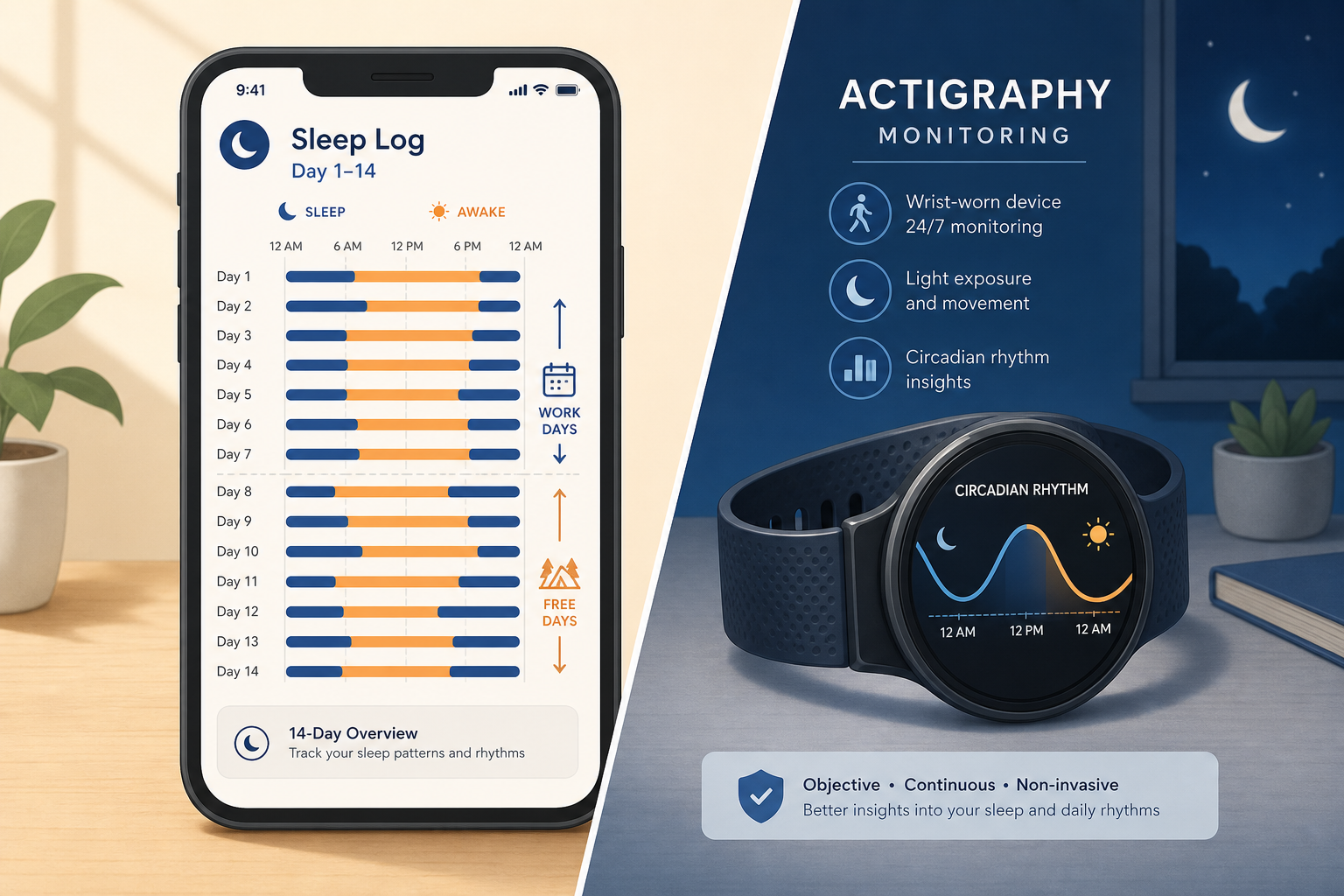
The gold standard for diagnosing SWD involves a thorough clinical history and the use of a sleep log or actigraphy for at least 14 days, covering both work days and free days. A sleep log (or sleep diary) documents when you go to bed, when you wake up, how many times you wake during the night, how rested you feel, and factors like caffeine or alcohol use. Actigraphy uses a wrist-worn device to track movement patterns, providing objective data on sleep-wake cycles. A sleep specialist uses this information to confirm that your sleep pattern is misaligned with your work schedule and that the problem cannot be explained by another sleep disorder or medical condition.
- Bedtime and wake time
- Number and duration of night awakenings
- Subjective restfulness rating
- Caffeine, alcohol, and medication use
- Work shift times and days off
What Is the ICD-10 Code for Shift Work Disorder?
The billable ICD-10-CM code for shift work disorder is G47.26: 'Circadian rhythm sleep disorder, shift work type.' This code has been active since 2016 and is current for the 2026 edition (effective October 1, 2025). The official clinical description states: 'A subtype of circadian rhythm sleep disorder in which the individual exhibits a normal endogenous pattern of sleep and wakefulness, but this pattern comes into conflict with the desired pattern of sleep and wakefulness required by shift work.'
Do I Need a Sleep Study for Diagnosis?
Polysomnography (an overnight sleep study) is not routinely required for diagnosing shift work disorder. The diagnosis rests primarily on the clinical interview and sleep log/actigraphy data. A sleep study may be ordered if your doctor suspects another sleep disorder such as obstructive sleep apnea, narcolepsy, or periodic limb movement disorder—conditions that can produce similar symptoms but require different treatment.
- Loud snoring or observed breathing pauses
- Uncontrollable sleep attacks during the day
- Leg movements or kicking during sleep
- Symptoms not explained by shift schedule mismatch
How Does My Chronotype Affect My Risk?
Your natural tendency toward morningness or eveningness—your chronotype—plays a significant role in how well you tolerate shift work. According to UCLA Health, night-shift workers are three times more likely to develop a shift-related sleep disorder than day workers. Morning chronotypes (early birds) tend to struggle more with night shifts because their internal clock fights the daytime sleep window. Evening chronotypes may adapt more easily to late shifts but often have greater difficulty with early morning shifts. Age also matters: older shift workers and those with more cumulative years on rotating schedules face higher risk.
- Night shift work (3× higher risk)
- Morning chronotype
- Older age
- Multiple years of shift work
- Rotating shifts (frequent schedule changes)
When Should I See a Doctor?
If you’re still unsure whether your experience qualifies as shift work disorder, our comprehensive guide, Shift Work Disorder: Symptoms, Causes, and Treatment, provides a full overview of the condition, including management strategies. That article covers the broader picture—this FAQ focuses on getting you to the right diagnostic starting point.
Read the full guide: When It's Safe to Sleep Through a Severe Thunderstorm