
How to Sleep During a Flood Watch While Staying Safe
The hard part of trying to sleep during a flood watch is not usually the rain. It is the thought that if you close your eyes, you might miss the one update that matters. That fear deserves a practical answer before it gets a relaxation exercise.
Start with the wording of the alert. The National Weather Service uses a flood watch to mean “Be Prepared”: flooding is possible, but it is not yet the same as a flood warning, which means “Take Action.”[1] That distinction is not a technicality. It tells you what tonight’s job is. During a watch, your job is to prepare the household and make sure escalation will wake you. It is not to personally monitor the sky every few minutes until morning.
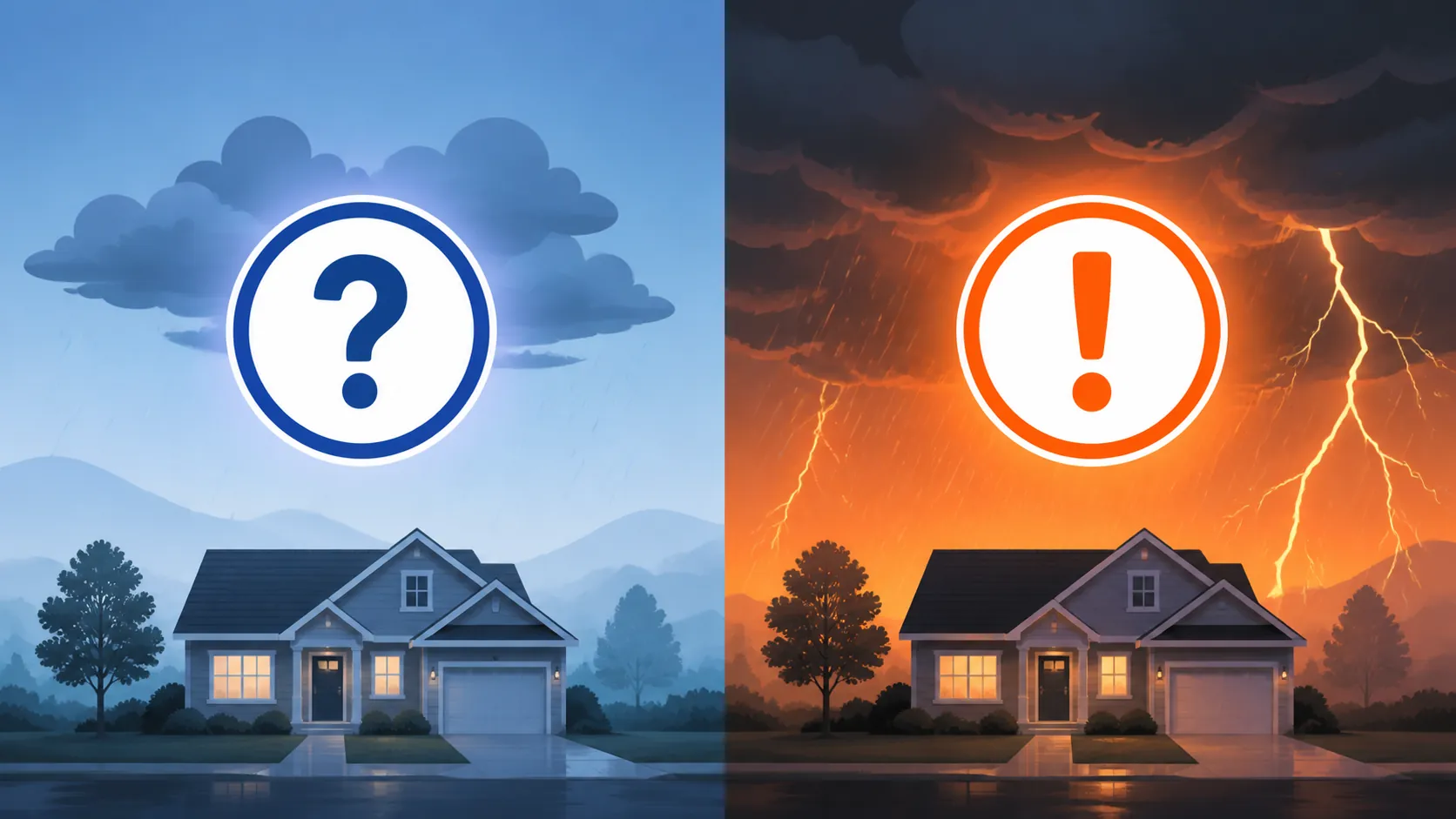
A Flood Watch Means Prepare, Not Stay Awake
| Alert wording | What it means for tonight | What sleep-compatible safety looks like |
|---|---|---|
| Flood watch | Flooding is possible. Conditions are favorable enough that you should be prepared.[1] | Set alerts, decide what would make you act, prepare essentials, then stop active monitoring. |
| Flood warning | Flooding is occurring or imminent, and protective action may be needed.[1] | Wake, check the specific warning, and follow your pre-decided action plan. |
This is where flood watch sleep disruption usually starts: the body treats “possible” as “already happening.” If you have lived through a previous flood, a basement filling with water, a late-night evacuation, or even a frightening near miss, your nervous system may not wait for the official upgrade. UAB’s storm-anxiety guidance explains that emergency alerts can activate the brain’s salience network, which helps detect and prioritize possible threats, and that past storm trauma can condition the amygdala to stay unusually sensitive during later weather events.[2]
That does not mean the alert is harmless. It means the alert has to be handled in the right order. First make the safety plan credible. Then ask the body to stand down.
The Pre-Sleep Flood Watch Protocol
Do these steps once, deliberately, before bed. The point is to move the monitoring job out of your nervous system and into systems that can actually alert you if the situation changes.
- Confirm the alert type and location. Read the alert wording, not just the notification headline. Make sure it is a flood watch for your area, not a warning, flash flood warning, evacuation notice, or road closure notice.
- Decide your action threshold before lying down. Write or say the trigger clearly: “If this becomes a flood warning for my area,” “If water reaches the driveway,” or “If officials issue an evacuation order.” The threshold should be concrete enough that you do not have to debate it at 2 a.m.
- Set redundant alerts. Use at least two channels if you have them: a NOAA weather radio and phone emergency alerts. Do not rely on a social media feed as your main alert system.
- Put the phone on Do Not Disturb only if emergency alerts can still break through. Check the settings rather than assuming. The goal is to block ordinary noise, not the warning you actually need.
- Prepare the first-motion items. Put shoes, glasses, keys, medications, flashlight, charger, water, and any necessary documents or pet supplies where you can reach them without searching.
- Name the safe place or route. Know whether your next move is an upper floor, a higher place in the building, a neighbor’s place, a higher route, or following official evacuation instructions. Avoid planning any route that crosses moving water.
- Stop active monitoring. Once alerts and essentials are set, do not keep refreshing radar unless a warning arrives or conditions around you visibly change.
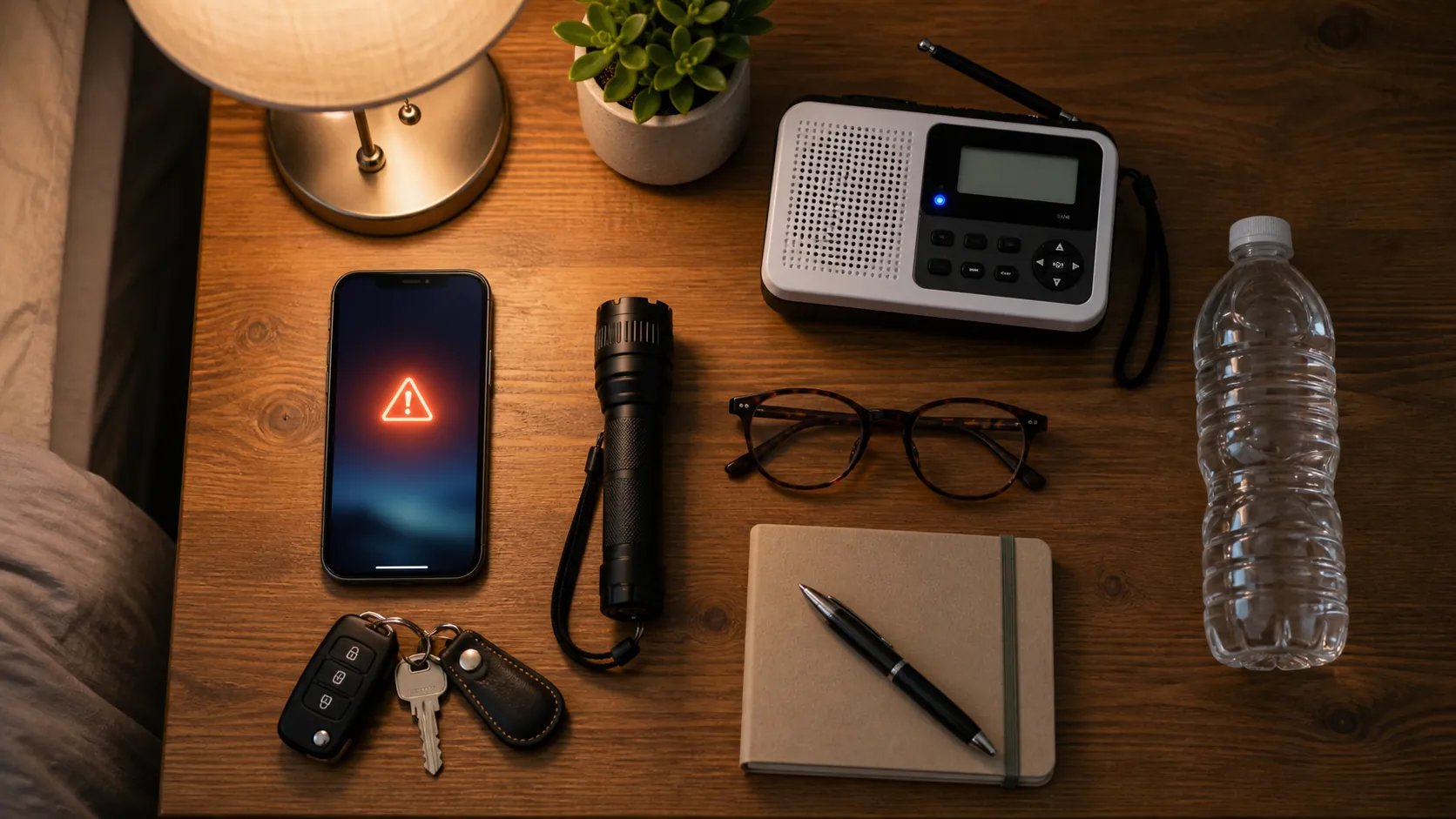
The “stop active monitoring” step is the one most people skip, and it is also the step that makes sleep possible. If the phone, radio, and plan are already assigned their jobs, refreshing radar becomes a way of feeding uncertainty rather than reducing it. You are not becoming safer with each check if no new action follows from the check.
Practical preparation is also a legitimate anxiety intervention. CoxHealth’s storm-anxiety guidance points to concrete preparation steps such as having supplies ready, identifying a safe place, and making a communication plan.[3] For a flood watch at bedtime, those steps matter because they reduce the number of decisions left for a half-awake brain.
Why Your Body Still Feels on Duty
Even after the setup is complete, your body may keep acting as if it has been appointed night watch. That reaction can feel irrational, but it has a recognizable mechanism. Emergency alerts and alarming news notifications can disrupt interoceptive signaling, making it harder to separate a real external emergency from the body’s internal stress response.[4] A racing heart, tight chest, or sudden heat can then become “evidence” that something must be wrong outside.
A modest survey often cited in weather-anxiety discussions found that about 1 in 8 respondents reported weather-related anxiety severe enough to disrupt sleep.[5] That finding should not be treated as a national diagnosis rate; the sample was about 300 people across 43 states.[5] It does, however, make one thing clear enough for tonight: you are not the only person whose sleep gets tangled in weather alerts.
Some nights are also harder because of the body you are trying to sleep in. Pregnancy, perimenopause, ADHD, chronic pain, caregiving responsibilities, mobility limits, and trauma-related insomnia can all make “just go to bed after preparing” a much bigger ask. If you are pregnant and a weather alert is compounding sleep or medication-safety concerns, this related guide on pregnancy-specific sleep considerations during extreme heat may be a useful parallel. If weather emergencies in general keep disrupting your nights, the guide on how to sleep safely during 110-degree heat covers another version of the same problem: staying ready without staying awake.
After the Plan Is Set, Help the Body Stand Down
Grounding techniques belong here, after the alerts and safety plan are in place. Used earlier, they can feel like someone is asking you to breathe through a missing smoke alarm. Used now, they give the body a clear message: the monitoring system is active, the next step is defined, and it is safe enough to attempt sleep during the watch.
Use 4-4-6 breathing
Breathe in through your nose for a count of 4, hold gently for a count of 4, then exhale for a count of 6. Repeat for several rounds. Keep the exhale easy rather than forced. The longer exhale is the useful part; it gives your body a slower rhythm to follow when alert adrenaline is trying to keep everything sharp.
Use the 5-4-3-2-1 sensory method
Name 5 things you can see, 4 things you can feel, 3 things you can hear, 2 things you can smell, and 1 thing you can taste. Nashville Psych describes this kind of grounding as a way to shift attention away from spiraling storm anxiety and back toward the present environment.[6] During a flood watch, keep the exercise plain and physical: blanket weight, pillow edge, floor under your feet, the hum of the fan, the cool side of the pillow.
If a sound outside interrupts you, do not restart the whole safety debate. Ask only one question: “Has my action threshold been met?” If the answer is no and your alert systems are still on, return to the breathing pattern or sensory list. If the answer is yes, get up and follow the plan.
When Resting Is No Longer the Goal
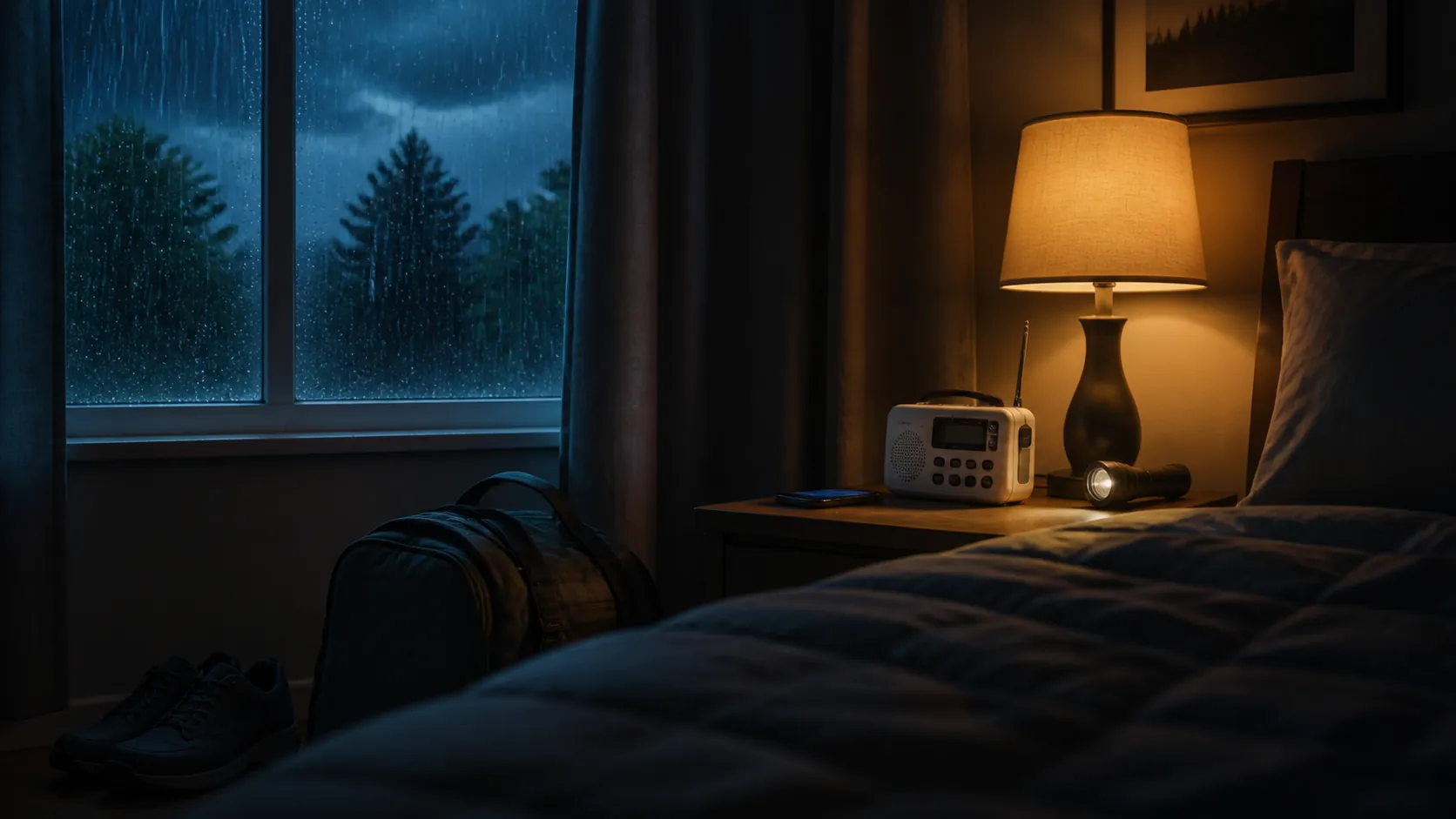
There are nights when trying to sleep is no longer the right target. If the alert becomes a flood warning for your exact area, if local officials issue evacuation instructions, if water is rising near your home, if you hear or see conditions that match your action threshold, or if someone in the household needs help moving, wake fully and act. Wellness advice should not dilute emergency instructions.
There is also a clinical boundary. If weather alerts repeatedly cause severe insomnia, panic, nightmares, avoidance, or trauma symptoms, the answer is not simply a better bedside checklist. Sleep Foundation notes that anxiety and sleep problems commonly reinforce each other, and that CBT-I and trauma-focused treatment can be appropriate when insomnia is persistent or trauma-related; it also reports that over 90% of people with trauma-related PTSD experience insomnia symptoms.[7]
During a flood watch, the safest sleeper is not the person who stays half-awake refreshing updates. It is the person who has made escalation unmistakable and action easy if a warning arrives.
References
- Flood Watch vs. Warning, National Weather Service, https://www.weather.gov/safety/flood-watch-warning
- Understanding storm anxiety, UAB News, https://www.uab.edu/news/
- Storm Anxiety, CoxHealth, https://www.coxhealth.com/
- Emergency alerts and news notifications, The Conversation, https://theconversation.com/
- Ball State study examines weather anxiety, Ball State University, 2014, https://www.bsu.edu/
- Finding Calm in the Storm, Nashville Psych, https://www.nashvillepsych.com/
- Anxiety and Sleep, Sleep Foundation, https://www.sleepfoundation.org/mental-health/anxiety-and-sleep
Read the full guide: How to Watch a Blood Moon Without Ruining Your Sleep