How to Sleep Safely During Hurricane Prep
If you need hurricane prep sleep safety tips tonight, start with the non-negotiables: sleep in an interior room on the lowest floor, away from windows and exterior walls; keep every generator or fuel-burning device outside and far from the house; and make a power plan for CPAP, oxygen, medication refrigeration, or any other equipment someone depends on while sleeping.
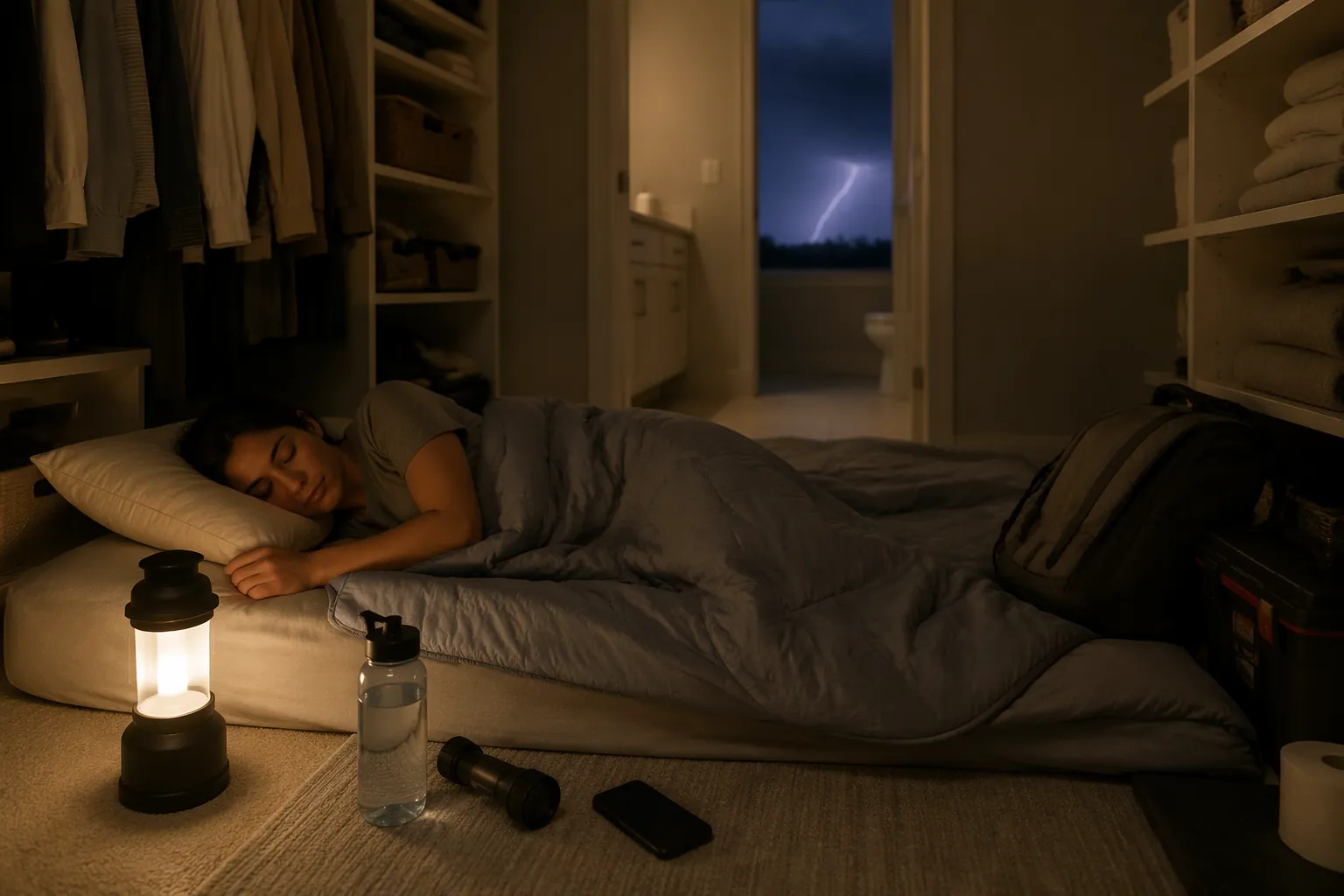
The safest hurricane sleep setup is usually not a bedroom. A windowless bathroom, walk-in closet, interior hallway, or small room near the center of the home is often better than a comfortable bed beside glass. Bring the mattress, crib, play yard, medications, phone, charger, flashlight, water, shoes, and pet leash to the safe room before conditions get bad enough that moving around is hard.
Do not sleep near a running generator, grill, camp stove, charcoal device, or any fuel-burning equipment. Ready.gov says generators should never be used inside a home, basement, garage, or enclosed area and should be kept outside, at least 20 feet away from windows, doors, and vents. Carbon monoxide cannot be seen or smelled, and a sleeping person may not wake up in time to recognize symptoms. [1]
The safest place to sleep during a hurricane
Choose protection before comfort. The room should put as many walls as possible between you and windborne debris. If you are in a one-story home, that usually means the most interior room. If you are in a multi-story home and flooding is not the immediate threat, the lowest safe floor is usually preferred. If local officials tell you to evacuate because of storm surge, flooding, or an unsafe structure, do not try to solve that with a better sleeping spot inside the home.
| Sleep decision | Safer choice |
|---|---|
| Bedroom has windows | Move to an interior hallway, bathroom, closet, or windowless room |
| Bed is near an exterior wall | Move the sleep surface toward the center of the home |
| Flashlight is across the room | Put it beside the person who will wake first |
| Phone is charging in another room | Charge it early, then keep it in the safe room with emergency alerts on |
| Shoes are by the front door | Keep sturdy shoes within reach in case glass, water, or debris is on the floor |
Set up before bedtime, not after the first loud branch hits the roof. Move children away from windows while they are still calm. Put older adults’ medications, glasses, hearing aids, mobility devices, and chargers where they can be reached in the dark. If someone will need help getting to the bathroom, plan that path before the power fails.
CPAP and nighttime medical equipment cannot be an afterthought
Power loss is not just an inconvenience for people who use CPAP. After Hurricane Irma, researchers found that 67% of sleep apnea patients in the surveyed group could not use their positive airway pressure therapy for an average of 4.3 days. That was one storm event in Florida and Georgia, not a universal prediction for every hurricane, but it shows the failure pattern clearly: therapy stops when backup power has not been planned and tested. [2]
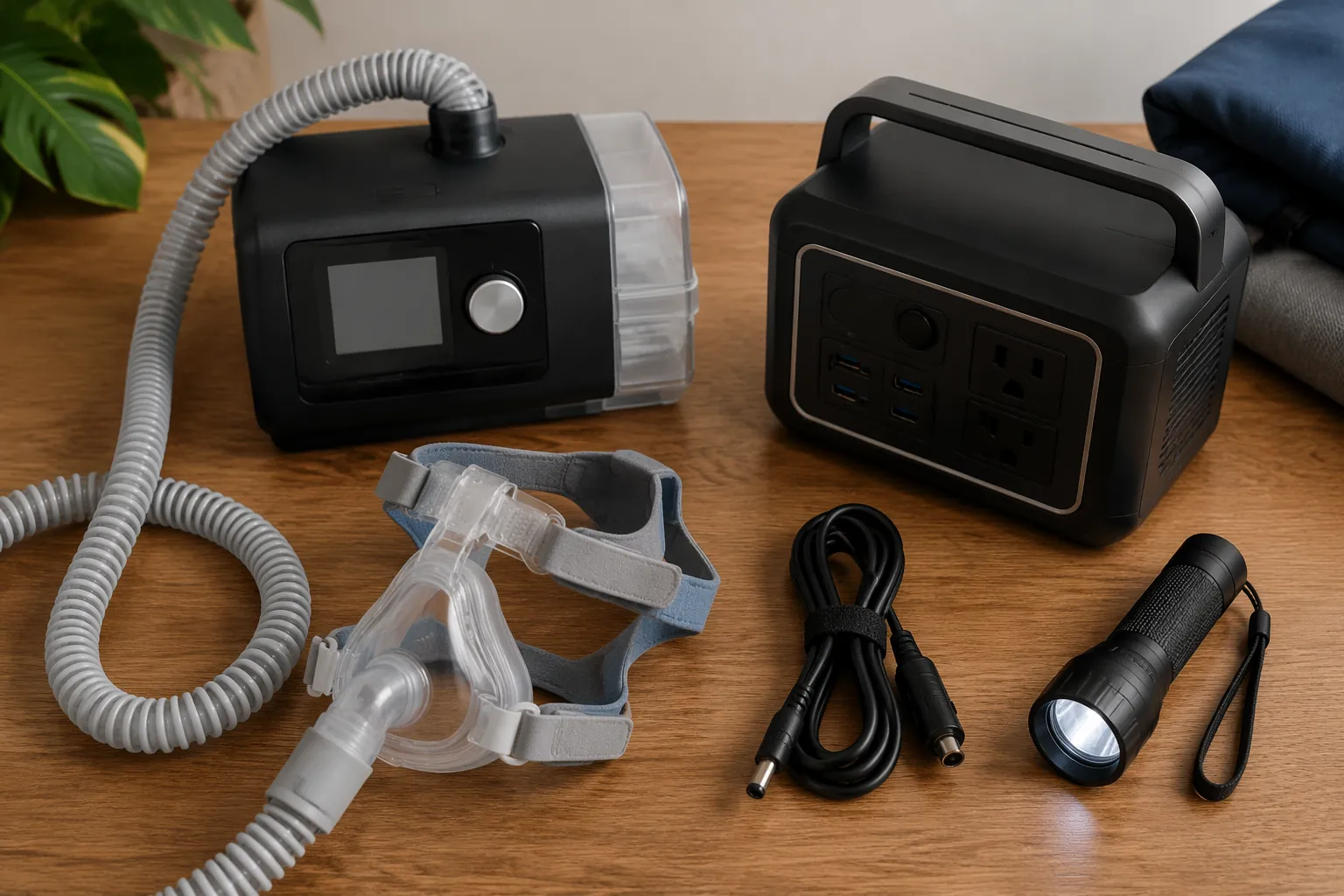
Before the storm, charge the CPAP battery or portable power station fully, then test it with the actual machine, mask, tubing, and settings the person uses at night. A battery that can run a phone is not automatically enough for a CPAP. If the device has a heated humidifier or heated tubing, ask the clinician or equipment provider whether turning those features off during an outage is appropriate, because heat usually increases power draw.
Keep the CPAP bag in the safe room, not in a closet across the house. Pack the mask, tubing, filters, power cords, battery cable, distilled water if used, and a written note of pressure settings if the equipment provider gave them to you. If the machine uses an app, do not assume the app will be useful when cell service is weak. Paper still works at 2 a.m.
If the CPAP stops during the night, the user is not supposed to suffocate inside the mask. CPAP masks include an anti-asphyxia valve that lets the person breathe room air if airflow stops. That fallback does not make therapy interruption harmless, especially for people with severe sleep apnea or other medical risks, but it is important to know so no one panics and yanks equipment apart in the dark. [3]
If CPAP, oxygen, a ventilator, refrigerated medication, or another powered device is essential, contact the clinician, equipment supplier, utility medical-needs program, or local emergency management office before the storm when possible. The question is not only “Can this run?” It is “How long can it run if power is out through the night, and what is the next step if it cannot?”
Generator safety matters most while people are asleep
A generator should never be brought indoors to protect it from rain, theft, wind, or noise complaints. It should not run in a garage with the door open. It should not sit outside a bedroom window, under a porch, beside a vent, or near a door that someone may crack open for air. Ready.gov’s rule is plain: keep it outside and at least 20 feet from windows, doors, and vents. [1]
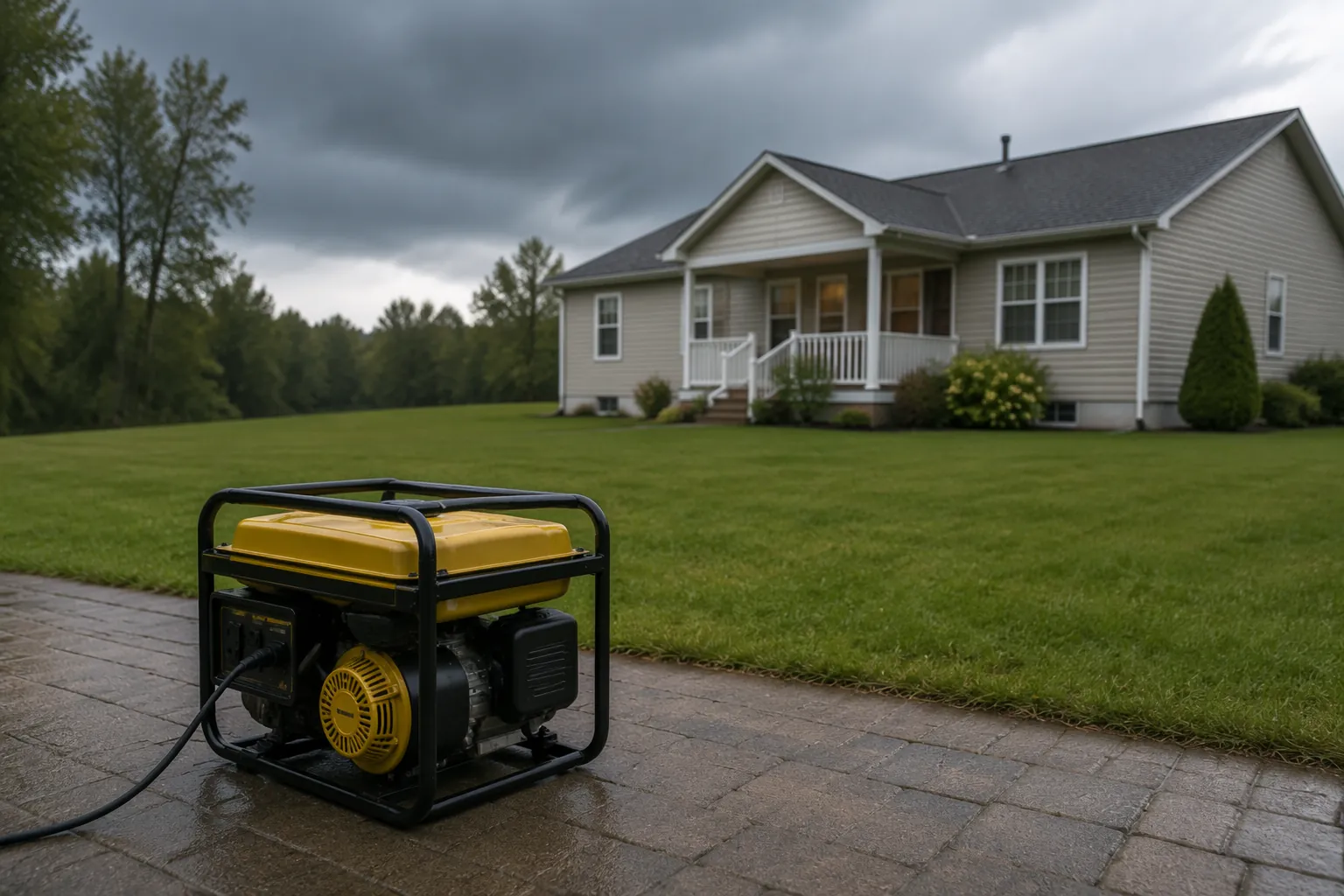
This rule covers more than portable generators. CDC guidance for hurricane and flood emergencies warns against using grills, camp stoves, or other gasoline, propane, natural gas, or charcoal-burning devices inside a home, basement, garage, or near a window. The danger is carbon monoxide, not just fumes that smell bad. [4]
Put battery-powered carbon monoxide alarms near sleeping areas and check their batteries before the storm. If an alarm sounds, treat it as an emergency. Move people to fresh air and call emergency services. Do not try to troubleshoot the generator while children, older adults, pregnant people, or a sleeping partner remain inside breathing contaminated air.
Charge first, then decide what power to shut off
If local conditions or official instructions lead you to turn off main electrical power before sleeping, do it only after the essentials are charged: phones, CPAP batteries, power banks, flashlights, lanterns, hearing aids, medical-device batteries, and weather radios. Do not drain the last safe charging window on decorative lights, entertainment, or appliances that will not help someone wake, breathe, move, or call for help.
Use flashlights and battery lanterns instead of candles. Keep one light within reach of the adult responsible for checking alerts, one near the bathroom path, and one near the person most likely to need help. A flashlight in the kitchen drawer is not a sleep safety plan.
Babies still need safe sleep during evacuation or sheltering
A hurricane does not make couches, adult beds, pillows, blankets, or car seats safe places for routine infant sleep. Babies should sleep on their backs, in their own portable crib or play yard, with no pillows, blankets, toys, or soft items in the sleep space. CDC emergency guidance and public-health safe-sleep guidance both preserve these rules during storm displacement and evacuation. [4][5]
If you are packing quickly, the portable crib or play yard belongs with the evacuation items, not in the “nice to have” pile. A baby may sleep in a strange room, shelter, or relative’s house; the sleep surface still needs to be separate, flat, firm, and clear.
Older adults need a night plan, not just a supply list
Older adults are often told to “keep medications ready,” but the sleep problem is more specific. Can they reach the medication in the dark? Can they hear alerts? Can they get up safely if the room floods, the roof leaks, or a caregiver needs to move them away from glass? A scoping review on natural disaster and medication preparedness reported that 6 in 10 older U.S. adults did not consider themselves disaster-prepared, which is one reason nighttime details deserve attention before the storm arrives. [6]
Put medications, a medication list, glasses, dentures, hearing aids, mobility aids, water, snacks if medically needed, and backup power for medical devices in the safe room. If an older adult uses a recliner or adjustable bed to breathe or sleep, think through what happens if that furniture cannot be powered. For a deeper power-outage checklist for older adults, see How Older Adults Can Sleep Safely During a Storm Power Outage.
Sleep aids, melatonin, and the need to wake up
During active storm conditions, be cautious with anything that makes it harder to wake, think, walk, or respond to emergency alerts. That includes alcohol, strong sedating medications, and over-the-counter sleep aids that leave you groggy. The advice to avoid strong sedatives during a hurricane night is not based on storm-specific clinical trials; it is a safety judgment. A sleeping person may need to move a child, answer an evacuation alert, check a carbon monoxide alarm, or help someone whose medical device has stopped.
Melatonin is not the same as a powerful sedative, but this is still a poor time to experiment with a new dose or a new product. If a clinician has already told you how to use a medication or sleep aid, follow that individualized advice. If you are the adult responsible for warnings, equipment, or caregiving, err on the side of being easier to wake.
How much sleep to expect
Do not plan on a normal night during active hurricane conditions. A broken 3- to 5-hour rest block may be the realistic target, especially if wind, alerts, heat, noise, or caregiving interruptions are present. Disaster sleep guidance emphasizes protecting rest where possible while recognizing that sleep may be disrupted during and after the event. [3]
If two capable adults are present, use shifts. One person sleeps while the other stays easier to wake for alerts, generator checks from a safe distance, leaks, frightened children, or medical-device problems. Then switch. This is not elegant, but it protects judgment better than having every adult half-asleep and no one clearly responsible.
For a broader phase-by-phase plan before, during, and after the storm, use Hurricane Preparedness Sleep Strategies for Every Phase. If the outage itself is what keeps you awake, the temperature and darkness issues are covered more fully in How to Sleep During a Power Outage, Whether It's Hot or Cold.
If anxiety is the thing keeping you awake
Storm anxiety is reasonable. The body is listening for threat, and sometimes it is correct to stay alert. Keep the response simple: prepare what can be prepared, ground the body once the room is safe, and plan recovery sleep after the danger passes.
- Preparation: choose the room, charge devices, place shoes and lights, secure CPAP power, and check alerts.
- Grounding: slow breathing, unclench the jaw, lower shoulders, and keep one reliable information source instead of cycling through feeds.
- Recovery: expect lighter sleep tonight and give yourself a chance to sleep again after the storm and immediate damage checks.
If anxiety is the main sleep barrier, see How to Sleep When Storm Anxiety Hits in Hawaii for a more focused anxiety plan. The same basic pattern applies outside Hawaii: reduce avoidable danger first, then work on calming the nervous system.
A final pre-sleep check
- Safe room chosen: lowest practical floor, interior location, away from windows and exterior walls.
- Generator risk removed: no generator, grill, camp stove, or charcoal device indoors, in a garage, or near windows, doors, or vents.
- Carbon monoxide alarms working near sleeping areas.
- Phones, flashlights, lanterns, weather radio, power banks, and medical-device batteries charged.
- CPAP backup power tested with the actual machine and mask.
- Infant sleep space separate, flat, firm, and clear.
- Older-adult medications, glasses, hearing aids, mobility aids, and water within reach.
- One adult assigned to hear alerts, or adults taking shifts if possible.
Once those are handled, the goal is not perfect sleep. It is limited, safer rest: enough to keep breathing supported, avoid preventable poisoning or injury, and preserve the judgment you may need before morning.
References
- Power Outages — Ready.gov
- A survey of positive airway pressure therapy preparedness and outcomes following Hurricane Irma — Journal of Clinical Sleep Medicine
- How To Manage Your Sleep During And After A Disaster — American Sleep Apnea Association
- Emergency Preparedness: Hurricanes, Floods and Pregnancy — CDC
- Hurricane Preparedness and Infant Safe Sleep — Healthy Start Coalition
- Natural disaster and medication preparedness among elderly: a scoping review — PMC
Read the full guide: How to Sleep Better During Hurricane Anxiety