
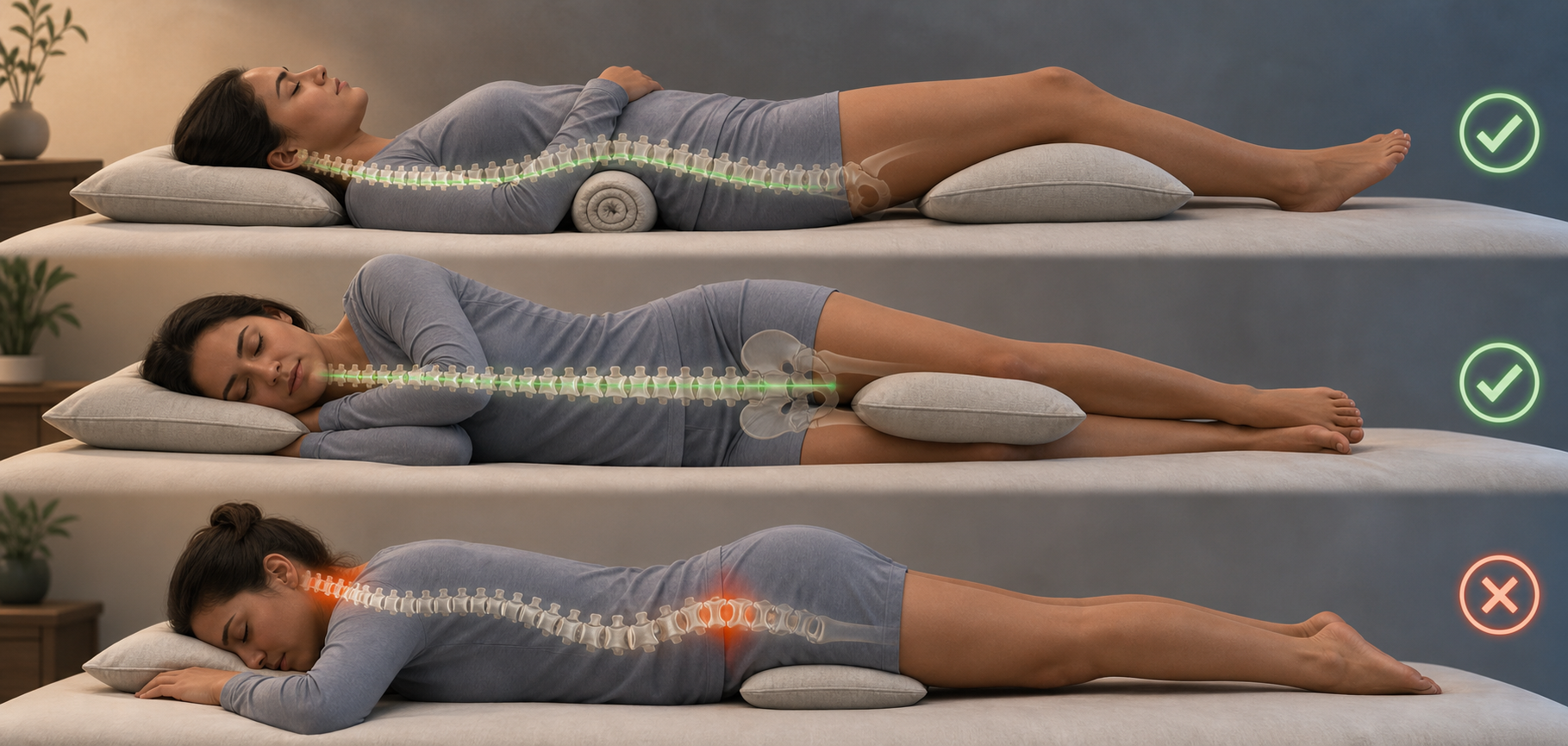
Waking up with a stiff neck or an aching lower back is a common experience. Epidemiological data cited in a 2021 study by Cary et al. puts the one-year point prevalence of cervical pain at 30–50% and lumbar pain at 38%. For many people, the culprit is not the mattress alone or an underlying condition — it is the position they spend seven to eight hours in every night. The relationship between sleep posture and morning spinal symptoms is not just correlational; emerging research using infrared video monitoring in home environments is beginning to quantify exactly how much time in a provocative position it takes to trigger pain.
This article draws on that research to explain why sustained postures matter, how the body signals distress during sleep, and — most importantly — how you can identify and modify your own sleep habits to reduce morning pain. The goal is not to prescribe a single "best" position, but to give you the tools to find your best position.
Why Your Sleep Position Matters for Back Pain
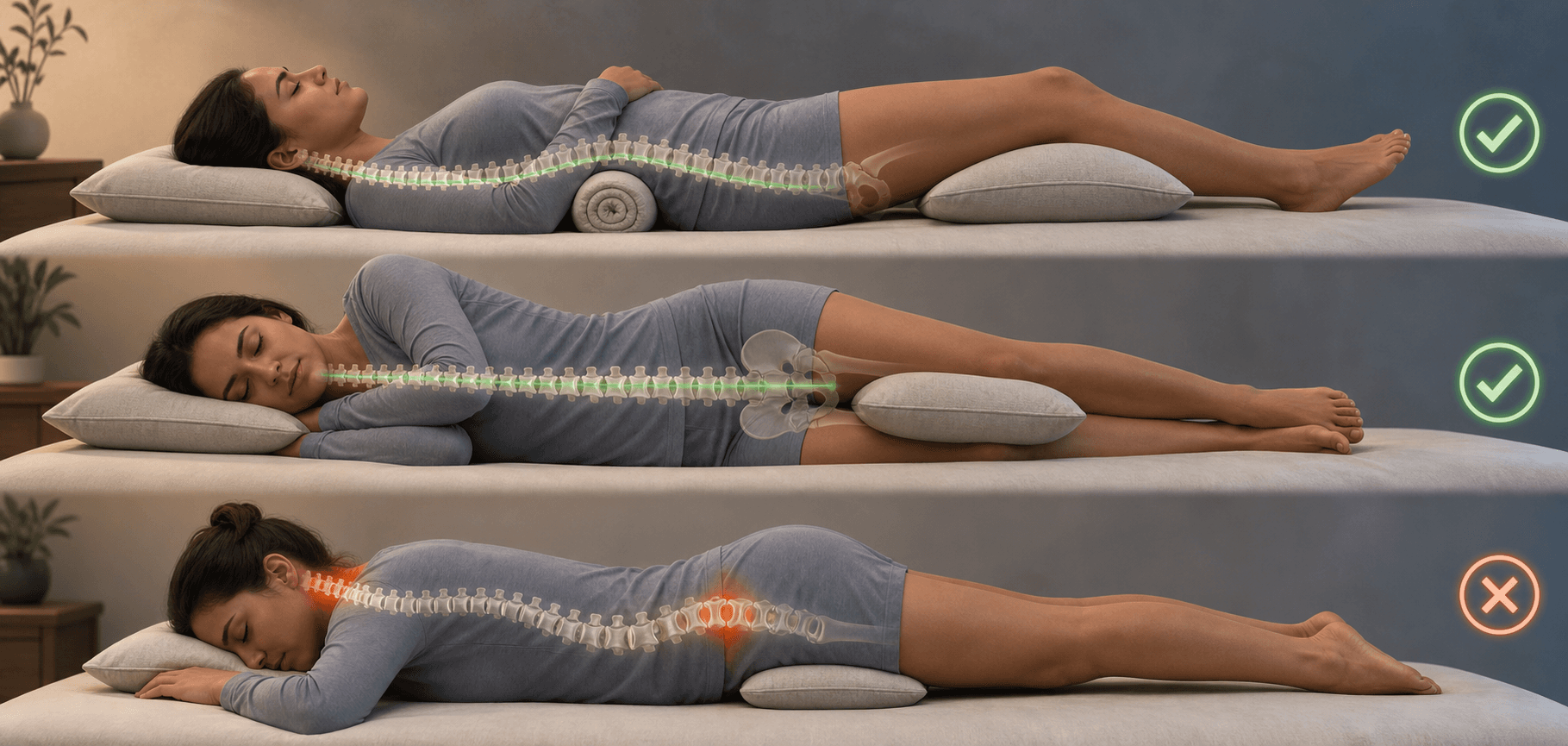
The spine is not a rigid rod; it is a curved, segmented column supported by muscles, ligaments, and intervertebral discs. When you lie down, the goal is to maintain the natural curves of the cervical, thoracic, and lumbar spine — a position clinicians call "neutral alignment." Deviations from neutral, sustained for hours, place uneven loads on soft tissues and joints.
The core problem is that sleep is a period of prolonged static loading. Unlike during waking hours, where you shift posture frequently in response to discomfort, sleep — particularly deep sleep — suppresses these micro-movements. If you settle into a position that torques the neck or arches the lower back, those tissues bear the load until you shift or wake.
Comments
Join the discussion with an anonymous comment.