

The hard question is not whether poor sleep and poor mood travel together. It is whether improving sleep quality actually changes depression, anxiety, and stress, or whether better sleepers are just less distressed to begin with. A meta-analysis of 65 randomized controlled trials with 8,608 participants points to a real causal effect: when sleep was deliberately improved, mental health improved afterward too. [1]

The causal answer is yes
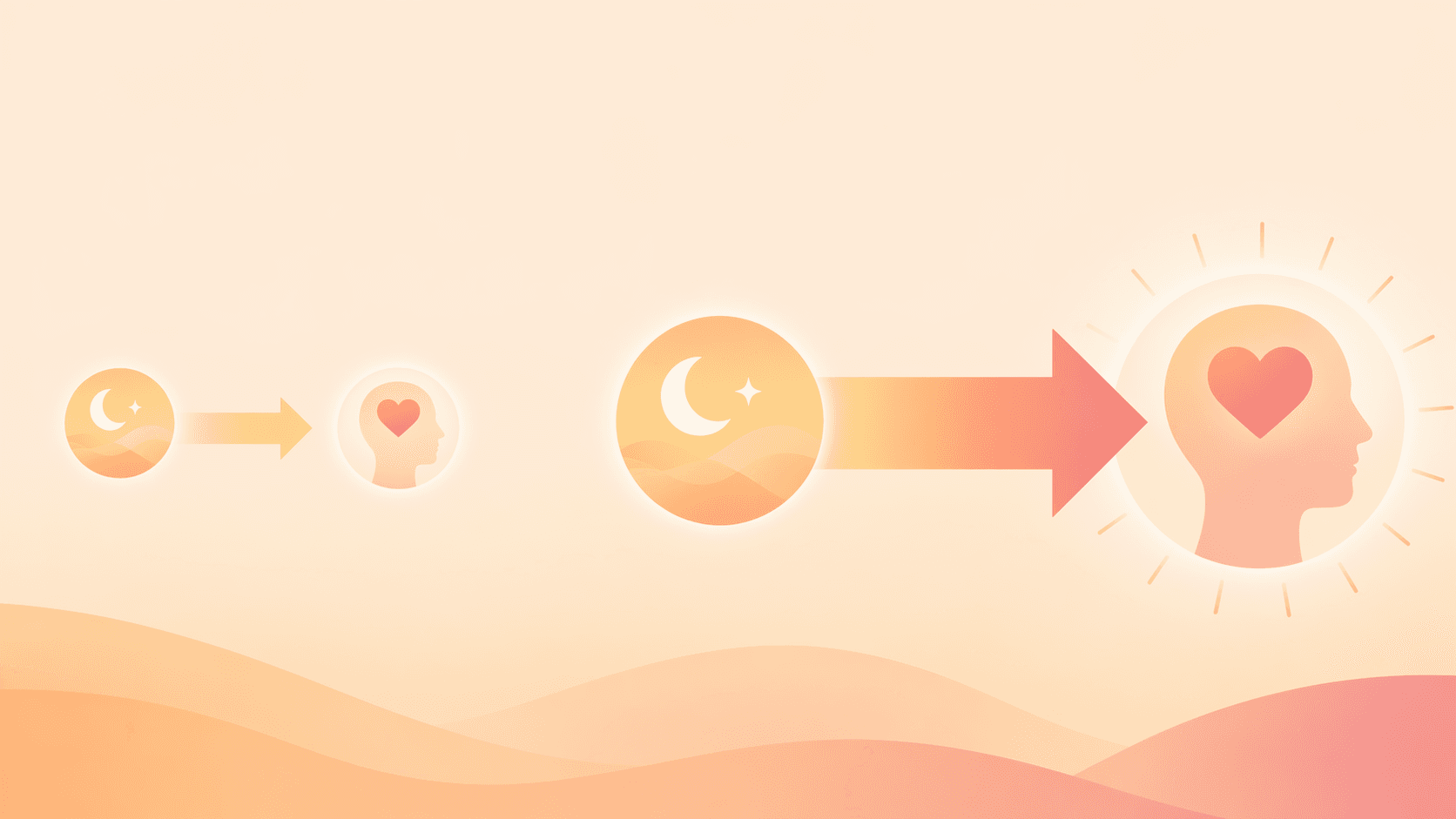
Scott and colleagues found medium-to-large reductions in depression (g = -0.63), anxiety (g = -0.51), stress (g = -0.42), and rumination (g = -0.49) after sleep-focused interventions. [1] That matters because these are intervention trials, not just surveys comparing light sleepers with distressed people. The result is stronger than a general “sleep and mood are connected” claim: changing sleep quality moved mental health in the better direction.
The most important detail is the dose-response pattern. The larger the sleep improvement, the larger the mental health improvement (B = 0.77, p < .001). [1] In plain language, this is not an all-or-nothing effect. A modest sleep gain tended to bring a modest mood gain, while a larger improvement in sleep quality tended to produce a larger change in depression, anxiety, or stress.
What improving sleep quality meant in the trials
The intervention with the strongest evidence base was CBT-I: 74% of the included studies used it. [1] Face-to-face CBT-I also outperformed self-administered approaches, with larger mental health effects (g = -0.63 versus g = -0.34). [1] That gap is a reminder that not every “sleep help” tool sits at the same evidentiary level. CBT-I is a structured treatment; generic sleep hygiene is something narrower and usually weaker. For the difference between those two, see [Sleep Hygiene Fundamentals and an Evidence-Based Bedtime Routine](/sleep-hygiene/sleep-hygiene-fundamentals-evidence-based-bedtime-routine), and for a ranked look at what sleep tips actually have evidence, see [Ranked by Evidence: Which Sleep Tips Actually Work and Which Are Overhyped](/sleep-hygiene/evidence-ranked-sleep-tips-tiered-guide).
CBT-I is also why this article should not drift into an OTC-sleep-aid shopping list. Medication and supplement approaches raise a separate safety and evidence question, and they deserve their own comparison. If that is the route you are evaluating, see [Best OTC Sleep Aids for Anxiety](/sleep-aids/best-otc-sleep-aids-for-anxiety-dual-mechanism) or [GABA-Targeting OTC Sleep Aids for Anxiety](/sleep-aids/gaba-targeting-otc-sleep-aids-anxiety-valerian-l-theanine-magnesium-kava).
Why the result still needs a realistic reading
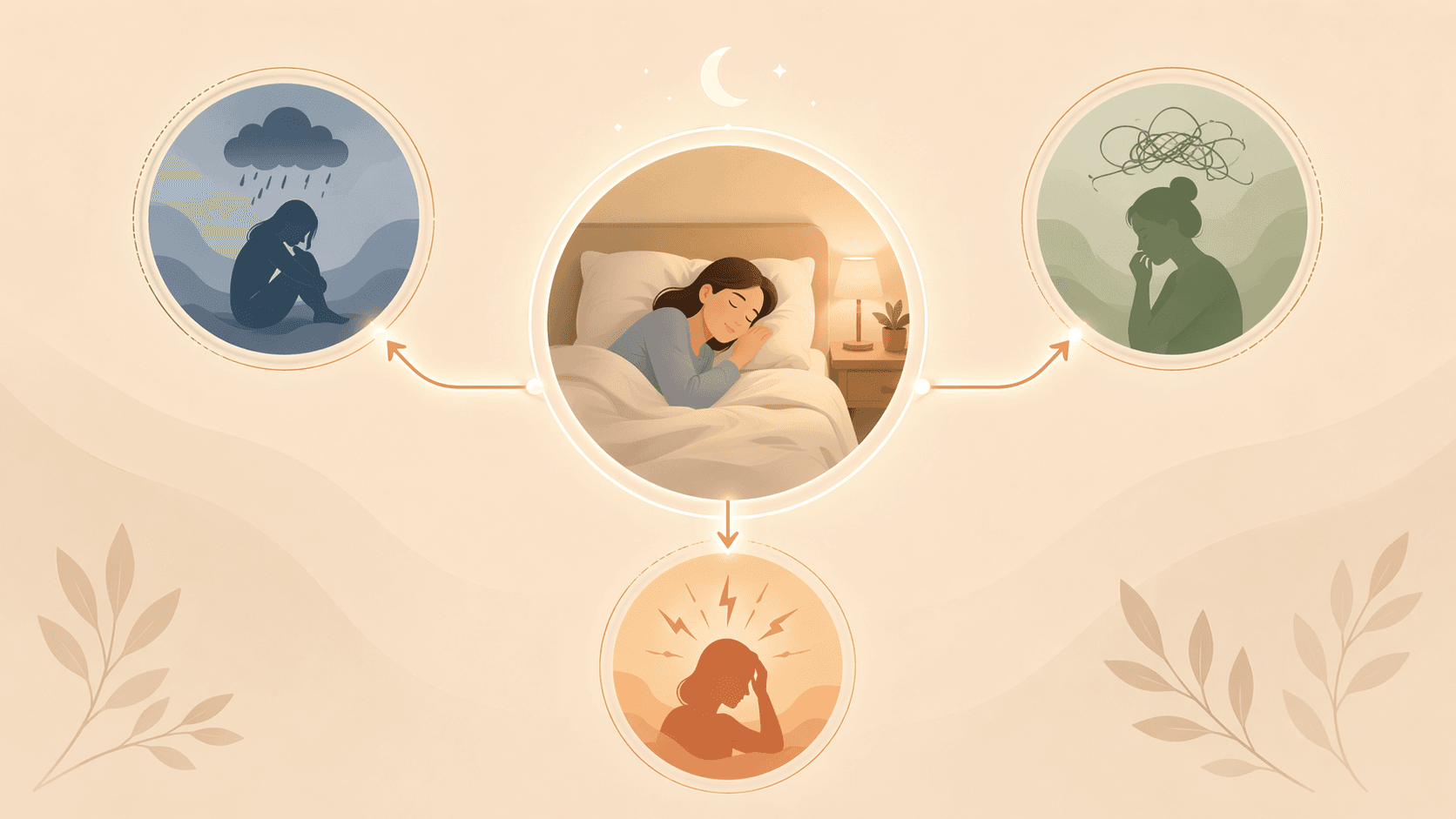
The effect held across clinical and non-clinical samples, and it also held when physical health conditions were part of the picture, which is why sleep looks more like a transdiagnostic treatment target than a niche insomnia fix. [1] That said, the loop still runs both ways. Anxiety and depression can make sleep worse, and nighttime worry can make sleep harder to recover. For that side of the loop, see [Why Anxiety Gets Worse at Night: The Cortisol-Melatonin Conflict](/sleep-conditions/why-anxiety-worse-at-night-cortisol-circadian-mechanism). So the right conclusion is narrower than a cure-all and stronger than a lifestyle tip: improving sleep quality is a credible mental health intervention target, with the clearest evidence behind CBT-I when it is available. The hard part in real life is not the logic of the evidence; it is access, cost, provider availability, and the fact that individual responses still vary. Even so, the central judgment holds: sleep quality is not only something to monitor after mood improves. It is something worth treating directly.
References
- Scott, A. J., et al. (2021). Improving sleep quality leads to better mental health: A meta-analysis of randomised controlled trials. Sleep Medicine Reviews, 2021.
Comments
Join the discussion with an anonymous comment.