
August 12, 2026 is a scheduling problem disguised as a sky event: a solar eclipse in the afternoon, the Perseid meteor shower peak that night, and a regular Thursday waiting on the other side. For North American viewers, the first correction matters. The eclipse is not total from North America; the totality path belongs to Greenland, Iceland, and Spain, while North American viewers are looking at a partial eclipse experience.
That distinction makes the sleep plan simpler. The eclipse may require safe solar viewing, calendar blocking, and maybe a little travel, but it is not the part likely to wreck your sleep. The real disruption is the Perseid window later that night, when the shower peaks under a new moon and the best viewing may pull you into the 1–4 AM range.[1][2]
For a healthy adult, this can be a bounded one-night disruption rather than a lost week. The plan is not to pretend sleep debt does not exist. It is to reduce pressure before the night begins, keep the viewing environment genuinely dark, and protect the recovery night afterward.
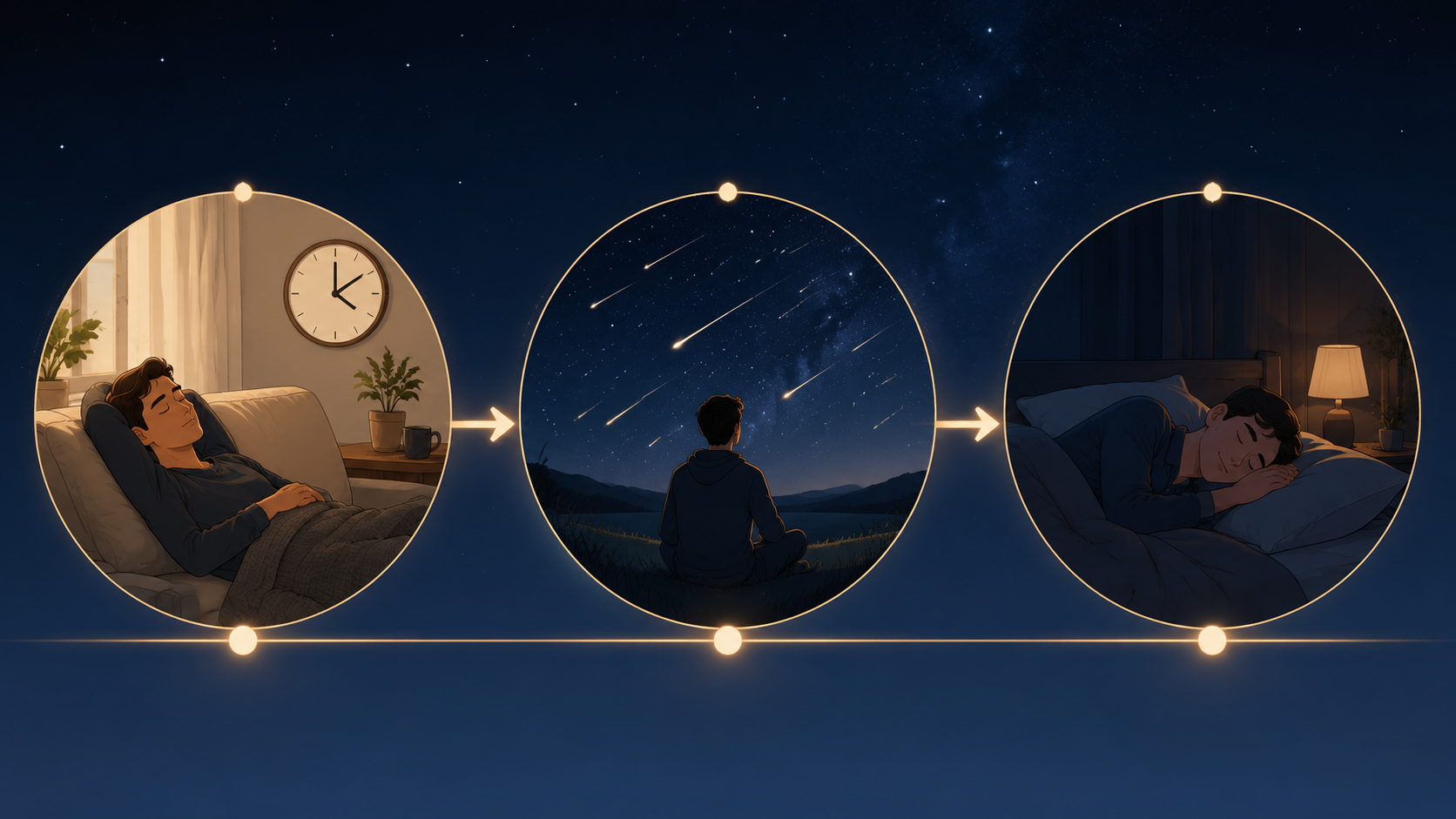
The Schedule That Keeps the Double-Header Contained
The most useful way to plan August 12 is not by treating it as one long astronomical occasion. Treat it as three separate sleep-management phases: prepare, view, recover.
| Phase | Timing | What to Do | Why It Matters |
|---|---|---|---|
| Before the eclipse and meteor viewing | Nap completed before 3 PM | Take one full 90-minute nap if your schedule allows | Reduces sleep pressure without pushing the night later |
| Afternoon eclipse | Local afternoon timing varies by location | Use proper solar viewing protection; avoid turning the eclipse into an all-day caffeine event | The eclipse itself is not the sleep problem for North American viewers |
| Meteor viewing | Late night into early morning | Drive to a dark location, use red-filtered light, avoid phone light, and stay physically comfortable | Keeps the disruption closer to wakefulness in darkness than wakefulness under indoor light |
| After viewing | When you return indoors | Go straight into a low-light wind-down; no phone catch-up | Prevents the brightest light exposure of the night from happening after the sky event is over |
| Recovery night | The following night | Protect a full sleep opportunity and avoid stacking another late night | Allows REM rebound to do its work |
If you can only control one thing before sunset, control the nap. If you can only control one thing after midnight, control light.
Phase 1: Take the Nap Seriously, Including the Cutoff
A 90-minute nap is not a decorative suggestion here. It is long enough to approximate a full sleep cycle, and the timing matters: complete it before 3 PM. The sleep-strategy literature cited in the meteor-shower sleep guide points to this window as a way to reduce sleep pressure without making it harder to fall asleep later.[3]
A practical version looks like this: eat lunch early, set an alarm for a 90-minute sleep period plus a few minutes to settle, and be fully up before midafternoon. Do not let the nap become a 4 PM collapse on the couch. That later sleep can steal from the beginning of the night, which is exactly what you do not need when the meteor shower is already going to move bedtime.
If you cannot sleep for 90 minutes, a quiet rest period is still useful, but it is a different thing. Do not compensate by adding a second late nap unless your schedule and body genuinely tolerate it. The goal is to enter the Perseid window less depleted, not to fragment the whole day.
Keep the Eclipse From Stealing Energy It Does Not Need
The August 12 eclipse deserves attention on its own terms. It is part of why the day is unusual, and the total eclipse path across Greenland, Iceland, and Spain is a real headline.[4] But for a North American adult planning sleep, the afternoon eclipse should stay in its lane: safe viewing, reasonable logistics, and no unnecessary all-day ramp-up.
That means no heroic caffeine schedule starting at breakfast, no skipping meals because the day feels special, and no turning eclipse travel into an excuse to begin the sleep disruption twelve hours early. The meteor shower will ask enough of your night.
Phase 2: Make the Meteor Viewing Dark Enough to Matter
Staying awake in a dark field is not physiologically identical to staying awake in a bright kitchen or scrolling in bed. Natural starlight is roughly 0.0001–0.001 lux, while ordinary indoor room light can sit around 100–300 lux. The meteor-shower sleep guide cites evidence that indoor light at that level can delay melatonin onset by about 90 minutes.[3]
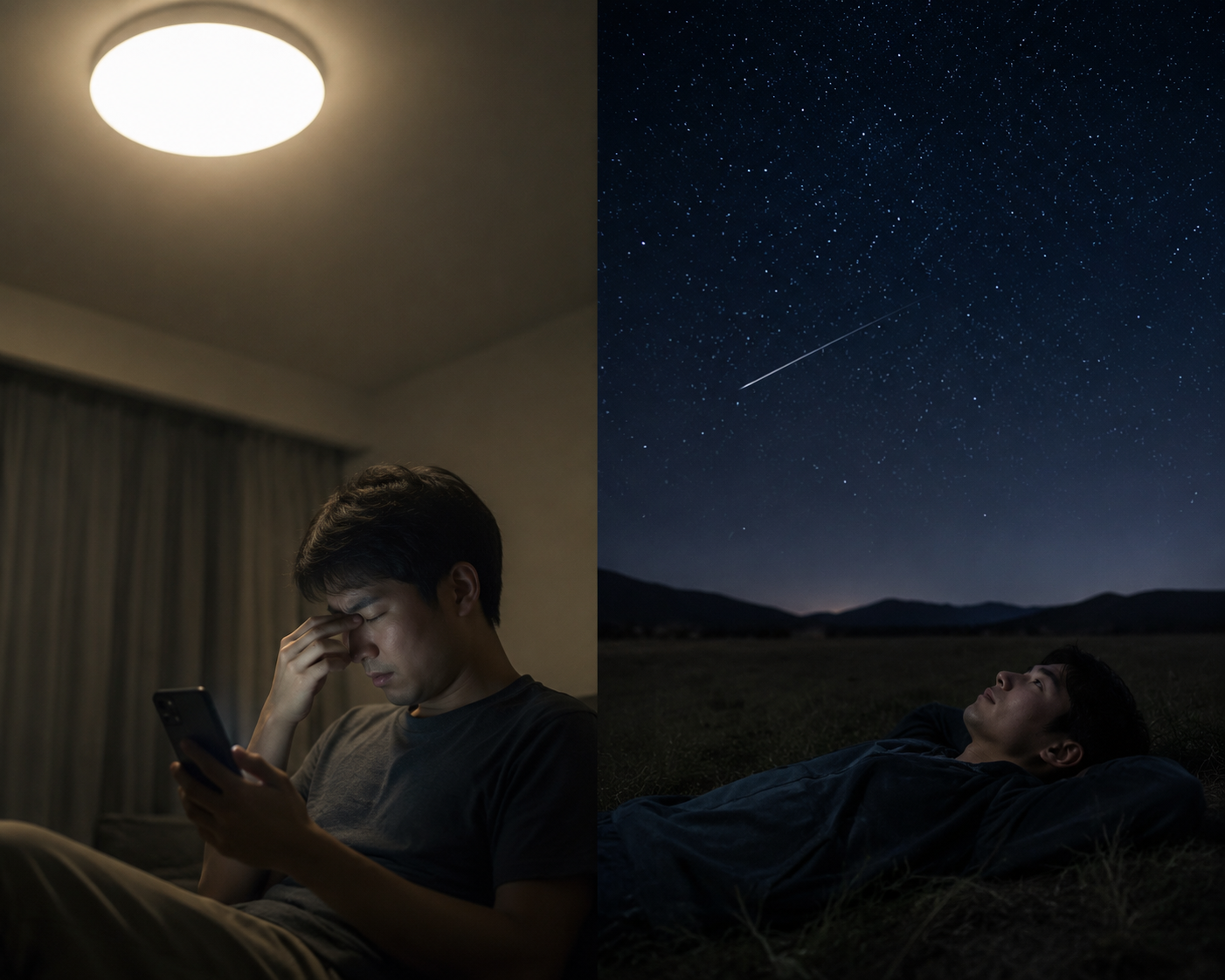
That difference matters because the eye is not only forming images. Specialized light-sensitive pathways help signal time of day to the body. The American Academy of Sleep Medicine describes light as a major cue for circadian timing, and the wavelength and intensity of evening light are part of why screens and bright rooms can push sleep later.[5]
The practical rule is simple: once you begin meteor viewing, protect darkness as if it is part of the event. Do not spend two hours letting your eyes adapt and then erase that work with a phone.
- Use red-filtered light only when you need to move, read, or adjust gear.
- Keep phone brightness at minimum if you must use it, but treat “no phone” as the default after you arrive.
- Set navigation, emergency contacts, weather checks, and music before you leave home.
- Do not check messages when you get back indoors; go straight into the recovery routine.
- Bring enough layers, a reclining chair or pad, and a thermos so discomfort does not become the reason you keep turning lights on.
Red light is not magic, but it is better suited to this job than blue-rich light. Red wavelengths around 620–750 nm are less effective at activating melanopsin than blue light around 480 nm, which is why red-filtered lamps are the right compromise for moving safely without flooding your eyes with the kind of light most likely to shift circadian timing.[3]
What to Do in the Field
Arrive before you are desperate to see meteors. Give yourself time to park, orient, and settle while you are still patient. The more tasks you finish early, the fewer reasons you will have to switch on a bright light after midnight.
- Choose a dark, safe viewing site away from streetlights, with permission to be there and a clear route home.
- Set up your chair, blanket, warm layers, water, and thermos before you begin serious viewing.
- Switch to red-filtered light only; do not use a bare white flashlight for “just a second.”
- Let your eyes adapt and then leave them alone. The meteor shower is the screen.
- Decide your departure time before the peak window begins, especially if you have to drive.
The departure time is not a personality test. If your next day includes a commute, caregiving, machinery, clinical work, or any task where sleepiness has consequences for other people, set a hard cutoff before you are tired enough to negotiate with yourself.
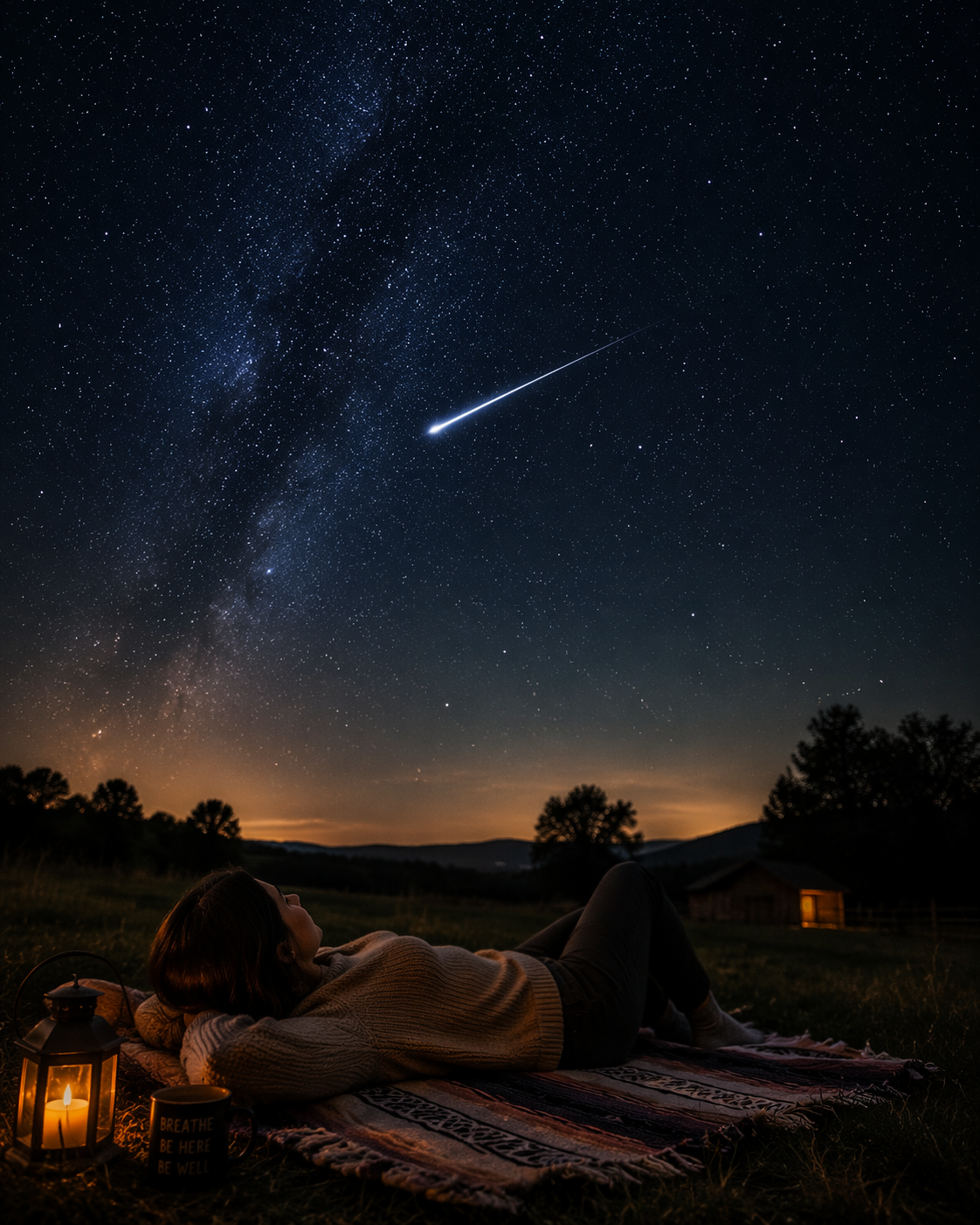
The Phone Rule Is Stricter After You Come Indoors
The riskiest light exposure may not be in the field. It may be the 20 minutes after you get home, when you are cold, awake, and tempted to look up photos, compare reports, answer messages, or check whether anyone else saw the same bright meteor.
Do not make the phone the final event of the night. Put the charger somewhere boring before you leave. When you return, use the dimmest practical light, change clothes, brush teeth, and get into bed. If you want a record of the night, write one sentence on paper or dictate a note the next morning.
This is where a lot of “sleep hygiene” advice becomes annoying because it sounds as if one glance at a screen ruins everything. That is not the point. The point is that the sky gave you a rare low-light wake period. Do not follow it with the brightest, most alerting part of the night.
Phase 3: Plan for REM Rebound Instead of Pretending You Lost Nothing
A late Perseid night is likely to cut into the part of sleep that becomes richer in REM toward morning. The meteor-shower sleep guide cites sleep-stage research describing REM as roughly 50–60% of late-night cycles, compared with about 15–20% in early cycles.[3]
That does not mean you have permanently damaged anything by staying up for a rare event. It means the next night deserves protection. Healthy adults often recover from this kind of acute sleep disruption within 1–2 nights through REM rebound, but that recovery depends on giving sleep enough room to happen.[3]
- Keep the next evening quiet and boring; do not stack another late social plan on top of the meteor night.
- Avoid using the next day’s sleepiness as a reason for heavy late caffeine.
- Get morning light at your usual time to help anchor the day after.
- Go to bed early enough to allow a full sleep opportunity, not merely your usual bedtime after a depleted day.
- If possible, keep demanding decisions and long drives out of the early morning after viewing.
This recovery plan is for generally healthy adults managing a single rare night. It is not a workaround for chronic sleep restriction, untreated insomnia, sleep apnea, shift-work exhaustion, or any situation where drowsiness could make driving or work unsafe. In those cases, the better plan may be a shorter viewing window, a local site, a shared driving arrangement, or skipping the late-night portion entirely.
A Realistic August 12 Plan
A workable day might look like this: normal wake time, normal meals, eclipse viewing in the afternoon with proper eye protection, a 90-minute nap completed before 3 PM if your schedule allows, then a quiet evening without pretending you are about to have a normal night.
Before leaving for the Perseids, pack as if comfort is part of sleep protection: layers, blanket, chair, water, thermos, red-filtered light, and a plan for the drive home. Use bright light for setup only if you must, then make the field dark and keep it that way. Watch the sky. Leave at the cutoff you chose while you were still sensible.
When you get home, resist the second event: the indoor-light-and-phone encore. Go straight to bed in low light. The next night, give REM rebound a protected runway. One late night can be recoverable when the disruption is planned, kept dark, and followed by recovery sleep.
References
- August 2026 solar eclipse and Perseid meteor shower, BBC Sky at Night Magazine, https://www.skyatnightmagazine.com/news/august-2026-solar-eclipse-perseid-meteor-shower
- Perseid meteor shower 2026 guide, Space.com, https://www.space.com/perseid-meteor-shower-2026-guide
- Best Meteor Shower Sleep, Mattress Miracle, https://mattressmiracle.ca/blogs/mattress-miracle-blog/best-meteor-shower-sleep
- Total solar eclipse visible August 12, 2026, EarthSky, https://earthsky.org/astronomy-essentials/total-solar-eclipse-visible-august-12-2026/
- Embracing the eclipse: Shedding light on the importance of light for our sleep and daily routines, American Academy of Sleep Medicine, https://aasm.org/embracing-the-eclipse-shedding-light-on-the-importance-of-light-for-our-sleep-and-daily-routines/
Comments
Join the discussion with an anonymous comment.