
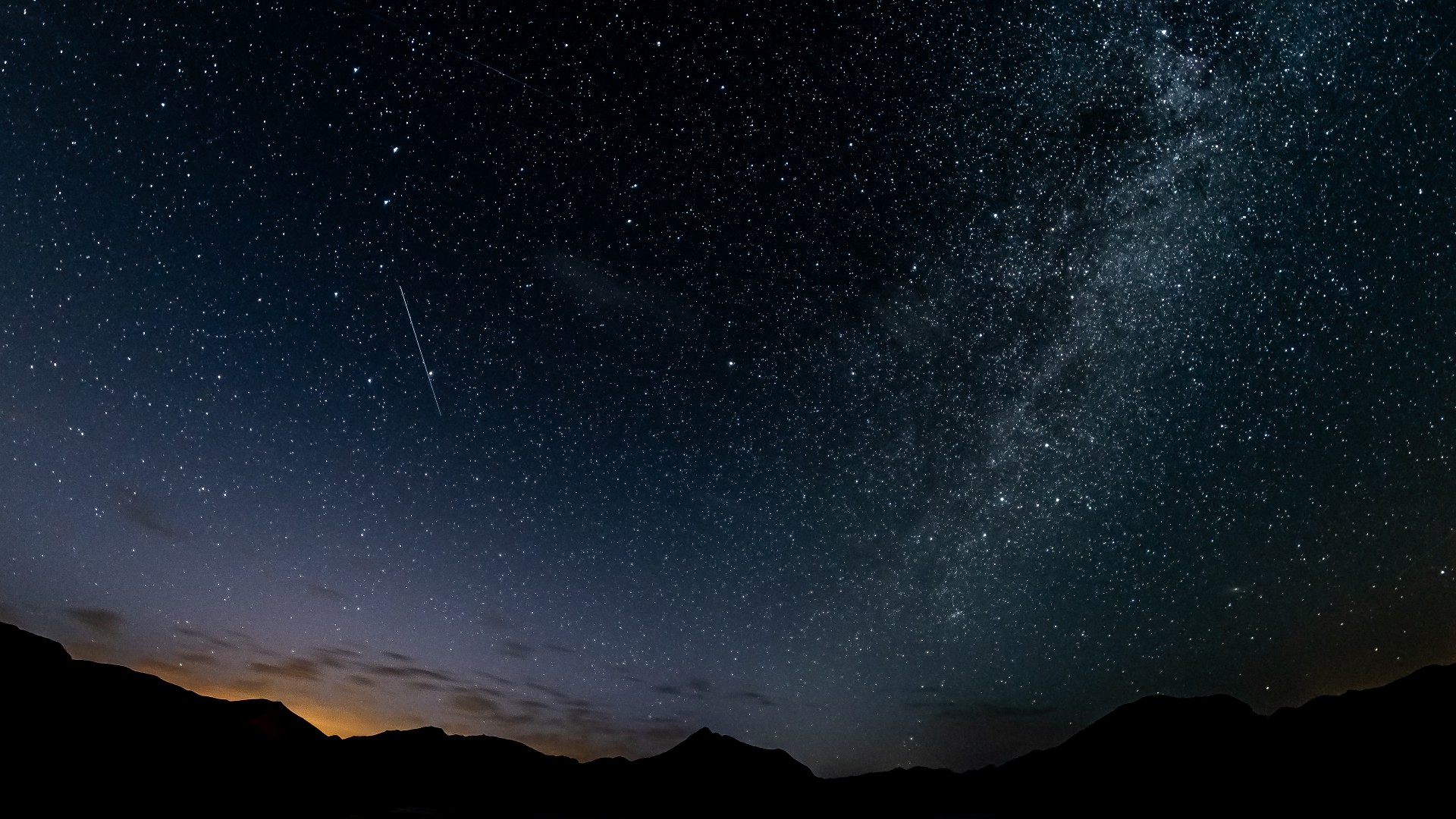
The 2026 Perseid meteor shower peaks on the night of August 12 into the early morning of August 13, and this is one of the years when staying up is easier to justify. The moon is new, with 0% illumination, so the sky will not be washed out by moonlight at the moment when the shower is strongest.[1][2] For most healthy adults, the sleep impact does not have to become a weeklong penalty: plan one late night, reduce sleep pressure before it, protect your eyes from bright light during it, and give August 13 a real recovery night.
The best viewing window is after midnight, when the Perseid radiant climbs higher and the part of Earth you are standing on turns more directly into the meteor stream.[3] That is also the inconvenient part: midnight to pre-dawn is valuable sleep territory. The practical decision is not whether sleep matters. It does. The decision is whether this particular peak is good enough to spend some of that sleep deliberately, and whether the next morning can absorb the cost.
The Sleep-Smart Plan for August 12-13
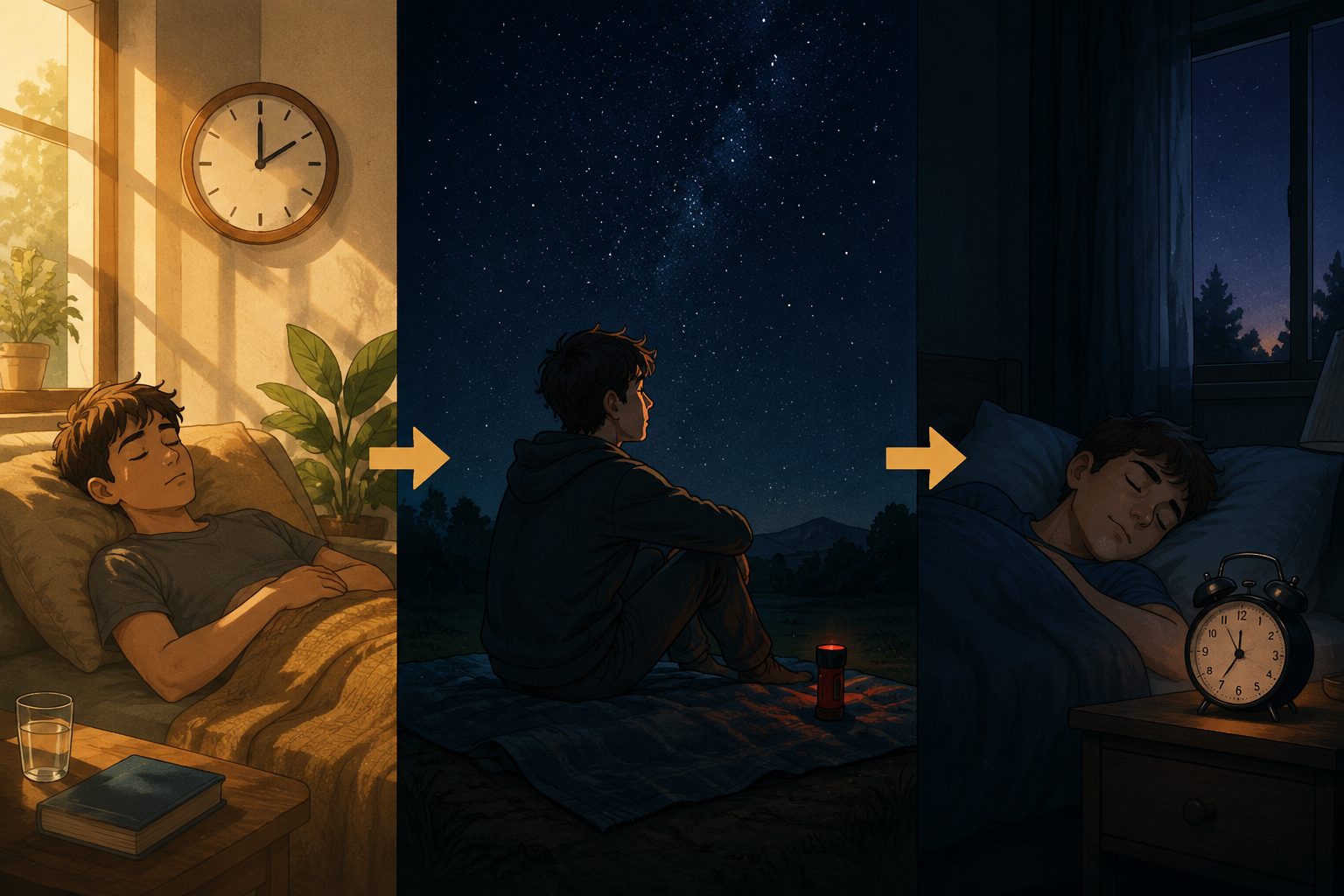
If you are rested enough going in and do not have a safety-critical morning on August 13, the cleanest plan is simple: nap early, keep the viewing period dark, then recover without pretending you did not miss sleep.
| When | What to do | Why it matters |
|---|---|---|
| Afternoon of August 12 | Take a 90-minute nap, ending before 3 PM | Reduces sleep pressure without pushing the main night too far later |
| Evening of August 12 | Dim indoor lights before leaving; pack red light only | Prevents artificial light from delaying the biology you want available after the shower |
| After midnight into early August 13 | Watch from a dark site, lying back, phone away | Matches the best meteor window while limiting light exposure and stimulation |
| Morning of August 13 | Avoid heroic scheduling, long drives, and high-stakes work if possible | The missed later-night sleep can affect alertness, mood, and reaction time |
| Night of August 13 | Go to bed on time or slightly early; keep the night protected | Gives the body room for rebound sleep rather than stacking a second deficit |
The plan is strict in only one way: do not let a planned exception become an unplanned two-night sleep loss. A meteor shower is much easier to enjoy when the cost has a boundary.
Why This Perseid Peak Is Worth Planning Around
The Perseids are active for weeks, but the peak matters because the shower’s rate rises sharply around the maximum. In 2026, the peak night falls under a new moon, which removes the biggest natural source of sky glow.[1][2] Under ideal dark-sky conditions, the Perseids are often described as capable of producing around 100 meteors per hour, though that figure assumes far better conditions than a suburban driveway and fully dark-adapted eyes.[4]
That caveat is not a disappointment; it is the reason planning matters. The actual number you see depends on darkness, horizon, clouds, local light pollution, how long you stay outside, and whether you keep looking up long enough for your eyes to adapt. A new moon gives you the best natural setup. Your job is not to ruin it with porch lights, headlights, and phone checks.
You do not need to stare at the constellation Perseus. The meteors appear to radiate from that direction, but long streaks can cross many parts of the sky. Choose the darkest safe place you can reasonably reach, lie back with a wide view, and give yourself at least several minutes without white light before judging whether the night is delivering.
Nap Before 3 PM, Not After Dinner
The nap is the part people either skip or do badly. For this night, a 90-minute afternoon nap is more useful than a late-evening doze on the couch. Ninety minutes roughly gives the brain a chance to pass through a full sleep cycle, so you are less likely to wake from deep sleep feeling drugged. Ending before 3 PM keeps the nap far enough from bedtime that it reduces pressure without stealing the first part of your main sleep opportunity.
NASA-related fatigue research is often cited for finding that a short planned nap improved alertness by 54%, and sleep education sources continue to treat brief, strategic naps as a fatigue-management tool rather than a replacement for full sleep.[5] For the Perseids, though, the goal is not a tiny power nap that merely gets you through a meeting. The goal is to make the late-night viewing window less punishing without pushing your body clock later.
Set an alarm. Keep the room cool and dim. If you do not fall asleep, resting quietly still helps more than spending the afternoon in a caffeine-and-scroll loop. What you should avoid is the accidental 7 PM nap: it can reduce sleep pressure at exactly the wrong time, leaving you wide awake after the shower when you most need to return to bed.
The Sky Is Not the Light Problem
A dark Perseid night is not what usually disrupts melatonin. Artificial light is. In a controlled study, exposure to ordinary room light before bedtime suppressed melatonin and shifted its timing; the study described room light in the 100-300 lux range and found a substantial shortening of the body’s melatonin signal compared with dim light.[6] Natural starlight is far dimmer, commonly described in the range of about 0.0001-0.001 lux, and field research on natural light-dark exposure supports the idea that true darkness is very different from modern evening lighting.[7]
So the red-light protocol is not fussy astronomy etiquette. It is sleep protection. Use a dim red flashlight or a red-light headlamp pointed down. Put your phone in airplane mode and reduce the temptation to check it; if you must use it, set the display as dim as possible and use a red filter. Avoid turning on the car’s interior lights repeatedly. Do not walk back into a bright kitchen at 3:30 AM and then wonder why sleep will not return.
The same rule applies before you leave. Bright indoor light in the last hour before viewing can delay the system you are hoping will still be ready when you come home. Keep the house dim, gather blankets and snacks early, and treat white light as a tool for safety only, not convenience.
What the Late Window Costs
The after-midnight advantage is real, but it lands in a sensitive part of the night. Early sleep is usually heavier in deep non-REM sleep; later cycles contain more REM sleep. If you watch from midnight to 4 AM, you are not just trimming some anonymous block called “sleep.” You are cutting into the part of the night that tends to carry more dreaming, emotional processing, and morning-restoration value.[8]
This is why “I’ll just sleep in a little” may or may not solve the problem. Sleeping later can help if your schedule allows it, but a noisy house, caregiving, work, heat, or daylight can shorten that extension. If you have to drive early, operate equipment, make medical decisions, manage a classroom, supervise children near water, or handle a volatile workday, the cost is no longer just grogginess.
For a healthy adult who starts the week reasonably rested, one partial night is usually recoverable. Laboratory work on sleep restriction and recovery shows that recovery sleep changes after restriction, and clinical sleep references describe REM rebound after deprivation.[8][9] That does not mean the body erases the missed sleep instantly. It means the next sleep opportunity matters.
Protect August 13 Like It Is Part of the Event
The recovery night is not an afterthought. It is the final step of watching well. On August 13, keep caffeine earlier than usual, avoid adding a second late night, and make the evening boring on purpose. If you can get to bed on time or a little early, do it. If you can move a demanding workout, long drive, or emotionally loaded task away from that day, move it.
The mistake is treating the shower as over when you get back inside. Your nervous system still has to downshift. Keep the lights low, skip the photo review, avoid social posting, and go straight through a short landing routine: bathroom, water if needed, bed. If you want a more formal sequence, an evidence-based evening wind-down routine is useful precisely because it removes decisions when you are tired.
Morning also needs a plan. Do not evaluate the whole night by how you feel at 7 AM. Expect some fog. Get daylight soon after waking, eat normally, and use caffeine strategically rather than continuously. If you are still impaired, treat that as information, not weakness.
Who Should Be More Cautious
This plan is mainly for healthy adults with some control over August 13. It is not a dare. If you are already severely sleep restricted, dealing with chronic insomnia, living with delayed sleep phase disorder, managing shift work disorder, or trying to stabilize mood with a very regular sleep schedule, the peak may not be worth the disruption.
The same goes for anyone with a safety-sensitive early morning. A beautiful meteor shower does not make sleepy driving safer. In that case, the sleep-smart choice may be to watch briefly before midnight, choose another active Perseid night with lower expectations, or skip the peak and keep your schedule intact.
Awe May Help the Night Feel Worth It, but It Is Not a Sleep Substitute
There is a reason people remember meteor showers differently from ordinary late nights. Awe has been associated with lower levels of interleukin-6, an inflammatory marker, in research on positive emotions and physiology.[10] That is interesting, and it fits the lived experience of standing under a dark sky and feeling the day’s concerns shrink.
It should stay in its proper place. The evidence is associative, not proof that watching the Perseids produces an anti-inflammatory health benefit. A very small planetarium study has also explored physiological responses to simulated starry skies, but with only five participants it is better read as suggestive, not general guidance.[11] Enjoy the awe. Do not use it to excuse a dangerous next-day schedule.
For 2026, the boundary is clear enough. If you are healthy, not already running a serious sleep debt, and can protect the night of August 13, the August 12-13 Perseid peak is a reasonable planned exception. If your sleep is fragile or your next morning has no margin for error, the wiser version of loving the sky may be watching briefly, watching earlier, or letting this peak pass.
References
- Perseid meteor shower 2026: All you need to know, EarthSky
- Meteor Shower Calendar 2026-2027, American Meteor Society
- Perseids, NASA Science
- The Perseid Meteor Shower Begins Today: When To Watch, Forbes, July 17, 2026
- NASA Nap: How Astronauts Nap in Space, Sleep Foundation
- Exposure to Room Light before Bedtime Suppresses Melatonin Onset and Shortens Melatonin Duration in Humans, Journal of Clinical Endocrinology & Metabolism, 2011
- Entrainment of the Human Circadian Clock to the Natural Light-Dark Cycle, Current Biology, 2013
- Sleep Deprivation, StatPearls, NCBI Bookshelf
- Neurobehavioral Dynamics Following Chronic Sleep Restriction: Dose-Response Effects of One Night for Recovery, Sleep, 2010
- Positive Affect and Markers of Inflammation: Discrete Positive Emotions Predict Lower Levels of Inflammatory Cytokines, Emotion, 2015
- Psychophysiological Effects of a Planetarium-Based Starry Sky Experience, International Journal of Environmental Research and Public Health, 2025
Comments
Join the discussion with an anonymous comment.