
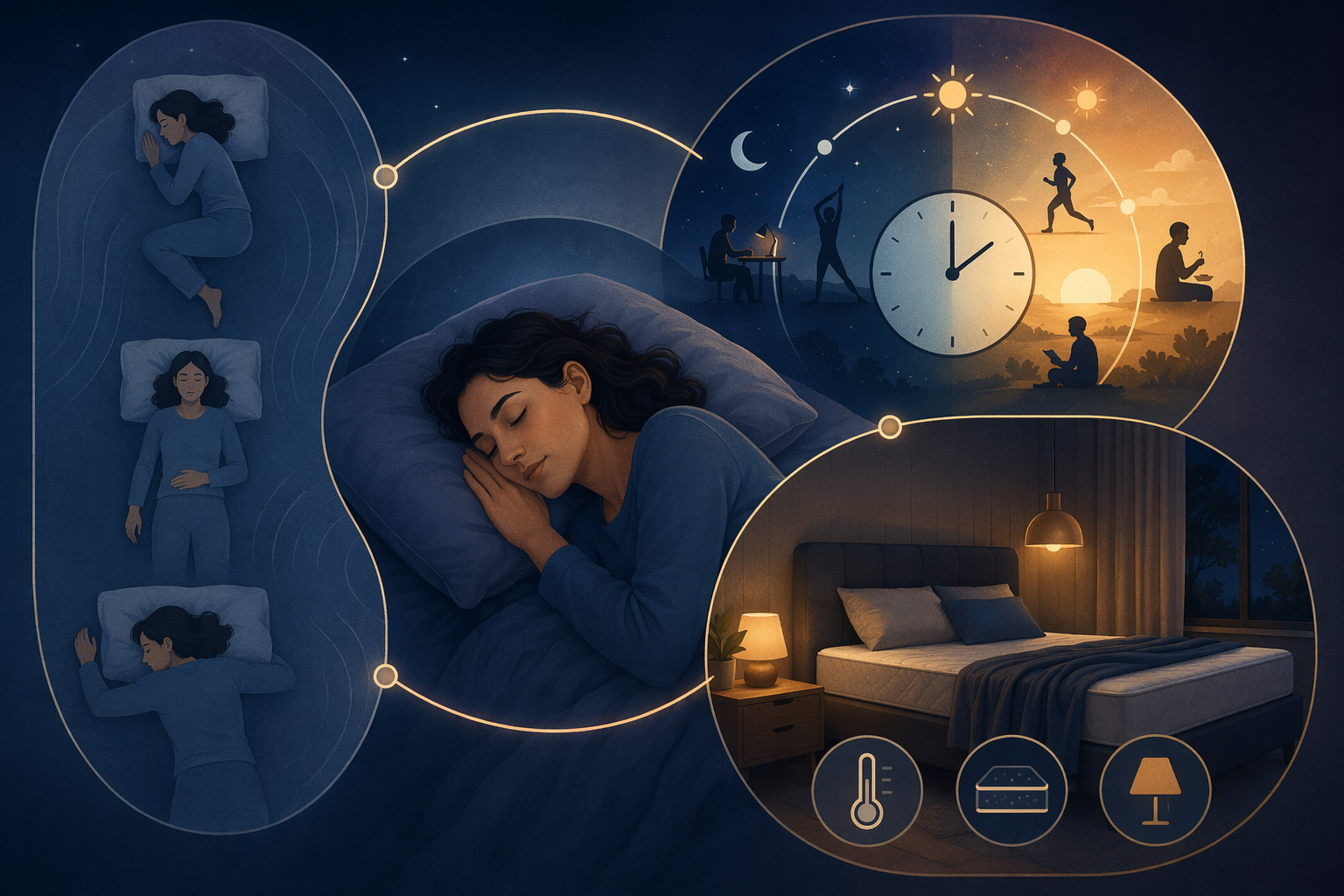
The best way to sleep is usually not a single posture or a perfect checklist. A more useful first question is: which layer is most likely driving the problem in your case? If reflux, snoring, apnea, pregnancy discomfort, or neck pain is the loudest complaint, position usually deserves first attention [1]. If the clock is drifting, routines deserve the next look. If you already have a workable routine but still wake because the room is too hot, bright, or noisy, the environment is the last place to tune.
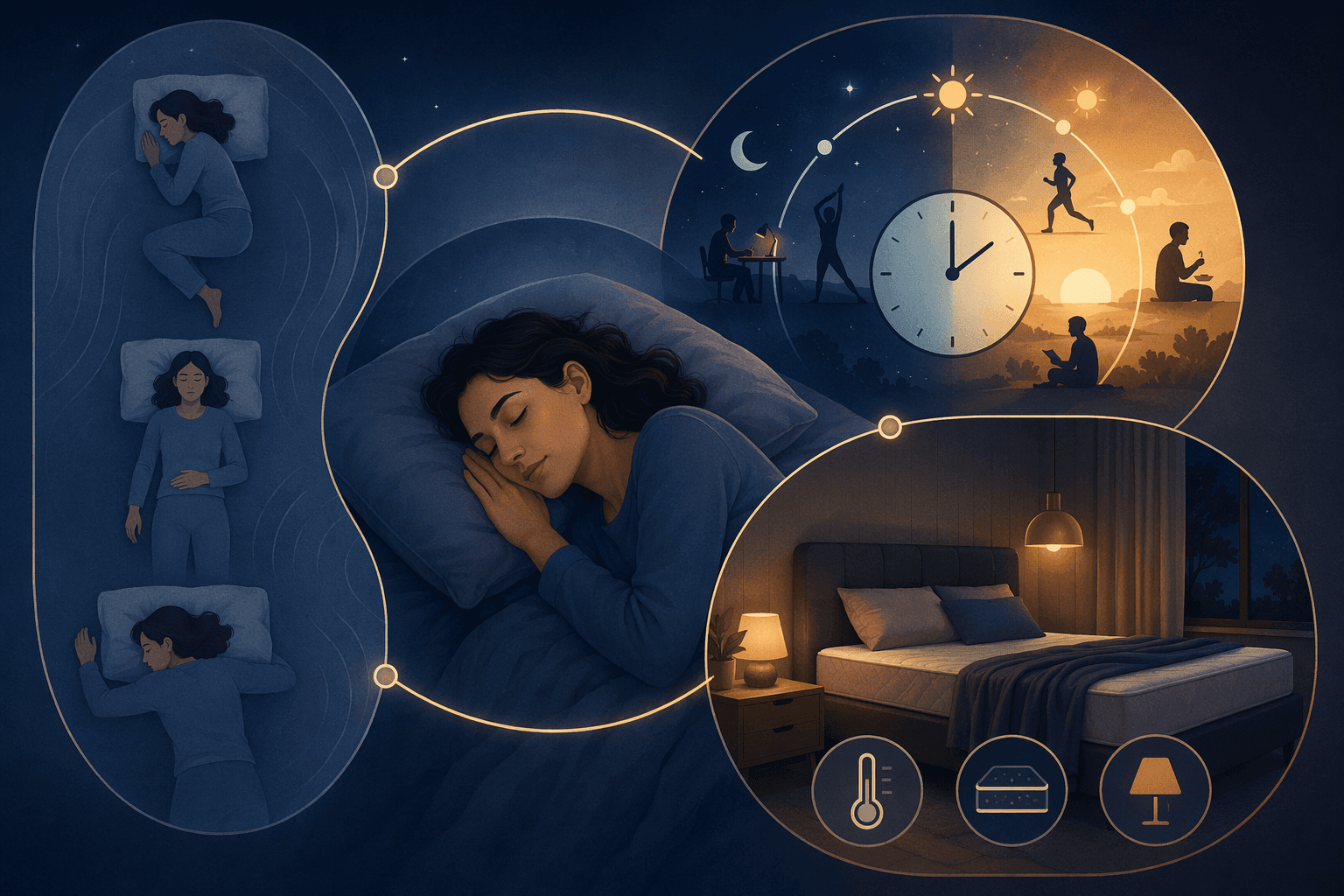
Which layer is most likely causing the problem?
- Position first when the issue is body-specific: reflux, pregnancy discomfort, snoring, sleep apnea, shoulder or neck pain.
- Routine first when the issue is timing-specific: late caffeine, variable bedtimes, work that runs into the evening, screens that keep the brain activated.
- Environment first when the issue is setting-specific: heat, light, noise, mattress support, or a room that keeps interrupting sleep even when you are otherwise ready.
Position is where generic advice breaks fastest
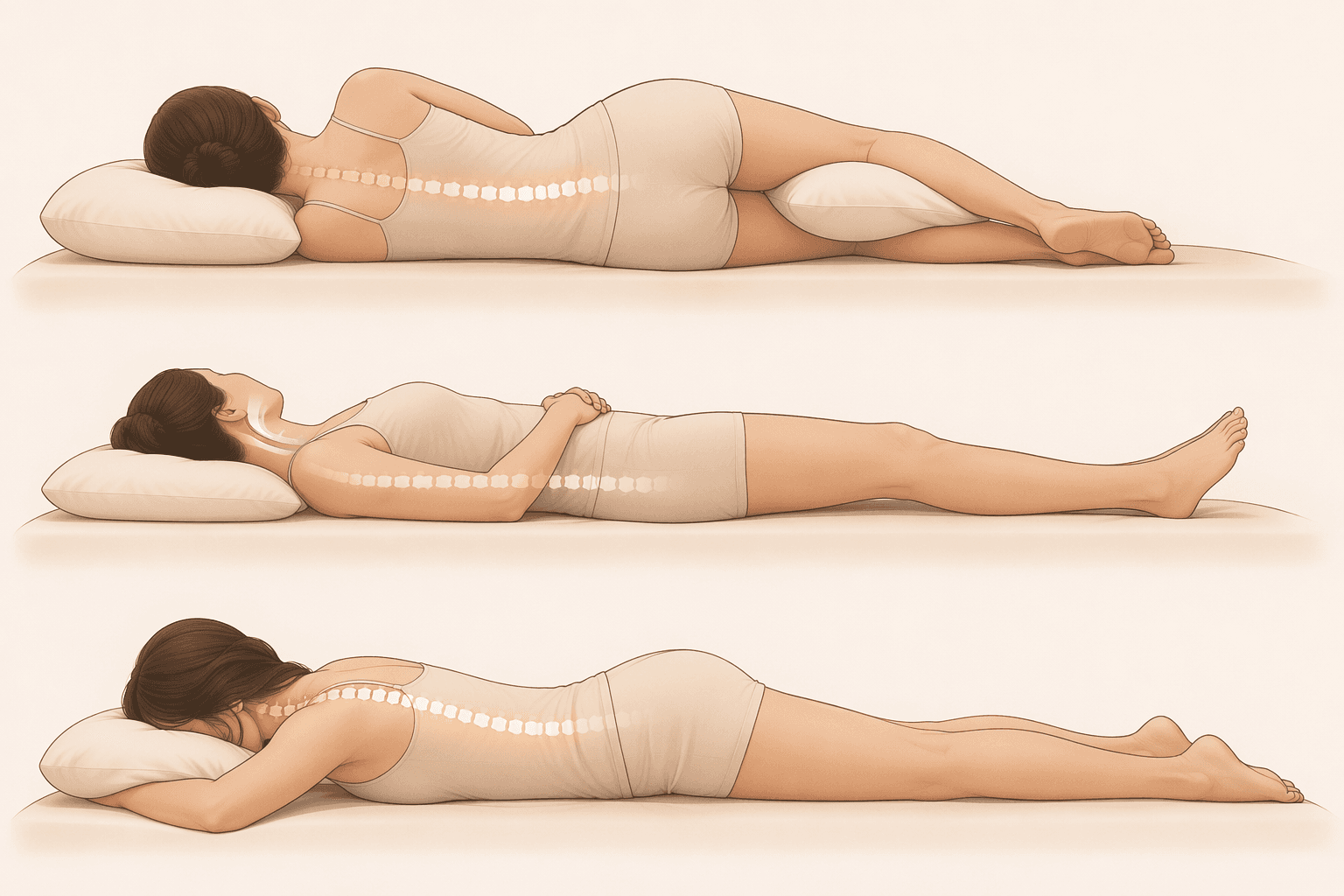
This is the branch that most often gets flattened into one-size-fits-all advice. Side, back, and stomach sleeping each have tradeoffs, and the same position can be helpful for one body and irritating for another. If you want the mechanics behind those tradeoffs, see how sleep position affects sleep quality and health.
| Position | Where it tends to fit | What to watch |
|---|---|---|
| Side | A common starting point for many adults; Sleep Foundation cites side sleeping as the most common position, used by 60%+ of adults [1]. It also makes sense when you need to stay off your back because of positional sleep apnea [1]. | A 2022 flexible sensor study of 13 young adults found that right-side sleep was associated with the most slow-wave sleep and the fewest awakenings, but the sample was small and young, so that result should be treated as suggestive rather than universal [2]. |
| Left side | Often the better fit when reflux or pregnancy discomfort is part of the picture [1]. | The reason is anatomical and practical, not moral: the position can reduce reflux exposure and is commonly recommended in pregnancy guidance [1]. |
| Back | Can be useful when you want the neck and face to stay more neutral [1]. | It is usually the wrong default if snoring or sleep apnea gets worse on your back [1]. |
| Stomach | Sometimes reduces snoring for some people [1]. | It is the least common choice, at under 10% of adults, and the turned neck can strain the cervical spine [1]. |
The most useful reading of the position evidence is narrower than the internet usually makes it sound. The sensor study is interesting because it connects a posture to sleep architecture, but it was only 13 participants, all young adults, over 15 nights each [2]. That makes it a clue, not a universal command. The broader pattern is simpler: choose the position that best matches the problem you are trying to solve, then adjust only if the body still pushes back [1][2].
Routines matter when the clock is the problem
Sleep hygiene works better when it is treated as circadian alignment, not as a personality test. In a 2026 randomized trial of 119 adults aged 50 to 80, video-based sleep hygiene education improved subjective PSQI scores from 6.82 to 5.82 and Epworth Sleepiness Scale scores from 6.97 to 5.36, but Fitbit sleep efficiency and wake after sleep onset did not change [3]. The important part is not that the wearable was wrong; it is that people can feel better before the objective metrics move, and sometimes the reverse happens too [3].
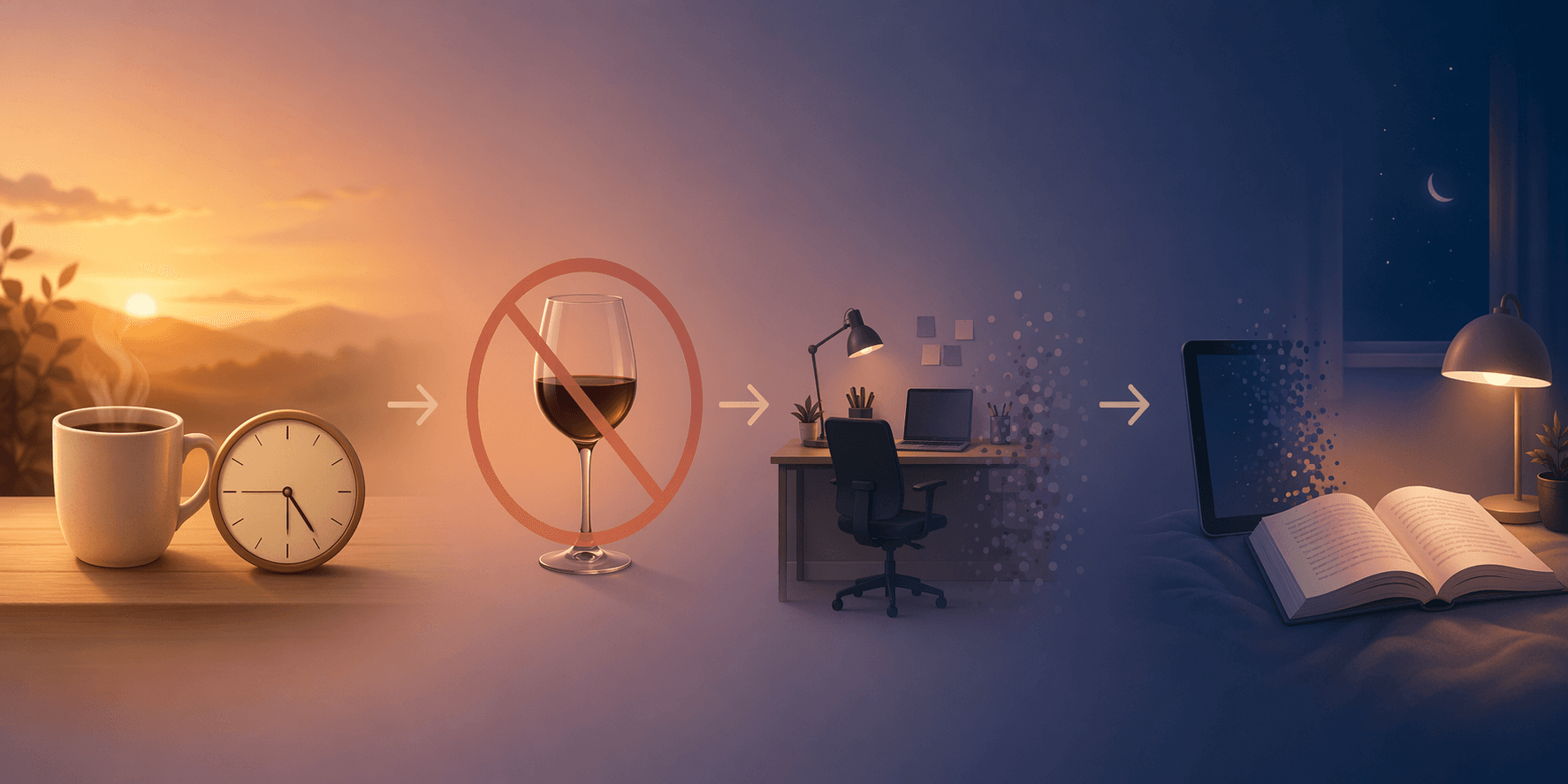
That makes routine work worth doing, especially when the problem is timing rather than anatomy. The usual levers are concrete:
- Keep caffeine earlier in the day. Late caffeine can shorten sleep and make sleep less efficient [4][5].
- Keep alcohol and heavy meals away from bedtime if they tend to fragment your sleep [4][5].
- Stop work early enough that your nervous system is not trying to shut down while it is still solving problems [4][5].
- Reduce screens before bed if they keep the brain alert or push bedtime later [4][6].
- Move regularly during the week; exercise is one of the more reliable background supports for sleep [6].
A shorthand like 10-3-2-1 can help organize those choices, but it should stay a mnemonic, not a rulebook. The useful part is the sequence of decisions: remove the stimulant early, avoid the late disruptors, cut off work, then dim the room and mind.
Environment is the last layer to tune
Once position and timing are close to right, the bedroom is mostly about reducing friction. Cooler rooms, darkness, and quiet remain the most durable recommendations across clinical and public-health sleep guidance [4][6][1]. A mattress and pillow setup that leaves you sore or compressed is not a small detail; it is part of the sleep problem, especially when pain wakes you before the clock does.
Consistency helps, but it is not a moral law. If a stretch of short sleep has built up, a bit of recovery sleep on the weekend may be reasonable rather than a sign that the whole routine has failed.
If the pattern keeps pointing to suspected sleep apnea, chronic insomnia, or another sleep disorder, the next step is evaluation rather than more optimization. Position changes, routines, and room tweaks can support better sleep, but they should not be asked to replace diagnosis when the body keeps sending the same warning.
References
- What Is the Best Sleeping Position? — Sleep Foundation.
- The Relationship between Sleeping Position and Sleep Quality: A Flexible Sensor-Based Study — PMC, 2022.
- Improving sleep health through sleep hygiene education in adults aged 50–80 years — Frontiers in Sleep, 2026.
- Sleep tips: 6 steps to better sleep — Mayo Clinic.
- 8 secrets to a good night's sleep — Harvard Health.
- About Sleep — CDC.
Comments
Join the discussion with an anonymous comment.