
If you have insomnia, you probably do not need another list that tells you to stop drinking coffee at bedtime and “just relax.” A useful sleep hygiene checklist for adults with insomnia has to do two things at once: give you concrete habits to test, and be honest that sleep hygiene is supportive care, not the full treatment for persistent or clinically impairing insomnia.
That distinction matters. Sleep hygiene can reduce avoidable friction around sleep: badly timed light, irregular schedules, caffeine too late in the day, a bedroom that keeps waking you up, or a bed that has become the place where your brain rehearses every unfinished problem. But chronic insomnia often runs on conditioned arousal, worry about sleep, schedule drift, and behaviors that make sense in the moment but keep the cycle going. For that level of insomnia, cognitive behavioral therapy for insomnia, usually called CBT-I, is the first-line treatment framework; sleep hygiene is one component inside a larger plan.
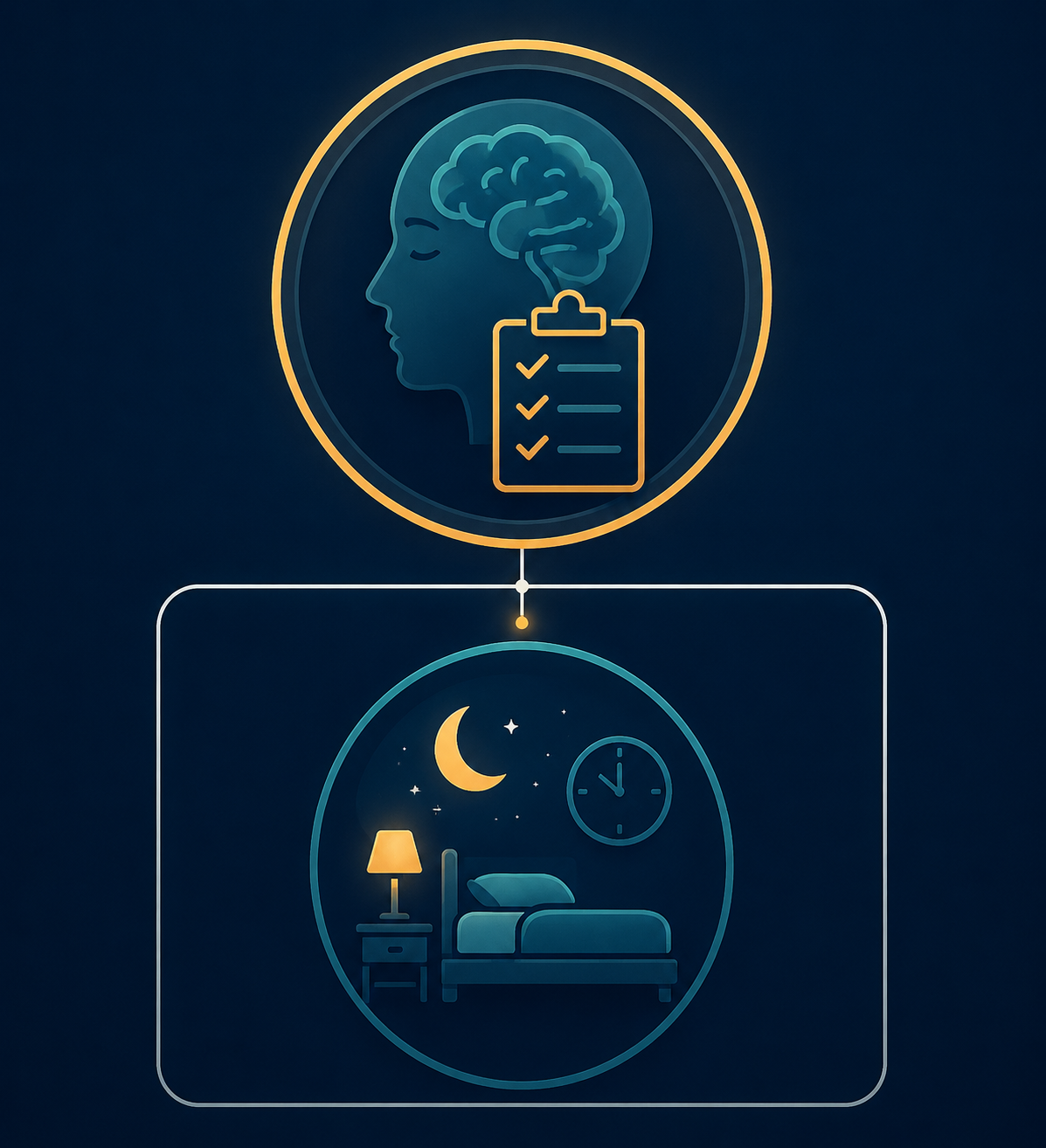
The Checklist, Organized by What Each Habit Is Trying to Fix
The point is not to become perfect at sleep. The point is to stop guessing. Each item below targets a different mechanism: circadian timing, conditioned arousal, sleep pressure, physiological disruption, environmental disruption, or cognitive-emotional activation. If a habit does not match the problem you are having, it may be harmless but unimpressive.
| Checklist item | Mechanism it targets | Most relevant when |
|---|---|---|
| Keep a consistent wake time | Circadian anchoring and sleep-wake rhythm stability | Your sleep schedule drifts, weekends reset your body clock, or you lie in bed late after a bad night |
| Get bright light soon after waking and dim light at night | Circadian timing signals | You feel sleepy too late, wake too early, or have an irregular rhythm |
| Use the bed only for sleep and sex | Conditioned arousal | Your bed has become a place for worrying, scrolling, working, or watching the clock |
| Get out of bed when you are awake for a prolonged stretch | Reconditioning the bed-sleep connection | You spend long periods awake in bed and become more alert there |
| Protect sleep pressure during the day | Homeostatic sleep drive | You nap to recover from bad nights but then cannot fall asleep at bedtime |
| Time caffeine and alcohol carefully | Physiological stimulation and sleep fragmentation | You fall asleep but wake often, or your body feels wired despite fatigue |
| Build a repeatable wind-down period | Cognitive-emotional activation | Your mind accelerates at bedtime or sleep becomes a performance test |
| Make the bedroom dark, quiet, cool, and boring | Environmental disruption reduction | Noise, light, temperature, pets, or a partner repeatedly wake you |
| Keep clock-checking out of reach | Sleep effort and threat monitoring | Seeing the time triggers calculation, panic, or self-criticism |
| Use exercise and meals to support timing, not to force sleep | Rhythm regularity and physical arousal management | Late intense workouts or heavy meals leave you activated or uncomfortable |
Start With Wake Time, Not Bedtime
For insomnia, bedtime is often the wrong control lever. It is tempting to go to bed earlier after a bad night, hoping to catch up. The problem is that an early bedtime can put you in bed before your body has built enough sleep pressure, which gives you more time awake in the exact place you are trying to make feel safe and sleepy again.
A consistent wake time gives the sleep system an anchor. It helps set the rhythm for light exposure, meals, movement, alertness, and the next night’s sleepiness. This does not mean you must enjoy getting up after a poor night. It means the wake time is doing a job that bedtime cannot do as reliably.
- Choose a wake time you can keep on workdays and most days off.
- Avoid sleeping in for long stretches after a bad night; it can make the next night harder.
- If your current schedule is very irregular, move toward consistency gradually rather than trying to fix everything in one morning.
- Do not use an early bedtime as the main repair strategy after insomnia. Let sleepiness, not exhaustion alone, guide when you get into bed.
This is one of the least glamorous items on the checklist, and also one of the most important. A stable wake time will not erase insomnia by itself, but without it, the rest of the plan often has to work against a moving target.
Use Light Like a Timing Signal
Light is not just ambience. It is one of the clearest signals your brain uses to judge when daytime and nighttime are happening. For an adult with insomnia, light timing is especially worth cleaning up when the sleep schedule has drifted, bedtime keeps sliding later, or mornings feel disconnected from the rest of the day.
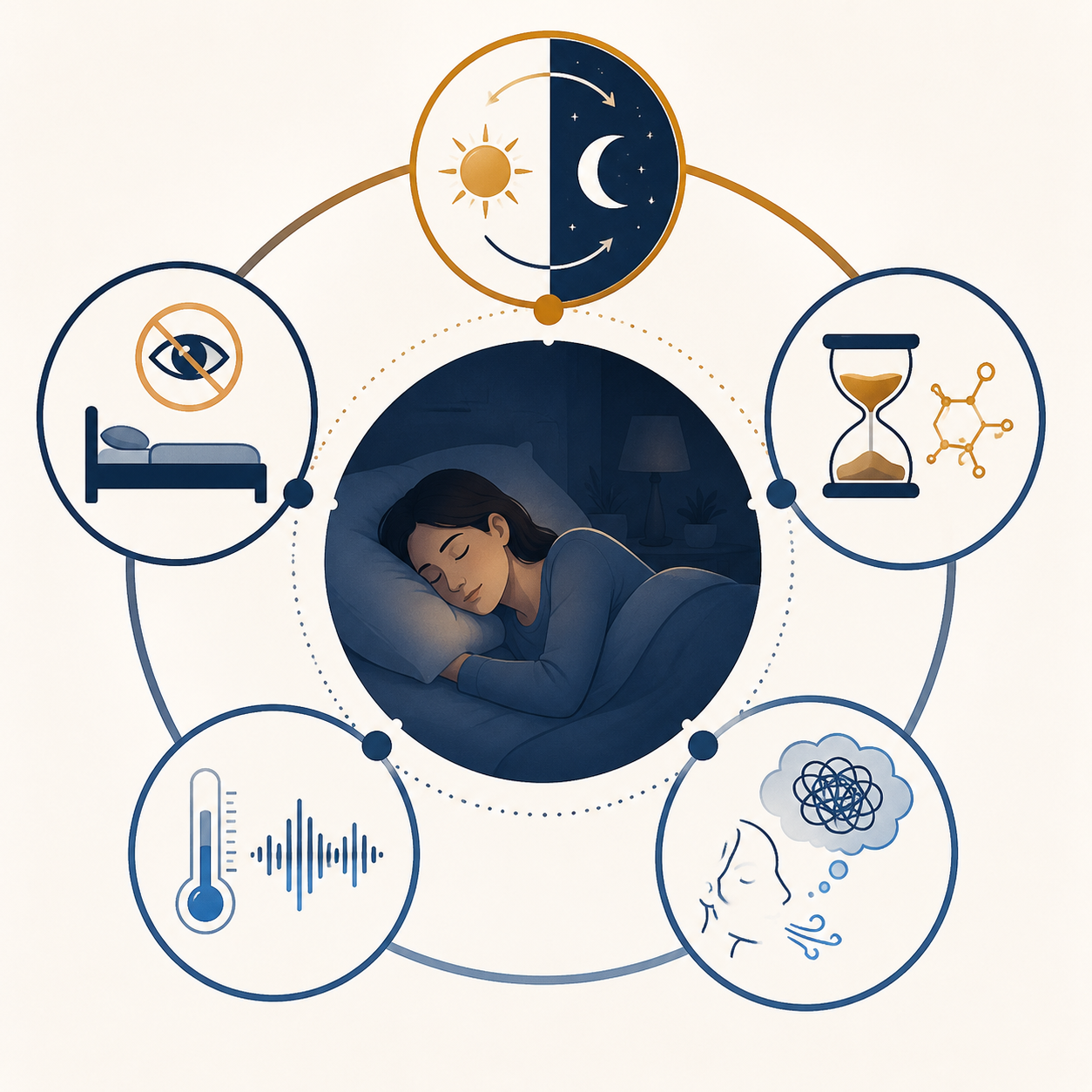
Morning light helps reinforce the start of the biological day. Evening light, especially bright light close to bed, can push against the signal that night has arrived. This does not require turning your home into a cave at sunset. It does mean being intentional: brighter mornings, gentler evenings, and fewer high-intensity light exposures when you are trying to cue the brain toward sleep.
- Get outdoor light or bright indoor light soon after waking when possible.
- Dim unnecessary lights during the wind-down period.
- If screens are part of your evening, reduce brightness and avoid content that keeps you emotionally or mentally activated.
- Do not treat blue-light settings as a complete solution if the real issue is working, arguing, shopping, gaming, or problem-solving in bed.
The screen advice is where sleep hygiene often becomes annoyingly shallow. The light matters, but so does what you are doing with the screen. A calm show across the room and a work email in bed are not the same sleep problem.
Rebuild the Bed-Sleep Connection
This is the part many generic checklists under-explain. In insomnia, the bed can stop feeling like a cue for sleep and start functioning like a cue for alertness. You get into bed and the brain learns: now we monitor, calculate, remember, regret, plan, and check whether sleep is happening yet.
That learned association is called conditioned arousal. It is one reason a person can feel half-asleep on the couch, then become abruptly awake after getting into bed. The solution is not to scold yourself into relaxing. The solution is to reduce the amount of wakeful struggling that happens in bed.
- Use the bed for sleep and sex, not work, scrolling, eating, tense conversations, or clock-watching.
- If you are awake for a prolonged stretch and getting more frustrated, leave the bed and do something quiet in low light.
- Return to bed when sleepiness is present again, not when you have successfully forced yourself to feel calm.
- Repeat this as a re-training process, not as a punishment for being awake.
The detail that matters is tone. Getting out of bed is not meant to be dramatic. No bright kitchen lights, no catching up on work, no turning the night into a second day. The action is simply: stop pairing the bed with a long, frustrated wakeful episode.
Protect Sleep Pressure Without Turning the Day Into a Test
Sleep pressure is the body’s accumulating drive for sleep across the day. After a rough night, it is understandable to nap, lie down repeatedly, cancel movement, or spend the evening resting in bed. Sometimes recovery rest is necessary. But if daytime sleep and extended time in bed become the main response to insomnia, bedtime can arrive before the body is ready to sleep.
For many adults with insomnia, the goal is not to ban rest. It is to avoid draining sleep pressure so much that the night becomes another long wait.
- If you nap, keep it intentional rather than drifting in and out of sleep for much of the day.
- Avoid using the bed as the default recovery location during the day.
- Keep ordinary daytime activity in place when you safely can, even if the day is slower than usual.
- Notice whether naps help you function or mainly postpone sleepiness until too late at night.
Time Caffeine and Alcohol Around Their Real Effects
Caffeine advice often sounds insulting because most adults with insomnia already know not to drink espresso in bed. The more useful question is whether caffeine is still carrying stimulation into the part of the day when your nervous system needs a downward slope.
The practical move is to set a personal caffeine cutoff and keep it steady long enough to judge the effect. If insomnia is severe, that may mean testing an earlier cutoff than you would prefer. Also count sources that are easy to forget: tea, energy drinks, some sodas, pre-workout products, and chocolate. The goal is not moral purity. It is removing a stimulant variable while you evaluate the rest of the pattern.
Alcohol causes a different kind of confusion. It may make sleep feel easier at the front end, but it can make the night more unstable. For someone whose main complaint is waking during the night or waking too early, alcohol timing and amount are worth examining even when alcohol seems to “help” with falling asleep.
- Set a caffeine cutoff and keep it consistent for a trial period.
- Track whether the issue is sleep onset, nighttime waking, early waking, or all three.
- If alcohol is part of the evening, notice whether it is followed by lighter, more broken sleep.
- Avoid adding new sleep aids while testing caffeine or alcohol changes, or you will not know what changed what.
Make Wind-Down a Buffer, Not a Sleep Performance
A wind-down routine is useful when it lowers cognitive and emotional activation. It is much less useful when it becomes a nightly exam: did I breathe correctly, stretch long enough, journal the right way, relax hard enough?
The routine should create separation between the day’s demands and the bed. It can be plain. Dimming lights, setting out tomorrow’s essentials, taking a warm shower, reading something low-stakes, listening to quiet audio, or doing a brief written worry list can all work if they reduce mental load. The best routine is repeatable on a bad night, not impressive on a perfect one.
| If bedtime usually brings... | Try a wind-down action that... |
|---|---|
| Work thoughts | Moves tomorrow’s tasks onto paper before bed |
| Emotional replay | Creates a quiet transition without requiring you to solve the feeling |
| Body tension | Uses gentle stretching, warmth, or slow breathing as a cue to downshift |
| Fear of another bad night | Reduces checking and calculation rather than promising guaranteed sleep |
If a relaxation exercise helps, keep it. If it makes you more aware that you are still awake, change it. Insomnia treatment does not require you to become a person who loves scented candles, meditation apps, or elaborate rituals. It requires fewer cues that tell your brain the night is a problem to solve.
Fix the Bedroom Problems That Actually Wake You
Bedroom environment is a support, not a cure. A dark, quiet, comfortable room cannot by itself undo conditioned arousal or a badly shifted schedule. But environmental disruptions still matter because they can trigger awakenings that are hard to recover from once insomnia has made you vigilant.
- Reduce light that reaches your eyes during the night, including small LEDs if they draw your attention.
- Address noise with earplugs, white noise, room changes, or household agreements when possible.
- Adjust bedding and temperature so you are not repeatedly waking hot, cold, or uncomfortable.
- If pets or a partner regularly wake you, treat that as a sleep variable, not a character flaw.
- Move visible clocks away from the bed if time-checking fuels panic or mental math.
The standard is not a magazine bedroom. It is fewer preventable awakenings and fewer cues that invite monitoring. If you wake briefly and do not fully register the room, the environment is probably doing its job.
Exercise, Meals, and Evening Activity: Keep Them Predictable
Movement during the day can support sleep, partly because it helps reinforce daytime alertness and physical tiredness. The insomnia-specific caution is timing. A hard workout late in the evening may leave some people too activated, while no daytime activity at all can make the day and night feel blurred together.
Meals work in a similar way. Going to bed uncomfortably full can disrupt sleep; going to bed hungry can also keep you alert. For most adults, the practical target is a steady meal rhythm and avoiding extremes close to bedtime.
- Keep daytime movement regular, even if it is modest.
- If intense evening exercise seems to delay sleep, move it earlier when possible.
- Avoid very heavy meals close to bed if they cause reflux, discomfort, or awakenings.
- Use a small planned snack only if hunger is a recurring reason you cannot settle.
How to Use the Checklist Without Making Insomnia More Stressful
The fastest way to ruin a sleep hygiene checklist is to turn it into a nightly scorecard. Insomnia already makes people monitor themselves too closely. A better approach is to choose a small number of changes that match your actual pattern, repeat them consistently, and judge the trend rather than one night.
| Your pattern | Start with |
|---|---|
| Trouble falling asleep | Wake time, light timing, caffeine cutoff, bed-use boundaries, wind-down |
| Waking often during the night | Alcohol timing, bedroom disruptions, clock-checking, bed reconditioning |
| Waking too early | Light timing, schedule consistency, alcohol review, reducing early-morning clock monitoring |
| Sleep schedule drifting later | Consistent wake time, morning light, evening dimming, fewer naps |
| Bed feels stressful | Stimulus control, removing wakeful activities from bed, calmer out-of-bed reset plan |
A reasonable trial does not require changing your whole life at once. In fact, changing everything makes it harder to know what helped. Pick the few habits most connected to your mechanism and make them boringly repeatable.
Where CBT-I Fits If Sleep Hygiene Is Not Enough
Sleep hygiene removes common obstacles to sleep. CBT-I goes further. It directly addresses the insomnia cycle: the time spent awake in bed, the fear and effort around sleep, the schedule choices that reduce sleep drive, and the thoughts and behaviors that keep the nervous system on alert at night.
That is why sleep hygiene can feel both sensible and insufficient. You may have a dark room, no late caffeine, and a decent bedtime routine, yet still become wide awake the moment sleep matters. That does not mean you failed the checklist. It may mean the main driver is no longer a simple hygiene problem.
Consider a CBT-I-level intervention if insomnia is persistent, causes meaningful daytime impairment, or continues despite reasonable sleep hygiene changes. This is especially important when you spend long stretches awake in bed, dread bedtime, rely heavily on compensating behaviors, or feel trapped in a cycle of trying harder and sleeping worse.
The Decision Point
Keep using sleep hygiene if the checklist reveals clear, fixable problems: irregular wake times, poorly timed light, late caffeine, alcohol-related awakenings, disruptive bedroom conditions, or a wind-down period that never really separates the day from the night. Those changes are worth repeating long enough to see whether your sleep becomes more stable.
Move beyond sleep hygiene if you have already made the reasonable changes and insomnia still runs the night. At that point, the next step is not a stricter checklist. It is treatment that targets insomnia itself, with sleep hygiene in its proper place: useful support, not the main event.
Comments
Join the discussion with an anonymous comment.