
What Does It Mean to Sleep With Your Mouth Open?
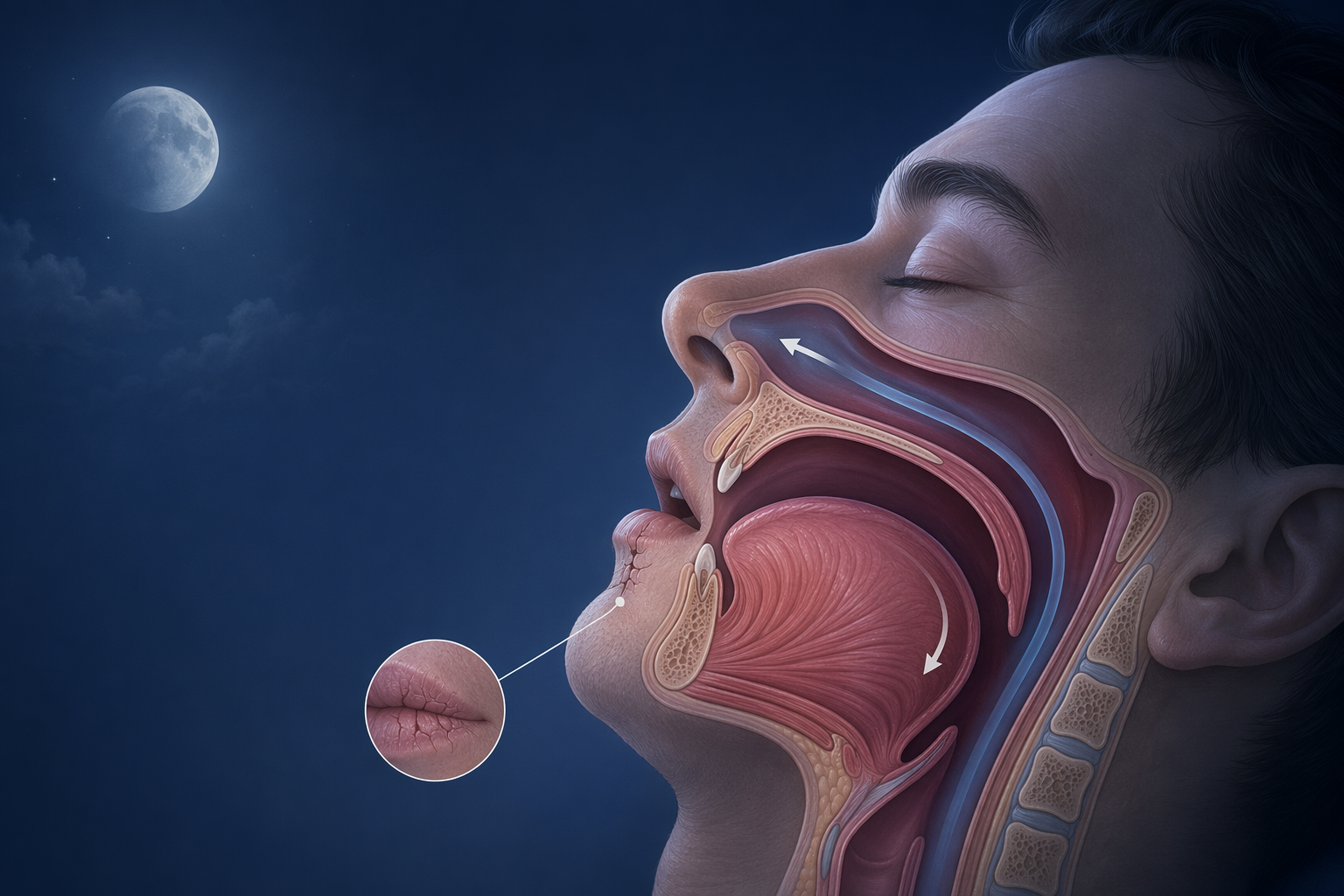
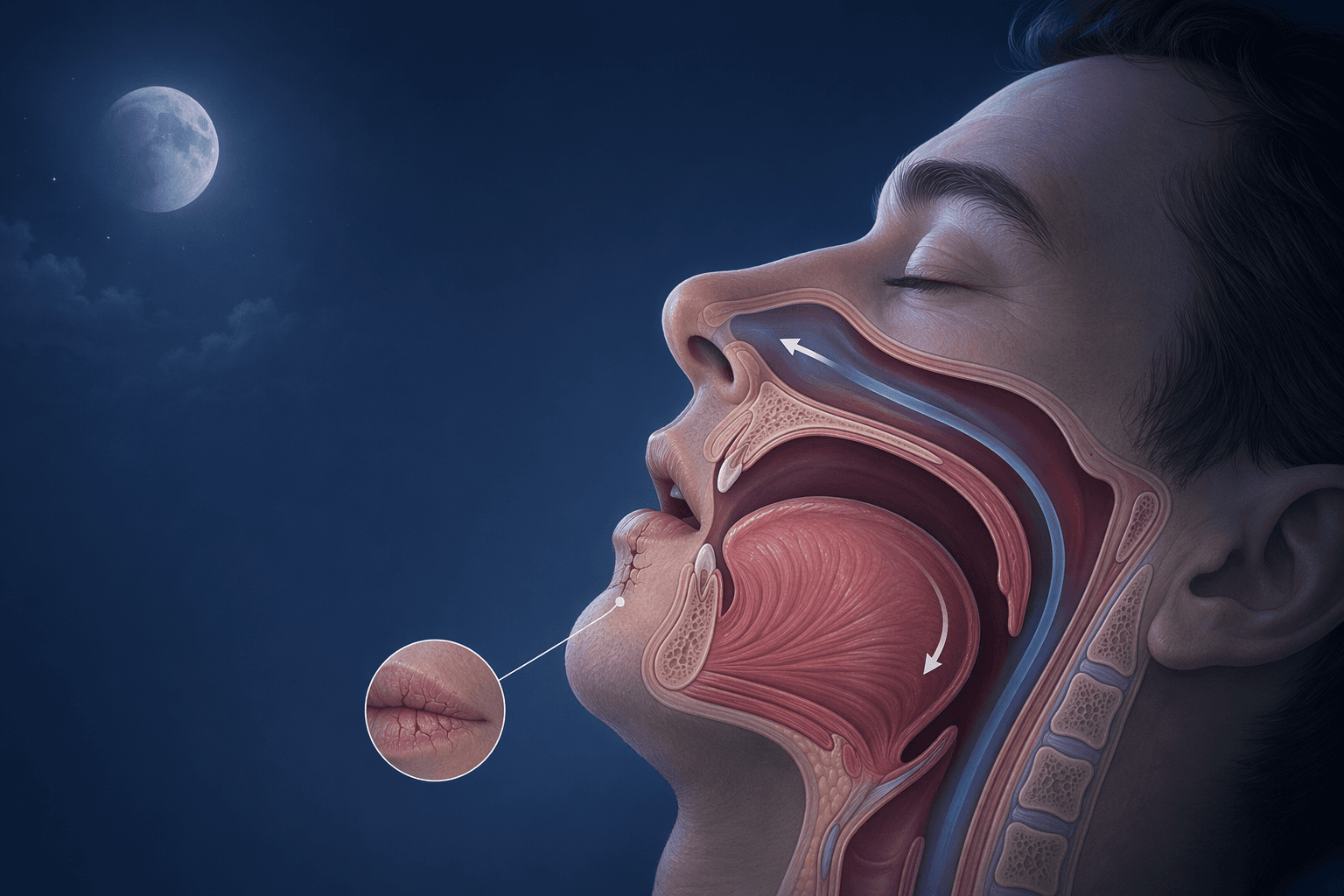
Sleeping with your mouth open is not a simple preference or a harmless quirk. Physiologically, it represents a bypass of the nasal airway — the body's primary, purpose-built breathing route during rest. The nose is designed to filter, warm, and humidify incoming air before it reaches the lungs. When you sleep with your mouth open, you skip that entire preparation system.
For most adults, open-mouth breathing during sleep is a signal that something is compromising nasal airflow. The body defaults to the mouth as a backup airway when the nose cannot deliver enough air. The core thesis of this guide is straightforward: address the root cause that is blocking nasal breathing, not just the symptom of a dry mouth in the morning. Taping the mouth shut without understanding why it opened in the first place can be dangerous.
How Common Is Mouth Breathing During Sleep?
Mouth breathing is far more common than most people realize. A 2015 survey conducted by KRC Research on behalf of Breathe Right polled 1,001 American adults and found that 61% self-identify as mouth breathers, and 71% of beds host at least one person who breathes through their mouth at night. The same survey reported that 75% of respondents had been woken by nighttime nasal congestion, 61% wake with a dry mouth, and 37% snore.
The survey also highlighted the impact on sleep quality: 64% of mouth breathers reported that breathing through their mouth affected their sleep quality, nearly matching the 69% who cited stress as a factor. More than half (54%) of mouth breathers said they did not get a good night's sleep, and 56% reported waking at least twice per night due to mouth breathing.
Nasal Breathing vs. Mouth Breathing: A Physiological Comparison
The difference between nasal and oral breathing is not trivial. The nose is an active organ of respiration, not just a passive passageway. When you switch to mouth breathing, you lose several critical physiological functions simultaneously.
| Function | Nasal Breathing | Mouth Breathing |
|---|---|---|
| Air filtration | Nasal hairs and mucus trap particles, allergens, and pathogens | No filtration; unfiltered air enters the airway directly |
| Humidification | Nasal mucosa adds moisture to inspired air, preventing airway drying | Dry air reaches the throat and lungs, causing tissue irritation |
| Temperature regulation | Turbinates warm air to near body temperature before it reaches the lungs | Cold or room-temperature air enters the lower airway |
| Upper airway resistance | Lower resistance; nasal breathing creates optimal airflow dynamics | 2.5× higher resistance during sleep (Fitzpatrick et al., 2003) |
| Saliva production and oral pH | Normal saliva flow maintains oral pH above 5.5, protecting enamel | Reduced saliva flow drops pH below 5.5, triggering enamel demineralization |
| Oxygen uptake | Nasal breathing increases nitric oxide production, improving oxygen absorption | Reduced nitric oxide; lower oxygen uptake efficiency |
Comments
Join the discussion with an anonymous comment.