
Mechanism explainer
How to Safely Treat Parkinson's Sleep Problems
An evidence-tiered guide to treating sleep disruption in Parkinson's disease, organized by sleep disorder with explicit safety notes for older adults, from non-drug strategies to medication options.
Parkinson's disease sleep problems are common enough that a bad night should not be treated as a personal failure. In one early-stage Parkinson's cohort, 71% of participants had at least one diagnosable sleep disorder on systematic assessment, and broader clinical summaries often place sleep problems in more than 75% of people with Parkinson's disease.[1] The more useful question is not whether sleep is affected. It is which sleep disorder is showing up at 2 a.m., 10 a.m., or beside a startled bed partner.
That distinction matters because insomnia, REM sleep behavior disorder, excessive daytime sleepiness, restless legs syndrome, and obstructive sleep apnea are not five names for the same broken sleep. They point toward different tests, different first steps, and very different medication risks. A sedating pill that seems reasonable for one pattern can make another pattern more dangerous, especially in an older adult who already has freezing, low blood pressure, confusion, urinary urgency, or a history of falls.
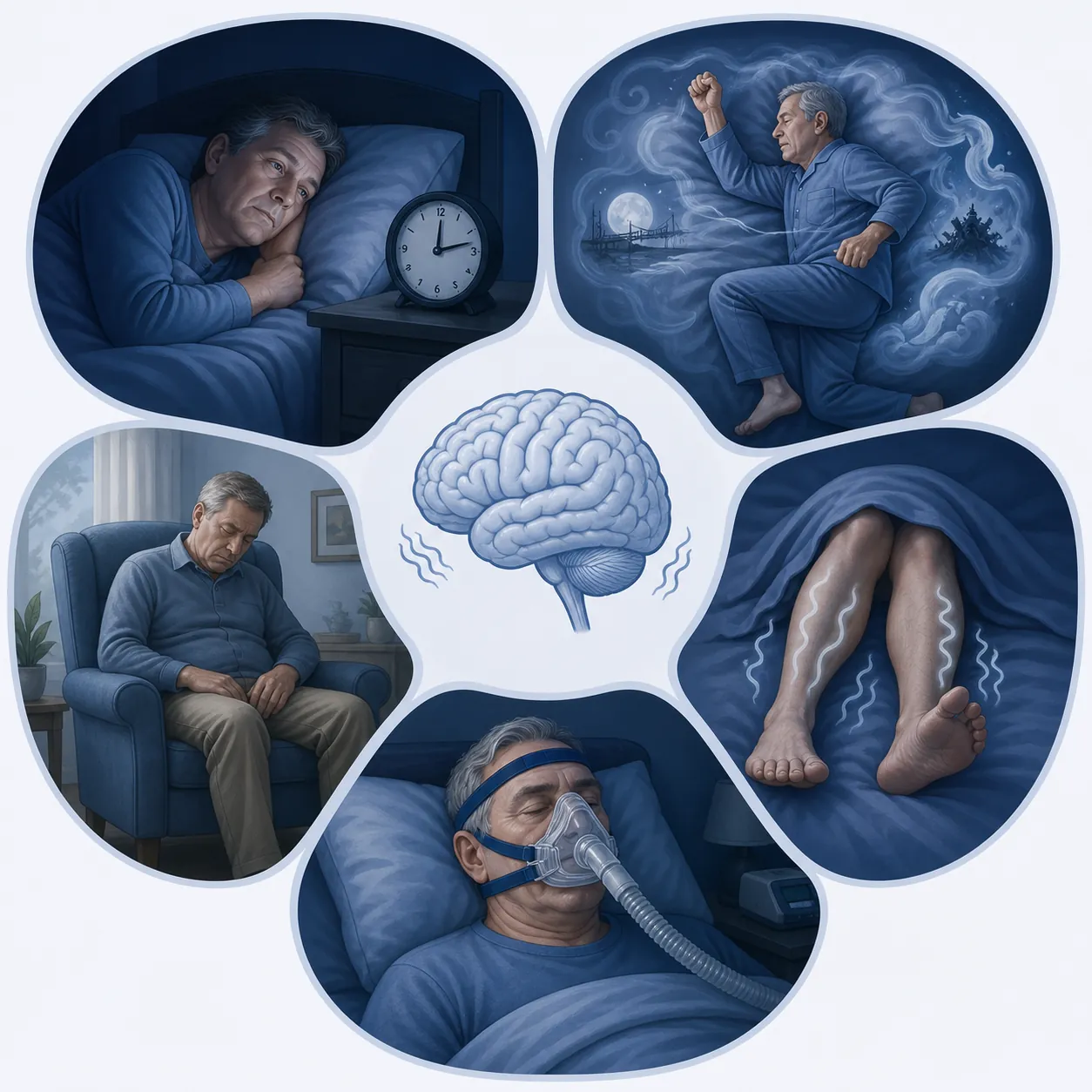
Start by naming the sleep pattern
Parkinson's can disturb sleep through several overlapping routes: degeneration in brainstem and arousal systems, dopamine dysregulation, nighttime motor symptoms, autonomic symptoms such as urinary urgency, and circadian disruption.[2] That biology explains why a person can have more than one sleep problem at once. It also explains why a generic sleep-aid approach is too blunt.
The early-stage ICEBERG cohort gives a useful, but not universal, snapshot: insomnia was found in 41%, REM sleep behavior disorder in 25%, excessive daytime sleepiness in 25%, restless legs syndrome in 16%, and obstructive sleep apnea estimates ranged widely in the broader literature, with a 2024 meta-analysis cited in a later review estimating OSA prevalence around 45% in Parkinson's disease.[1][2] Those figures should not be read as a home diagnosis. The cohort was specific, the methods were formal, and rates can differ in more advanced Parkinson's. The value is in the shape of the problem: several treatable disorders can hide inside the phrase “sleep problems.”
| What the night or day looks like | More likely sleep disorder to discuss | Why the treatment path changes |
|---|---|---|
| Long sleep onset, repeated waking, early waking, or frustration in bed | Insomnia, sometimes worsened by nighttime motor symptoms, pain, nocturia, anxiety, or medication timing | CBT-I, schedule work, movement comfort, and symptom timing usually come before sedatives |
| Shouting, punching, kicking, falling out of bed, or acting out dreams | REM sleep behavior disorder | Bed safety is urgent; melatonin or clonazepam may be discussed, but clonazepam needs older-adult risk review |
| Dozing unintentionally during meals, conversations, reading, or daytime activities | Excessive daytime sleepiness | The clinician needs to check dopamine agonists, nighttime sleep quality, and sleep apnea before adding stimulants |
| Uncomfortable leg sensations at rest, worse in the evening, relieved by movement | Restless legs syndrome | Iron status, medication contributors, and augmentation risk matter; dopamine agonists can worsen the pattern over time |
| Loud snoring, witnessed pauses, gasping, morning headaches, or persistent sleepiness | Obstructive sleep apnea | CPAP or another airway treatment addresses breathing; sedatives can make an undiagnosed breathing problem riskier |
The non-drug base is not filler
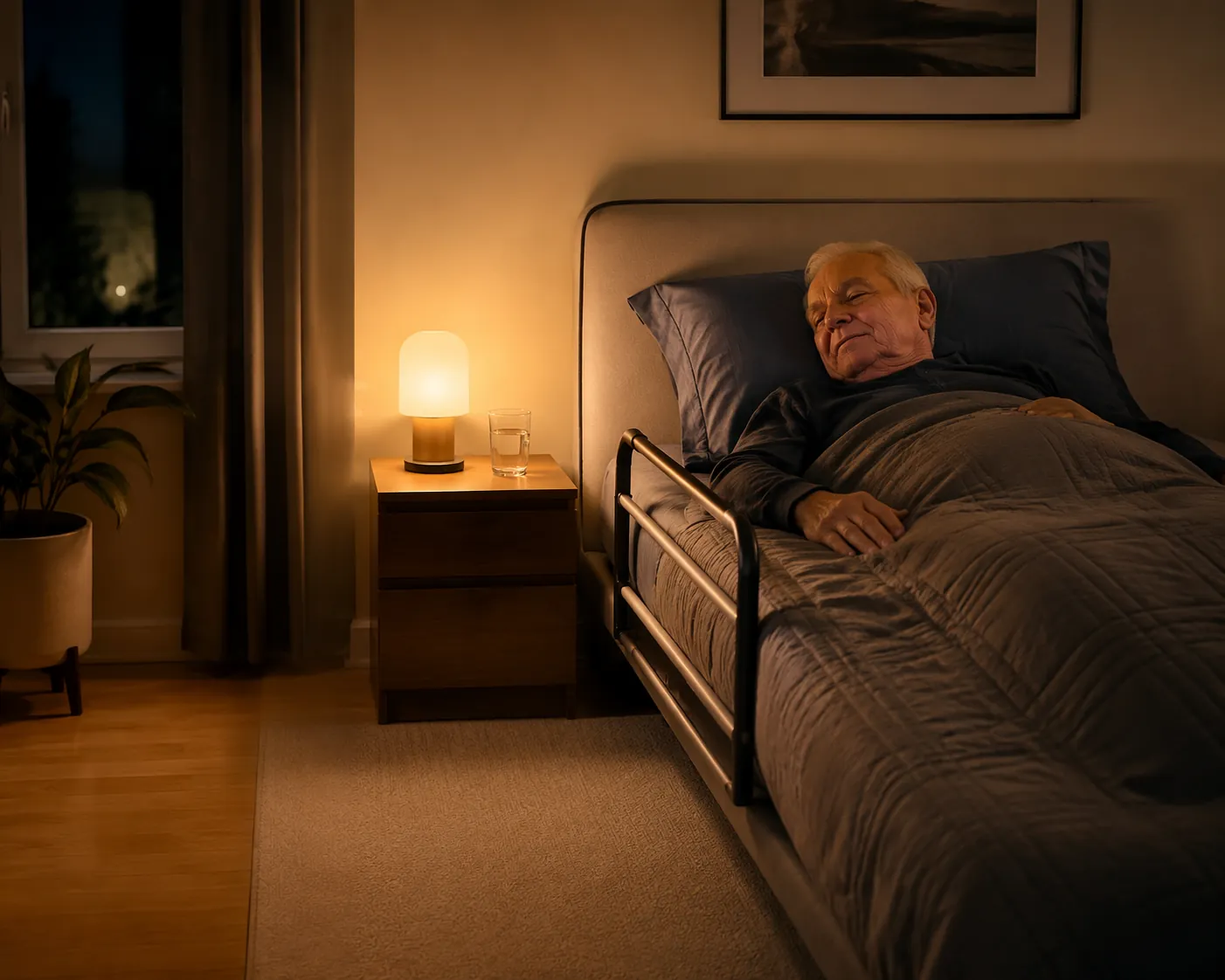
Non-drug treatment can sound weak when everyone in the house is exhausted. In Parkinson's, it is often the safest place to act while the medical sorting is still happening. The point is not to recite generic sleep hygiene. The point is to reduce the specific things that keep a person with Parkinson's awake or unsafe: difficult turning, nighttime bathroom trips, poorly timed fluids, dim walking paths, untreated movement symptoms, and a bed setup that turns dream enactment into injury.
CBT-I has a strong evidence base in insomnia more broadly, but Parkinson's-specific randomized trial evidence is limited; one treatment review identified only two small randomized controlled trials in Parkinson's disease.[3] That is a reason to be honest, not to dismiss it. CBT-I is still one of the few approaches that can improve insomnia without adding a sedating drug to an already complicated medication list.
- Use consistent wake time and light exposure rather than letting a bad night erase the next day's rhythm.
- Move longer daytime naps earlier or shorten them if they are stealing sleep pressure from the night.
- Ask the clinician whether nighttime stiffness, wearing off, pain, tremor, or urinary symptoms need targeted adjustment instead of adding a hypnotic.
- Use satin sheets or satin sleepwear if turning in bed is difficult, while making sure the floor and transfer path are not slippery.
- Place a warm night light, clear the path to the bathroom, and consider a bedside commode when urgency or freezing makes the walk risky.
- Shift more fluids earlier in the day when medically appropriate, while avoiding dehydration or changes that conflict with other conditions.
Parkinson's Foundation and APDA materials both emphasize practical bedroom changes such as lighting, bathroom safety, fluid timing, and bed mobility aids.[4][5] These are not elegant interventions. They are the difference between a person waking, turning, and returning to sleep, versus standing half-awake in the dark with orthostatic lightheadedness and a full bladder.
Insomnia: treat the cause of waking, not only the waking
Insomnia in Parkinson's is often real insomnia, but it is also often a signal. The person may be awake because medication is wearing off, because tremor or rigidity makes turning painful, because anxiety spikes at night, because restless legs begin when the room gets quiet, or because nocturia pulls them out of bed repeatedly. A sleep diary that includes medication timing, naps, alcohol, caffeine, urinary trips, pain, and motor symptoms can give the neurologist more to work with than the sentence “I can't sleep.”
CBT-I is usually the cleaner first conversation for chronic insomnia than sedative-hypnotics, particularly in an older adult with Parkinson's. The evidence in Parkinson's itself is still small, but the risk profile is usually more forgiving than medications that can worsen balance, cognition, and nighttime transfers.[3] Bright light therapy has also been studied in Parkinson's, with reviewed protocols using 4,000 to 10,000 lux and reporting potential benefit for sleep quality and excessive daytime sleepiness, though this is not a substitute for diagnosing sleep apnea, RBD, or medication-related sedation.[3]
Over-the-counter sleep aids deserve the same suspicion as prescription sedatives. “Available without a prescription” does not mean safe for Parkinson's. Many nighttime products contain antihistamines that can worsen confusion, constipation, urinary retention, and next-day grogginess in older adults. If a product's main promise is stronger sedation, it may be solving the family's immediate desperation while raising the chance of a fall before sunrise.
REM sleep behavior disorder: protect the bed before debating the pill
REM sleep behavior disorder is the Parkinson's sleep problem that most clearly punishes vague advice. A person may shout, swing, kick, leap from bed, or injure a partner while acting out dreams. The first treatment is not philosophical and not pharmacologic. It is safety: remove sharp furniture near the bed, pad corners, lower the bed if possible, place a mat beside it, secure weapons or breakable objects outside the room, and consider separate sleeping surfaces when injury risk or partner sleep disruption is high.
Separate beds are sometimes treated as an emotional verdict. In RBD, they can be a protective medical choice. A care partner who is repeatedly startled, struck, or kept hypervigilant is not simply “sleeping lightly.” Their sleep can become a second health problem in the household; more on that pattern is covered in Restful Ground's article on why sleep suffers when your partner has Parkinson's and in its guide to caregiver sleep deprivation.
Medication for RBD has to be discussed with unusual care. Melatonin is commonly used first because its safety profile is generally more favorable in older adults; a Parkinson's sleep treatment review describes melatonin doses of 3 to 12 mg for RBD.[3] Even here, the evidence is not as sturdy as families might assume. Much of RBD treatment guidance rests on case series and expert consensus rather than large randomized trials in Parkinson's populations.[3]
Clonazepam is the harder conversation. The same review reports 80% to 90% effectiveness for RBD in clinical experience and case-series evidence, which is too substantial to pretend away.[3] But clonazepam is a benzodiazepine. In an older adult with Parkinson's, that means the prescriber has to weigh sedation, confusion, worsened balance, nighttime falls, and possible worsening of sleep-disordered breathing. It may be appropriate for a specific person with dangerous RBD. It should not be handed out as a casual “sleep aid.”
Excessive daytime sleepiness: check the medication list before adding wakefulness medication
Daytime sleepiness in Parkinson's can come from fragmented sleep, OSA, depression, circadian disruption, nighttime medications, or Parkinson's medications themselves. Dopamine agonists are a particular medication class to review when sleepiness, sudden sleep episodes, hallucinations, or impulse-control symptoms appear. This is where the adult child comparing a neurologist's medication list with a sleep clinic handout is doing useful work, not being fussy.
Bright light therapy has some supportive evidence in Parkinson's sleepiness and sleep quality studies, with reviewed protocols in the 4,000 to 10,000 lux range.[3] Regular exercise can also support sleep and daytime alertness, though timing and fall safety matter. A late, vigorous workout that worsens fatigue or instability is not an upgrade just because it is non-drug.
Modafinil has been studied for excessive daytime sleepiness in Parkinson's, but it belongs after the clinician has looked for reversible causes such as untreated OSA, sedating medications, dopamine agonist effects, and insufficient nighttime sleep.[3] A wake-promoting drug can make sense for the right patient. It is a poor substitute for finding out that the person is repeatedly oxygen-desaturating at night or over-sedated by the current regimen.
Restless legs syndrome: watch for augmentation
Restless legs syndrome is not just “fidgety legs.” The classic pattern is an uncomfortable urge to move, worse at rest and in the evening, relieved by movement. In Parkinson's, it can be confused with akathisia, wearing off, neuropathy, cramps, or general nighttime discomfort. That distinction affects treatment.
A clinician may check iron status, review antidepressants or other contributors, and decide whether the pattern is truly RLS. Gabapentin or pregabalin may be considered for RLS in some patients, especially when pain or sleep fragmentation overlaps, but they can also cause dizziness, sedation, and gait unsteadiness.[3] Dopamine agonists can help RLS, yet APDA warns that they can also worsen RLS over time through augmentation, where symptoms begin earlier, become more intense, or spread.[5] That is exactly the kind of detail that gets lost when treatment is framed as simply “something to help sleep.”
Obstructive sleep apnea: sedation is not treatment
Obstructive sleep apnea can be easy to miss in Parkinson's because daytime fatigue and poor sleep already seem explained. Snoring, witnessed pauses, gasping, morning headaches, dry mouth, and persistent sleepiness should still trigger a sleep apnea conversation. A review citing a 2024 meta-analysis reported OSA prevalence around 45% in Parkinson's disease, and CPAP treatment may help stabilize motor function over one-year follow-up in people with PD and OSA.[2]
CPAP is not glamorous, and it can be difficult for someone with stiffness, tremor, mask discomfort, or cognitive changes. But when OSA is confirmed, airway treatment addresses the breathing disorder directly. Sedatives do not. In a person with unrecognized OSA, adding a stronger sleep medication may quiet the night while worsening the breathing vulnerability that is fragmenting sleep in the first place.
Medication safety in older adults with Parkinson's
The “natural versus prescription” divide is the wrong divide. The safer divide is disorder-specific versus nonspecific, and lower-risk versus higher-risk for this person. An older adult with Parkinson's may already be managing levodopa timing, dopamine agonists, MAO-B inhibitors, antidepressants, blood pressure medications, bladder medications, pain medications, constipation, hallucination risk, and nighttime bathroom trips. A new sleep drug enters that room, not an empty one.
Sedative-hypnotics are especially uncomfortable in this setting. APDA specifically cautions that these medications can increase fall risk in Parkinson's disease.[5] Parkinson's Foundation materials also emphasize that sleep treatment should include review of Parkinson's medications and other drugs that may worsen sleepiness or sleep disruption.[4] The practical question is not “Can this medication make someone sleep?” Many can. The question is what happens when the person wakes at 2 a.m. and tries to stand.
| Medication or treatment conversation | Where it may fit | Safety note that should be explicit |
|---|---|---|
| Melatonin | Often discussed for RBD; sometimes considered when circadian timing is part of the problem | Generally lower risk than benzodiazepines, but dosing, timing, next-day sleepiness, and product quality still matter |
| Clonazepam | RBD with injury risk or severe dream enactment when clinician judges benefit outweighs risk | Reported 80% to 90% effectiveness for RBD, but benzodiazepine risks include sedation, confusion, falls, and possible breathing concerns |
| Z-drugs or sedative-hypnotics | Sometimes prescribed for insomnia in general practice | Need particular caution in older adults with PD because balance, cognition, nocturia, and fall risk change the risk-benefit calculation |
| Gabapentin or pregabalin | Possible RLS option in selected patients | Can worsen dizziness, sleepiness, and gait instability; dose and kidney function matter clinically |
| Modafinil | Selected cases of excessive daytime sleepiness after reversible causes are reviewed | Should not replace evaluation for OSA, medication-induced sleepiness, or insufficient nighttime sleep |
| CPAP | Confirmed obstructive sleep apnea | Not a sedative; it treats airway collapse and needs mask support, troubleshooting, and follow-up |
Medication timing can be as important as medication choice. Nighttime wearing off may need a Parkinson's medication adjustment. Daytime sleepiness may improve when a sedating drug is reduced. RLS may worsen if a dopamine agonist causes augmentation. RBD may become less dangerous after the room is changed even before the medication decision is final. These are clinician-level decisions, but families can make them easier by bringing a clear pattern instead of a single complaint.
What to bring to the appointment
A useful appointment starts before the appointment. For one or two weeks, track the time the person goes to bed, estimated sleep onset, awakenings, bathroom trips, dream enactment, falls or near-falls, morning confusion, naps, exercise, caffeine, alcohol, and all Parkinson's and non-Parkinson's medication timing. If a bed partner has witnessed snoring, pauses in breathing, punching, shouting, or sudden sitting or standing during dreams, write that down plainly.
- Ask whether the pattern sounds like insomnia, RBD, excessive daytime sleepiness, RLS, OSA, or more than one disorder.
- Ask whether a sleep study is needed, especially with snoring, witnessed pauses, gasping, unexplained sleepiness, or violent dream enactment.
- Review dopamine agonists, nighttime levodopa timing, antidepressants, bladder medications, pain medications, and any over-the-counter sleep products.
- Report falls, near-falls, confusion, hallucinations, low blood pressure symptoms, and nighttime bathroom urgency before discussing sedatives.
- Ask what non-drug steps should start now and what medication risks would trigger a call back.
The safest posture is not to keep trying stronger sleep aids until something finally knocks the person out. Treat the identified sleep disorder. Start with the non-drug measures that reduce injury and fragmentation. Use medication only when the pattern is specific enough, the current Parkinson's regimen has been reviewed, and the fall, confusion, breathing, and care-partner safety risks have been named out loud.
References
- Sleep disorders in early Parkinson's disease: the ICEBERG cohort study, npj Parkinson's Disease, 2024
- Sleep Disorders in Parkinson's Disease, Nature and Science of Sleep, 2025
- Treatment of Sleep Dysfunction in Parkinson's Disease, Current Treatment Options in Neurology, 2017
- Sleep and Parkinson's Disease, Parkinson's Foundation
- Sleep Problems, American Parkinson Disease Association
Supports these guides
Spot an error or have clinical feedback?
Because this article covers clinical, medication, or safety information, we use a moderated correction channel instead of open public comments. Let us know if something about “How to Safely Treat Parkinson's Sleep Problems” needs a closer look.
Send feedback on this article