
Mechanism explainer
How the Sunshine Protection Act Affects Sleep in 2026
The Sunshine Protection Act of 2026 would make daylight saving time permanent across the U.S. This article explains why that change could disproportionately harm sleep and health in older adults, pregnant people, school-age children, teenagers, and adults with circadian-sensitive conditions — and what the research shows about the unequal burden.
In July 2026, the U.S. House passed a version of the Sunshine Protection Act that would make daylight saving time permanent. The Senate path remains unsettled: as of July 27, 2026, S. 29 had been referred to committee, so this is not yet a settled national clock change. But the sleep question is already here. The American Academy of Sleep Medicine opposed the House passage, arguing that permanent daylight saving time is the wrong direction for public health and that permanent standard time better matches human circadian biology.[1]
That is the starting point for understanding the Sunshine Protection Act sleep impact in 2026: permanent daylight saving time would not simply give the country “more daylight.” It would move daylight later on the clock. In winter, that means darker mornings for many people who still have to wake, commute, take medication, attend school, or start caregiving on schedule.
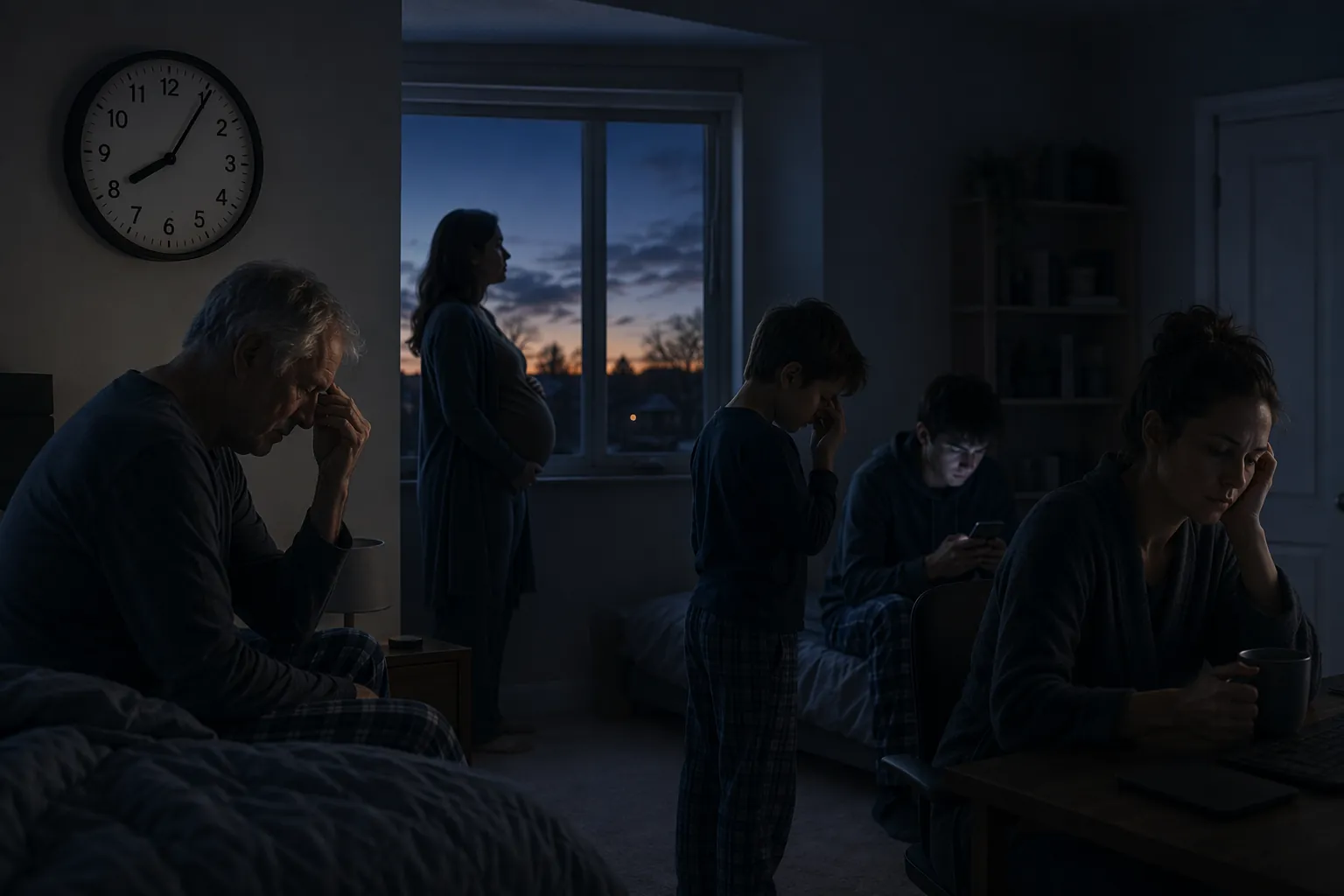
The emotional appeal is easy to understand. Lighter evenings sound safer, more social, and more usable. But the health claim is where the argument often gets too casual. A brighter evening can feel like a gift to one person and still be paid for, biologically, by someone else’s dark morning.
Permanent daylight saving time means later winter sunrises
Daylight saving time shifts civil time one hour later relative to the sun. During the current seasonal system, that shift ends in autumn, returning winter mornings closer to solar time. Permanent daylight saving time would keep the later clock year-round.
That matters because the human circadian system is not anchored by clock preference. Morning light is one of the strongest signals that tells the body when the biological day has begun. It helps suppress melatonin, supports alertness, and nudges the internal clock earlier. Light later in the evening pushes in the opposite direction, encouraging later circadian timing.[2][3]
Permanent standard time and permanent daylight saving time therefore are not equal health options with different aesthetics. Permanent standard time gives more morning light across more of the year. Permanent daylight saving time gives more evening light while making winter mornings darker. The AASM’s permanent standard time position rests on that alignment between solar time and circadian time, not on nostalgia for changing clocks.[2]
The annual clock change is annoying, and for some people it is acutely disruptive. But the deeper problem with permanent daylight saving time is not the one-hour switch itself. It is the long-term placement of light: less morning light when many bodies need it most, and more evening light when many bodies are already being pulled later.
Why sleep medicine keeps favoring standard time
A Stanford Medicine report on a PNAS model made the contrast unusually concrete. The model compared permanent standard time, permanent daylight saving time, and the current switching system. Under permanent standard time, researchers estimated better population health outcomes, including 2.6 million fewer obesity cases and 300,000 fewer stroke cases.[4]
Those numbers should be read with care. The model assumed fixed sleep-wake schedules of 10 p.m. to 7 a.m., which is cleaner than real life. Real households include night shifts, split caregiving, insomnia, early practices, school buses, babies, late chronotypes, and people whose bodies do not respond neatly to a schedule printed on a calendar.[4]
Even with that limitation, the direction of the result matters. The modeled advantage did not come from standard time being more convenient. It came from better biological alignment. Permanent daylight saving time moves the national schedule toward later clock sunrises and later light exposure, the pattern sleep physicians keep warning against.[2][4]
This is also why average sleep-loss numbers can mislead. Giuntella and Mazzonna’s 2017 work is often summarized through an estimated 19 minutes of average daily sleep loss associated with later sunset exposure, but that average varies by demographic group and is concentrated among early-morning workers.[5]
Nineteen minutes is not trivial. Across a week, it is more than two hours. Across a season, it becomes a sleep debt that can show up as morning grogginess, irritability, poorer glucose regulation, reduced attention, or a shorter fuse with a child who also slept badly. But the bigger issue is that “19 minutes” sounds like everyone loses the same slice. They do not.
The average adult is the wrong unit of concern
Policy arguments about permanent daylight saving time often imagine a healthy adult with a flexible evening, a controllable bedtime, and enough margin to adapt. That person exists. They are just not the whole public.
Averages blur the people whose mornings are already physiologically expensive. Older adults may sleep more lightly and recover less easily from fragmented nights. Pregnant people may already be waking from discomfort, reflux, urination, anxiety, or fetal movement. Children and teenagers cannot usually choose later school start times when the sunrise moves later. Adults with ADHD or other circadian-sensitive conditions may already be fighting a delayed sleep phase and inconsistent routines.
Permanent daylight saving time adds the same clock rule to all of them. It does not add the same burden.
Older adults: less room for another circadian insult
For many older adults, sleep is already lighter, more fragmented, and more vulnerable to medical conditions, medications, pain, nocturia, caregiving, and anxiety about nighttime safety. Treating poor sleep as “just aging” is one of the ways older people get denied help. A clock policy that delays morning light can make that neglect easier to miss.
Morning light is not a decorative wellness habit for this group. It is one of the cleanest external cues the brain gets. When winter mornings remain dark later, an older adult who wakes early may spend more of the morning in dim indoor light, especially if mobility, weather, or fall risk limits outdoor exposure. The body receives a weaker signal that the day has started, while evening light remains more available to delay the clock.[2][3]
The cardiovascular evidence is not a perfect stand-in for permanent daylight saving time, because much of it concerns the acute spring transition. Still, it is relevant to the broader question of sleep and circadian stress. Reviews of daylight saving time and cardiovascular events have reported increased heart attack risk after the spring shift, with estimates ranging from 24% to 50% across studies that use different methods and populations.[6]
That range should not be flattened into a single dramatic number. It does, however, make one point hard to dismiss: sleep timing and circadian disruption are not merely matters of mood. For people already carrying cardiovascular risk, poorer sleep and darker biological mornings are not harmless inconveniences.
Pregnant people: the night is already broken
Pregnancy is a good test of whether a sleep policy argument is taking real bodies seriously. A pregnant person may not have a clean seven- or eight-hour sleep opportunity to protect. They may have a sequence of partial sleeps interrupted by nausea, pelvic pain, reflux, leg cramps, frequent urination, fetal movement, or anxiety. Telling that person to “go to bed earlier” misunderstands the problem.
If permanent daylight saving time makes the necessary wake time darker, the morning recovery cue arrives later. The person who was awake at 3 a.m. still has to start work, take another child to school, attend an appointment, or function through a commute. Later evening light may also make it harder to feel sleepy at a protective hour, especially when household schedules are built around dinner, homework, screens, and caregiving.
This is the kind of burden an average can hide. A 19-minute mean loss does not describe what it feels like to lose the only stable part of the night, or to have a difficult early-morning awakening followed by a darker start and no realistic way to nap.[5]
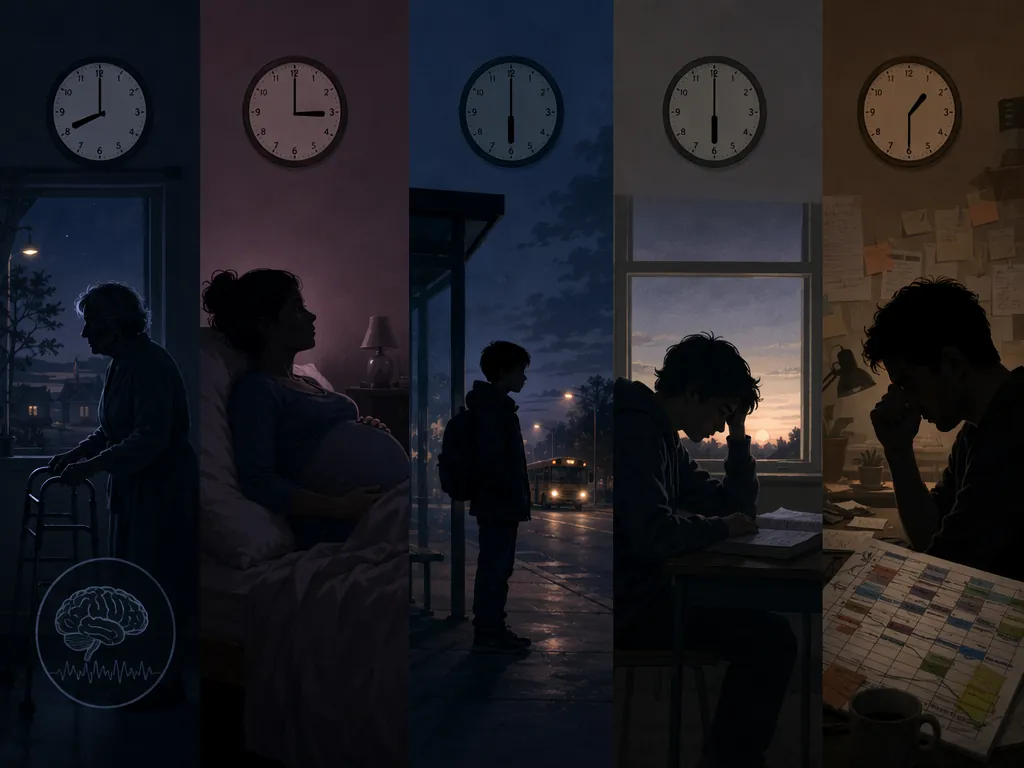
School-age children and teenagers: darker mornings meet fixed start times
Children do not vote on sunrise. Teenagers do not usually control first period. Under permanent daylight saving time, a winter school morning can become darker by the clock while the bus, bell, test, practice, and attendance policy stay where they are.
Teenagers are especially mismatched to this arrangement because adolescent circadian timing tends to run later. Evening light reinforces that delay. Morning light helps pull the clock earlier. Permanent daylight saving time weakens the morning side of that equation precisely when school demands alertness early in the day.[2][3]
For younger children, the issue is less about choosing a bedtime philosophy and more about exposure. A child waiting for a bus in darkness is not experiencing the policy as an abstract time preference. Families still have to manage visibility, traffic, supervision, and the child’s ability to be awake enough to learn once they arrive.
The United States has seen this before. In 1974, a national experiment with year-round daylight saving time was cut short after about 10 months, with dark school mornings and child safety concerns central to the political reversal.[5]
The point is not that 1974 can be copied and pasted onto 2026. Transportation, school schedules, lighting, and family patterns have changed. But the underlying conflict has not disappeared: permanent daylight saving time can turn ordinary winter school travel into a pre-dawn activity for more children.
ADHD and circadian-sensitive conditions: later light can amplify an existing delay
For adults with ADHD, delayed sleep timing is often treated as a discipline problem: try harder, make a routine, put the phone away, wake up earlier. Routines can help, but they are not magic. Many people with ADHD already struggle with delayed circadian timing, inconsistent sleep onset, and difficulty translating intention into a repeated evening sequence.
Permanent daylight saving time presses on that weak point. More evening light can make the body feel less ready for sleep. Less morning light can make the body feel less anchored after waking. For someone whose internal clock already drifts late, that is not a small lifestyle preference. It is a change in the environmental cues that help the routine hold.
The same concern applies more broadly to people whose symptoms worsen when sleep timing drifts: some mood disorders, chronic insomnia patterns, and other circadian-sensitive conditions. The available evidence does not support assigning a precise added risk to each diagnosis. The narrower, better-supported conclusion is that delayed morning light and extended evening light can make circadian stabilization harder for people who already depend heavily on consistent timing cues.[2][3]
Safety risk is also about where you live inside a time zone
Permanent daylight saving time would not distribute dark mornings evenly across the map. People living near the western edge of a time zone already experience later sunrises by the clock than people near the eastern edge. Under permanent daylight saving time, that difference becomes more consequential in winter.
A 2022 time-zone eccentricity study cited by Save Standard Time reported 21.8% higher motor vehicle crash fatality rates in western-edge locations. The same geographic issue becomes more visible when some winter sunrises under permanent daylight saving time would occur after 9:30 a.m.[5]
That does not mean every dark commute produces a crash, or that traffic safety alone settles the entire clock debate. It means the morning-darkness burden is not hypothetical. It lands on workers, students, caregivers, and drivers who cannot move their required start time later just because the sun has been moved later on the clock.
What the “19 minutes” number can and cannot tell us
The 19-minute average sleep-loss estimate is useful because it gives the debate a measurable sleep outcome. It helps move the conversation away from pure preference and toward what happens when evening light stretches later and mornings become biologically less supportive.[5]
It is insufficient for exactly the same reason many sleep averages are insufficient. It compresses the early-shift worker, the retired older adult, the pregnant nurse, the teenager with a 7:30 a.m. class, the parent driving in the dark, and the ADHD adult trying to stabilize a bedtime into one number. The mean can be accurate and still conceal who is paying more.
The better question is not whether every person will lose exactly 19 minutes. They will not. The better question is whether permanent daylight saving time pushes sleep timing in a direction that makes adaptation harder for groups already under sleep strain. The evidence from circadian biology, medical consensus, population modeling, and prior safety experience points that way.[1][2][4][5]
Where this leaves households in Q3 2026
No one needs to pretend brighter evenings have no value. Many people enjoy them. Some families may feel that an extra bright hour after work improves exercise, errands, child care, or mood. Those are real lived benefits.
But a lived benefit is not the same as a national health argument. A policy can feel good at 7 p.m. and still make 7 a.m. worse for the people with the least margin: an older adult whose sleep is fragile, a pregnant person already awake for half the night, a child waiting for a bus in the dark, a teenager being asked to learn before their brain has had enough morning light, or an adult whose circadian rhythm already slips later than they want.
For a shorter version of the population-specific stakes, Restful Ground’s companion FAQ, Permanent daylight saving time’s unequal burden on sleep, condenses the same issue. Readers who want practical timing help should pair this policy discussion with Restful Ground’s DST adjustment guides and circadian science explainers.
The central sleep impact of the Sunshine Protection Act in 2026 is not that every American would feel the same one-hour change. It is that permanent daylight saving time would shift biological burden toward people who already have less room to absorb darker mornings and later circadian pressure.
References
- AASM opposes Sunshine Protection Act of 2026 — American Academy of Sleep Medicine, July 2026.
- Daylight saving time: an American Academy of Sleep Medicine position statement — Journal of Clinical Sleep Medicine.
- Debunking myths about daylight saving time: ten things everyone should know about daylight saving time and sleep — Journal of Clinical Sleep Medicine.
- Permanent standard time would be healthier than daylight saving time, Stanford Medicine researchers find — Stanford Medicine, September 2025.
- Health — Save Standard Time.
- Daylight saving time and myocardial infarction: should we be worried? — American Journal of Physiology-Heart and Circulatory Physiology.
Supports these guides
Spot an error or have clinical feedback?
Because this article covers clinical, medication, or safety information, we use a moderated correction channel instead of open public comments. Let us know if something about “How the Sunshine Protection Act Affects Sleep in 2026” needs a closer look.
Send feedback on this article