
Mechanism explainer
Can Houseplant Weed Strains Actually Help You Sleep?
An evidence-based review of Houseplant's sleep strains: what the brand actually sells, what users report, and why the clinical literature treats cannabis as a short-term perceptual aid rather than a durable insomnia treatment.
A review of Houseplant weed strains for sleep has to start with a less convenient question than “which indica is strongest?” Houseplant does sell indica-positioned cannabis that many shoppers will naturally read as nighttime-friendly. What it does not appear to sell is a clinically tested insomnia product.
That distinction matters most for the person searching at midnight, not for the person casually comparing celebrity cannabis brands. If you are looking at Houseplant because sleep has become difficult, the useful review is not about whether the branding is charming or whether the strain names are memorable. It is about whether the available products, user reports, and sleep research line up strongly enough to treat a “sleep strain” as more than a short-term sedating aid.
What Houseplant actually sells for the sleep-minded buyer
Houseplant, the cannabis and home-goods company associated with Seth Rogen and Evan Goldberg, launched in Canada in 2019 and in California in March 2021. Its initial U.S. cannabis line included Diablo Wind and Pancake Ice as sativas, plus Pink Moon as the indica, with strain names built around weather-system language rather than medical-use language.[1]
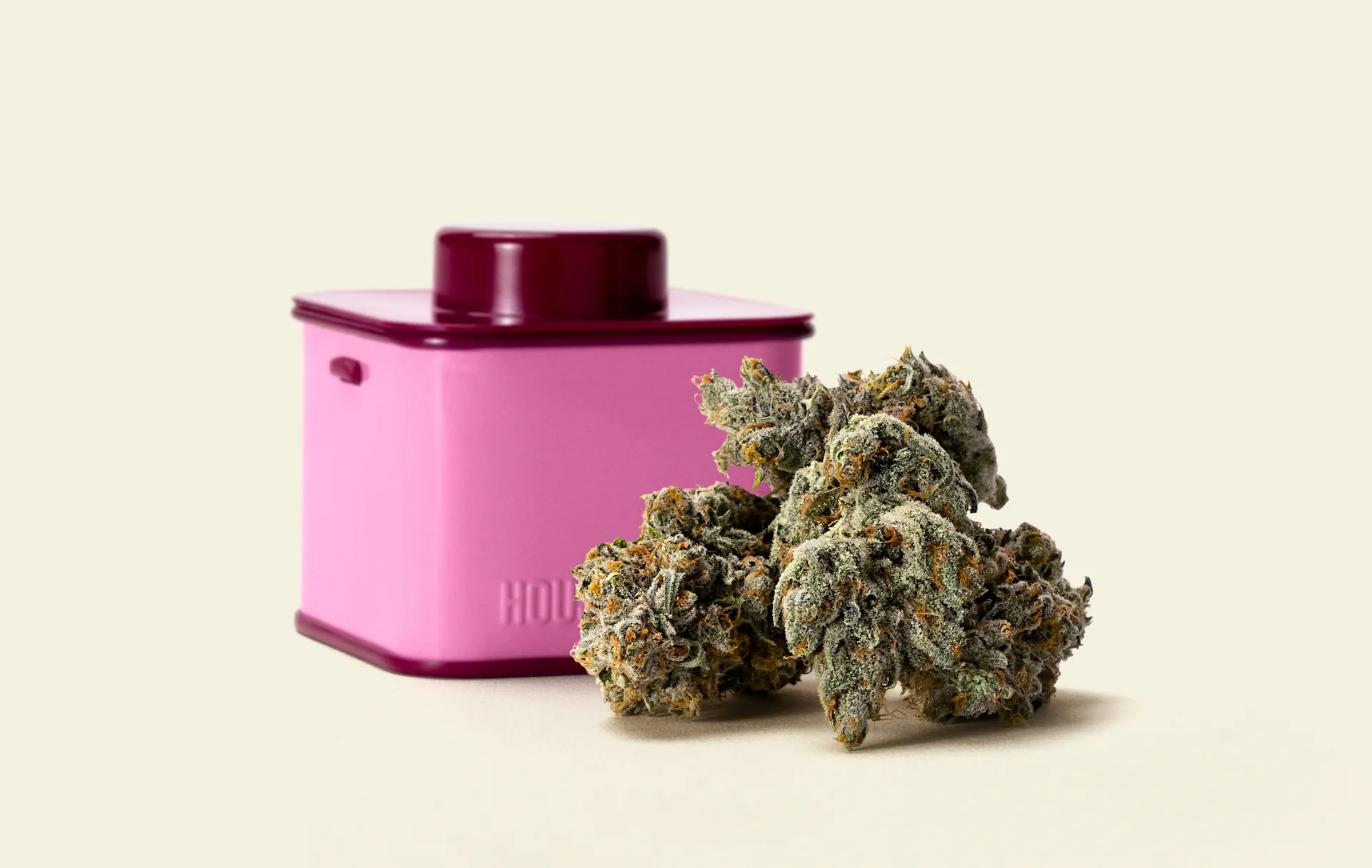
For a sleep shopper, the relevant Houseplant options are the brand’s indica products: Pink Moon in the U.S. and 91 Krypt in Canada. The sleep inference comes from that indica identity, along with the broad consumer expectation that indica strains feel heavier, calmer, and more bedtime-compatible. Based on the relevant product details, these are high-THC products, roughly in the 20–30% THC range, with near-zero CBD; Houseplant does not sell CBD products.
That makes the Houseplant sleep proposition narrower than it may feel at first glance. This is not a balanced THC/CBD sleep formula. It is not a low-dose cannabinoid product developed around insomnia outcomes. It is a branded, high-THC indica option that some adults may experience as sedating.
| What the buyer sees | What it reasonably supports | What it does not prove |
|---|---|---|
| Houseplant has indica strains such as Pink Moon in the U.S. and 91 Krypt in Canada | The product may match the common consumer preference for indica at night | That the strain has been clinically shown to treat insomnia |
| THC is the dominant cannabinoid, with near-zero CBD | Some users may feel intoxicated, relaxed, or sleepy | That sleep quality, sleep stages, or next-day functioning improve |
| The brand does not sell CBD products | The sleep effect being considered is mainly a high-THC cannabis effect | That Houseplant is offering a broad cannabinoid sleep line |
Why indica strains get treated as sleep strains
The reason Houseplant’s indica products are easy to read as sleep products is not mysterious. Many cannabis users do report that indica strains feel more sedating than sativa strains. In a web survey of medical cannabis users comparing perceived effects of Cannabis sativa and Cannabis indica, respondents were more likely to associate indica with help for sleep and sedation-related effects.[2]
That kind of perception should not be brushed aside. If an adult uses a high-THC indica and feels less wound up, less aware of discomfort, or more able to drift off, that is a real subjective experience. For a person who has spent nights watching the clock, even a short-lived feeling of “I can finally fall asleep” can be persuasive.
But perceived sleepiness is not the same thing as durable insomnia improvement. A product can make someone feel sedated before bed without improving sleep continuity, sleep architecture, total restorative sleep, or next-day functioning. The gap between those outcomes is where many “best strains for sleep” lists become too confident.
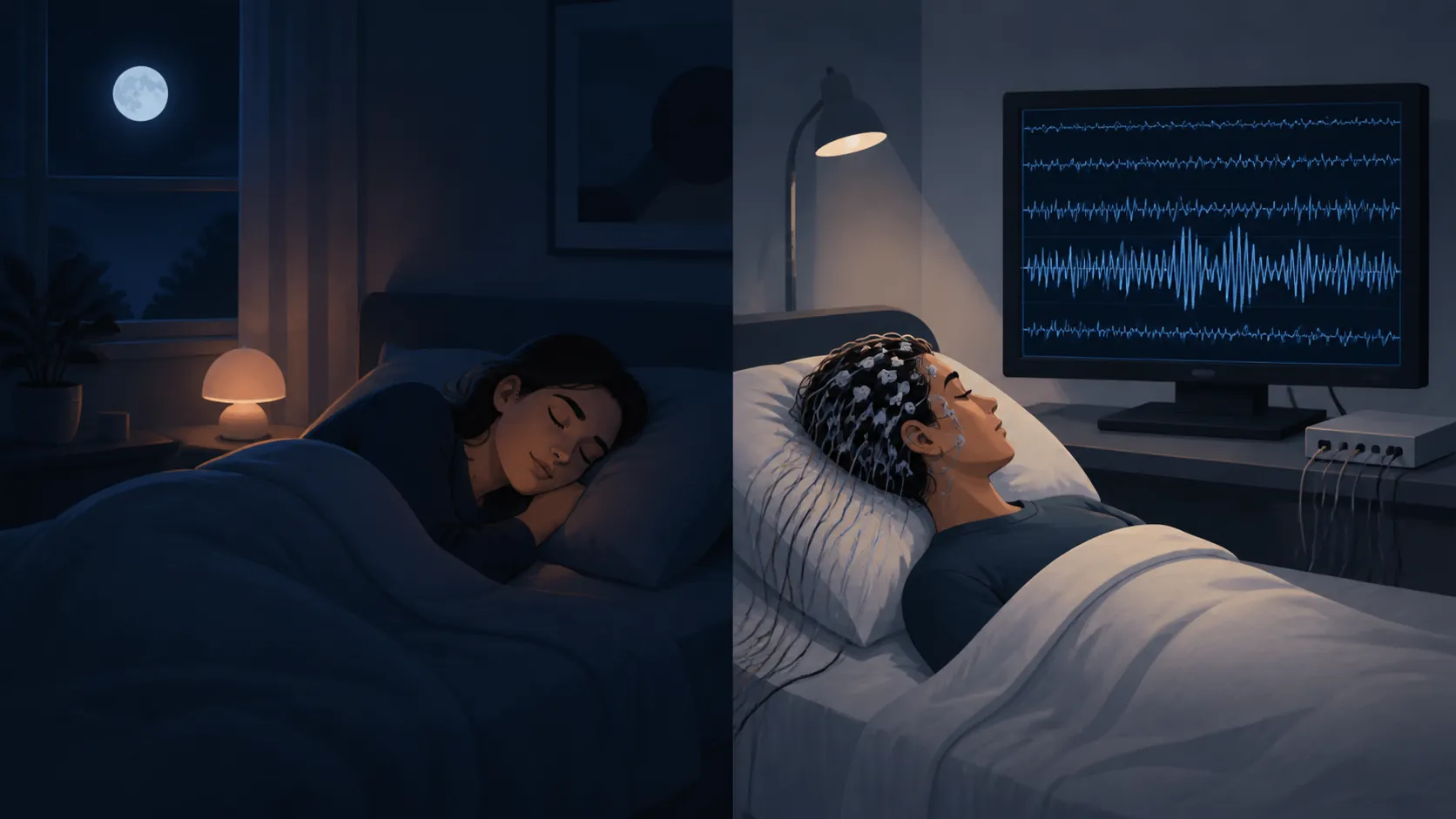
What clinical sleep research measures that product reviews usually do not
Sleep research is less interested in whether a strain feels cozy and more interested in what happens across the night. Does sleep onset change? Do awakenings decrease? Does REM sleep change? Does slow-wave sleep change? Does the person function better the next day? And do those effects hold up with repeated use?
The answer is not clean enough to support a strong Houseplant-for-insomnia claim. Reviews of cannabinoids and sleep describe mixed findings, with objective sleep testing failing to show a consistent, reliable improvement in sleep architecture across cannabis exposure.[3] That does not mean nobody ever sleeps after cannabis. It means the stronger claim—that cannabis predictably improves the structure and quality of sleep in a clinically meaningful way—is not established.
A 2025 scoping review makes the asymmetry sharper: across the studies it examined, 48% reported worsened sleep outcomes while 21% reported improvement.[4] Those percentages do not mean every user’s sleep will worsen, and they do not isolate Houseplant products. They do show why it is risky to turn “indica made me sleepy” into “this is an evidence-based insomnia aid.”
This is especially important for high-THC, near-zero-CBD products. THC may make the pre-sleep period feel easier for some people, particularly in the short term. But a sedating intoxication effect is not automatically the same as more stable sleep across weeks or months. The research base does not let a reviewer responsibly say that Pink Moon or 91 Krypt should be expected to repair chronic insomnia.
The regular-use problem: rebound sleep can become part of the cycle
The most practical concern is not a single evening. It is what happens when the product becomes the thing a person believes they cannot sleep without.
Sleep disturbance is a well-documented feature of cannabis withdrawal. In research on heavy marijuana users, abstinence was associated with disrupted sleep, including trouble sleeping and vivid or strange dreams.[5] For someone using cannabis nightly, that can create a frustrating loop: cannabis seems to help initiate sleep, then stopping or reducing it makes sleep worse, which makes returning to use feel like the only workable fix.
That rebound risk changes the meaning of a successful first night. If a Houseplant indica helps someone feel sleepy once in a while, the tradeoff is different from using it as a nightly substitute for insomnia care. The second pattern asks more from the product than the evidence can provide and may make future sleep more dependent on continued use.
So, can Houseplant weed strains help you sleep?
For some adults, yes, in the limited sense that a high-THC indica such as Pink Moon or 91 Krypt may feel relaxing, sedating, or useful for getting through the pre-sleep window. That is the strongest fair version of the claim.
The evidence does not support the stronger version: that Houseplant’s indica strains are proven sleep treatments, that they durably improve insomnia, or that the indica label itself is enough to predict better sleep architecture. The brand’s sleep relevance is built from strain category, THC-forward product design, and user expectation—not from Houseplant-specific clinical testing.
The clearest verdict is therefore modest. Houseplant’s indica strains may work as a short-term perceptual crutch for some adults who already tolerate THC. They should not be treated as a clean solution for chronic insomnia, especially if use becomes regular enough that withdrawal or rebound sleep disruption enters the picture.
References
- Houseplant (company), Wikipedia.
- Discriminating the effects of Cannabis sativa and Cannabis indica: a web survey of medical cannabis users, PubMed, 2014.
- The Effects of Cannabinoids on Sleep, Current Psychiatry Reports, 2022.
- Cannabis and sleep: a scoping review, PubMed, 2025.
- Sleep disturbance in heavy marijuana users, Drug and Alcohol Dependence, 2008.
Supports these guides
Spot an error or have clinical feedback?
Because this article covers clinical, medication, or safety information, we use a moderated correction channel instead of open public comments. Let us know if something about “Can Houseplant Weed Strains Actually Help You Sleep?” needs a closer look.
Send feedback on this article