
Mechanism explainer
What Mitch McConnell's Illness Teaches About Sleep Recovery
Older adults recovering from serious illness need to prioritize sleep because aging alters sleep architecture and immune response. This article explains the science behind that need, using Mitch McConnell's extended recovery as a real-world example.
The public question around Mitch McConnell’s illness and sleep recovery is easy to misread. The interesting part is not whether an 84-year-old senator is moving quickly enough for a political calendar. It is that his recovery has made visible a common biological mismatch: older bodies often need weeks, not days, to recover from a fall, hospitalization, pneumonia, immobility, and the sleep disruption that comes with all of it.
McConnell was hospitalized on June 14, 2026, after a fall that left him briefly unconscious. He later developed mild pneumonia, entered rehabilitation, was doing multiple daily physical therapy sessions, and had not been cleared to return to the Senate as of July 27, according to public reporting on his physician’s update and recovery status.[1][2]
That is a roughly six-week arc from hospitalization to still-not-cleared status. In an older adult recovering from pneumonia and a period of reduced mobility, that timeline is not automatically suspicious. The National Council on Aging, citing NIH-style recovery benchmarks, describes pneumonia recovery in older adults as commonly taking 6 to 12 weeks, with fatigue, weakness, poor appetite, and brain fog lingering during that period. The same recovery guidance notes a rough rule of thumb of about one week of recovery for each hospital day, and warns that bedrest can contribute to 2% to 5% muscle mass loss per day when a patient cannot walk.[3]
Those benchmarks do not explain McConnell’s individual medical course. They do, however, put the public timeline in a more realistic frame. Pneumonia recovery is not just the absence of fever. Hospital recovery is not just discharge. And rehabilitation is not just “getting stronger” in a general sense; it is the work of rebuilding breathing capacity, balance, muscle function, alertness, appetite, and confidence after several systems have been stressed at once.
Why sleep becomes part of the recovery biology
Sleep after illness is often described as comfort: the patient needs rest because illness is exhausting. That is true, but it is too small. During infection, the immune system and the sleeping brain communicate in both directions. Acute immune activation can increase non-rapid eye movement sleep, or NREM sleep, through inflammatory signals including interleukin-1 and tumor necrosis factor-alpha.[4][5]
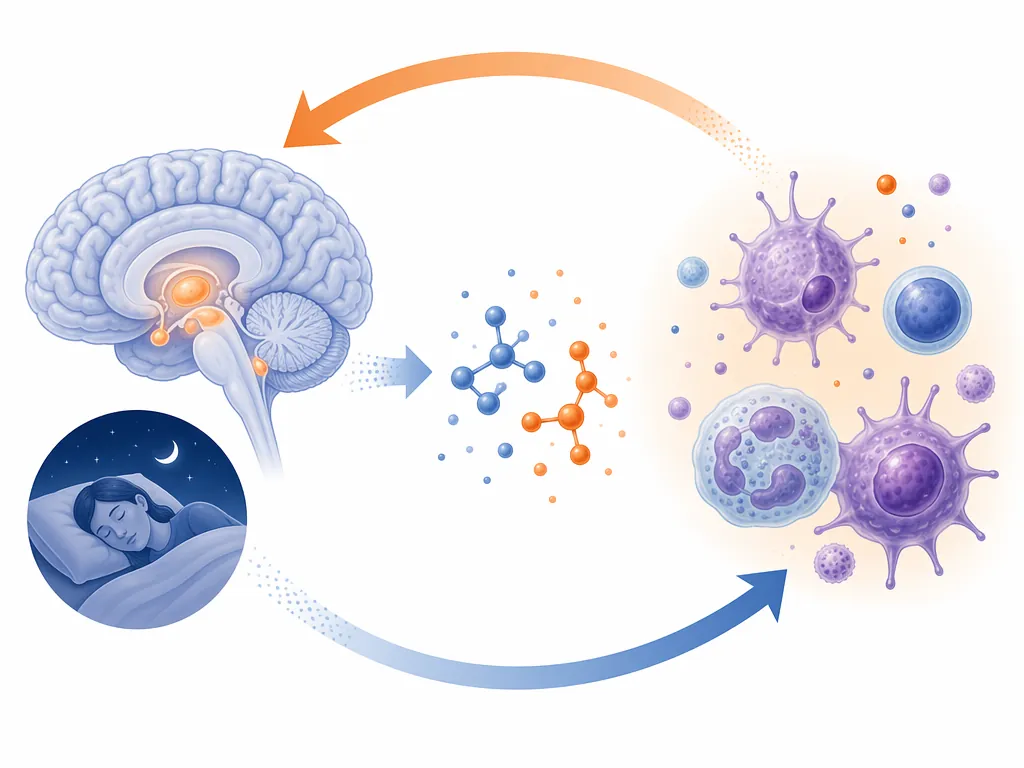
That increase in NREM sleep is not random drowsiness. It is one way the body shifts energy toward immune work. In deeper NREM sleep, the hormonal environment is generally more favorable to immune regulation: cortisol is lower, growth hormone is higher, and the body is less occupied by the metabolic and sensory demands of wakefulness.[5]
The same literature helps explain why disrupted sleep matters when someone is fighting or recovering from a respiratory infection. Experimental and observational studies have linked short sleep—especially sleep of 5 hours or less—to higher vulnerability to respiratory infections and weaker immune responses, including reduced antibody response.[6][7] Those findings do not mean a bad night causes pneumonia in a simple one-to-one way. They do show that sleep loss changes the conditions under which the immune system has to work.
That distinction matters in McConnell’s case. No peer-reviewed study tests the exact combination of an 84-year-old recovering from a fall, brief unconsciousness, pneumonia, post-polio mobility limitations, rehabilitation, and Senate duties. The case is an illustration, not proof of a personalized medical explanation. The stronger claim is broader: when an older adult is recovering from serious illness, sleep is one of the physiological conditions that can either support or burden immune recovery.
Older sleep is already working with less margin
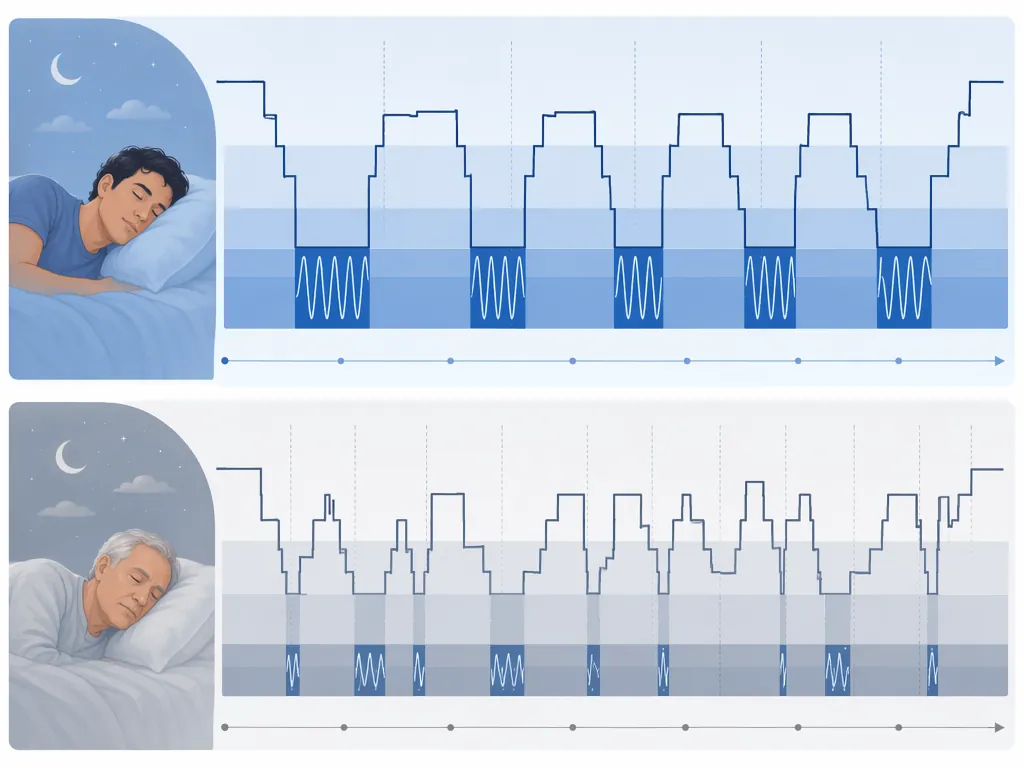
The reason this becomes especially important after 65 is that illness-related sleep disruption does not land on a neutral system. Older adults commonly experience lighter, more fragmented sleep and less slow-wave sleep than younger adults.[8] That means the stage most closely associated with the immune-supportive hormonal profile is already reduced before pneumonia, hospitalization, pain, nighttime checks, coughing, anxiety, or medications enter the picture.
This is why generic sleep advice can feel inadequate during recovery. “Keep a regular bedtime” is sensible, but it does not fully answer what happens when an older adult is awakened by coughing, bathroom trips, pain, oxygen checks, medication timing, or early-morning circadian drift. For readers who want the practical aging-sleep side of that problem, older-adult sleep hygiene often needs a different lens, especially when the person is recovering rather than simply trying to optimize a normal week.
Aging also changes circadian timing. Many older adults become sleepier earlier in the evening and wake earlier in the morning, a pattern often discussed as circadian phase advance. When that early waking is layered onto post-illness fatigue, the patient may spend more time in bed without necessarily getting consolidated restorative sleep. That can look confusing from the outside: the person appears to be “resting all day,” yet still feels weak, foggy, and unrefreshed. The mechanics of waking around 3 a.m. after 60 are not the whole recovery story, but they often shape the bedside reality.
The immune effects are not limited to feeling tired. Sleep loss can shift T-helper cell balance away from Th1-type anti-infection activity and toward Th2-type allergic or inflammatory patterns, which may be less favorable for clearing infection.[5] In one controlled sleep restriction study, two nights of 8-hour recovery sleep after five nights of restricted sleep were not enough to normalize inflammatory markers including CRP and IL-17.[9]
That last point is easy to underestimate. “Catch-up sleep” is not a magic eraser. A caregiver may see one long nap or one better night and expect the patient to rebound the next morning. But inflammatory and metabolic recovery can lag behind subjective rest. In an older adult, the lag may be more visible because baseline sleep is already shallower and recovery reserves are narrower.
What the McConnell timeline makes clinically plausible
The public facts point to several overlapping recovery burdens. First came the fall and brief unconsciousness. Then pneumonia. Then rehabilitation with multiple daily PT sessions. Public reporting also noted McConnell’s post-polio condition as a significant mobility factor in his physician’s description of his rehabilitation needs.[1]
Post-polio history matters here because mobility limitations change the cost of every setback. CNN, citing CDC data, reported that post-polio syndrome affects 25% to 40% of polio survivors and can involve muscle fatigue and weakness.[10] That does not mean McConnell’s recovery should be reduced to post-polio syndrome, and it does not tell outsiders exactly what symptoms he has. It does mean that a fall, pneumonia, bedrest, and rehab are being layered onto a body with a known mobility vulnerability.
Sleep sits inside that layered recovery rather than outside it. Poor sleep can make physical therapy harder by worsening fatigue, attention, pain tolerance, and next-day exertional capacity. Reduced mobility can worsen sleep by increasing daytime napping, discomfort, and nighttime restlessness. Pneumonia can fragment sleep through coughing, breathing discomfort, medication schedules, and inflammatory signaling. Each piece feeds the others without any single factor needing to be treated as the whole explanation.
This is also where hospitalization matters. Hospitals save lives, but they are rarely sleep-protective environments. Vital signs, alarms, room noise, pain, unfamiliar light exposure, and interrupted nights can all collide with an older adult’s already-fragile sleep architecture. The biological question is not whether a patient “had time to rest.” It is whether the sleep they obtained was consolidated enough, deep enough, and repeated over enough nights to support immune and physical recovery.
Fatigue, weakness, and brain fog are not vague complaints
After pneumonia, older adults may continue to have fatigue, weakness, low appetite, and brain fog for weeks.[3] Those symptoms can be frustrating because they are less dramatic than fever or an oxygen crisis. They are also the symptoms most likely to be judged from the outside as motivation problems: Why is he still tired? Why is she not walking more? Why does he seem mentally slow if the infection is “better”?
Sleep science gives those symptoms a more concrete place to live. Fatigue can reflect immune activation, deconditioning, fragmented sleep, and the energy cost of tissue repair. Weakness can reflect muscle loss from inactivity, reduced intake, and the work of regaining balance and endurance. Brain fog can reflect inflammation, poor sleep continuity, medication effects, low appetite, and the cognitive load of illness. None of these possibilities should be guessed at from a headline; they are reasons for careful clinical follow-up.
For caregivers, the useful question is less “Is this recovery taking too long?” and more “Is the trajectory improving, stalling, or worsening?” Six to 12 weeks of post-pneumonia recovery can be medically plausible in an older adult, but worsening confusion, breathing distress, recurrent fever, new falls, inability to eat or drink, severe daytime sleepiness that is out of proportion, or sudden functional decline belong in a clinician’s hands.
Sleep protection is not the same as sleep medication
When sleep is framed as part of recovery biology, the next temptation is to reach immediately for a pill. That can be risky in older adults. Sedating medications may affect balance, cognition, breathing, or next-day alertness depending on the drug, dose, timing, and medical context. During recovery from a fall or pneumonia, those tradeoffs deserve clinician review rather than casual experimentation.
The safer starting point is usually to protect the sleep opportunity around medical care: reduce avoidable nighttime disruption, time naps so they do not erase nighttime sleep pressure, manage pain and coughing with the care team, keep light exposure anchored to daytime, and avoid treating every restless night as a medication problem. If medication is already in the conversation, older adults and caregivers should review risks through an age-specific lens, such as which sleep aids are considered safer after 65.
Infection-specific recovery can add its own complications. A person recovering from a respiratory infection may need different sleep positioning, nighttime symptom control, or pacing than someone recovering from a gastrointestinal illness. That is why practical guidance for sleep during Legionnaires’ treatment and recovery or post-infection fatigue after cyclospora has to be adapted to the illness, the patient’s age, and the recovery setting.
A bounded lesson from a public recovery
McConnell’s extended recovery does not prove that he has a unique sleep problem. It does not prove that sleep alone determines pneumonia recovery, fall recovery, or return-to-work clearance. Public reporting cannot tell us the full medical picture, and the story may change as new information emerges.
What the case does usefully show is how quickly public expectations can outrun older-adult physiology. A six-week recovery arc after a fall, brief unconsciousness, pneumonia, rehabilitation, and known mobility limitations is not automatically strange when placed beside older-adult pneumonia and hospitalization benchmarks. The sleep-immune literature then explains why protecting sleep during that period is not a soft wellness preference. It is part of giving the immune system, the brain, and the musculoskeletal system enough favorable conditions to recover.
For families watching an older adult recover, the practical standard is steady attention rather than panic: expect fatigue to last longer than feels convenient, protect sleep as deliberately as medications and therapy appointments, and bring worsening or stalled recovery back to the clinical team. Sleep will not cure pneumonia or reverse frailty by itself. But when serious illness has already narrowed an older adult’s margin, poor sleep is one burden the recovery plan should not casually accept.
References
- McConnell not cleared for Senate return; physician statement on post-polio and PT, CNBC, July 27, 2026.
- Fall + brief unconsciousness + pneumonia confirmation, AP News, 2026.
- Pneumonia recovery benchmarks, muscle loss per bedrest day, 1-week-per-hospital-day rule, National Council on Aging.
- The crosstalk between immune system and sleep, Communications Biology, 2021.
- The Sleep-Immune Crosstalk in Health and Disease, Physiological Reviews, 2019.
- Behaviorally Assessed Sleep and Susceptibility to the Common Cold, 2015.
- Sleep Habits and Susceptibility to the Common Cold, 2009.
- Sleep and Older Adults, National Institute on Aging.
- Sleep restriction increases the risk of developing cardiovascular diseases by augmenting proinflammatory responses through IL-17 and CRP, 2009.
- McConnell announcement on hospitalization cause; post-polio prevalence via CDC data, CNN, July 12, 2026.
Supports these guides
Spot an error or have clinical feedback?
Because this article covers clinical, medication, or safety information, we use a moderated correction channel instead of open public comments. Let us know if something about “What Mitch McConnell's Illness Teaches About Sleep Recovery” needs a closer look.
Send feedback on this article