
Mechanism explainer
How Permanent Daylight Saving Time Unequally Affects Sleep
Permanent daylight saving time doesn't affect all sleepers equally. This article explains why perimenopausal women, older adults, pregnant people, and adults with ADHD face a heavier sleep burden under year-round DST than the general population.
Permanent daylight saving time is being argued in 2026 as if it were one clean national preference: stop changing the clocks, keep the later sunset, move on. As of July 28, 2026, the Sunshine Protection Act is still unfinished federal business: the House passed it 308–117 on July 14, and the Senate has not yet voted. For the legislative background, see How the Sunshine Protection Act Affects Sleep in 2026. The sleep question is more basic: how permanent daylight saving time affects sleep in 2026 depends heavily on whose circadian system is being asked to carry the change.
The public slogan makes permanent DST sound like the removal of an annoyance. No more spring-forward grogginess. No more fall-back confusion. But year-round DST does not merely remove clock switching. It permanently shifts social time later against the sun: sunrise arrives later by the clock, and evening light lasts later by the clock. For some people, that means a pleasant summer dinner outside. For others, it means less usable morning light, more biologically persuasive evening light, and a sleep system that was already unstable being asked to stabilize itself with fewer supports.
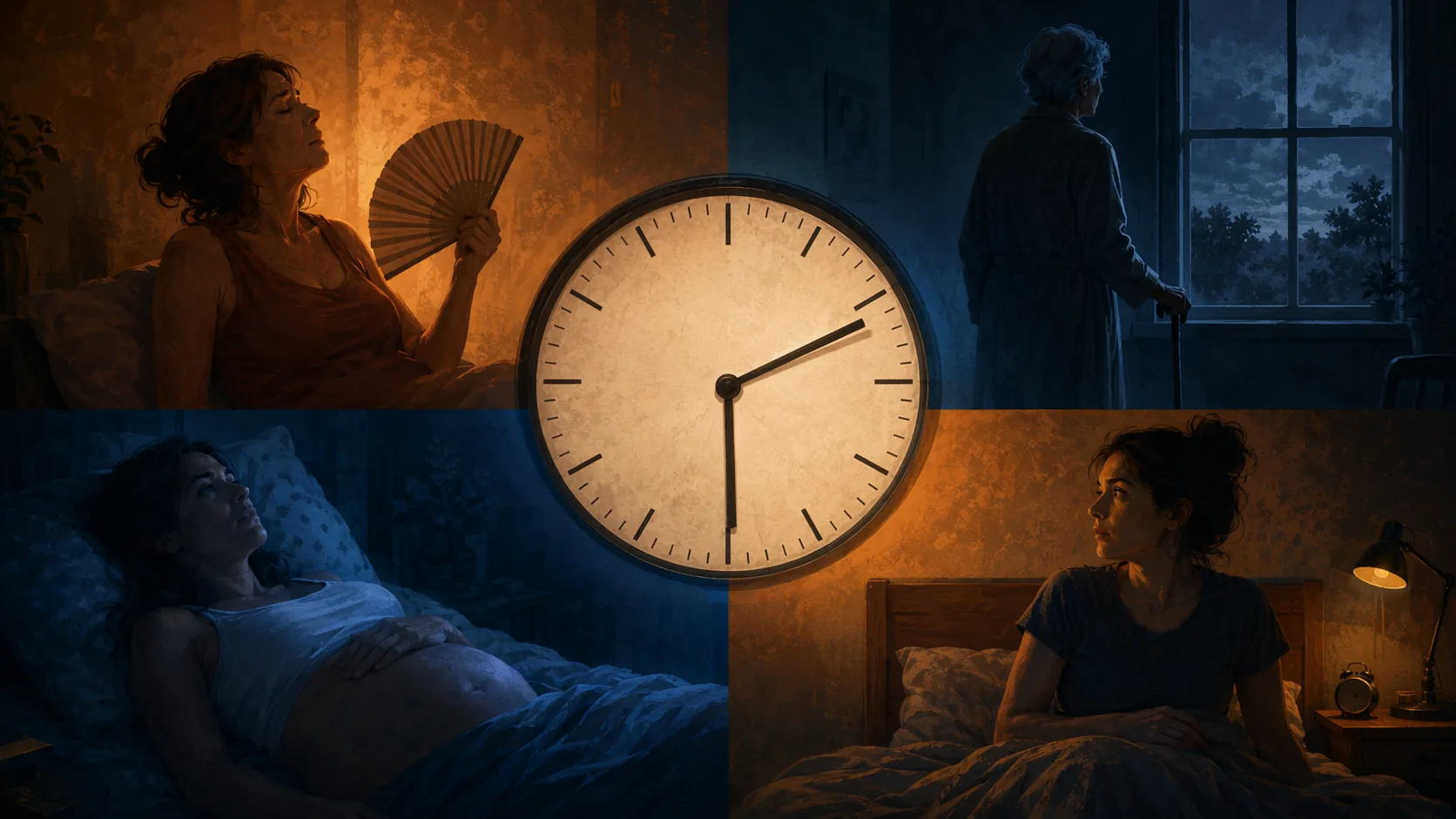
Permanent DST changes which light the body can use
The most important part of the permanent-DST debate is not whether people like light after work. Many do, understandably. The problem is that the circadian system does not treat all light as interchangeable. Morning light helps anchor the body clock earlier. Evening light pushes it later. Permanent DST delays the morning light cue and extends the evening light cue, so the body receives less of the signal that helps it wake on schedule and more of the signal that tells it to stay alert.
That is why major sleep and medical organizations have not lined up behind permanent DST. The American Academy of Sleep Medicine position statement supports permanent standard time because it aligns more closely with human circadian biology, including the timing of light exposure across the day.[2] The AASM has also noted support for permanent standard time from organizations including the American Medical Association, the Sleep Research Society, and the Society for Research on Biological Rhythms; the medical consensus described there is not “pick one permanent time and call it healthy,” but specifically permanent standard time.[3]
The population-level modeling points in the same direction. A Stanford Medicine report on a 2025 PNAS study estimated that permanent standard time would reduce stroke by about 300,000 cases and obesity by about 2.6 million cases, while permanent DST would achieve only about two-thirds of that benefit and remain worse than standard time.[4] Those estimates are useful because they show the general direction of the health tradeoff. They are not the whole story, because the model necessarily simplifies real life.
The Stanford model used idealized light-exposure assumptions, including a consistent 10 p.m. to 7 a.m. sleep schedule and outdoor light exposure before and after work; Jamie Zeitzer noted that the model likely underestimates the actual circadian burden because people do not live in such tidy light conditions.[4] That limitation matters most for people who already cannot keep the ideal schedule: the person waking in hot flashes, the older adult up before dawn, the pregnant person sleeping in fragments, the ADHD adult whose body clock is already late.
This is also where direct evidence and inference need to be kept separate. Much of what researchers know about chronic DST-like misalignment comes from time-zone position studies, time-zone boundary comparisons, and natural experiments rather than randomized trials assigning whole populations to permanent DST or permanent standard time.[5] That does not make the concern speculative. It means the evidence is strongest for the general circadian mechanism and for some vulnerable groups, while thinner for others.
Perimenopause: when the sleep signal is already weaker
Perimenopause is a bad place to pretend sleep is just a matter of discipline. In a 2025 narrative review, up to 47% of perimenopausal women reported sleep disturbances.[6] That number is not a side note. It describes a large group of people entering the DST debate with their sleep already under pressure from hormonal transition, night waking, hot flashes, mood changes, and altered circadian signaling.
Permanent DST can make that pressure heavier because it interferes with the two light cues perimenopausal sleep often needs most: a strong morning signal and a dimmer evening. When sunrise is pushed later by the clock, the morning anchor is delayed. When evening light is extended, the brain receives a later alerting cue. For someone whose melatonin rhythm and temperature regulation already feel unreliable, that is not a neutral inconvenience.
The perimenopause-specific evidence is not limited to formal sleep-lab data. Oprah Daily’s 2026 coverage cites Deanna Minich, PhD, on the way DST’s evening light can delay an already compromised melatonin signal in menopause-related sleep disruption.[7] Genesis Gold similarly frames the issue through declining estrogen and progesterone and the way those changes can weaken circadian stability during the menopause transition.[8] These are not claims that every perimenopausal woman will respond identically. They are claims that the baseline physiology is not the same as that of the imagined “standard adult.”
The practical consequence is easy to miss because it is ordinary. A perimenopausal woman may wake at 3 a.m. hot, damp, and fully alert. Under standard time, an earlier winter sunrise may give her body a clearer reset cue later that morning. Under permanent DST, that cue arrives later, while the previous evening’s light has had more opportunity to push her clock back. If she has work, caregiving, or medication schedules that do not move with the sun, she absorbs the mismatch inside her body.
There is an unfairness in calling that “adjustment.” Adjustment implies a flexible system with unused margin. Perimenopause often removes margin first and then asks the person to function as if nothing has changed. Permanent DST would add another delayed-light burden on top of an already common sleep disturbance pattern.
Older adults: the cost is not only feeling sleepy
Older adults are often discussed in clock-change debates as if the main issue were annoyance with resetting clocks. That is too small. Aging can change sleep timing, sleep depth, nighttime waking, balance, medication routines, and morning obligations. A later winter sunrise does not land on a blank daily schedule. It lands on people who may already wake early, move more cautiously, take medications at fixed times, or rely on daylight for safe errands.
The National Committee to Preserve Social Security and Medicare has warned that permanent DST is a particular concern for seniors, citing Benjamin Liptzin, MD, on issues including worsening sundowning in dementia, disrupted sleep-wake patterns, medication-timing confusion, increased fall risk, and dark winter mornings.[9] Those concerns move the debate out of the category of personal preference. If morning darkness changes when an older person walks to the bus, goes to a medical appointment, or navigates a dim hallway after poor sleep, the health consequence is no longer abstract.
Sundowning is a useful example because it shows why “more evening light” is not automatically beneficial. Dementia-related agitation and confusion often worsen later in the day. A clock policy that delays the light-dark pattern can complicate routines that caregivers use to keep evenings predictable. The point is not that permanent DST single-handedly causes sundowning. The point is that for a household already managing dementia symptoms, medication timing, meals, and sleep, a later-shifted light schedule can make the day harder to organize.
Dark winter mornings also deserve more than a shrug. The United States tried year-round DST in 1974 and repealed it after less than one year amid public backlash; reporting on that period has highlighted eight child fatalities in dark-morning traffic accidents in Florida alone.[1] That history is not a perfect template for 2026, and children are not older adults. But it is a reminder that morning darkness is not merely a mood issue. It changes the conditions under which vulnerable people move through public space.
For older adults, the sleep burden also compounds. Poorer sleep can worsen alertness. Reduced alertness can affect balance and judgment. Darker mornings can make the first trip outside more hazardous. Medication schedules may remain clock-based even when the light environment has shifted. A younger, healthy office worker may describe permanent DST as later sunsets. An older adult may experience it as a longer stretch of functioning before the day has given the body a proper morning cue.
Pregnancy: a plausible burden, with less direct DST-specific evidence
Pregnancy belongs in this discussion, but it needs a more careful claim. The direct evidence on permanent DST in pregnant populations is thinner than the evidence for the general circadian mechanism and the concerns documented for older adults. The stronger statement is not “permanent DST has been proven to produce a specific pregnancy outcome.” The stronger, narrower statement is that pregnancy often fragments sleep, and a policy that weakens morning light while strengthening evening light can remove support from a system already working under strain.
A pregnant person may be awake because of reflux, fetal movement, urination, discomfort, restless legs, anxiety, or the simple difficulty of finding a tolerable position. Those awakenings do not necessarily wait politely until morning. When sleep comes in pieces, circadian anchors matter. Morning light helps tell the brain that the day has started; evening dimness helps make night biologically credible. Permanent DST pushes both in the wrong direction for someone trying to rebuild a rhythm from fragments.
This is where policy language tends to flatten the experience. “Later sunset” sounds like a lifestyle benefit. But if the evening light makes it harder to feel sleepy, and the delayed sunrise makes it harder to consolidate the next morning’s wake signal, the pregnant sleeper is not simply being fussy about clock labels. She is trying to protect the limited continuity her sleep architecture still has.
ADHD adults: when the body clock already runs late
ADHD is another place where the evidence should be stated honestly. Direct trials of permanent DST specifically in ADHD adults are limited. The concern comes from a well-recognized clinical pattern: many adults with ADHD struggle with delayed sleep timing, difficulty initiating sleep, and difficulty pulling the sleep-wake rhythm earlier. Permanent DST applies pressure in the same late direction by delaying morning light and extending evening light.
For an ADHD adult, the problem is not only bedtime. It may be the whole sequence: stimulation stays high at night, sleep onset drifts, waking becomes rushed, morning light arrives too late to help much, and the next evening offers another long bright runway for alertness. A permanent clock policy cannot be evaluated only by asking whether the average person dislikes changing clocks twice a year. It also has to ask what happens to people whose rhythms are already hard to advance.
That does not mean every ADHD adult would experience permanent DST the same way. Some may prefer later daylight because their social or work life fits a later schedule. But for ADHD adults trying to keep conventional morning obligations, the late-shifted light pattern can make the hardest part of the day harder: getting the brain and body to start before they feel ready.
The night-owl exception is real, but it does not settle the equity question
There is one exception that deserves to be treated plainly. The Stanford report notes that evening chronotypes, about 15% of the population, may do slightly better under permanent DST, while morning larks do better under standard time.[4] That matters. A sleep-health argument should not pretend that every body prefers the same light schedule.
But the exception does not erase the larger pattern. Evening types may benefit from a later social-light schedule, especially if their work and family obligations also run later. Many vulnerable sleepers do not have that freedom. A caregiver’s morning medication routine, a pregnant person’s appointment schedule, an older adult’s early errand, or a perimenopausal worker’s fixed start time does not automatically move later because sunset is nicer.
Public preference is divided too. AASM polling in 2024 found that 50% of respondents supported eliminating seasonal time changes, while 26% opposed doing so.[3] That kind of polling can tell lawmakers that people are tired of clock switching. It cannot, by itself, answer which permanent clock best protects sleep physiology. Eliminating the switch and choosing permanent DST are not the same health decision.
The better 2026 question
Permanent DST is often sold as a convenience policy, an energy policy, a recreation policy, or a way to end a twice-yearly irritation. It is also a light-timing policy. It changes when the brain receives the strongest daily signals for wakefulness and sleep, and those signals do not land evenly across the population.
For perimenopausal women, the issue is a weakened and frequently interrupted sleep system being asked to manage later evening light and delayed morning light. For older adults, the issue can extend into dementia care, medication timing, balance, falls, and dark winter mobility. For pregnant people, the concern is biologically plausible and clinically important, even though direct permanent-DST pregnancy trials are limited. For ADHD adults, the concern is that an already delayed rhythm may be pushed later still.
The standard for judging the 2026 debate should not be whether everyone hates changing clocks, or whether many people enjoy a later sunset. Both can be true. The harder question is whether the chosen permanent clock protects the people whose sleep biology already has the least room for disruption. On that question, permanent standard time has the clearer medical case, and permanent daylight saving time asks the most vulnerable sleepers to absorb the difference.
References
- Trump's Push to Make Daylight Saving Time Permanent, FactCheck.org, June 2026
- Daylight saving time: an American Academy of Sleep Medicine position statement, PMC, 2020
- Sleep experts push for adoption of permanent standard time, AASM
- Study suggests most Americans would be healthier without daylight saving time, Stanford Medicine, 2025
- Debunking myths about daylight saving time: ten things everyone should know, PMC
- Sleep Disturbance and Perimenopause: A Narrative Review, PMC, 2025
- Daylight Saving Time 2026: The Health Effects for Menopausal Women, Oprah Daily
- Permanent Daylight Saving Time Health Effects, Explained, Genesis Gold
- Is Permanent Daylight Saving Time Healthy for Seniors?, NCPSSM
Supports these guides
Spot an error or have clinical feedback?
Because this article covers clinical, medication, or safety information, we use a moderated correction channel instead of open public comments. Let us know if something about “How Permanent Daylight Saving Time Unequally Affects Sleep” needs a closer look.
Send feedback on this article