
Mechanism explainer
Treating Sleep Apnea Improves Mental Health in Former NFL Players
New 2026 research reveals that untreated sleep apnea is a hidden driver of depression, anxiety, and cognitive difficulties in former NFL players. This article explains why screening and treatment should be prioritized to improve both sleep and mental health.
The most useful finding in the 2026 sleep apnea research on former NFL players is not that sleep and mental health are connected. That has been obvious in clinics, bedrooms, and family conversations for years. The sharper point is this: in a large group of former professional football players, sleep apnea appeared far more likely than prior diagnoses suggested, and the players with diagnosed but untreated sleep apnea had the heaviest burden of depression, anxiety, pain interference, and cognitive difficulty symptoms.[1]
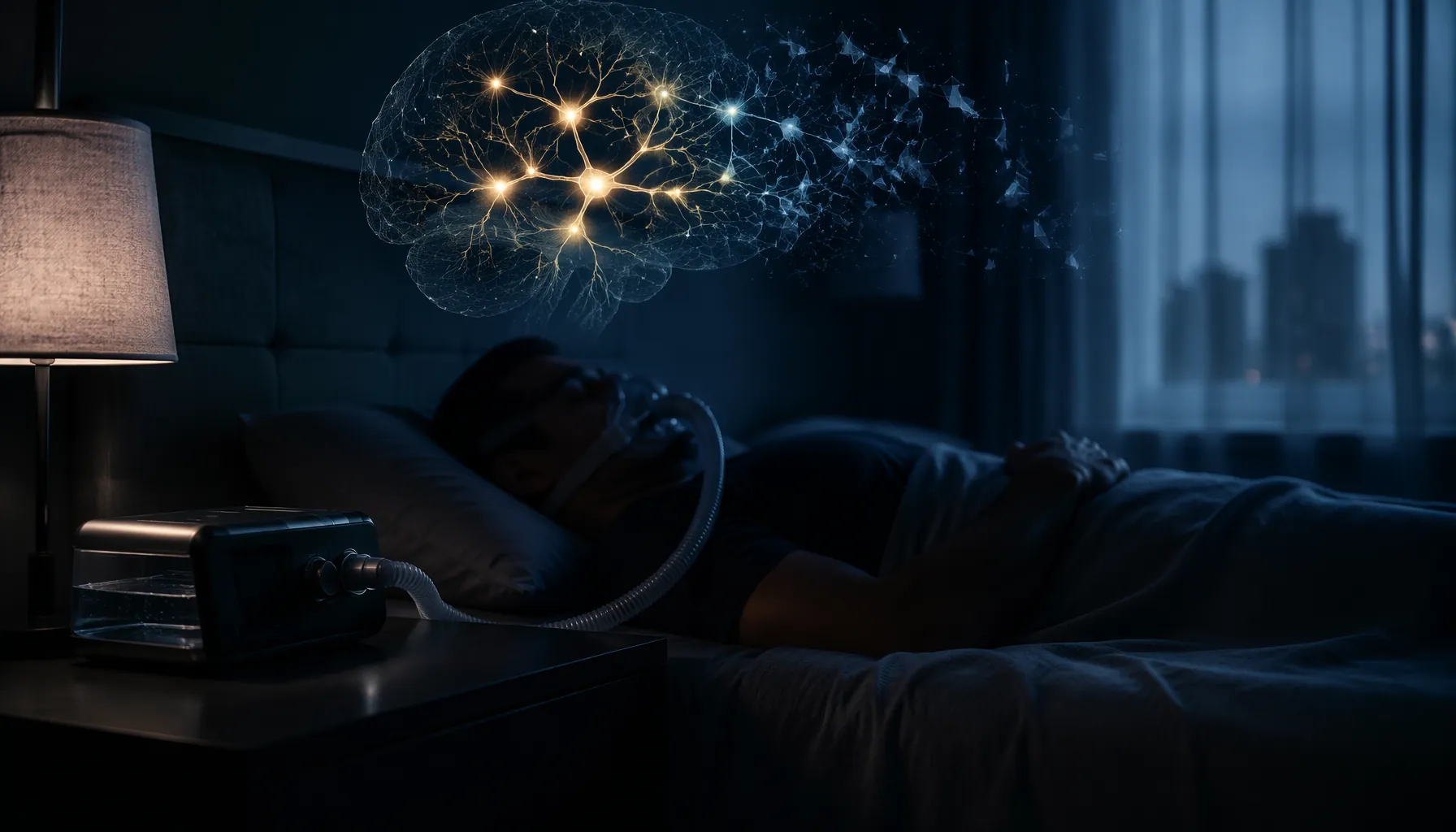
That matters because sleep apnea is not a vague wellness variable. It is a treatable breathing disorder in which the upper airway repeatedly narrows or closes during sleep. When that happens, sleep fragments, oxygen levels can fall, the nervous system keeps being pulled into alarm, and the next day’s mood, pain tolerance, attention, and memory can all be worse. For former NFL players trying to sort out depression, anxiety, chronic pain, concussion history, post-career identity loss, or brain fog, untreated sleep apnea is too concrete to leave in the background.
The 2026 Numbers Show a Diagnosis Gap, Not Just a Sleep Problem
In the 2026 Neurology study, 32% of former players reported a prior clinical diagnosis of sleep apnea. But when nearly 2,000 former players were screened with STOP-BANG, an estimated 69% screened positive for possible sleep apnea.[1] The difference between those two figures is the first clinical warning: many players may be living with high sleep apnea risk without having a confirmed diagnosis. The study was funded by the NFLPA, and the authors reported no NFL editorial input.
The 69% figure should be read carefully. STOP-BANG is a screening tool, not a sleep study. A high-risk screen is not the same thing as confirmed obstructive sleep apnea. It means the player needs a proper clinical evaluation, often including home sleep apnea testing or an in-lab polysomnogram, depending on the person’s symptoms, medical history, and clinician judgment.
The treatment gap was almost as concerning as the screening gap. Among players who already had a sleep apnea diagnosis, only 39.8% reported using CPAP at least four nights per week.[1] CPAP adherence is difficult for many patients, not only former athletes. Masks leak, pressure feels uncomfortable, nasal obstruction gets in the way, travel interrupts routines, and some people stop after a bad first setup. Still, in this population, the consequence is hard to ignore: diagnosis alone was not enough.
| What the 2026 study measured | What it means clinically |
|---|---|
| 32% had a prior clinical sleep apnea diagnosis | A large diagnosed group already existed before screening |
| About 69% screened positive by STOP-BANG | Many more players may be at high risk, but screening is not confirmation |
| 39.8% of diagnosed players used CPAP at least four nights per week | Treatment follow-through was limited even after diagnosis |
| Untreated diagnosed players had the highest symptom scores | Untreated sleep apnea tracked with worse depression, anxiety, pain interference, and cognitive difficulty |
Why a Blocked Airway Can Look Like a Mental Health Decline
Obstructive sleep apnea does not have to explain everything to be worth treating first. A former player can have real depression and also have untreated sleep apnea. He can have anxiety shaped by life after football and also have nightly breathing interruptions that keep his nervous system activated. He can have chronic orthopedic pain and also sleep in a way that lowers his threshold for pain the next day.
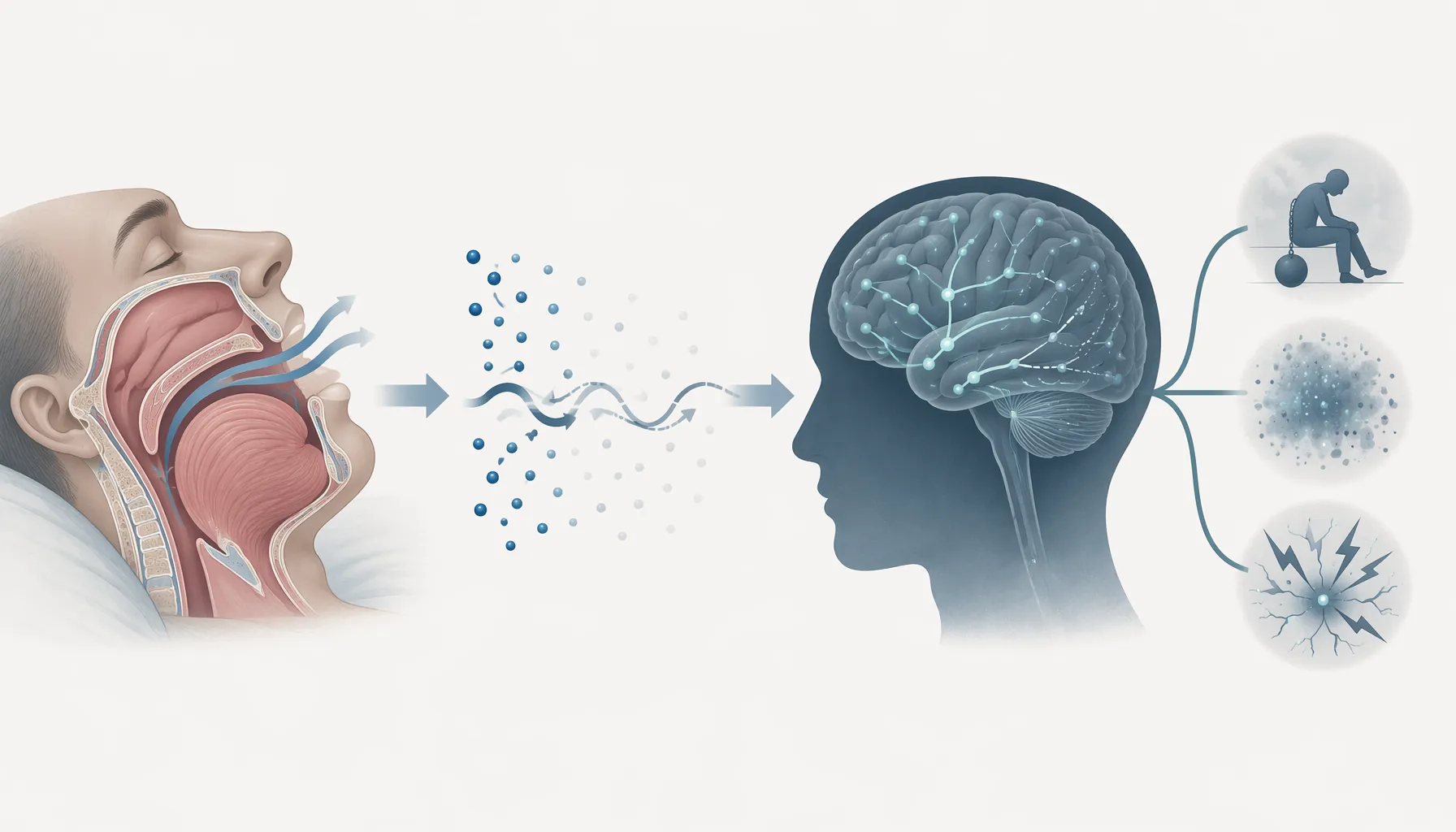
The mechanism is ordinary physiology, not a character judgment. Repeated airway obstruction can fragment sleep before the person remembers waking. Oxygen dips and repeated arousals can increase sympathetic nervous system activity. The brain gets less continuous restorative sleep, and the body starts the day with more inflammatory and stress-system pressure than it should. In that setting, irritability, low motivation, poor concentration, emotional reactivity, and pain sensitivity are not surprising.
This is where generic mental health advice can miss the body in the room. If a player is snoring loudly, stopping breathing during sleep, waking unrefreshed, falling asleep during the day, or needing more effort than expected to think clearly, the next step should not be limited to another conversation about stress management. A breathing problem during sleep can keep feeding the very symptoms the player is trying to treat.
The 2026 study does not prove that CPAP cures depression, anxiety, pain, or cognitive difficulty in former NFL players. It shows a clinically important pattern: players with diagnosed but untreated sleep apnea had the worst symptom scores, while treated players scored significantly better across those measures.[1] That is enough to make untreated sleep apnea a serious target in sleep and mental health support for former NFL players, especially because the target is modifiable.
Former Players Carry Several Sleep Apnea Risk Factors at Once
The risk profile is not mysterious. High body mass index, larger neck circumference, male sex, position-related body size, and concussion history all matter in this population.[1] Linemen often draw attention because body size and neck circumference can be especially prominent, but the sleep apnea problem should not be treated as a linemen-only issue.
Older research had already pointed in the same direction. A 2010 study in JACC found retired NFL players were 2.5 times more likely to have sleep apnea than matched community controls.[2] A 2017 Nature and Science of Sleep study examined sleep-apnea risk and subclinical atherosclerosis in early-middle-aged retired players, adding to the picture of sleep-disordered breathing as part of a broader cardiometabolic risk profile.[3] A 2018 scoping review also identified obstructive sleep apnea as a recurring concern in NFL players.[4]
Those earlier studies are useful background, but the 2026 data change the practical urgency. The issue is no longer simply that former players have risk factors. It is that high-risk screening, prior diagnosis, treatment follow-through, and mental health symptom burden line up in a way that should change clinical intake.
Screening Has to Lead Somewhere
A good screening question is not, “Are you sleeping okay?” Many people with sleep apnea answer yes because they spend enough hours in bed or because they do not remember the breathing interruptions. Better questions are more concrete: Has anyone seen you stop breathing? Do you snore loudly? Do you wake with headaches or a dry mouth? Are you exhausted despite a full night in bed? Do you fight sleep while driving, watching film, reading, or sitting quietly? Has your mood or patience changed along with your sleep?
For clinicians, the sequence should be plain. If the history suggests sleep apnea risk, use a validated screen, document the result, and arrange confirmatory testing when indicated. If testing confirms obstructive sleep apnea, treatment should be adjusted until the player can actually use it. A CPAP machine in a closet does not reduce nighttime obstruction.
- Start with a sleep-focused history, including snoring, witnessed apneas, unrefreshing sleep, daytime sleepiness, morning headaches, and cognitive fog.
- Use screening to identify risk, while being clear that screening does not confirm sleep apnea.
- Order home sleep apnea testing or in-lab polysomnography when clinically appropriate.
- Treat confirmed sleep apnea with CPAP, oral appliance therapy, or another clinician-directed pathway.
- Recheck adherence, residual symptoms, mask fit, pressure comfort, nasal obstruction, and whether mood, pain, and cognition are changing.
Treatment Is Not One Mask and a Pep Talk
CPAP is often the first-line treatment for obstructive sleep apnea, but the real clinical task is not handing over equipment. It is getting the treatment to work in the life of the person using it. That may mean changing mask style, adjusting pressure settings, treating nasal congestion, checking leak data, addressing claustrophobia, or explaining why four hours of irritated half-use is not the goal.
Oral appliance therapy also belongs in the conversation for selected patients. The NFLPA Sleep Apnea Program has offered oral appliance therapy through dentists trained by the American Sleep and Breathing Academy, giving former players another pathway when clinically appropriate.[5] Oral appliances are not interchangeable with CPAP for every patient, and severity, anatomy, dental status, and follow-up testing matter. But for a player who cannot tolerate CPAP, a legitimate alternative is better than abandoning treatment.
The Professional Athletes Foundation and Tulane Healthy Body & Mind Screening Program is another practical entry point. The program lists free OSA screening for former players, provides the phone number 1-800-635-4625, and reports that about 6,000 former players have been screened to date.[6] For a player or family member who knows something is wrong but does not know where to start, that kind of direct doorway matters.
Insomnia May Need Its Own Treatment Track
Not every sleep complaint in a former player is sleep apnea. Some players have insomnia: trouble falling asleep, staying asleep, or returning to sleep after waking. Some have both insomnia and sleep apnea, which can make treatment harder because the person may be exhausted but still unable to sleep comfortably with equipment.
A Harvard-led pilot study adapted telephone-delivered Brief Behavioral Treatment for Insomnia for former NFL players. The study included 40 participants and was designed to test feasibility and acceptability, not to provide definitive efficacy data.[7] That makes it promising but preliminary. It should not be placed on the same evidentiary shelf as the 2026 sleep apnea findings, but it does point to a useful principle: sleep treatment for former players may need to be specific, accessible, and built around barriers that generic referrals do not solve.
The Care Barrier Is Often Follow-Through, Not Awareness
Toughness culture does not need to be turned into a lecture to affect care. If a player does not see himself as someone who asks for help, he may wait until symptoms are severe. If he frames exhaustion as normal aging or pain as the cost of playing, he may not mention loud snoring or witnessed apneas unless someone asks directly. If he has already been told to manage mood or pain without a sleep evaluation, he may assume sleep is secondary.
Research on current and former athletes has documented sleep and mental health concerns in this population, along with barriers related to athletic identity and help-seeking.[8] The important clinical consequence is simple: screening cannot depend on a former player walking in and saying, “I think my airway is closing at night.” Spouses, adult children, primary care clinicians, neurologists, psychologists, dentists, and sleep specialists may be the ones who notice the pattern first.
That pattern deserves a direct response when depression, anxiety, pain interference, cognitive difficulty, loud snoring, witnessed apneas, or unrefreshing sleep appear together. Screen for sleep apnea. Confirm it properly. Treat it until treatment is usable. Then keep treating the rest of the person. Sleep apnea care does not erase concussion history, chronic pain, grief, financial stress, or the loss of a structured athletic identity. It removes one common, measurable source of nightly physiological strain that can make all of those problems harder to carry.
References
- Sleep Apnea Screening and Neuropsychiatric Symptoms in Former Professional American-Style Football Players — Neurology, 2026.
- Sleep-disordered breathing, Hypertension and Obesity in Retired National Football League Players — J Am Coll Cardiol, 2010.
- Sleep-apnea risk and subclinical atherosclerosis in early-middle-aged retired National Football League players — Nature and Science of Sleep, 2017.
- Obstructive Sleep Apnea among Players in the National Football League: A Scoping Review — 2018.
- Success Found in the NFLPA's Sleep Program — American Sleep and Breathing Academy, 2017.
- PCF Body & Mind — Healthy Body & Mind Screening Program.
- Adapting Brief Behavioral Treatment for Insomnia for Former National Football League Players: A Pilot Study — Behavioral Sleep Medicine, 2022.
- Sleep and Mental Health Issues in Current and Former Athletes: A Mini Review — Frontiers in Psychology, 2022.
Supports these guides
Spot an error or have clinical feedback?
Because this article covers clinical, medication, or safety information, we use a moderated correction channel instead of open public comments. Let us know if something about “Treating Sleep Apnea Improves Mental Health in Former NFL Players” needs a closer look.
Send feedback on this article