
Does the full moon actually affect perimenopause sleep?
Perimenopausal women often wonder whether the full moon is worsening their sleep. This guide evaluates the existing evidence across general populations and perimenopause-specific studies, explaining what researchers actually know and where the gaps remain.
If your sleep reliably gets worse around the full moon during perimenopause, the most honest answer is not “yes, the moon is causing it” or “no, you are imagining it.” The evidence sits in a more awkward place: studies in general populations suggest a small lunar effect on sleep for some people, perimenopause independently makes sleep more fragile, and no study has directly tested whether the full moon worsens sleep quality specifically in perimenopausal women.
That distinction matters. A 20-minute shift in sleep may be easy to shrug off in a steady sleeper. It may feel very different in a body already dealing with lighter sleep, night sweats, earlier waking, anxiety surges, or the temperature instability that often arrives in the menopausal transition.
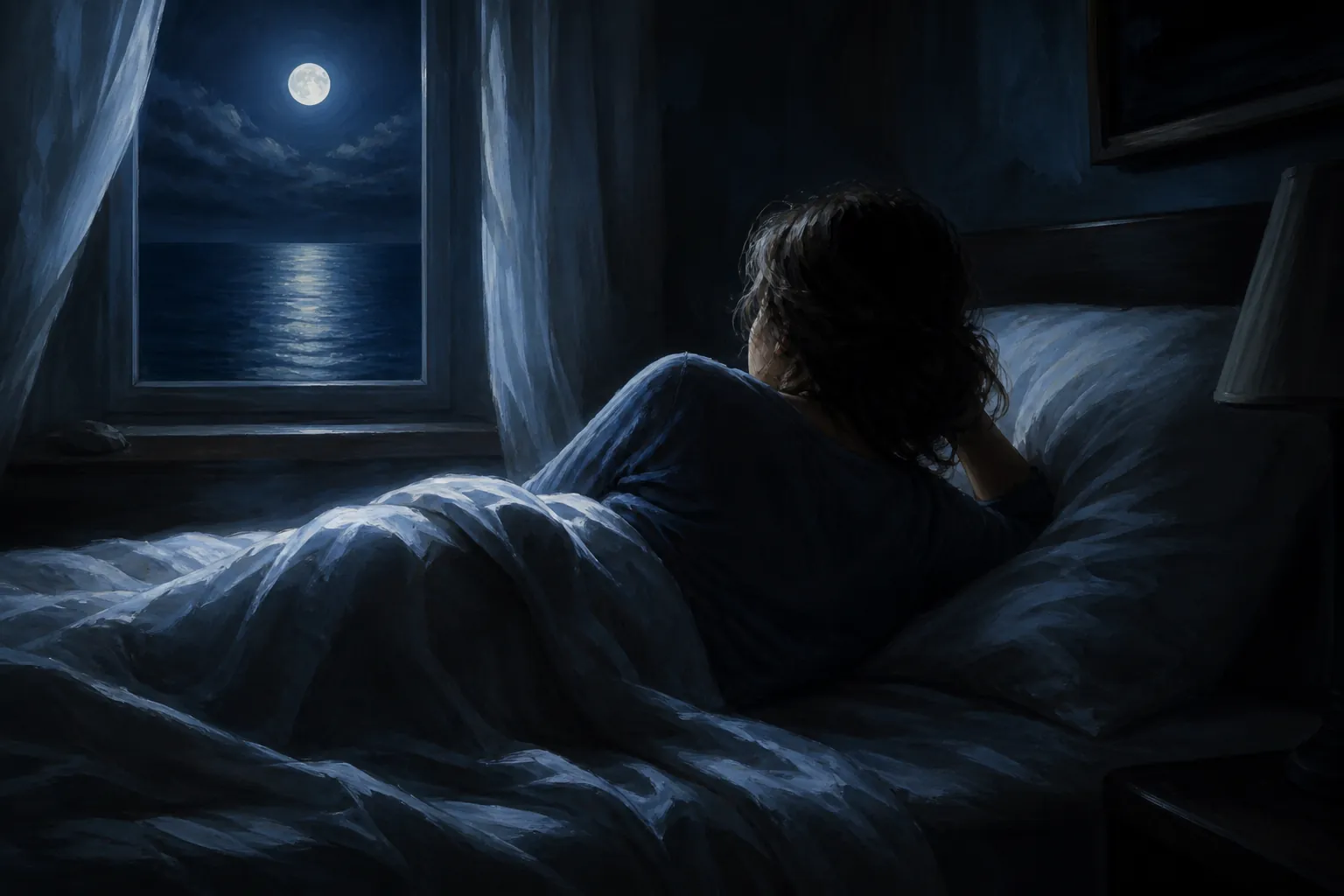
The best answer starts outside perimenopause
The strongest lunar-sleep studies do not study perimenopause. They study human sleep more broadly. That is not a small caveat; it is the central limitation. Still, these studies are worth taking seriously because they move the question away from folklore and into measurable sleep timing, duration, and architecture.
One of the most useful studies is the 2021 field study by Casiraghi and colleagues, which tracked sleep across the lunar cycle in several communities, including Indigenous communities with limited or no access to electricity. Sleep tended to start later and last less in the nights leading up to the full moon, with reductions in total sleep time in the range of about 20 to 25 minutes. The most consistent pattern appeared in the 3 to 5 nights before the full moon, not only on the full-moon night itself.[1]
That pre-full-moon timing is the part to notice. It turns a vague complaint — “I sleep badly when the moon is full” — into something trackable. If a lunar pattern is present, it may show up before the calendar says “full moon,” when evening moonlight is bright and visible during the hours many people are trying to wind down.
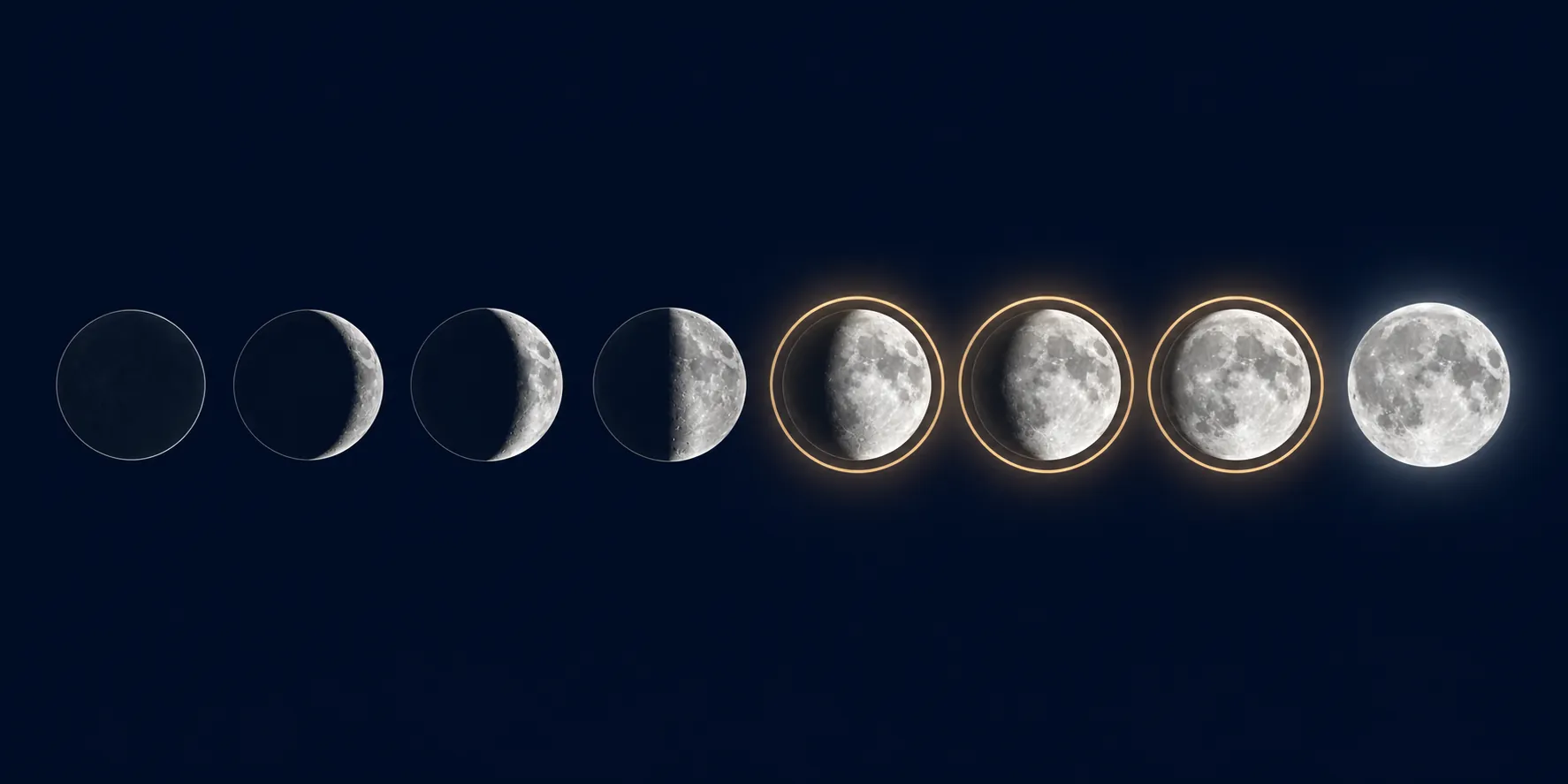
A smaller laboratory study by Cajochen and colleagues gives a different kind of evidence. In that study of 33 adults, sleep was measured with polysomnography, the kind of monitoring that can identify sleep stages rather than relying only on how someone felt the next morning. Around the full moon, participants had about 30% less deep sleep, took about 5 minutes longer to fall asleep, and slept about 20 minutes less overall.[2]
Those numbers are not enormous. They also are not nothing. Five extra minutes to fall asleep is unlikely to explain severe insomnia by itself. Less deep sleep and 20 minutes less total sleep may matter more when sleep is already fragmented. The frustrating part is that lunar sleep findings are not consistent across the literature; larger observational work, including Haba-Rubio and colleagues’ study, has not found a significant association between lunar phase and sleep measures.[3]
So the general-population evidence supports a careful sentence: the full moon, or more precisely the days just before it, may be associated with slightly shorter or lighter sleep in some settings. It does not support the stronger claim that the full moon reliably disrupts everyone’s sleep.
Perimenopause makes the same small disturbance feel bigger
Perimenopause does not need the moon’s help to disturb sleep. Across studies, sleep complaints affect an estimated 40% to 60% of women during the menopausal transition.[4] In the SWAN cohort, perimenopausal women were about 1.6 times more likely to report sleep disturbance than premenopausal women.[5] Separately, review data report that 26% of perimenopausal women meet diagnostic criteria for insomnia.[6]
This is where dismissing the moon question too quickly can miss the point. Many women are not asking because they believe the moon has magical control over sleep. They are asking because they have already noticed that sleep is less resilient than it used to be. A mild external cue — light through a window, a later bedtime, a warmer room, one stressful evening — can land harder when the baseline system is already unstable.
The physiology is not vague. Estrogen and progesterone fluctuations can affect thermoregulation, which helps explain why hot flashes and night sweats wake many women from sleep during the menopausal transition.[4] Sleep can also become more vulnerable through changes in circadian timing and melatonin. Jehan and colleagues describe links among menopause transition, declining melatonin amplitude, and delayed dim-light melatonin onset, with poor sleepers showing a delay of about 50 minutes in DLMO.[6]
A delayed melatonin signal does not automatically mean moonlight is the culprit. It does mean the timing system may be less forgiving. If the brain’s “biological night” is already starting later, then evening light exposure — from lamps, screens, or possibly bright moonlight entering the room — becomes more relevant as a trigger to investigate.
The missing study is the one readers actually want
The crucial missing evidence is simple to state: researchers have not directly measured sleep in perimenopausal women across lunar phases to test whether sleep quality worsens near the full moon in this specific life stage. The claim that the moon has a stronger effect during perimenopause is therefore inferred from two separate bodies of evidence, not demonstrated by a population-specific study.
| Evidence tier | What it supports | What it does not prove |
|---|---|---|
| General lunar sleep studies | Some studies show shorter sleep, later sleep timing, longer sleep onset, or reduced deep sleep near the full moon or in the pre-full-moon window. | They do not prove the same effect occurs in perimenopausal women. |
| Perimenopause sleep research | Sleep disturbance, insomnia, night sweats, thermoregulation changes, and circadian shifts are common during the menopausal transition. | It does not prove lunar phase is one of the triggers. |
| Melatonin and light mechanism | A shared pathway is biologically plausible because light can affect melatonin and perimenopause may alter melatonin timing. | It does not establish that moonlight meaningfully suppresses melatonin in real bedrooms. |
| Personal sleep patterns | A repeated pattern in your own sleep diary can help identify vulnerable nights. | It cannot, by itself, separate moon phase from stress, heat, alcohol, travel, symptoms, or expectation. |
This evidence gap is not a reason to roll your eyes at the question. It is a reason to keep the claim appropriately sized. The moon may be a contributor for some women. It is not currently established as a cause of perimenopausal insomnia.
Where melatonin fits, and where it gets overused
Melatonin is the most plausible bridge between lunar light and perimenopausal sleep, but it is also where overconfident explanations tend to appear. The reasonable version is narrow: perimenopause can be associated with changes in melatonin rhythm, and nighttime light exposure can influence circadian signaling. Therefore, a bright pre-full-moon evening could plausibly matter more for someone whose sleep timing is already vulnerable.
The unreasonable version goes further than the evidence: the full moon suppresses melatonin enough to cause perimenopause insomnia. That has not been directly shown. If you want the fuller mechanism discussion, the companion piece on why the full moon may disrupt perimenopause sleep more is the better place to go deeper. For this question, the main point is restraint: plausibility is not proof.
How to test the pattern without making the moon the villain
If you suspect a full-moon pattern, track it for several lunar cycles before deciding what it means. One rough month is easy to misread, especially if it included travel, a heat wave, illness, work stress, alcohol, late meals, or a run of night sweats.
- Mark the 3 to 5 nights before the full moon, the full-moon night, and 2 nights after it.
- Record bedtime, estimated sleep onset, wake-ups, final waking time, night sweats, room temperature, alcohol, caffeine timing, and unusual stress.
- Note light exposure honestly: bright rooms, screens, outdoor evening light, and whether moonlight reaches your face or bed.
- Look for repeatable timing, not a single memorable bad night.
- If the pattern appears, treat the window as a vulnerable period rather than as proof of causation.
The most useful interventions are low-risk because they help sleep whether or not the moon is involved: dim lights earlier, keep the bedroom dark, use blackout curtains or a sleep mask, avoid checking the moon or the clock during the night, and cool the sleep environment if heat is part of the wake-up pattern.
If you want a gentle, structured routine for these nights, a full-moon sleep ritual for perimenopause insomnia can be useful as long as it does not become another performance standard at bedtime.
When the pattern is probably perimenopause, not the moon
Blaming the moon can become a problem if it delays treatment for insomnia that is already established. If you are awake for long stretches most nights, dreading bedtime, sleeping in fragments, or organizing your life around exhaustion, the priority is not proving whether lunar phase is involved. The priority is treating the sleep disorder and the symptoms that keep feeding it.
When hot flashes, night sweats, or heat sensitivity are the main pattern, cooling strategies deserve more attention than moon tracking. A comparison of recovery and cooling devices for perimenopause sleep may be more relevant than another lunar calendar. When the pattern is conditioned insomnia — lying awake, monitoring sleep, becoming more alert the longer the night goes on — CBT-I for perimenopause sleep is a better-supported direction.
Melatonin supplements are sometimes discussed in this context, and low-dose ranges have been studied in perimenopausal populations, but dosing is a clinical decision. The more immediate point is behavioral: protect darkness and regular timing first, then discuss supplements or hormone-related treatment with a clinician if sleep remains persistently impaired.
So, does the full moon affect sleep quality in perimenopause?
It might for some women, but the evidence is not strong enough to say that it does in perimenopause specifically. General sleep studies show a small, inconsistent lunar signal, especially in the 3 to 5 nights before the full moon. Perimenopause research clearly shows that sleep is more vulnerable during this life stage. The intersection — full moon plus perimenopause — remains untested.
The practical judgment is modest: if your bad nights cluster before the full moon, prepare for that window. Darken the room, reduce evening light, cool the bed, and track the pattern across several cycles. But do not make the moon carry the whole explanation if insomnia, night sweats, or circadian disruption are present the rest of the month.
References
- Moonstruck sleep: Synchronization of human sleep with the moon cycle under field conditions, Science Advances, 2021.
- Evidence that the lunar cycle influences human sleep, Current Biology, 2013.
- Do Moon Phases Affect Your Sleep?, Sleep Foundation.
- Sleep and sleep disorders in the menopausal transition, Sleep Medicine Clinics, 2018.
- Sleep difficulty in women at midlife: a community survey of sleep and the menopausal transition, Menopause, 2008.
- Sleep, Melatonin, and the Menopausal Transition: What Are the Links?, Sleep Science, 2017.
Explore the mechanism
Next step
Spot an error or have clinical feedback?
Because this article covers clinical, medication, or safety information, we use a moderated correction channel instead of open public comments. Let us know if something about “Does the full moon actually affect perimenopause sleep?” needs a closer look.
Send feedback on this article