
Best recovery devices for perimenopause sleep compared
This article evaluates three wearable and bedside cooling devices for perimenopause sleep disruption, comparing their mechanisms, clinical evidence, cost, and whether each can genuinely help you recover sleep during hot flash episodes.
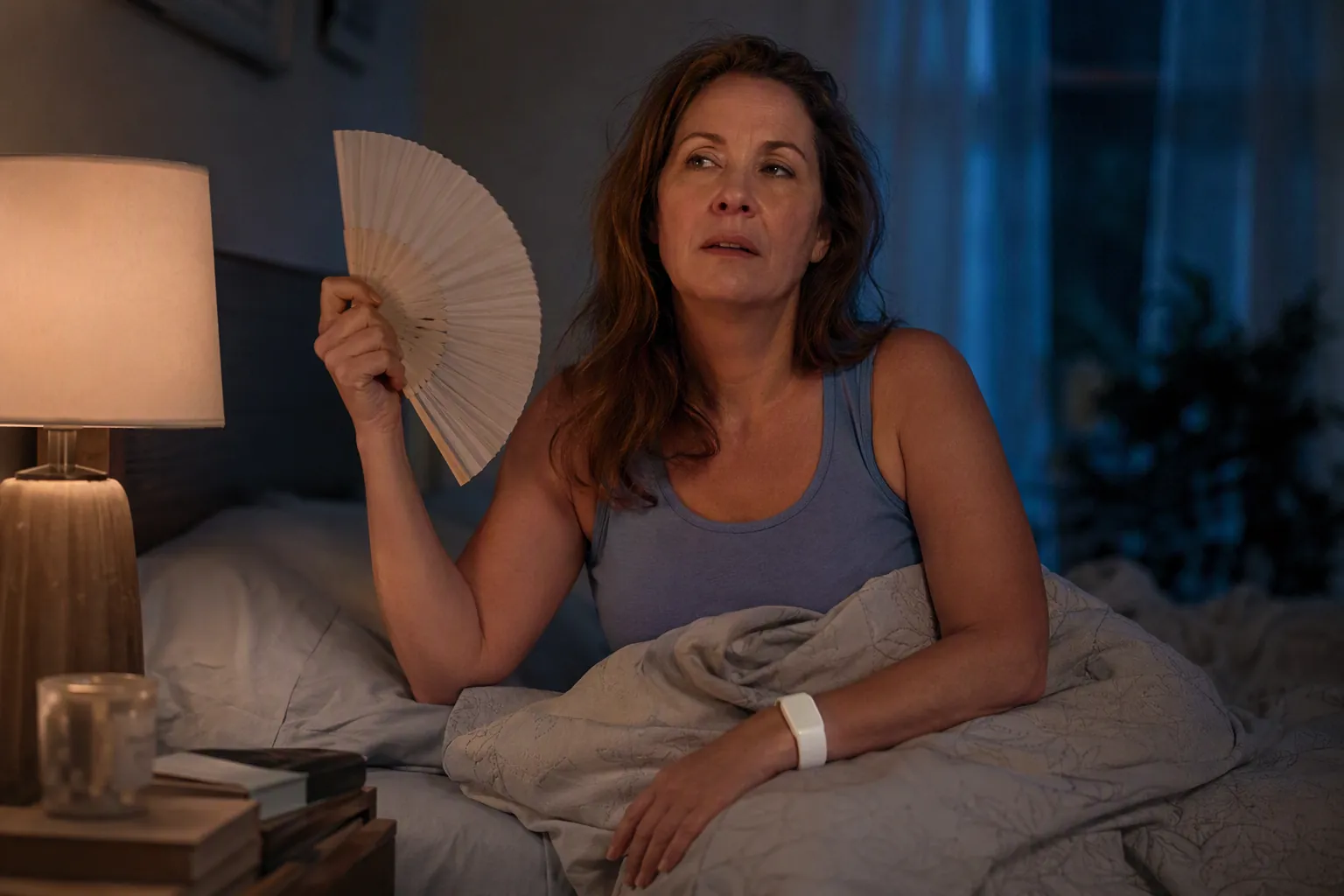
A perimenopause hot flash becomes a sleep problem before the sheets are soaked. The body misreads its own temperature, starts dumping heat, raises sweat and skin blood flow, and often adds a little pulse of alarm for good measure. Then the sleeper is awake enough to know the clock says something cruel, the pajamas are damp, and tomorrow still expects a functioning adult.
That is the practical question behind the best recovery devices for perimenopause sleep: not whether a gadget feels pleasantly cool, but whether it can interrupt the episode early enough to preserve the rest of the night. The answer is clearest for wrist cooling that targets thermosensory signaling. It is more tentative for predictive mattress cooling. It is weakest, for this specific hot-flash sleep problem, for general comfort wearables that cool and warm on demand.
What A Device Has To Beat
Hot flashes and night sweats are common during the menopause transition; reviews and sleep-health summaries report that up to 80% of perimenopausal women experience them, and they can fragment sleep rather than simply make the room feel too warm.[1][2]
The physiology matters because it separates active recovery devices from ordinary cooling products. During perimenopause, fluctuating estrogen can narrow the hypothalamic thermoregulatory window. A normal core temperature may be interpreted as too hot, triggering vasodilation, sweating, heart-rate activation, and abrupt waking.[2] A fan or breathable sheet can help with the aftermath. A recovery device has a harder job: it has to change the body’s response while the cascade is getting underway.
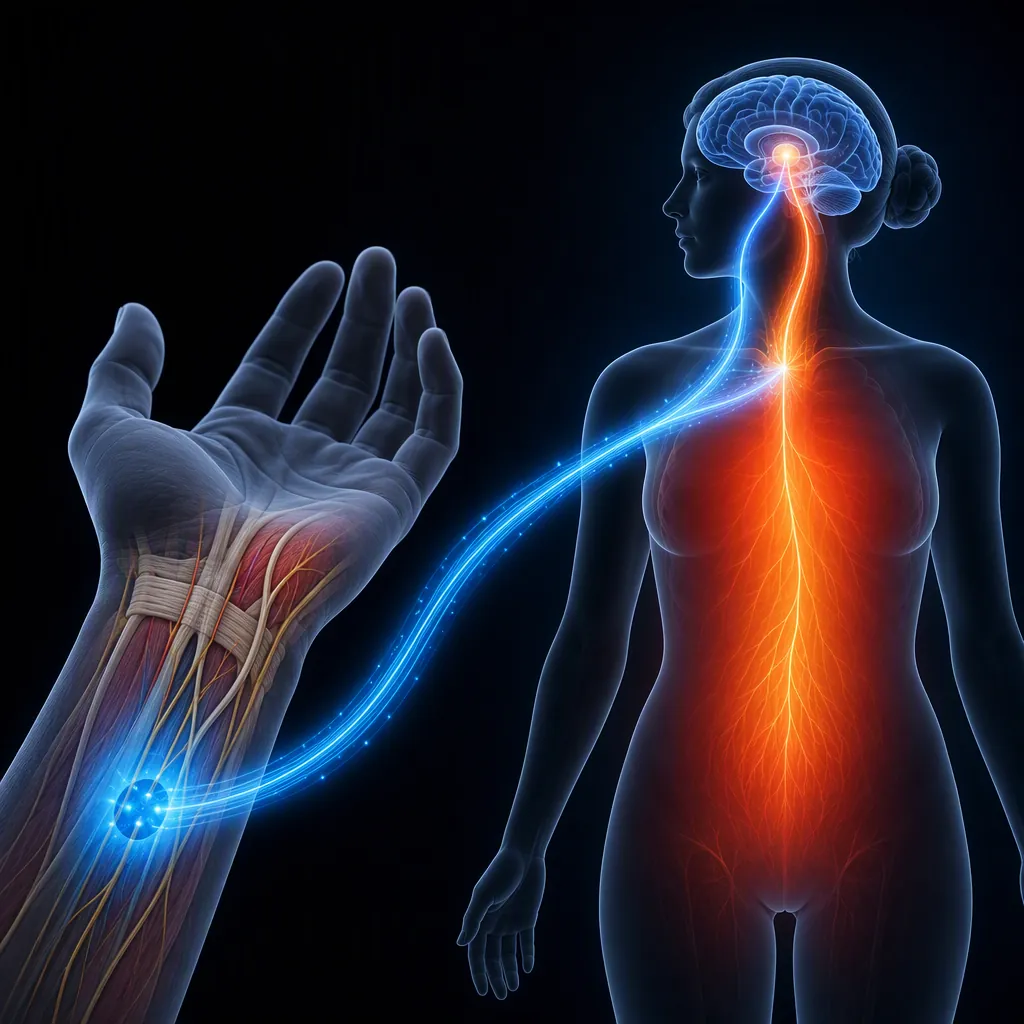
That is also why the wrist deserves more attention than it usually gets in sleep-product marketing. The ventral wrist, on the palm side, is a thermosensitive area where cooling can activate TRPM8 cold-sensitive ion channels. In the KÜLKUF study, the proposed mechanism is not simply “make her colder.” It is peripheral thermoregulatory modulation: a cold signal from the wrist communicates with central thermoregulation and may help abort or blunt the hot flash cascade.[3]
If your problem is general summer heat, passive cooling still has a place; fans, sheets, clothing, and timing can lower the background load. Those belong in a different decision, closer to how to stay cool at night in extreme heat. The devices compared here are more specific: they try to intervene when a vasomotor episode is already forming.
The Comparison At A Glance
| Device | Intervention Point | Evidence For Perimenopause Sleep Disruption | Commitment | Best Fit |
|---|---|---|---|---|
| KÜLKUF | Inner-wrist cooling aimed at TRPM8 thermosensory signaling | Strongest of the three: one double-blind RCT, small sample | $199 wrist-worn device | Hot flashes that wake you suddenly and need fast interruption |
| Terra by Amira | Bracelet detects moisture and movement, then triggers chilled water through a mattress pad | Promising but company-reported; no independently published clinical validation found as of July 2026 | High: bracelet plus mattress pad system | Intense, whole-body night sweats where bed-level cooling may matter |
| Embr Wave 2 | Wrist-worn cooling and warming sensations | Weaker for this specific use; broader comfort evidence and consumer review presence | $299 wrist device | People who want flexible temperature comfort, not a hot-flash-specific intervention |
KÜLKUF: The Most Concrete Evidence, With A Small-Study Warning
KÜLKUF is the device in this group with the most useful evidence for the actual middle-of-the-night problem. In a 2025 double-blind randomized controlled trial from Boston University School of Medicine, 27 participants used a wrist-cooling device for hot flash management. Severe hot flashes fell by 46% overall and by 50% in postmenopausal women, with p<0.02; the study also reported zero adverse events and 100% participant retention.[3]
Those details are unusually helpful in a product category that often lives on softened claims. The trial was blinded. It measured severe hot flashes, not just satisfaction. It named a plausible mechanism. It reported safety and retention. The cooling plate in the study reached 47°F almost instantly, and BU’s press materials describe the commercial KÜLKUF device as a $199 wrist-worn product with a cooling plate around 50°F.[3][4]
The wrist location is not a decorative design choice. KÜLKUF cools the ventral wrist, where cold-sensitive TRPM8 channels can send a cooling signal through the thermosensory pathway. That makes it different from turning down the bedroom temperature or chilling the whole mattress. A cold bed asks the skin to lose heat. Wrist thermosensory cooling tries to tell the thermostat that the emergency response can stand down.[3]
The evidence still has limits. A trial with 27 participants is not a settled treatment category. It does not tell us how every perimenopausal sleeper will respond, whether benefit persists across years, or how the device performs in people whose awakenings are mixed with pain, anxiety, alcohol rebound, room heat, or sleep apnea. The right reading is narrow but meaningful: among the devices compared here, KÜLKUF has the strongest non-hormonal device evidence for reducing severe hot flashes, and the mechanism is specific enough to deserve attention.
Who KÜLKUF Makes Sense For
- You wake suddenly with a recognizable hot flash or night sweat pattern rather than vague restlessness.
- You want a lower-cost device before committing to a mattress-pad system.
- You prefer a non-hormonal tool, or you cannot use menopausal hormone therapy.
- You are comfortable with promising but still early evidence from one small randomized trial.
Terra By Amira: Predictive Cooling, Big Commitment, Unpublished Proof
Terra by Amira takes a more ambitious route. A bracelet watches for changes such as skin moisture and movement, then triggers chilled water flow through a mattress pad within 5 seconds.[5] In plain bedroom terms, the system is trying to cool the bed before the sleeper is fully awake and drenched.
That is an attractive idea for people whose night sweats feel whole-body rather than localized, or whose sleep is lost to the cleanup: throwing off covers, towel on the bed, shirt changed, adrenaline still buzzing. Predictive cooling could matter if it consistently acts before the hot flash becomes a full waking episode.
The problem is the evidence boundary. Amira reports 39% less time awake from hot flashes, a 70% reduction in hot flash intensity, and 40% more restful nights.[5] Those numbers may be useful as company disclosure, but they should not be read as independent clinical proof. As of July 2026, the available sources do not include an independently published peer-reviewed clinical trial validating those claims.
Terra also asks for more from the household. A bracelet plus active mattress pad is a bigger commitment than a wrist device: more setup, more bed infrastructure, and likely more sensitivity to partner preferences, travel, maintenance, and power. If your episodes are severe and soak the bed, that commitment may feel reasonable. If your main need is fast interruption of a flash before it blooms, the independent evidence currently points more cleanly toward wrist thermosensory cooling.
Embr Wave 2: Useful Comfort Tool, Less Specific Evidence
Embr Wave 2 sits in the middle of the decision. It is wrist-worn, like KÜLKUF, but it is designed as a broader personal temperature device that can cool or warm. Its listed price is $299, and Consumer Reports has reviewed it as a consumer temperature-modulation product.[6]
That warming function may matter more than it sounds. Some sleepers with unstable temperature comfort do not have only one problem. They run hot during a flash, then get chilled afterward, then hesitate under the covers because another flash may be coming. A device that can provide both cool and warm sensations may be useful for comfort across the night.
But comfort is not the same claim as hot-flash interruption. The available evidence for Embr is smaller and industry-funded, without a large independently funded randomized trial specific to perimenopause sleep disruption. That does not make the device useless. It makes the evidence less direct than KÜLKUF’s for the exact reason most readers are here.
How To Choose Without Letting The Marketing Choose For You
Start with the shape of the night, not the prettiest mechanism. If the flash wakes you fast and cleanly—heat, sweat, pulse, alertness—then a device aimed at interrupting the thermoregulatory signal is the most logical first test. If the episode floods the whole bed and the aftermath is the bigger sleep thief, a mattress-cooling system becomes more tempting, even with weaker independent evidence. If your temperature problem is variable comfort rather than classic night sweats, Embr’s broader cooling and warming profile may be enough.
- Choose KÜLKUF first if you want the strongest device-specific evidence for severe hot flash reduction and a lower-commitment wrist option.
- Consider Terra if your night sweats are intense, bed-soaking, and whole-body, and you are willing to pay for an unverified but technically interesting system.
- Consider Embr Wave 2 if you want personal temperature comfort across cooling and warming, with less direct evidence for perimenopause sleep recovery.
- Skip all three as a stand-alone answer if snoring, gasping, severe insomnia, panic-like awakenings, or worsening symptoms are part of the picture.
One more practical boundary: repeated hot-flash awakenings can train the brain to expect wakefulness even after the temperature trigger improves. That is where CBT-I for perimenopause sleep belongs beside cooling, not behind it. A device may reduce the trigger; CBT-I addresses the conditioned insomnia that can remain.
Alcohol can also make temperature-triggered nights harder to interpret. If the worst flashes cluster after wine or cocktails, the device may be getting blamed for a job made much harder upstream; the interaction is worth sorting out with alcohol and perimenopause sleep in mind.
Where Devices Fit Beside Medical Care
There is a reason non-hormonal devices draw attention: one 2021 Menopause paper reports that roughly 54% of U.S. women decline hormone therapy.[7] A device can be a reasonable tool for someone who cannot or does not want menopausal hormone therapy, or for someone who wants a targeted nighttime aid while discussing options with a clinician.
It should not be asked to do everything. Menopausal hormone therapy remains an established treatment for vasomotor symptoms for appropriate candidates; CBT-I can help when insomnia becomes conditioned; and a sleep-medicine evaluation matters when awakenings come with snoring, choking, morning headaches, or daytime sleepiness. Perimenopause can also raise sleep-apnea risk, so a cooling device should not become a way to postpone care when the symptoms point beyond hot flashes.
The calibrated choice is simple enough. KÜLKUF has the strongest non-hormonal device evidence for hot flash interruption, though it rests on one small randomized trial. Terra by Amira is promising and mechanically plausible for intense whole-body night sweats, but its headline numbers remain company-reported without independent publication in the available materials as of July 2026. Embr Wave 2 is plausible for personal comfort and temperature flexibility, but less proven for perimenopause-related sleep disruption.
References
- Perimenopause and Sleep: Causes and Solutions to Disruptions. Sleep Foundation.
- Sleep Disturbance and Perimenopause: A Narrative Review. PMC.
- Peripheral Thermoregulatory Modulation for Hot Flash Management: Efficacy of Novel Wrist Cooling Device. PMC. 2025.
- Study finds wrist cooling represents a promising approach for managing hot flashes. BU School of Medicine Press Release. 2025.
- Terra by Amira. Amira.
- 11 Science-Backed Products for Better Sleep During Menopause. HealthCentral.
- Nappi et al., Menopause, 2021.
Safety & eligibility read
Cross-check against other interventionsExplore the mechanism
Next step
Spot an error or have clinical feedback?
Because this article covers clinical, medication, or safety information, we use a moderated correction channel instead of open public comments. Let us know if something about “Best recovery devices for perimenopause sleep compared” needs a closer look.
Send feedback on this article