
Yes, cetirizine can make you sleepy. In adult placebo-controlled trial data summarized from Zyrtec labeling, about 11% to 14% of adults reported drowsiness or sedation, compared with roughly 6% of adults taking placebo.[1][2] That is not rare enough to dismiss, and it is not high enough to treat cetirizine like an old-school sedating antihistamine such as diphenhydramine.
This is where the phrase “non-drowsy” can do real damage. Cetirizine is often described as a second-generation, less-sedating antihistamine, which is fair as a class comparison. But “less sedating” does not mean “cannot slow you down.” If you took Zyrtec before work, driving, studying, or caring for someone and then felt foggy, you are not imagining a side effect that the label somehow rules out.

How sleepy does cetirizine make people?
The most useful answer is a population-level one: in adults, drowsiness shows up in roughly one in eight people, give or take. The NHS also lists feeling sleepy and tired among common cetirizine side effects, which fits the trial data rather than contradicting it.[3]
That number is a guide, not a personal forecast. Side-effect rates depend on how people are asked, what dose they take, what else they are taking, how tired they already are, and how sensitive they are to antihistamines. Spontaneous adverse-event reporting in trials can miss some subjective effects and capture others unevenly. So the honest answer is not “cetirizine will make you sleepy” or “cetirizine will not make you sleepy.” It is: cetirizine makes a meaningful minority of adults sleepy, and you should plan as if you might be in that group until you know otherwise.
Cetirizine sits between Allegra, Claritin, and Benadryl
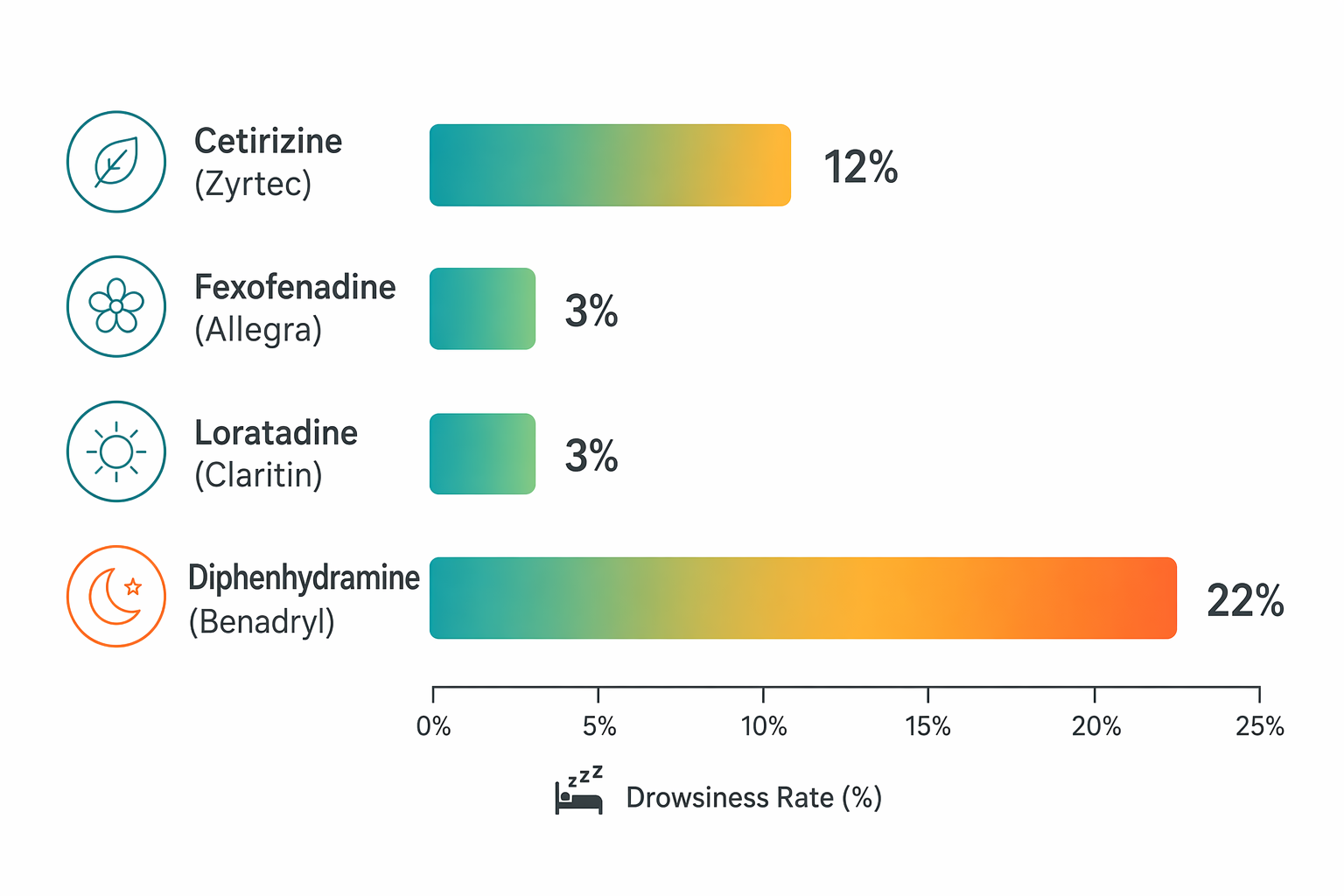
The clearer comparison is not “drowsy versus non-drowsy.” It is a scale. Fexofenadine is generally the least sedating of the common over-the-counter second-generation options. Loratadine is also usually less sedating than cetirizine. Cetirizine is still far less sedating than diphenhydramine, but it is the second-generation option most likely to make some adults feel sleepy.
| Medication | Common brand | Drowsiness signal |
|---|---|---|
| Fexofenadine | Allegra | About 3% in comparative summaries; generally least sedating among these OTC options.[4][5] |
| Loratadine | Claritin | Reported around 3% to 8% depending on source and method; generally less sedating than cetirizine.[5] |
| Cetirizine | Zyrtec | About 11% to 14% of adults in placebo-controlled data.[1][2] |
| Diphenhydramine | Benadryl | Much more sedating, with comparative sources reporting roughly 28% to 30% drowsiness.[4][5] |
This is why two people can give opposite reviews of the same allergy aisle. One person takes cetirizine and finally stops sneezing without noticing any slowdown. Another takes the same drug and feels like the day has been padded with cotton. Both reports can be true.
Why cetirizine can affect wakefulness
Histamine is not only involved in allergy symptoms. In the brain, histamine also helps support wakefulness. Older first-generation antihistamines readily enter the brain and block histamine activity there, which is why diphenhydramine can feel so sedating. Second-generation antihistamines were developed to act more outside the brain, but they are not all kept out equally.
Cetirizine can cross the blood-brain barrier enough to affect alertness in some people. One reason is that it is a weaker substrate for P-glycoprotein efflux than fexofenadine or loratadine, meaning the body’s transport systems may not push it out of the brain as cleanly as they do with some alternatives.[6] That does not make cetirizine a sleeping pill. It means the “less-drowsy” label has a pharmacologic asterisk.
Individual variation matters here. Differences in transport proteins such as P-glycoprotein, including variation related to the ABCB1 gene, and differences in drug metabolism pathways such as CYP2D6 may help explain why the same dose can feel invisible to one person and sedating to another.[6] The mechanism points in the right direction, but it still cannot tell you in advance exactly how your morning will feel.
When the drowsiness may start and how long it can matter
Timing is the practical part people often need first. Cetirizine-related drowsiness may begin about 60 to 90 minutes after a dose, and the effect can last up to 8 hours.[7] Cetirizine is commonly dosed once daily over a 24-hour interval, which is useful if the medication works for your allergies but the timing is wrong for your day.[7]
That timing changes the decision. Taking cetirizine right before a commute, a long drive, an exam, a shift, or a caregiving block is different from taking it in the evening after the alert part of the day is over. The problem is not moral toughness or “pushing through.” It is avoidable impairment.
What to do if cetirizine makes you sleepy
If cetirizine controls your allergies but makes you drowsy, the first question is whether the timing can be moved. Evening or bedtime dosing often makes more sense than morning dosing, especially if the sleepiness tends to appear within the first couple of hours after taking it. Do not test a new timing strategy for the first time on a day when you need to drive early, operate equipment, or stay highly alert.
- Try bedtime dosing if cetirizine works well for your allergy symptoms and you do not need peak alertness soon after taking it.
- Ask a clinician or pharmacist whether a lower dose, such as 5 mg instead of 10 mg, is appropriate for your situation.
- Switch to fexofenadine or loratadine if daytime alertness matters and cetirizine repeatedly makes you foggy.
- Avoid combining cetirizine with alcohol, sleep aids, sedating medications, or other substances that can worsen drowsiness unless a clinician has specifically cleared the combination.
- Treat first-time drowsiness as real until proven otherwise; do not drive or do high-risk tasks if you feel slowed down.
Switching is not a failure of cetirizine. It is matching the medication to the job. If you mainly need allergy relief overnight, cetirizine may still be a reasonable choice. If you need a clear head through the workday, fexofenadine is often the cleaner first alternative, with loratadine also usually less sedating than cetirizine.
If you are already sleepy today
If you took cetirizine and now feel unexpectedly tired, look first at timing: did the sleepiness appear within the same general window after the dose, and is it different from your usual fatigue? Also check for obvious amplifiers: poor sleep, alcohol, another sedating medication, illness, or taking a higher dose than usual. If the pattern repeats, the medication is a plausible suspect.
For today, the safest move is to reduce risk while the effect passes: avoid driving if you feel impaired, postpone tasks that require sharp attention when possible, and do not add alcohol or another sedating product to “balance it out.” For tomorrow, change one variable at a time: dose timing, dose amount if appropriate, or the antihistamine itself.
Dose matters, especially in children
The dose-sedation relationship is easiest to see in pediatric labeling data summarized for children ages 6 to 11: drowsiness was reported by 1.9% at 5 mg and 4.2% at 10 mg.[2] That does not turn this into a children’s dosing guide, and caregivers should follow the product label or a pediatric clinician’s advice. It does underline a simple point: more cetirizine can mean more drowsiness for some people.
Adults should be careful with the same assumption in reverse. Taking less may reduce drowsiness for some people, but it may also reduce allergy control. That tradeoff is worth discussing with a pharmacist or clinician if symptoms are persistent, if you use cetirizine often, or if you have kidney disease, take multiple medications, are pregnant, or have another medical reason to be cautious.
Older adults should be more cautious, even with second-generation antihistamines
Cetirizine has a lower anticholinergic burden than first-generation antihistamines such as diphenhydramine, which is one reason it is often a better allergy option than Benadryl for many adults. But lower burden is not zero concern. Older adults are more vulnerable to medication-related sedation, falls, confusion, and interactions, especially when several drugs are being taken at once.[6]
For an older adult who becomes sleepy on cetirizine, the answer should not be casual reassurance. It should be a medication review: dose, timing, kidney function considerations, other sedating drugs, and whether a less-sedating antihistamine would be safer.
A separate safety note for long-term daily users
Sleepiness is the side effect most relevant to this question, but long-term users should know about a newer warning. In 2025, the FDA required a warning about rare but sometimes severe itching after stopping long-term use of oral cetirizine or levocetirizine.[8] This is not the same thing as cetirizine drowsiness, and it does not mean people should abruptly stop a medication that is helping them.
It does mean that if you have been taking cetirizine every day for a long time and want to stop, it is reasonable to ask a clinician or pharmacist how to do that, especially if you have already had intense itching when you tried to discontinue it.
The practical bottom line
Cetirizine sleepiness is real, common enough to plan around, and unevenly distributed. It is more likely to cause drowsiness than fexofenadine or loratadine, but much less sedating than diphenhydramine. If cetirizine works for your allergies, bedtime dosing may solve the problem. If sleepiness persists, a lower dose may be worth discussing. If you need reliable daytime alertness, switching to fexofenadine or loratadine is often the more practical choice.
References
- Does cetirizine make you drowsy? - Drugs.com
- Does Zyrtec make you drowsy? - SingleCare
- Side effects of cetirizine - NHS
- Comparison of Cetirizine to Diphenhydramine in the Treatment of Acute Food Allergic Reactions - PMC
- Antihistamine Types & Side Effects - Cleveland Clinic
- Antihistamines - StatPearls
- Cetirizine - MedlinePlus
- FDA requires warning about rare severe itching after stopping long-term use of oral allergy medicines - FDA, 2025


Comments
Join the discussion with an anonymous comment.