
Drug addiction and sleep problems are not two separate complaints. Substance use can damage sleep architecture directly, and the resulting sleep loss then raises craving, weakens impulse control, and makes relapse more likely [1][2]. For the person lying awake after the last use, the problem is not a missing bedtime routine; the brain is running on overlapping arousal and reward systems that have been pushed out of balance [2].
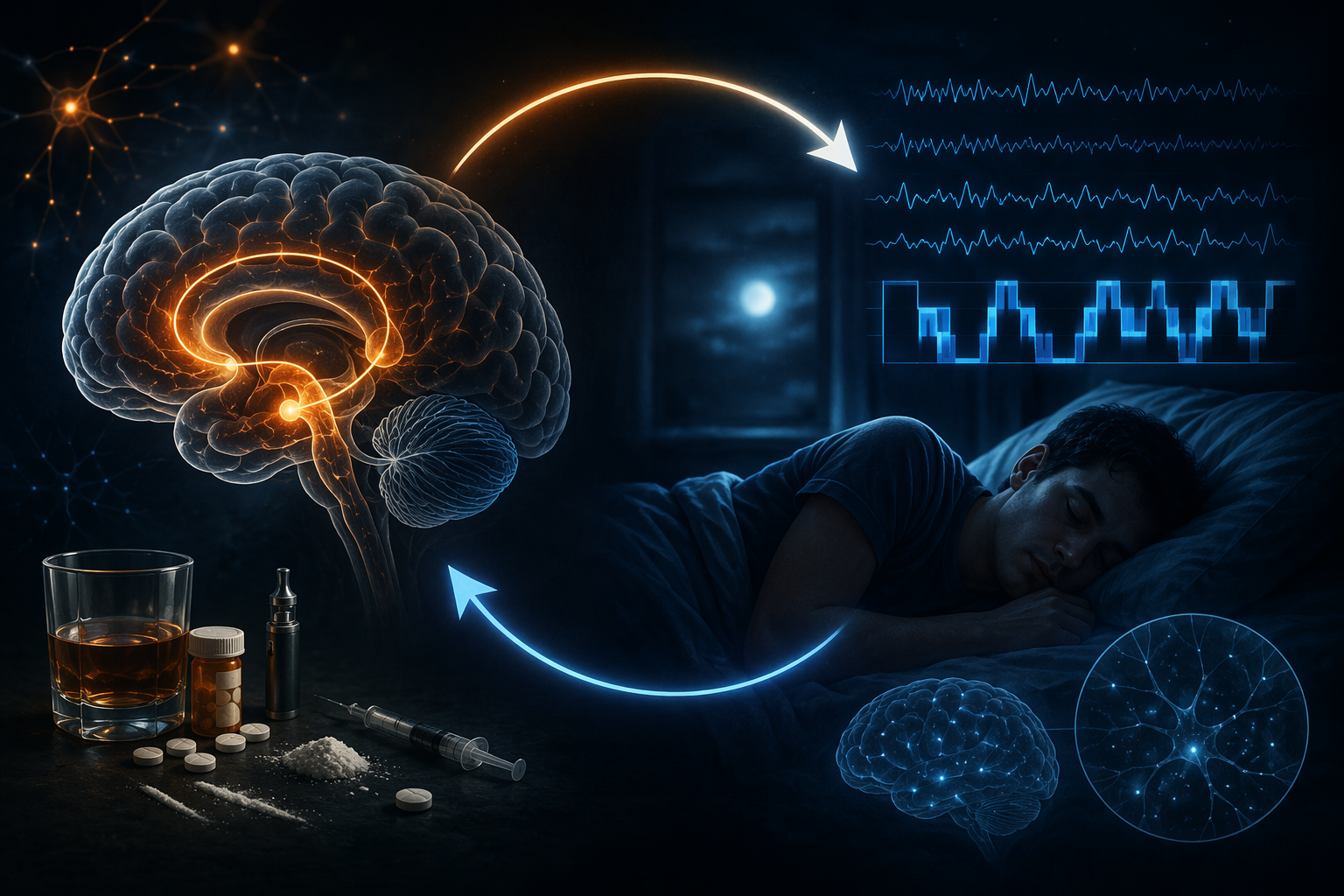
In recovery settings, the sleep complaint is usually not subtle. A mixed-methods study of people entering treatment for polysubstance use disorder in Norway found sleep problems in up to 79% at admission, and moderate-to-severe sleep problems still in 61% after one year; the sample was Norwegian and polysubstance-heavy, so the exact rate should not be generalized too far, but the persistence is the part that matters [3].
What Substance Use Does to Sleep
The clearest recent map comes from a 2026 systematic review and meta-analysis of 43 studies and about 7,500 participants. Alcohol use disorder shortened total sleep time by about 14 minutes and reduced slow-wave sleep by 3.7%; opioid use disorder shortened total sleep time by about 38 minutes; cocaine reduced slow-wave sleep by 30.69% and often produced an 'occult insomnia' pattern, where subjective sleep felt less broken than the objective data showed; nicotine was associated with shorter total sleep time [1]. Those pooled results still carried heterogeneity, and the paper could not pool cannabis, benzodiazepine, or methamphetamine data well enough to make the same class-level claims [1].
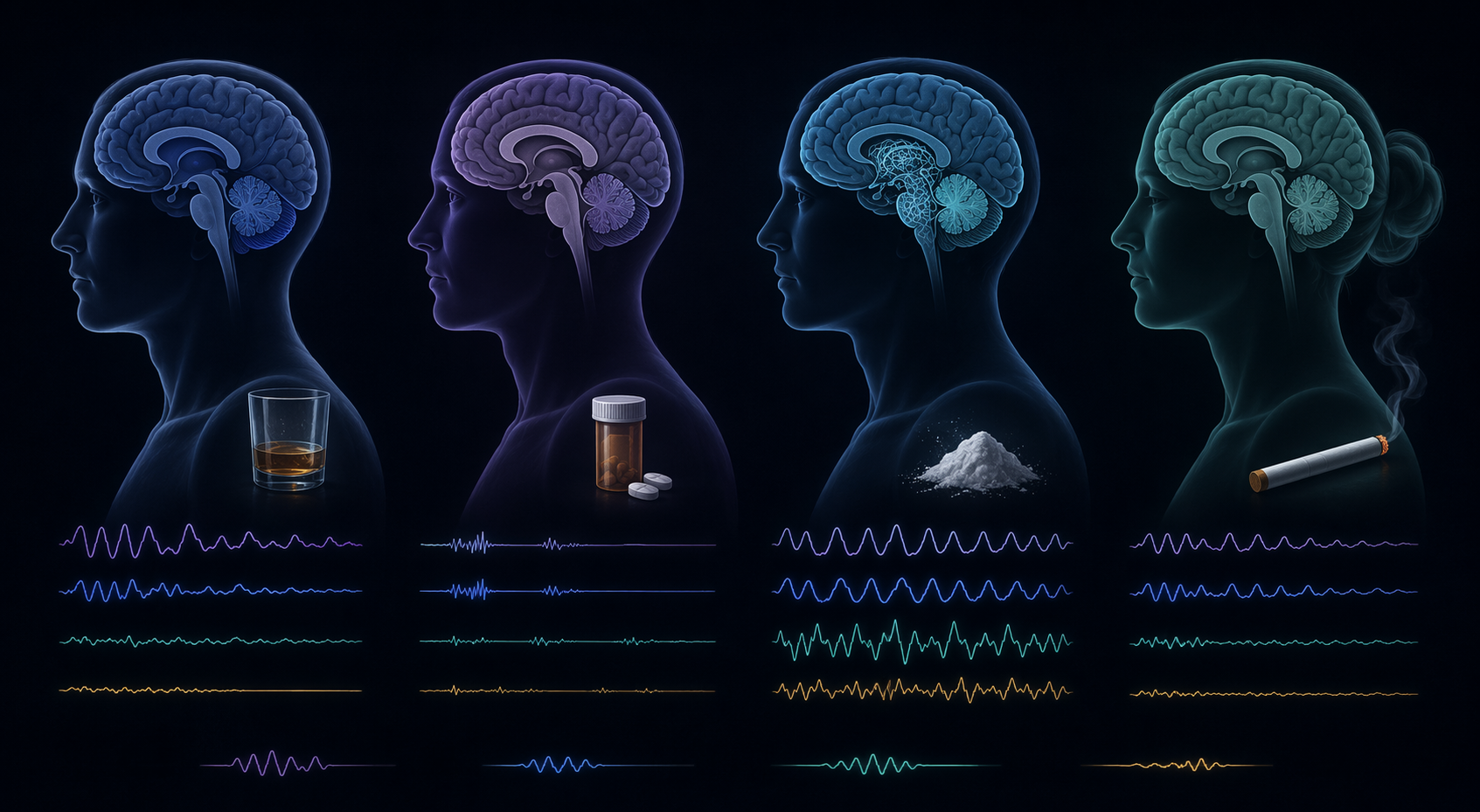
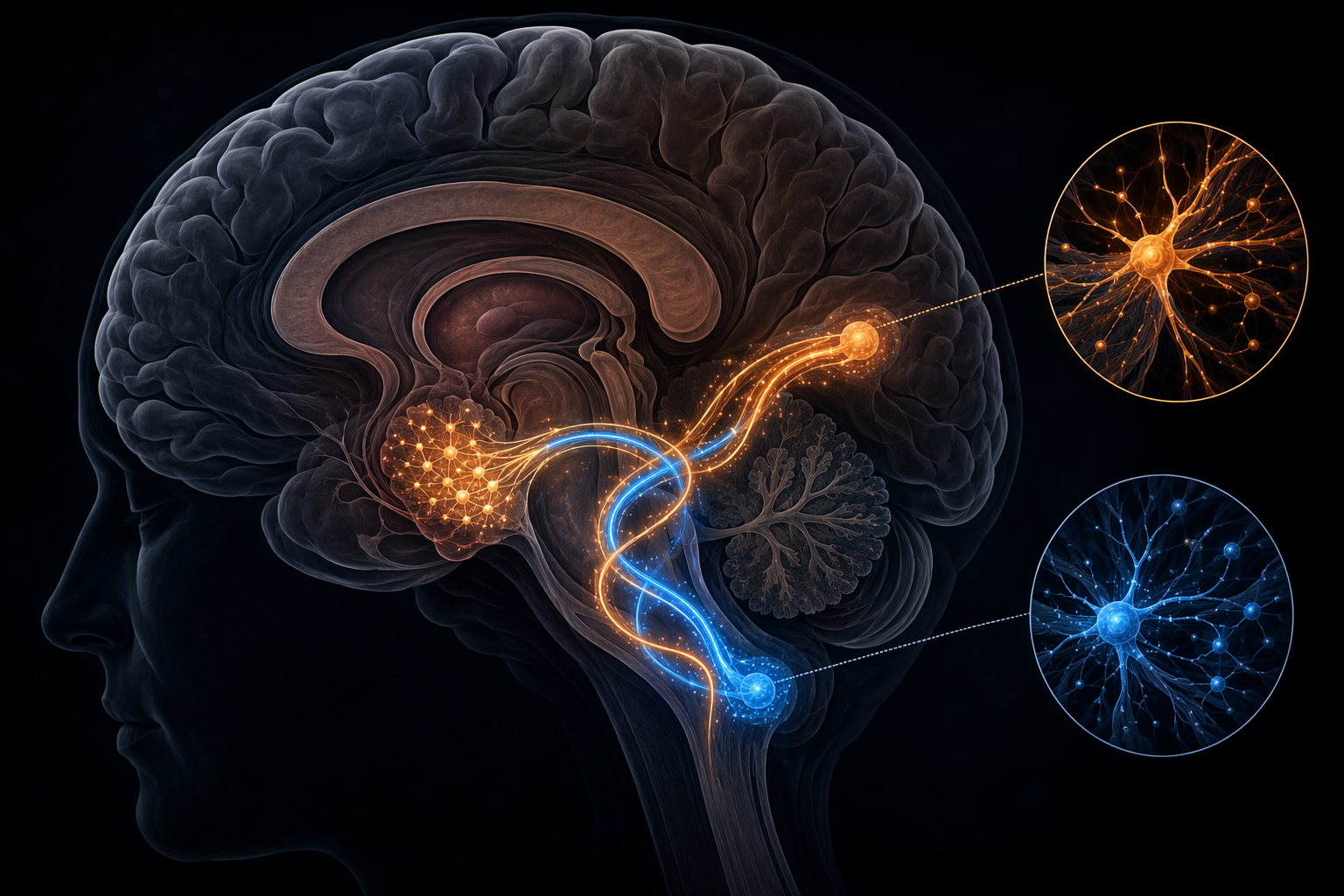
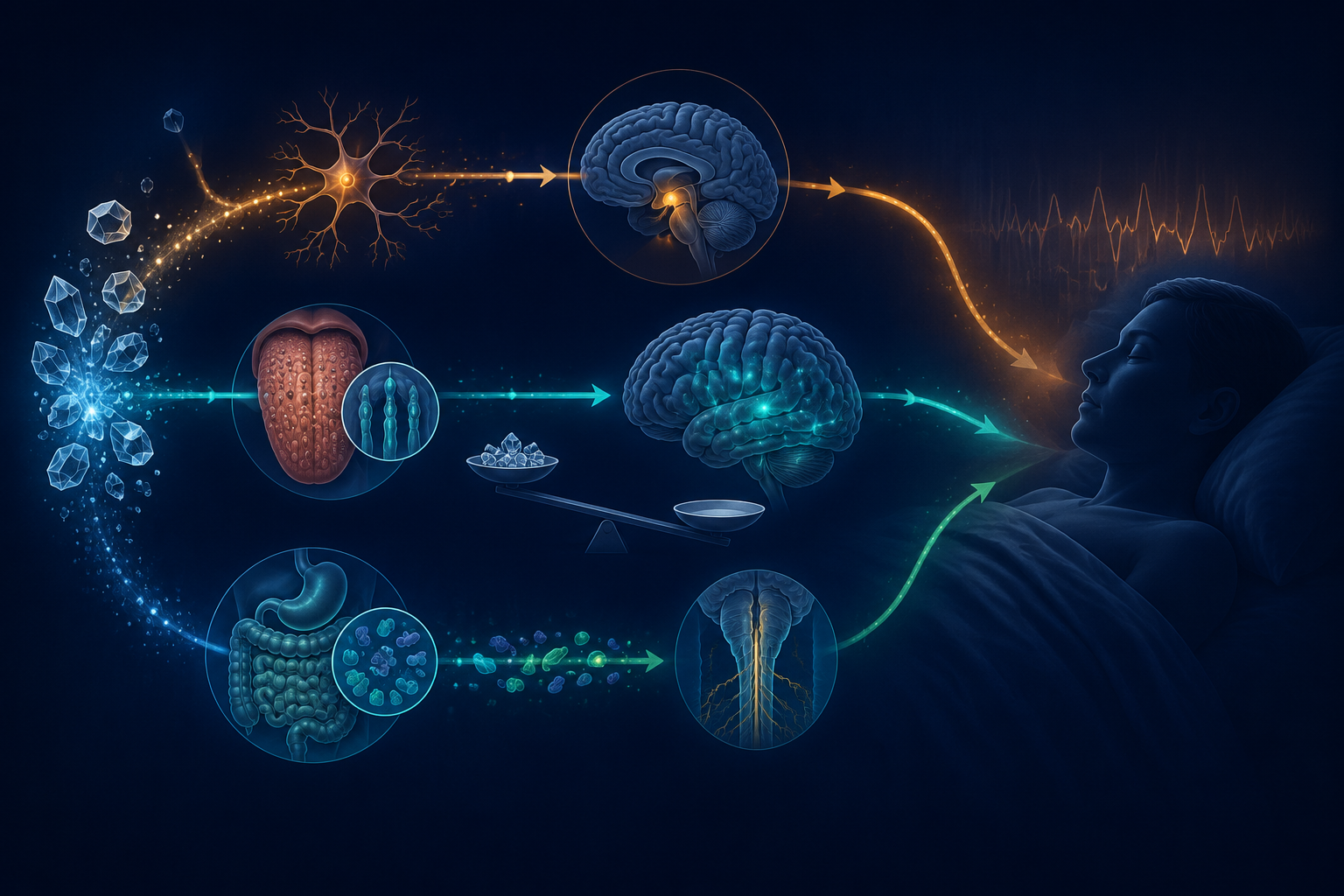
That pattern is not random. Chronic opioid exposure appears to recruit orexin/hypocretin neurons in the lateral hypothalamus, with one line of work showing a 54% increase in orexin neuron numbers, and the same circuitry connects sleep-wake control to the locus coeruleus-norepinephrine arousal system and reward pathways in the ventral tegmental area [2]. In plain terms, the brain is left in a state of persistent hyperarousal, which is why sleep can stay fragmented even after active use stops [2].
Why Poor Sleep Raises Relapse Pressure
Once sleep falls apart, recovery gets harder. Insomnia doubles relapse risk in the alcohol data most often cited in this literature: 60% of alcohol-dependent patients with insomnia relapsed within five months, compared with 30% of those without insomnia [4]. That figure does not mean insomnia explains every relapse, but it does show that sleep loss is not a side effect to ignore while treating the substance use itself [4].
The same association shows up outside alcohol. In a Florida community study of more than 8,000 adults, prescription opioid users were 42% more likely to have insomnia than nonusers [5]. Cannabis is trickier: an AASM survey found that 33% of users said it helped their sleep, but 40% of people trying to quit reported sleep problems, with tolerance and withdrawal often bringing rebound insomnia and unusual dreams [6]. That mix is exactly why a blanket 'it helps me sleep' story does not explain the sleep problems people actually live with [6].
Why Treatment Often Misses the Loop
Recovery programs still tend to treat sleep as a secondary complaint, even though the biology keeps pushing back. Current addiction medications do not reliably reverse sleep dysfunction [2], and while CBT-I can improve sleep latency by about 18 minutes and sleep efficiency by about 10% in alcohol use disorder, most randomized trials summarized in later reviews did not show a clear reduction in relapse rates [4]. If the goal is to make someone sleep a little better, CBT-I matters; if the goal is to break the addiction-sleep loop, it usually needs to sit alongside addiction treatment, not replace it.
When a treatment entry cohort shows sleep disturbance in most patients, not asking about sleep is a missed diagnosis as well as a missed symptom [3]. Sleep, mood, trauma, pain, and substance use all need to be checked together, because the person in the middle of recovery is rarely dealing with only one of them.
The practical takeaway is not that sleep cures addiction. It is that sleep is a real recovery target that is too often left untreated. Persistent insomnia deserves screening, referral to an accredited sleep or addiction clinic when needed, and urgent crisis care when someone is in immediate danger. Mechanism alone does not help the person who is awake at 3 a.m.; treatment has to address the loop itself.
References
- Sleep alterations in substance use disorders: a systematic review and meta-analysis - eClinicalMedicine (The Lancet), 2026
- Drugs, sleep, and the addicted brain - Neuropsychopharmacology (Nature), 2020
- Persistent sleep problems among people in recovery from substance use disorders: a mixed methods study - Addiction Research & Theory, 2022
- Treatment of insomnia associated with alcohol and opioid use: a narrative review - PMC, 2024
- Opioid use, pain linked to sleep problems - Sleep Education / AASM
- Marijuana and Sleep: Survey Finds Mixed Impact - AASM, 2025
Comments
Join the discussion with an anonymous comment.