How to Recover Sleep After an Eclipse or Meteor Shower All-Nighter
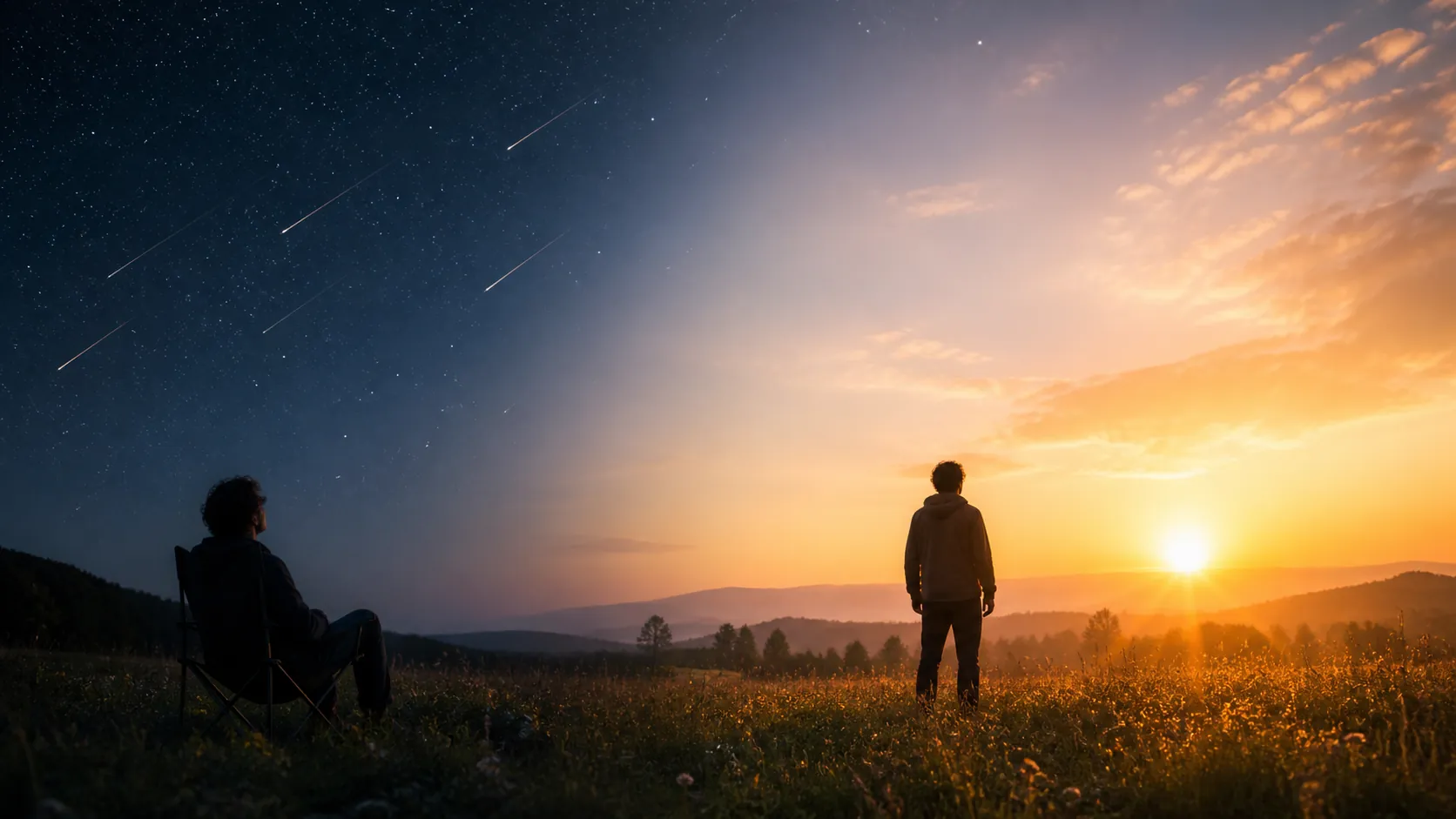
Dawn after a meteor shower has its own strange texture: cold feet, a little triumph, and a brain that knows it should be asleep but is now watching the sky turn pale. If you are searching for how to sleep after eclipse and meteor shower all-nighter viewing, start with the useful distinction: a genuinely dark observing site is not the same sleep insult as an all-night office, exam cram, or blue-lit scrolling session.
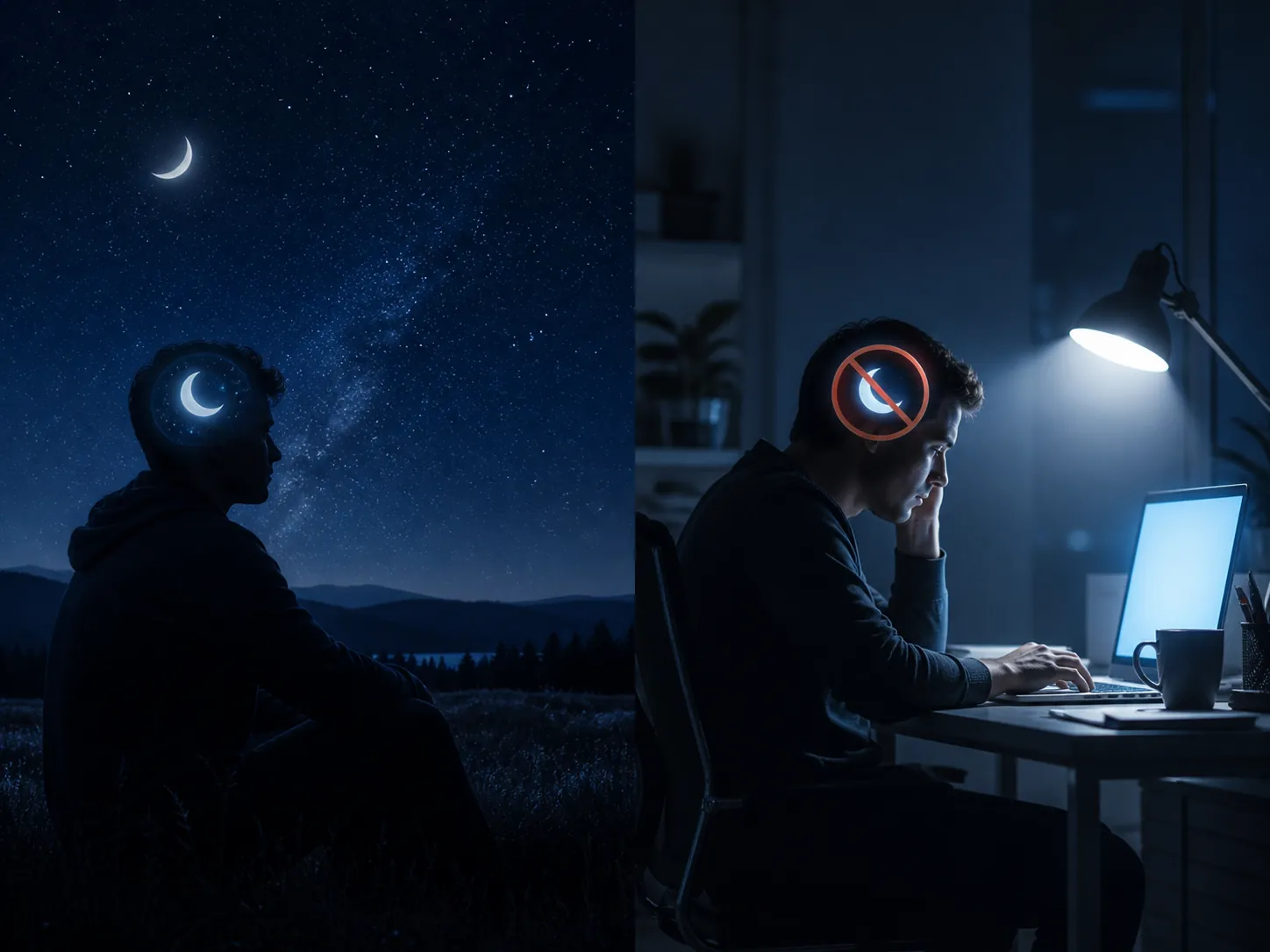
In a dark field, light exposure can be around 0.0001 to 0.001 lux, far below the level that meaningfully suppresses melatonin onset in the research on natural light-dark exposure.[1] That does not make the lost sleep harmless. It means the main problem is likely lost REM-rich late-night sleep, next-day sleep pressure, and post-event alertness — not a badly shoved circadian clock.
That is why the best recovery plan is not “sleep whenever you can for as long as possible.” Most healthy adults recover much of their neurobehavioral function within one to two recovery nights after a single all-nighter, though the evidence comes from healthy young adults and should not be stretched to every life stage.[2] Your job today is to protect the next night of sleep, not to punish yourself for liking the sky.
Why an astronomy all-nighter is different
The peak viewing window for many major meteor showers sits in the small hours, often around the part of the night when REM sleep becomes more prominent. Missing sleep between roughly 1 AM and 4 AM is not just missing interchangeable hours. It often means cutting into the stretch of sleep where dreaming, emotional processing, and REM-heavy cycles are more concentrated.
The difference is light. A work all-nighter usually brings bright indoor light, screens, snacks, stress, and task pressure. A meteor shower, if you watched from a properly dark place, may have kept your melatonin rhythm more intact even while it stole the sleep opportunity. A suburban driveway, a parking lot, a bright campground restroom, or repeated phone checks changes that equation. The darker the viewing conditions, the more this looks like REM loss plus sleep pressure; the brighter the night, the more it starts to resemble a conventional circadian disruption.
The 2026 sky calendar makes this more than a niche question. The Perseids peak around August 12–13 under favorable moon conditions, while a total solar eclipse also occurs on August 12, 2026.[3][4] The eclipse itself is a daytime event, so it is not the direct cause of an overnight sleep loss the way the Perseids can be. But eclipse travel, excitement, and late-night meteor watching can land in the same exhausted body.
Your dawn-to-bedtime recovery plan
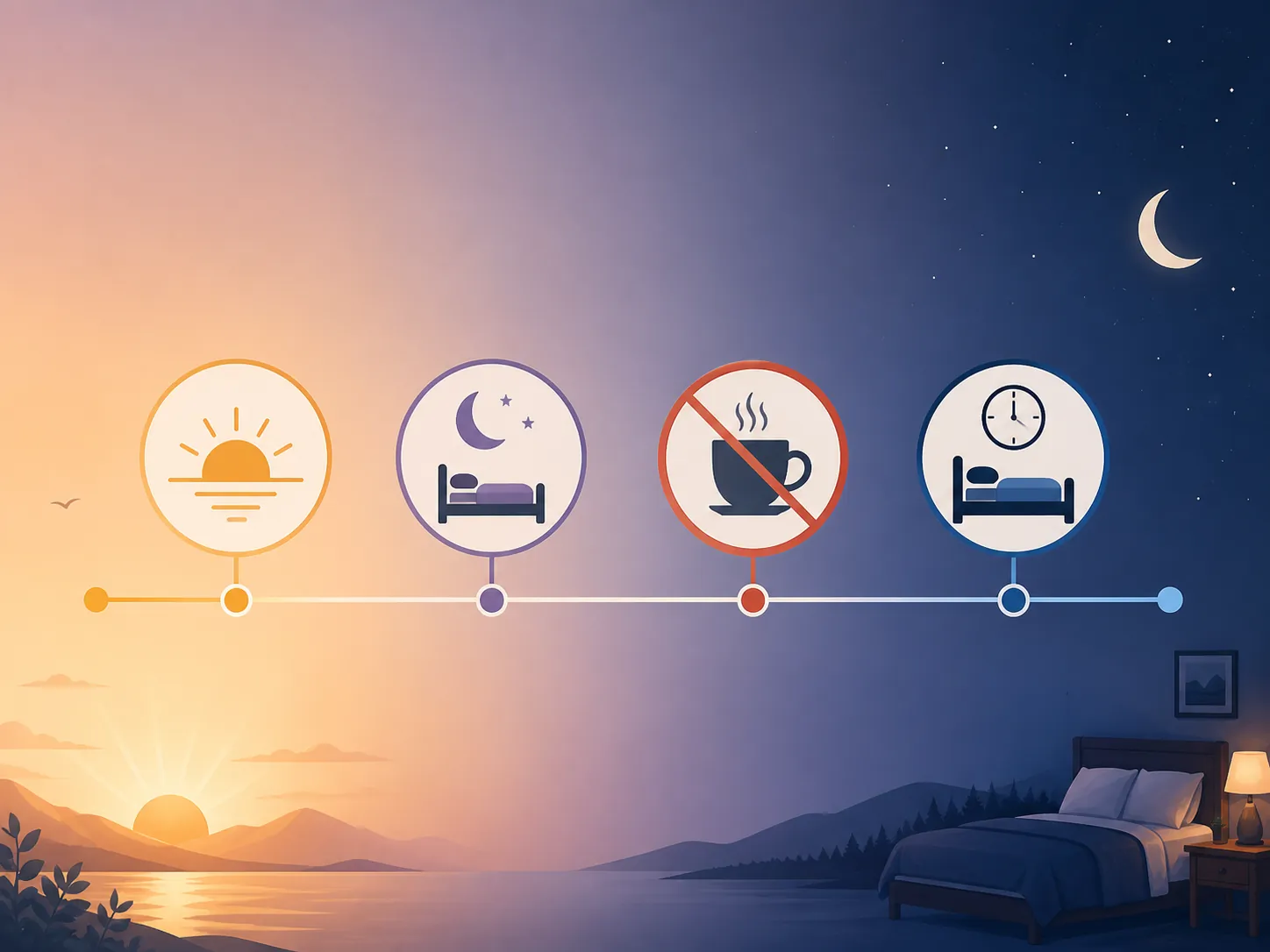
| When | What to do | Why it matters |
|---|---|---|
| Dawn to midmorning | Get outside light for 15–30 minutes | Anchors the circadian clock after the delayed night |
| Late morning to early afternoon | Take a 20–30 minute nap if sleepy | Improves alertness without making the next bedtime harder |
| After 2–3 PM | Stop caffeine | Reduces the chance of delaying sleep onset tonight |
| Evening | Keep the evening quiet but do not go to bed dramatically early | Protects one consolidated recovery night |
| Next morning | Use normal wake time and morning light again | Helps prevent the all-nighter from becoming a multi-day drift |
Dawn: get light, even if you are not trying to feel energetic
After a delayed night, morning light is the highest-leverage move. Natural morning light exposure helps re-anchor the circadian clock, and research on natural light-dark cycles supports morning outdoor light as a strong timing signal after schedule drift.[5] Aim for 15–30 minutes outside as soon as practical. You do not need a heroic sunrise hike. Standing on a porch, walking the dog, or sitting near open daylight is enough to tell the brain that the day has started.
This advice is easy to misunderstand. Morning light is not a magic eraser for lost sleep. It will not replace REM sleep, and it will not make an all-nighter physiologically free. Its job is narrower and more important: it helps keep one late night from pulling your next sleep period later and later.
If you drove home at dawn, the safety decision comes first. A bright morning walk is not a substitute for pulling over, switching drivers, or sleeping before driving if you are nodding off. Recovery advice only helps if you get home intact.
Late morning or early afternoon: nap without turning the day into a second night
A short nap is not failure. It is one of the cleanest tools you have after an astronomy all-nighter. Keep it to about 20–30 minutes, and take it before midafternoon if you can. Sleep guidance commonly places short power naps in this range because they can improve alertness while lowering the odds of waking groggy from deeper sleep; naps after about 3 PM are more likely to interfere with sleep onset that night.[6]
Set an alarm before you lie down. If you are the kind of tired where alarms become decorative objects, put the phone across the room, ask another person to wake you, or choose a couch instead of your bed. The point is not to deny the body sleep. The point is to borrow just enough alertness to get through the day without stealing from the recovery night.
If you accidentally sleep for two or three hours, do not panic. Just treat that as information. Your bedtime may arrive a little later, and forcing yourself into bed at an artificially early hour may lead to a chopped-up night. Keep the evening dim and low-stimulation, then go to bed when you are sleepy within a reasonable version of your normal schedule.
Caffeine: use it early, then stop
Coffee can be useful on the recovery day, especially if you have work, parenting, or travel waiting. Keep it to the morning and early afternoon. Caffeine after about 2–3 PM can shift the next night’s sleep later and reduce sleep quality, which is exactly the trade you do not want after losing the previous night.[6]
Do not use caffeine to outrun dangerous sleepiness. If you are making medical decisions, driving a long distance, using machinery, or caring for someone vulnerable, the safer intervention may be delay, backup help, or sleep — not another cup.
Evening: choose a normal bedtime, not a panic bedtime
The most tempting mistake is going to bed dramatically early. It sounds virtuous. It can also backfire. If you crawl into bed hours before your body is ready, you may get a first block of sleep, wake in the middle of the night, and then spend the rest of the night negotiating with the ceiling.
A better target is a slightly protected version of your normal bedtime. Dim the evening. Keep dinner and alcohol modest. Avoid turning the night into a second event with bright screens, trip photos, group chats, and meteor-count arguments. Then go to bed when real sleepiness arrives, ideally not much earlier than your usual bedtime.
The body has some built-in prioritizing here. REM rebound means that after REM loss, the brain tends to increase REM pressure and prioritize REM in a later sleep opportunity. StatPearls describes REM rebound as a protective mechanism, not a mystical guarantee that one perfect night repairs everything.[7] If you have ever read about REM rebound after quitting alcohol, the idea is related: the brain may push toward the sleep stage it has been missing, but the recovery still needs a real sleep window.
If it was an eclipse, a blood moon, or a full moon
A solar eclipse is different from a meteor shower because the main event is daytime. The sleep issue is usually travel, anticipation, schedule disruption, or late celebration — not standing awake in a field through the REM-heavy back half of the night. A lunar eclipse or blood moon can behave more like a nighttime sky event, especially if the timing keeps you awake well past your normal bedtime.
If lunar timing seems to hit your sleep harder than expected, it may help to separate the light, the schedule, and the anticipation. Restful Ground’s guide to blood moon sleep disruption covers that moon-specific context without treating every restless night as the same problem.
Who should recover more cautiously
The one-to-two-night recovery boundary is reassuring, but it is not a promise for every body. The study behind that timeline involved healthy young adults, so it is safest to treat it as a general adult reference point rather than a rule for older adults, pregnant people, perimenopausal women, ADHD adults, shift workers, or anyone with baseline insomnia.[2]
- Pregnancy: prioritize safety, hydration, and next-day support. If a night event worsens insomnia or physical discomfort, the recovery plan may need to be gentler; see Restful Ground’s guide to pregnancy insomnia by trimester.
- Perimenopause: night waking, temperature swings, and hormonal sleep instability can make one late night feel less contained. If full moon timing seems involved, read why the full moon disrupts perimenopause sleep more.
- Older adults: a long nap or very early bedtime may fragment the night more easily. Restful Ground’s article on why sleep hygiene advice often fails older adults is a better fit than generic all-nighter rules.
- ADHD or circadian vulnerability: protect morning light and the caffeine cutoff especially carefully, because one delayed night can more easily become several delayed nights.
- Chronic insomnia: if one sky event exposes a pattern that was already there, consider evidence-based insomnia treatment rather than adding more sleep hygiene rules; start with CBT-I explained.
For the next meteor shower, choose the earlier sky when you can
Not every celestial event asks the same price. The Geminids, for example, are often easier to fit around sleep because their radiant rises around 9 PM, making earlier-night viewing more practical than showers that reward the 1–4 AM crowd.[8] If you love the ritual but not the recovery, that kind of timing matters more than another perfect pillow routine.
After a dark-field meteor shower all-nighter, the night was costly but probably not ruined. Get morning light, nap briefly before midafternoon if you need it, stop caffeine by 2–3 PM, and keep the next bedtime close to normal. Let the body take its REM opportunity when it comes; do not turn recovery into a second disruption by trying to sleep the whole day away.
References
- Entrainment of the human circadian clock to the natural light-dark cycle — Wright et al., 2013
- Neurobehavioral dynamics following chronic sleep restriction: dose-response effects of one night for recovery — Banks et al., 2010
- EarthSky meteor shower guide — EarthSky
- Solar and Lunar Eclipses Worldwide – 2026 — Time and Date
- Circadian entrainment to the natural light-dark cycle across seasons and the weekend — Wright et al., 2017
- How to Pull an All-Nighter — Sleep Foundation
- REM Rebound Effect — StatPearls
- Meteor Shower and Sleep Guide — Mattress Miracle
Read the full guide: How to Manage Sleep Pain After Spinal Cord Injury: Tips That Work