
If shaking wakes you, the first job is not to bolt upright. CDC says you are less likely to be injured by staying in bed than trying to move, because broken glass is a major nighttime injury source [1]. USGS says drop-cover-hold-on still applies in bed [2], and Earthquake Country Alliance's in-bed version is straightforward: lie face down if you can, cover your head and neck with a pillow, and hold on until the shaking stops [3].
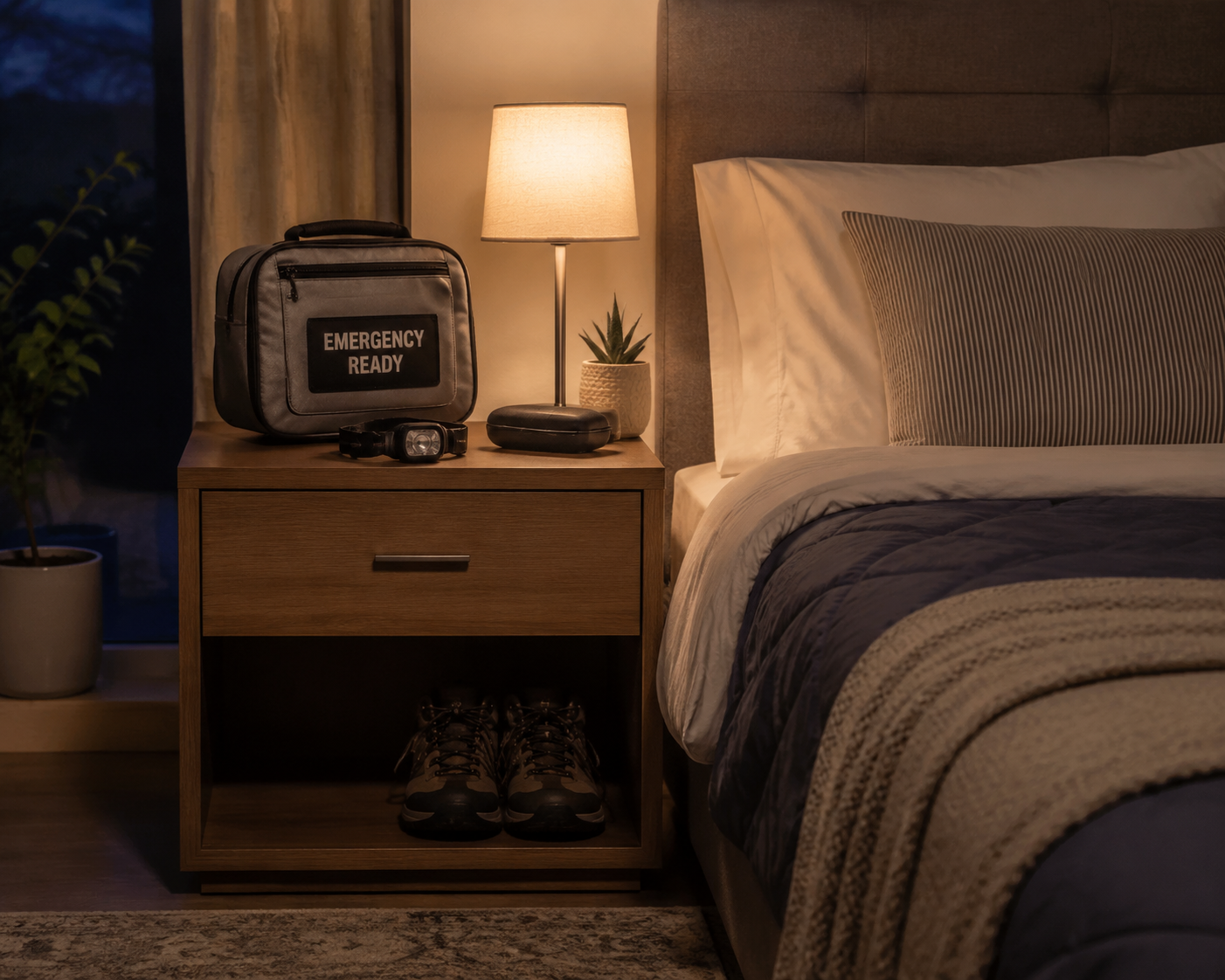
That is why an earthquake safety sleep routine is not a single trick but a small nightly sequence: prepare the bed zone before sleep, stay protected while the shaking lasts, then make the first post-quake minute as automatic as possible. The routine below is a practical synthesis of separate official recommendations, not a formally tested bedtime intervention.
Before Sleep
Nighttime safety depends on reducing choices. Keep a small bag attached to or immediately reachable from the bed. Red Cross recommends sturdy shoes, a flashlight, glasses, a dust mask, and a whistle at the bedside; Earthquake Country Alliance adds socks, a headlamp, and work gloves to the same reach-zone kit [4][5]. Ready.gov's earthquake guidance reinforces the same basic idea: the supplies belong where you can get them before the shaking starts [6].
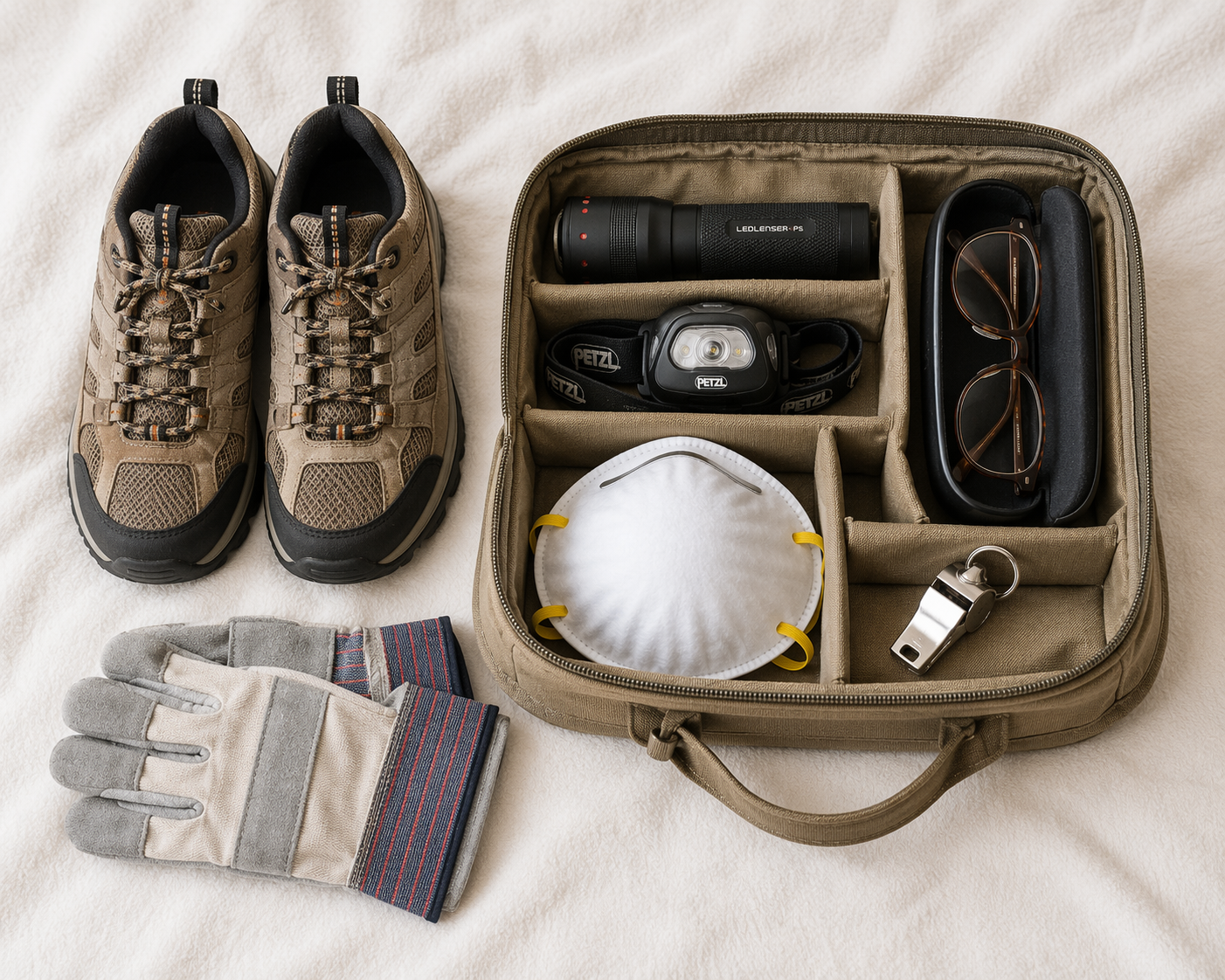
- Put sturdy shoes and socks in the bedside bag, and keep it attached to or immediately reachable from the bed [4][5].
- Keep glasses or contacts in the same pouch every night.
- Add a flashlight or headlamp, dust mask, whistle, and work gloves [4][5].
- Move heavy items away from the bed and anchor unstable furniture to wall studs [7].
During the Shaking
When the shaking starts, do not turn it into a search mission. Stay in bed rather than trying to move across the room; that is the safer choice when the floor may end up covered in glass [1]. If you can, lie face down, cover your head and neck with a pillow, and hold on until the motion stops [2][3].
After the Shaking
Once the motion stops, shift to orientation. Put on shoes before you stand, use a flashlight or headlamp to see the floor, and check for injuries and hazards before you start walking [4][5]. Broken glass is the reason the shoes matter [1]. If you are trapped or cannot move safely, use a whistle or phone to signal for help [4][5].
Make It Fit Your Room
The same routine needs different spacing in different rooms. A top-floor apartment, a basement bedroom, a room with tall furniture, or a person who uses mobility aids will not all use the same reach zone. What should stay fixed is the sequence: bed-side kit within touch, shoes before standing, light before walking, and a clear path away from glass.
If the setup helps you feel safer but you still cannot fall back asleep, the next problem is sleep, not quake prep. For that, see Can't sleep after an earthquake? How CBT-I breaks the anxiety cycle, How Earthquake and Bridge Collapse Fears Hijack Your Sleep, or the broader Evidence-Based Sleep Hygiene Checklist for Insomnia. What this routine does is narrower: it does not guarantee safety during a nighttime quake, but it makes the first minute and the first steps afterward less chaotic, less barefoot, and less dependent on frightened improvisation.
References
- Stay Safe During an Earthquake — CDC
- What should I do during an earthquake? — USGS
- Earthquake — American Red Cross
- Step 5: Drop, Cover, and Hold On — Earthquake Country Alliance
- Step 3: Get Disaster Supplies — Earthquake Country Alliance
- Earthquakes — Ready.gov
- Earthquake-Ready Bedroom: How to Prepare Your Bedroom for a Quake — Amerisleep
Comments
Join the discussion with an anonymous comment.