
The flight has landed somewhere else, the clock is already past midnight, and the useful question is no longer whether the trip is delayed. It is whether you can still get a real block of sleep before morning. That is the point where an overnight diversion stops being a travel nuisance and becomes a sleep decision.
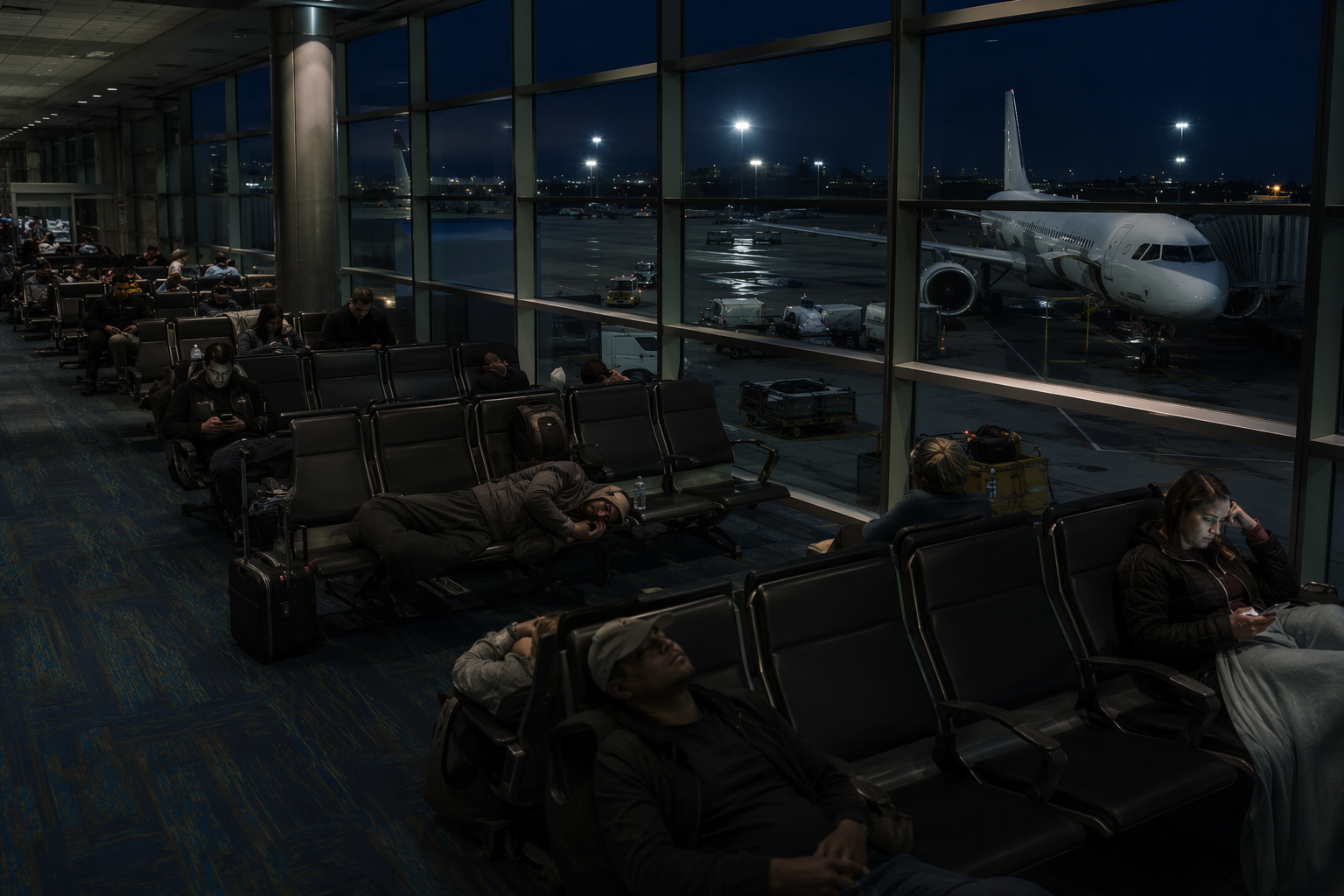
There is not a study that isolates diversions perfectly, but the best travel-sleep evidence still points to a simple pattern: travel can leave people short on sleep, and recovery is not instant. In a 2025 NUS Medicine and Oura Ring analysis of 1.5 million nights across 60,000 trips, sleep duration tended to recover in about two days, while sleep timing and nighttime awakenings could take more than a week to settle back down [1].
That lines up with what travelers report in the broader market. In an Airport Dimensions and Sleepover survey of 1,500 US and UK travelers, 8 in 10 said they experience sleep debt, with an average of 4h42m lost per journey; 62% said they need at least a full day to recover after getting home [2]. An overnight diversion compresses that same problem into a worse environment: you lose the plan, you lose the timing, and you often lose the best chance to sleep at all.
Diversions are also part of why the night feels so helpless. US data reported by Travel + Leisure and Simple Flying put 2024 diversions at about 12,000 flights, or roughly 0.25% to 0.32% of operations, and most happened in the last 10 to 15 minutes of approach [6]. That is little or no warning for passengers, which means the sleep problem starts before anyone has time to make a clean plan.
The mechanism is layered. Travel-related sleep loss is one part of it. Circadian misalignment is another, especially when the reroute pushes the clock in a direction your body does not like. Then there is the first-night effect, the well-known drop in sleep quality in unfamiliar sleeping spaces, where total sleep can fall and fragmentation rises even in a comfortable hotel room [3]. Add stress reactivity on top, and the result is not just a late arrival but a body that stays half-alert long after the plane has parked.
The choices that change the night
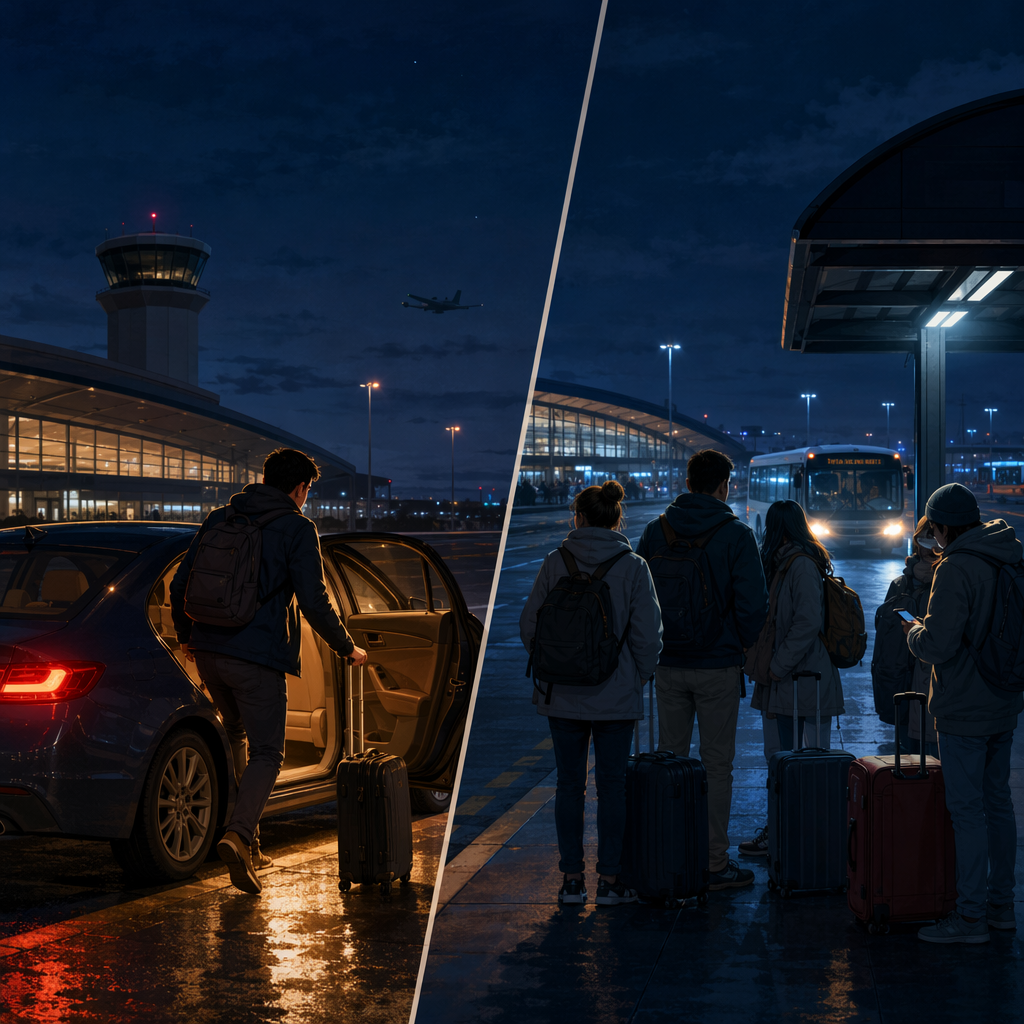
Once the aircraft stops somewhere unexpected, the biggest sleep decision is whether to deplane in a way that actually buys time, or to stay with the slowest version of the airline plan. One first-hand diversion account from The Points Guy is useful because it makes the tradeoff concrete: travelers who took an Uber instead of the airline bus reached a hotel in about 15 minutes rather than 2.5 hours, which at 1:00 a.m. is the difference between beginning sleep and losing the whole night to transit [4].
That kind of hour-by-hour difference matters more than the usual travel advice admits. If a room is available, the shortest path to an actual bed is usually the better sleep move, even if the room is plain and the ride is awkward. If the choice is between waiting for a shuttle that may not leave soon and paying for a rideshare that gets you horizontal fast, the rideshare can be the better recovery decision because it protects the only asset left: time.
The hotel itself is not automatically restful. The first-night effect makes unfamiliar rooms lighter and more fragmented than home sleep, which is why the goal after a diversion is not luxury but damage control. A room close to the airport, a fast check-in, darkness, and a predictable wake-up are more valuable than a nicer lobby or a longer shuttle ride. The effect is not limited to exotic settings; it can show up in ordinary hotel rooms simply because the brain notices that the place is new [3].
The terminal floor is the far end of the spectrum. When a Bermuda diversion left more than 300 passengers sleeping on the airport floor, the story was not about comfort so much as what happens when lodging falls through entirely [5]. That kind of scene should be read as a warning, not as a normal fallback: every step that gets you away from the concourse and into a bed has sleep value.

Policy still matters, but it should stay in the background of the sleep decision. A mid-2024 Simple Flying summary said all 10 major US airlines rebook at no cost, and 9 of 10 cover overnight hotel costs for controllable diversions such as mechanical or crew problems, though not necessarily for weather-related events [7]. The exact result still depends on the airline and the cause, so the contract of carriage is worth checking, but none of that changes the immediate sleep question: which option gets you to a usable bed first.
Refund rules are separate from the sleep problem, but they can shape what you do next. The US Department of Transportation says automatic cash refunds are due within 7 business days for significantly changed flights [8]. That is useful after the night is over. It is not the thing that helps at 1:30 a.m. when you are deciding whether to wait for the shuttle or call the car.
What recovery really looks like
The most useful expectation is narrow: sleep duration often comes back faster than sleep timing or continuity. If the best available evidence says hours can recover in about two days while awakenings and timing may take more than a week [1], then the right next-day move is not to declare victory after one nap. It is to protect the next sleep opportunity, keep the day from drifting too late, and treat the diverted night as a short recovery window rather than a one-off inconvenience.
That is why the middle of the disruption matters so much: whether you deplane, how you get to lodging, and how quickly that lodging turns into darkness and quiet all change how much sleep survives. Treat the night as a short recovery window, make the least delaying choice that gets you into a bed, and then protect the next sleep opportunity instead of trying to force a normal day.
References
- NUS Medicine / Oura Ring travel sleep study, Sleep journal, 2025
- Airport Dimensions / Sleepover survey of US and UK travelers
- First-night effect research reported by ScienceDaily and PMC
- The Points Guy diversion account by Summer Hull
- Royal Gazette report on Bermuda terminal-floor sleeping, 2022
- Travel + Leisure and Simple Flying reporting on BTS diversion data, 2024
- Simple Flying mid-2024 airline accommodation policy summary
- U.S. Department of Transportation refund rules
Comments
Join the discussion with an anonymous comment.