
When the night never cools off
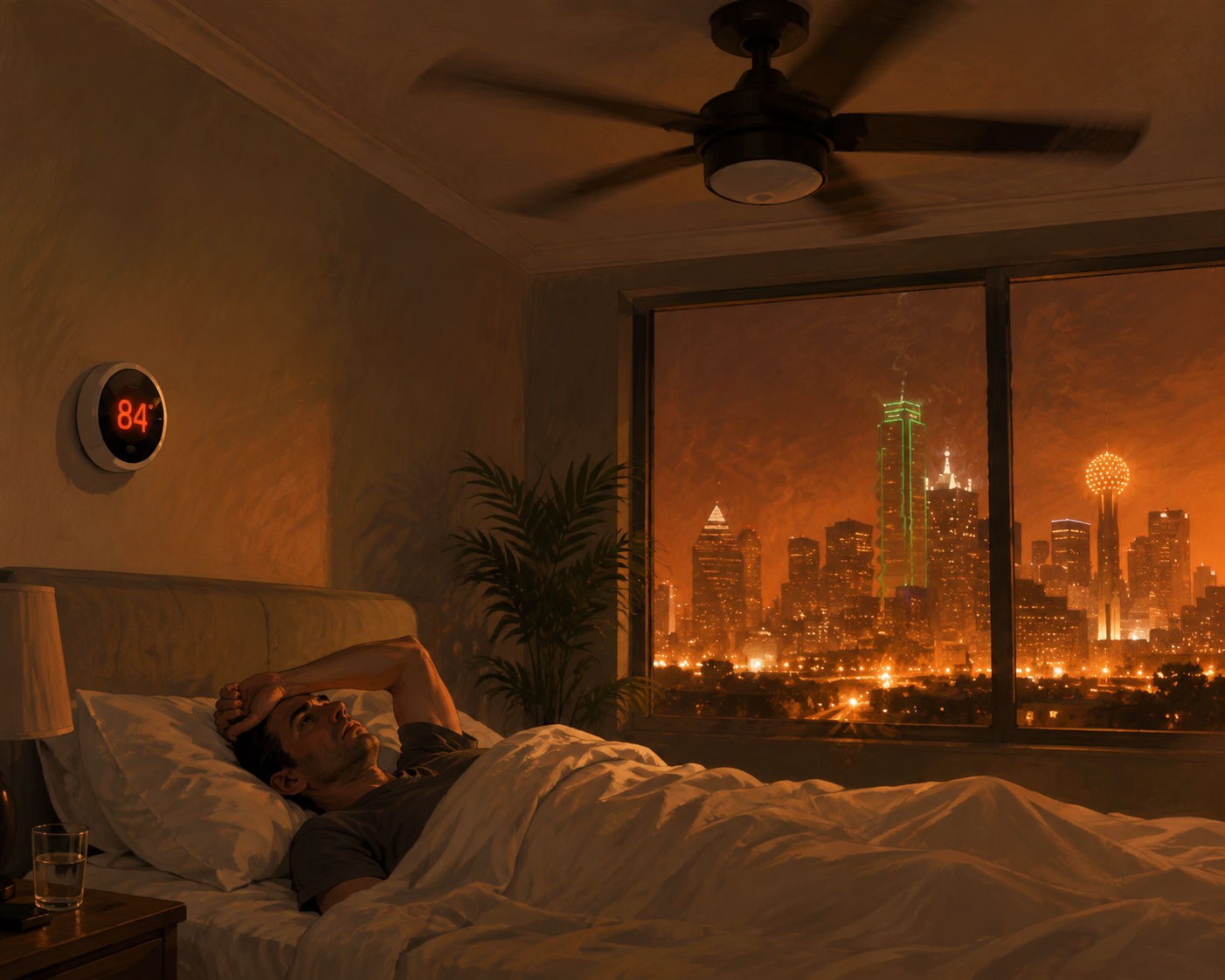
The first problem in a Dallas heatwave is the overnight gap. The outdoor temperature does not reset the way ordinary sleep advice assumes, so the bedroom can stay stubbornly warm long after sunset instead of drifting anywhere near the range your body would actually like to sleep in. Add humid air that makes sweat slow to evaporate, and the usual "just open a window" advice turns into a bad joke. [1][2]
Use the AC as the base layer
The workable answer is not to abandon AC or to chase 65°F like it is a moral duty. In Dallas, a more realistic setup is strategic cooling at 78°F, plus a ceiling fan that moves that cooler air across skin and bedding. One Dallas cost breakdown says 78°F with a fan can deliver the same sleep-quality benefit as 72°F without one while using about 18% less energy, and it also notes that a typical DFW home may spend $150-$300 a month on central AC in peak summer. That source is an HVAC company, so treat the exact dollars as directional, but the tradeoff is the important part: cooler where it matters, not colder everywhere. [3]
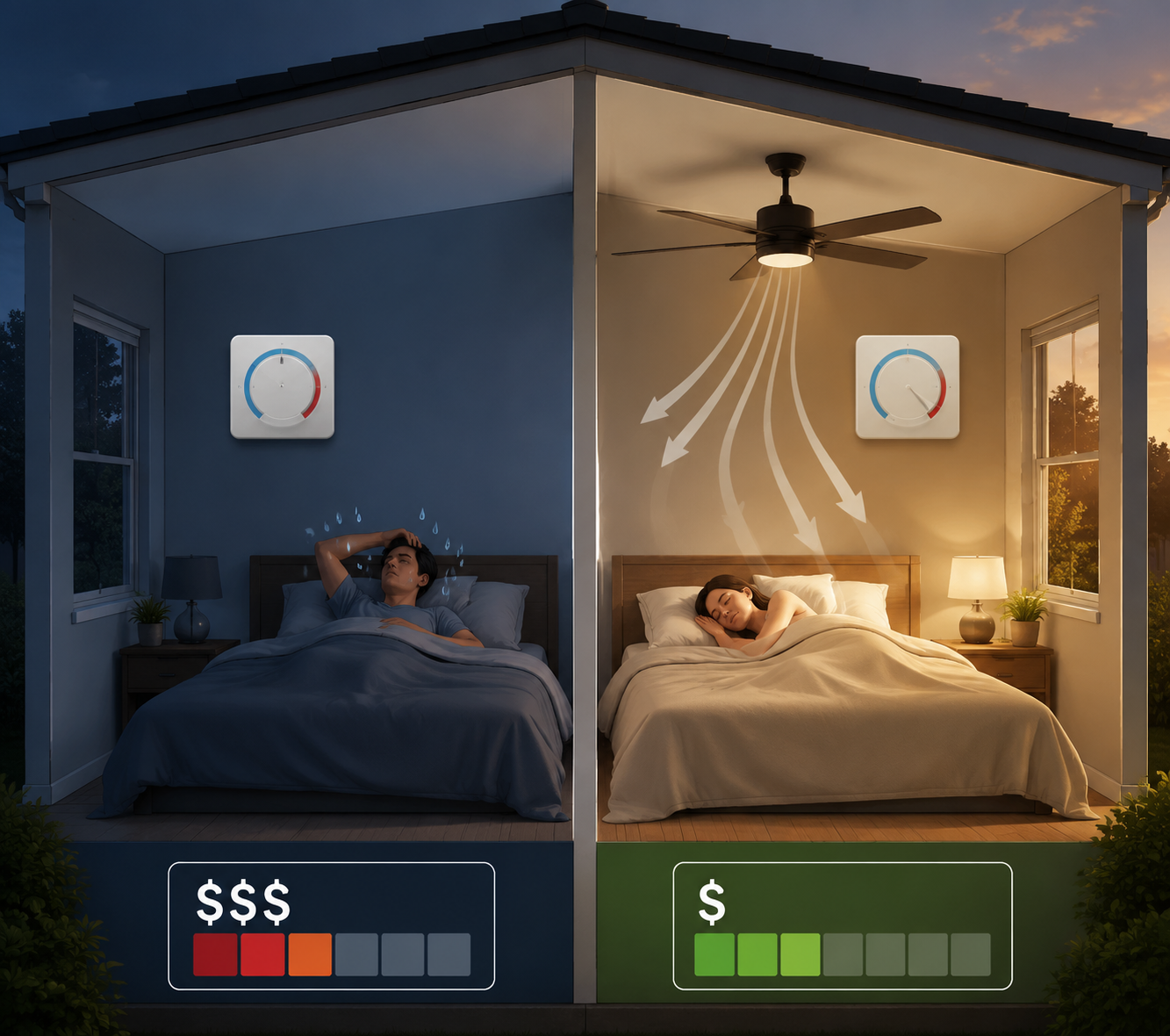
This is also where pre-cooling and zone cooling earn their keep. If the house is going to drift warm after dark, it is smarter to lower the bedroom before bedtime, keep doors closed, and stop paying to chill rooms nobody is using. That matters more in a summer when ERCOT coverage has pointed to evening conservation appeals around the same hours people are trying to fall asleep; the grid picture is not the place for heroics. [4]
Humidity is not a side issue
Humidity is the part low-tech sleep tips usually ignore. Sleep Foundation notes that higher humidity slows the evaporation of sweat, which is one of the body's main cooling mechanisms at night, so a room can feel worse than the thermostat suggests. A dehumidifier does not solve Dallas summer, but it can make the same temperature more usable because it helps the body cool itself the way it is supposed to. If you want the rest of the room to pull its weight too, the broader mechanics are in our guide to Sleep Environment as a Tool: How Temperature, Light, Noise, and Bedding Work Together. [2]
Freezing a pillowcase, taking a cool shower, or swapping bedding can help at the edges. They do not lower the room, and they do not fix humidity in a bedroom that is never getting below the mid-80s.
When comfort becomes safety
Heat is not only a comfort issue. The American Heart Association urges extra caution for older adults, infants, and people with heart, lung, or kidney conditions, and heat exhaustion signs are a stop signal rather than something to push through. If AC is failing or the room is getting genuinely dangerous, use Dallas cooling-center resources instead of trying to sleep through it. Dallas City News lists local options, but check current hours and access before you need them. [5][6]
References
- Dallas/Fort Worth Climate Narrative, National Weather Service: weather.gov/fwd/dfw_narrative
- Humidity and Sleep, Sleep Foundation: sleepfoundation.org/bedroom-environment/humidity-and-sleep
- How Much Does It Cost to Run an Air Conditioner in Dallas?, Cold Factor: coldfactor.com/cost-to-run-ac-dallas/
- Texas Heat Wave, Wego: blog.wego.com/texas-heat-wave/
- Hot weather sleep tips, American Heart Association: heart.org
- Cooling centers, Dallas City News: dallascitynews.net
Comments
Join the discussion with an anonymous comment.