
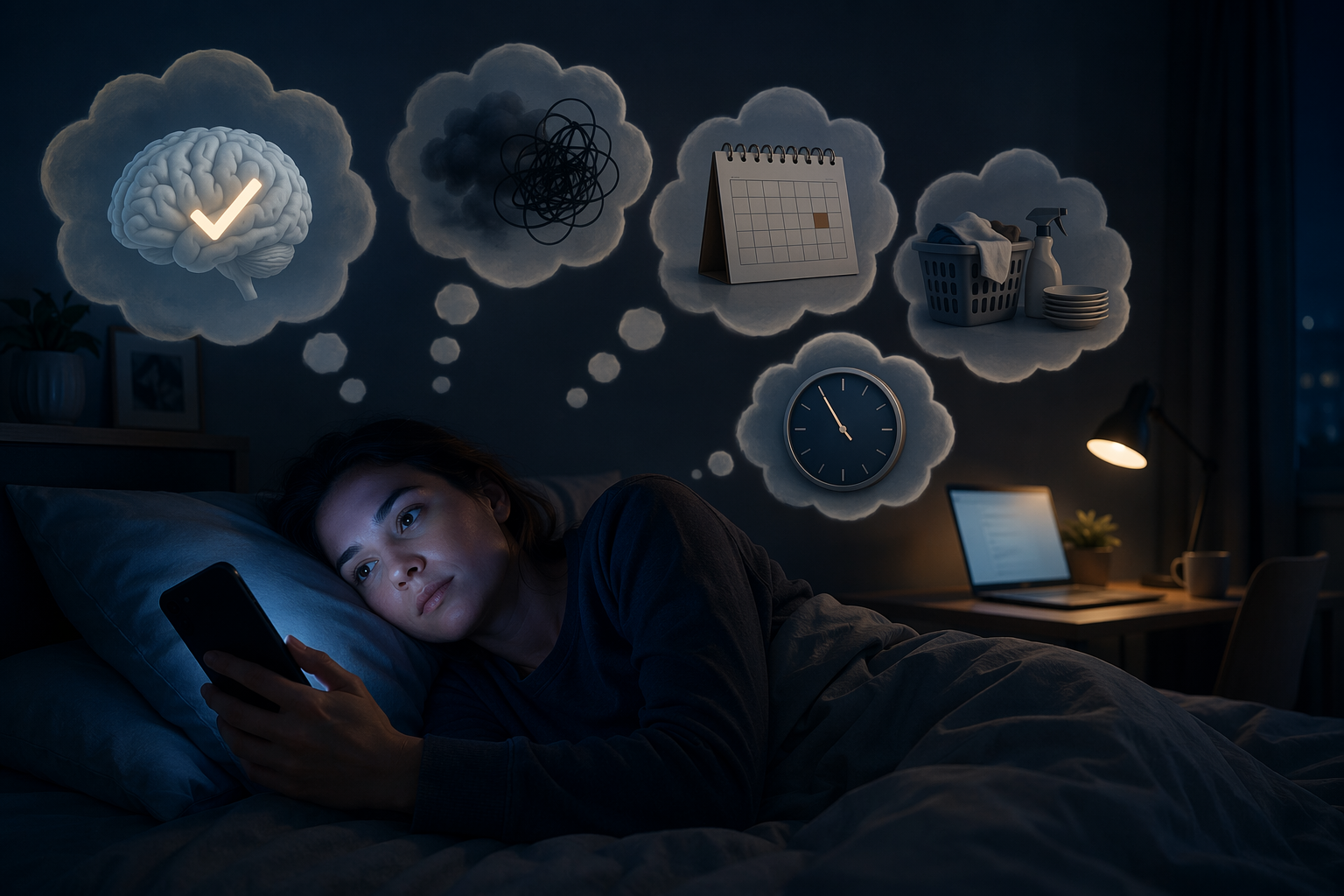
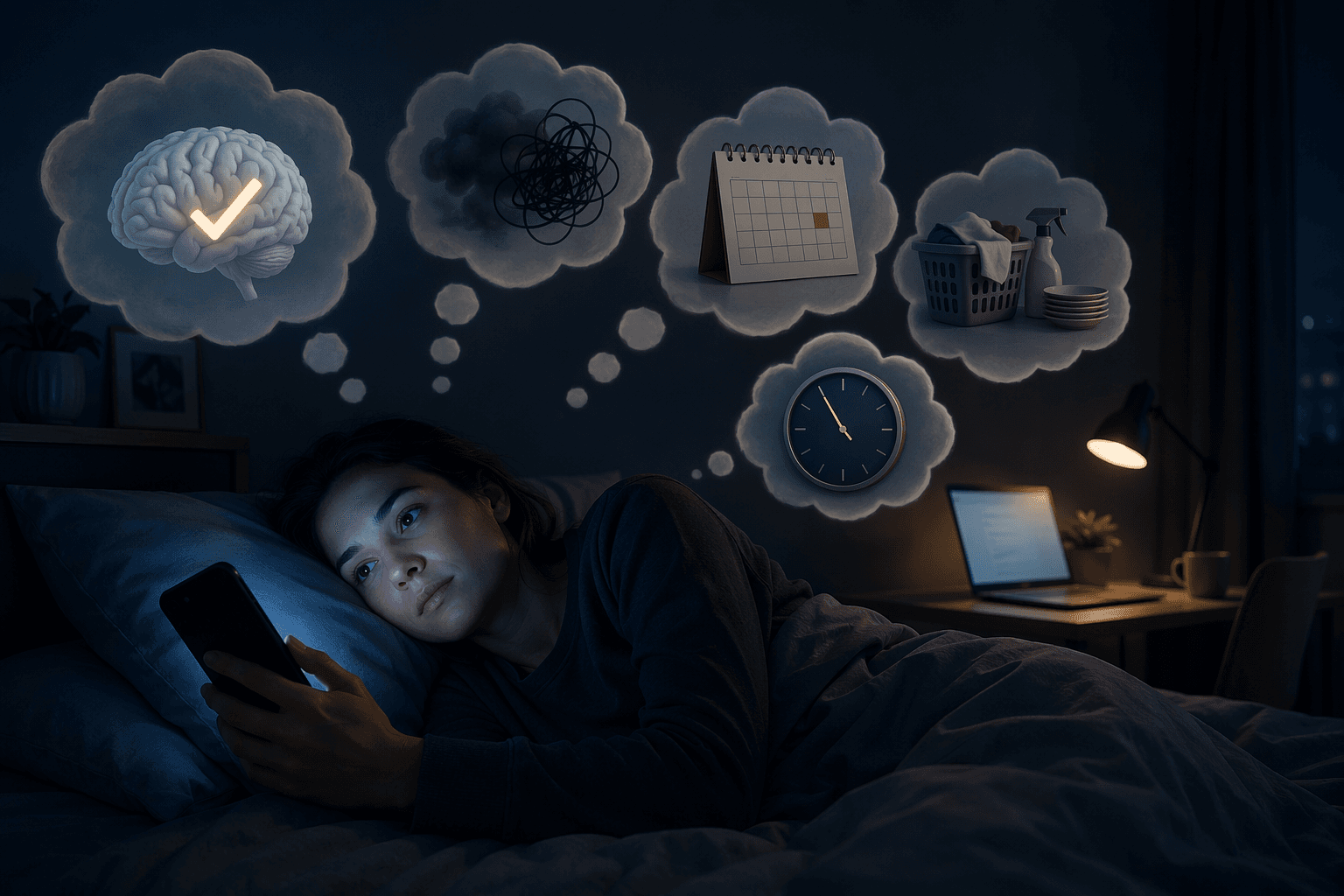
A good night's sleep is not usually lost because someone forgot that sleep matters. More often, it disappears in the ordinary squeeze of the evening: one more work message, one more load of laundry, one more episode, one more anxious pass through tomorrow’s problems. By the time the lights are out, the person in bed may be fully convinced that sleep is important and still be nowhere near ready to sleep.
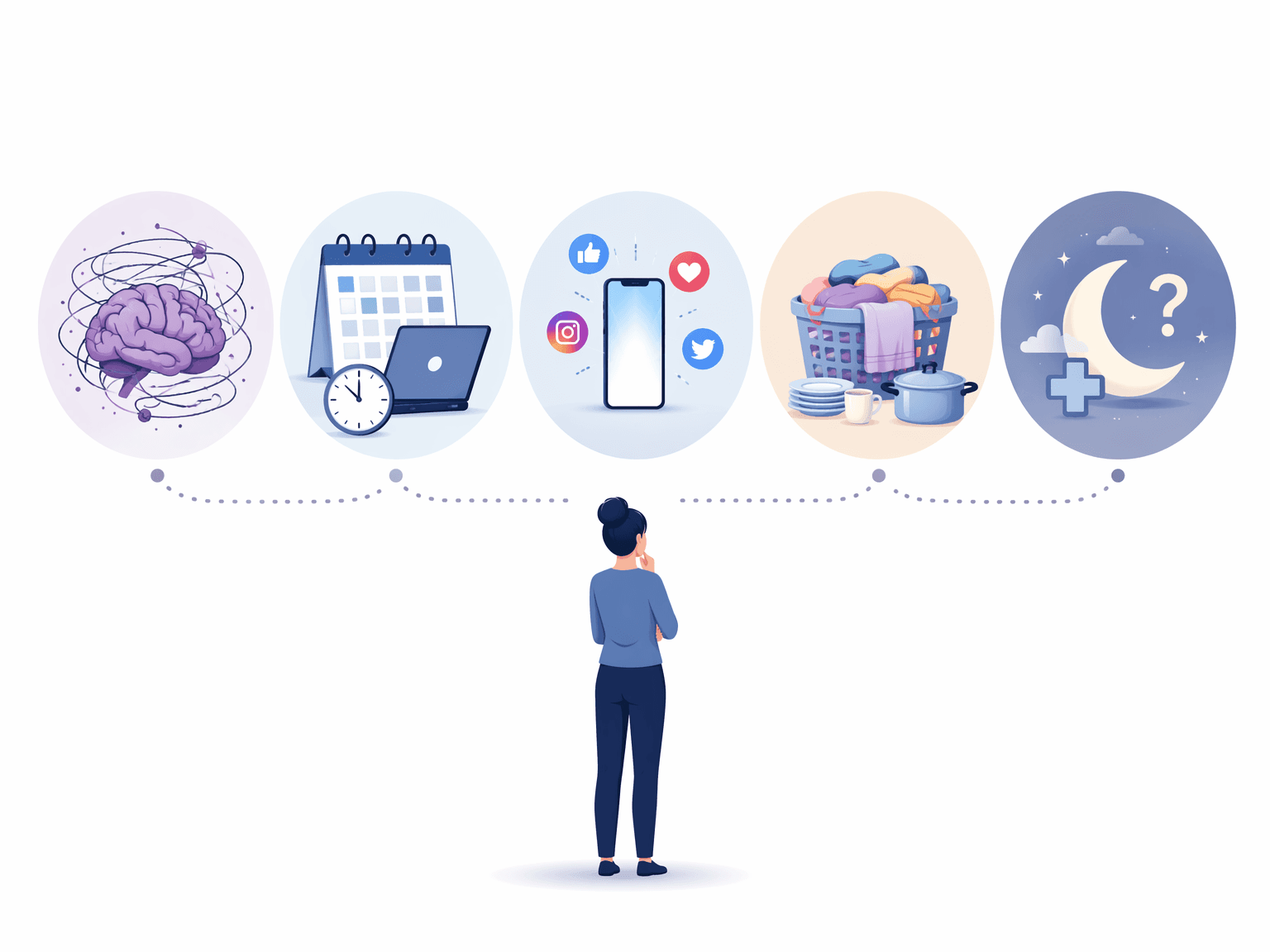
That mismatch is now large enough to measure. In ResMed’s 2026 Global Sleep Survey of 30,000 people across 13 markets, 84% of respondents said they recognize that quality sleep can extend healthy lifespan, yet more than half reported getting good sleep on four or fewer nights per week. In the U.S., 76% ranked sleep as important, while only 62% said they take action to improve it; the U.S. ranked 10th out of 13 countries in sleep quality. The same survey named the leading barriers: stress and anxiety, work demands, screen use before bed, household responsibilities, and sleep disorders.[1]
Those figures are useful, but they are not a diagnosis. The survey was commissioned by a company that makes sleep apnea devices, and the answers are self-reported. The percentages should be read as directional rather than clinical fact. Still, the pattern is hard to dismiss: awareness is not the main bottleneck. The next useful question is not “Do you know sleep is good for you?” It is “Which obstacle is actually stealing your nights?”
The sleep problem you have may not be the one generic advice assumes
Most sleep hygiene advice is written as if bedtime were a clean, private hour under the reader’s control. Dim the lights. Put away the phone. Relax. Keep a routine. Fine advice, when the problem is a loose routine. Less helpful when a caregiver cannot start cleaning the kitchen until everyone else is asleep, or when an anxious person gets a racing heart the moment the room goes quiet, or when snoring and gasping suggest something medical.
This is where the difference between knowing and doing matters. If the barrier is stress, the intervention has to help the nervous system stop treating bed as a problem-solving station. If the barrier is work, the evening needs a boundary that starts before bedtime. If the barrier is a sleep disorder, another checklist of habits can become a delay in getting evaluated.
| If the main barrier is... | The first useful response is... |
|---|---|
| Stress or anxiety | Move worry out of bed and use structured wind-down cues rather than trying to force calm |
| Work demands | Create an end-of-work ritual and decide which tasks are allowed to enter the evening |
| Pre-bed screen use | Reduce stimulation, displacement, and habit cueing—not just blue light |
| Household responsibilities | Shift or shrink the late-night task load instead of treating exhaustion as a discipline problem |
| Possible sleep disorder | Look for symptoms that need clinical evaluation rather than more self-optimization |
Stress and anxiety: when “just relax” becomes part of the problem
Stress and anxiety were the most commonly reported sleep barrier in the ResMed survey, named by 39% of respondents.[1] That matters because stress does not merely take up time before bed. It changes what the bed represents. For some people, lying down is the first quiet moment of the day, which means it becomes the first moment when the mind has room to inventory every unpaid bill, awkward conversation, health concern, deadline, and family need.
This is why vague calming instructions can feel insulting. A person who is already tense usually does not need to be told to calm down. They need a way to stop assigning problem-solving work to the bed. That can mean setting a short “worry appointment” earlier in the evening: write down the concern, the next action if there is one, and the point at which the issue is being deferred until tomorrow. The goal is not to resolve a life overnight. It is to keep the mattress from becoming the meeting room where every problem gets reopened.
A wind-down routine also works better when it is treated as a cue sequence, not a performance. The same few actions, repeated in the same order, can tell the body that no new work is being started. That might be as plain as washing up, setting out clothes, plugging in the phone outside arm’s reach, and reading something low-stakes for a short period. If the routine becomes another thing to do perfectly, it has failed its job.
When anxiety shows up as sudden nighttime terror, chest tightness, jolting awake, or fear of the sleep process itself, it deserves more precise sorting. A reader trying to distinguish panic-like awakenings from sleep anxiety may need a more specific guide to nocturnal panic attacks vs. sleep anxiety. And when insomnia has become chronic, structured behavioral treatment is often a better match than another round of general tips; this overview of CBT-I for menopause insomnia is one example of how targeted behavioral sleep treatment differs from generic sleep hygiene.
Some people also look for a short-term bridge when stress has made sleep feel unreachable. That is understandable, but sleep aids should not become the whole plan. If you are considering that route, it is worth reading about non-habit-forming sleep aids with the same practical question in mind: is this helping you stabilize while you fix the barrier, or is it covering up a problem that needs a different level of care?
Work and household responsibilities: the bedtime problem may start hours earlier
Work demands were reported by 22% of respondents, and household responsibilities by 19%.[1] These are often discussed as if they were separate from sleep discipline, but they are frequently the schedule itself. If work spills into the evening, or caregiving and chores cannot begin until late, bedtime is not being casually ignored. It is being displaced.
The useful first step is a plain audit of the evening, not a moral inventory. For several nights, note when work actually stops, when household tasks begin, when the first genuinely quiet moment appears, and what happens in that quiet moment. Many people discover that their “bedtime procrastination” is partly a delayed claim on personal time. If 10:30 p.m. is the first hour no one is asking for anything, the phone or show may be serving as a small rebellion against a day with no protected margin.
For work, the fix usually has to happen before the final email. A shutdown ritual can be simple: write tomorrow’s first task, close the relevant tabs, set a visible stopping point, and decide what counts as an actual after-hours exception. Without that last decision, everything feels eligible to intrude. The point is not to pretend every job respects boundaries. It is to reduce the number of nights when vague availability quietly becomes another hour of labor.
For household responsibilities, the better question is not “How do I become more disciplined at night?” It is “Which late task can move, shrink, rotate, or be left imperfect?” A few possibilities are boring but powerful: run the dishwasher before the final kitchen reset, move laundry folding to a daytime pocket, make the next morning’s essentials the only nonnegotiable evening tasks, or explicitly divide the closing shift in a shared household. Sleep advice that ignores this labor tends to sound clean because it has erased the person doing the cleaning.
Screens: not the only villain, but often the easiest lever
Pre-bed screen use was reported as a barrier by 21% of respondents.[1] The usual conversation gets stuck on the glow of the device. Light can matter, but for many adults the bigger issue is that the phone keeps offering novelty, emotion, social comparison, unfinished conversations, shopping decisions, news, and one more thing to respond to. It also displaces the dull transition that sleep often requires.
A stricter phone rule is not always the most durable one. A more realistic starting point is to identify the function the screen is serving. If it is entertainment, choose a lower-stimulation replacement and put it somewhere physically easier to reach than the phone. If it is connection, move the last check-in earlier and make it explicit. If it is avoidance, pair the phone boundary with the worry appointment or shutdown ritual above; otherwise the mind will simply continue the same work without the device.
Distance helps because it removes the cue. A phone charging across the room is not a moral achievement. It is friction. The fewer decisions required at 11:45 p.m., the better.
When the barrier is clinical, routines are not enough
Sleep disorders were reported as a barrier by 18% of respondents.[1] This category needs different handling from screens or chores. A person with possible obstructive sleep apnea, persistent insomnia, severe nighttime anxiety, or repeated unexplained awakenings does not need to be told to buy better sheets and try harder.
The survey also found a help-seeking gap: among people who said they would seek professional help for sleep issues, only 23% had actually done so, and 34% had never sought any guidance.[1] That gap matters because some sleep problems carry consequences beyond feeling tired the next day. If someone snores heavily, wakes gasping or choking, has witnessed breathing pauses, feels persistently unrefreshed despite enough time in bed, or has daytime sleepiness that interferes with driving, caregiving, or work, the next step should be medical evaluation rather than another round of self-blame.
Sleep apnea is also easy to miss in people who do not fit the stereotype many of us have in mind. Readers who are wondering whether their symptoms could fit may want the sleep apnea in women FAQ, especially if fatigue, insomnia-like complaints, morning headaches, or mood changes are part of the picture.
Wearables can prompt action—or feed the loop
Tracking has become much more common in the same survey: wearable sleep tracking use rose from 16% in 2025 to 39% in 2026, and 62% of wearable users said they would seek medical advice if their device flagged sleep apnea risk.[1] That is the best use case for a tracker: it notices a pattern, the person takes an appropriate next step, and the data becomes a bridge to care or a practical routine change.
The less helpful version is familiar too. Someone wakes up, checks the score, feels accused by it, and spends the morning anxious about a night that is already over. If the number helps you spot a consistent bedtime drift, recognize that alcohol or late work is affecting your sleep, or decide to ask about apnea risk, it is doing something useful. If it makes you chase perfect sleep or distrust how you feel, read about orthosomnia and sleep-tracker anxiety before adding more metrics.
Choose the next move by naming the real barrier
If you already know sleep matters, more facts may not change your night. A better starting point is to sort the problem without embarrassment:
- If your mind starts working the moment the room gets quiet, move worry and planning earlier, and consider structured insomnia support if the pattern is persistent.
- If work keeps entering the evening, define the shutdown point and the true exceptions before you are tired.
- If the phone is the last thing holding your attention, change the cue and the distance, not just the intention.
- If caregiving or chores consume the night, adjust the load where possible instead of treating lost sleep as a character flaw.
- If symptoms suggest a sleep disorder, seek evaluation; routines can support care, but they should not replace it.
A good night's sleep usually begins with less self-scolding and more accurate sorting. The problem may be behavioral, logistical, emotional, or clinical. Each calls for a different response. Knowing that sleep is important is already the part most people have learned; the work now is matching the next action to the obstacle that is actually in the room.
References
- ResMed 2026 Global Sleep Survey, ResMed
Comments
Join the discussion with an anonymous comment.