
Why Your Sleep Environment Matters: The Biological Mechanisms
Most people know that a dark, quiet, cool room helps them sleep better. But the difference between vague advice and actual results lies in understanding the biological mechanisms at work — and hitting specific numerical targets. Your bedroom environment is not a passive backdrop; it is an active physiological signal that either primes your body for restorative sleep or keeps it in a state of low-grade alertness.
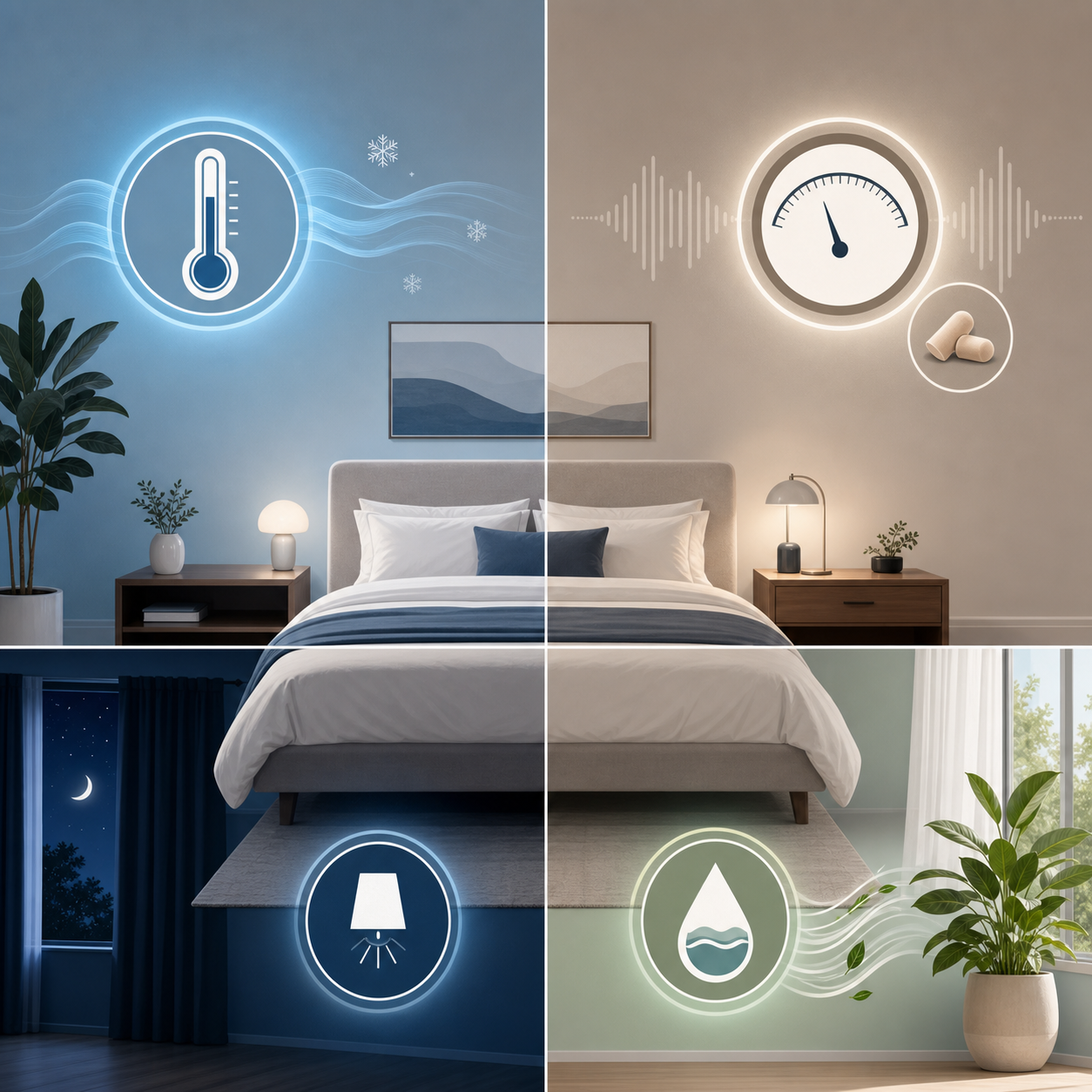
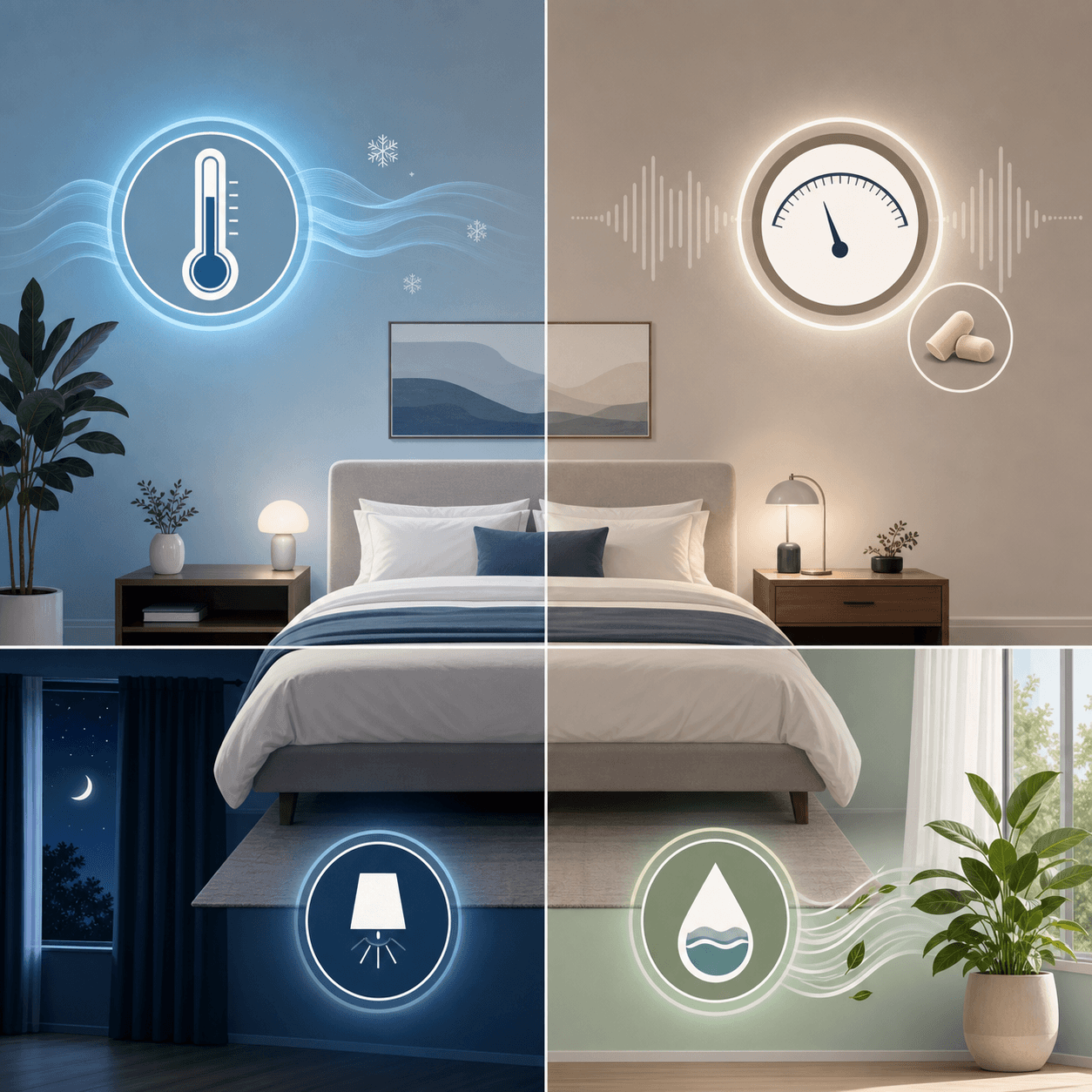
Four distinct pathways connect your environment to sleep quality:
- Thermoregulation and sleep onset. Your core body temperature must drop by about 2°F to initiate and maintain sleep. A room that is too warm prevents this natural cooling process, delaying sleep onset and fragmenting deep sleep stages.
- Light-driven melatonin suppression. Light exposure — especially blue wavelengths — signals your suprachiasmatic nucleus to halt melatonin production. Even brief, low-intensity light exposure during the night can reset your circadian clock and make returning to sleep difficult.
- Noise-induced cortisol and arousal. The World Health Organization recommends background noise below 30 dB for optimal sleep. Sounds above this threshold trigger the autonomic nervous system, increasing cortisol and adrenaline production, elevating heart rate and blood pressure — even if you do not consciously wake.
- Air quality and respiratory comfort. Humidity levels outside the 30–50% range, poor ventilation, and elevated CO₂ concentrations can cause nasal irritation, throat dryness, and micro-arousals that degrade sleep continuity without your awareness.
This guide builds on the systems-level overview in The Sleep Environment as a Tool, which explains how temperature, light, noise, and bedding interact. Here, we focus on the specific, measurable targets you can implement tonight — and the evidence behind each one.
Temperature: The 65–68°F Sweet Spot
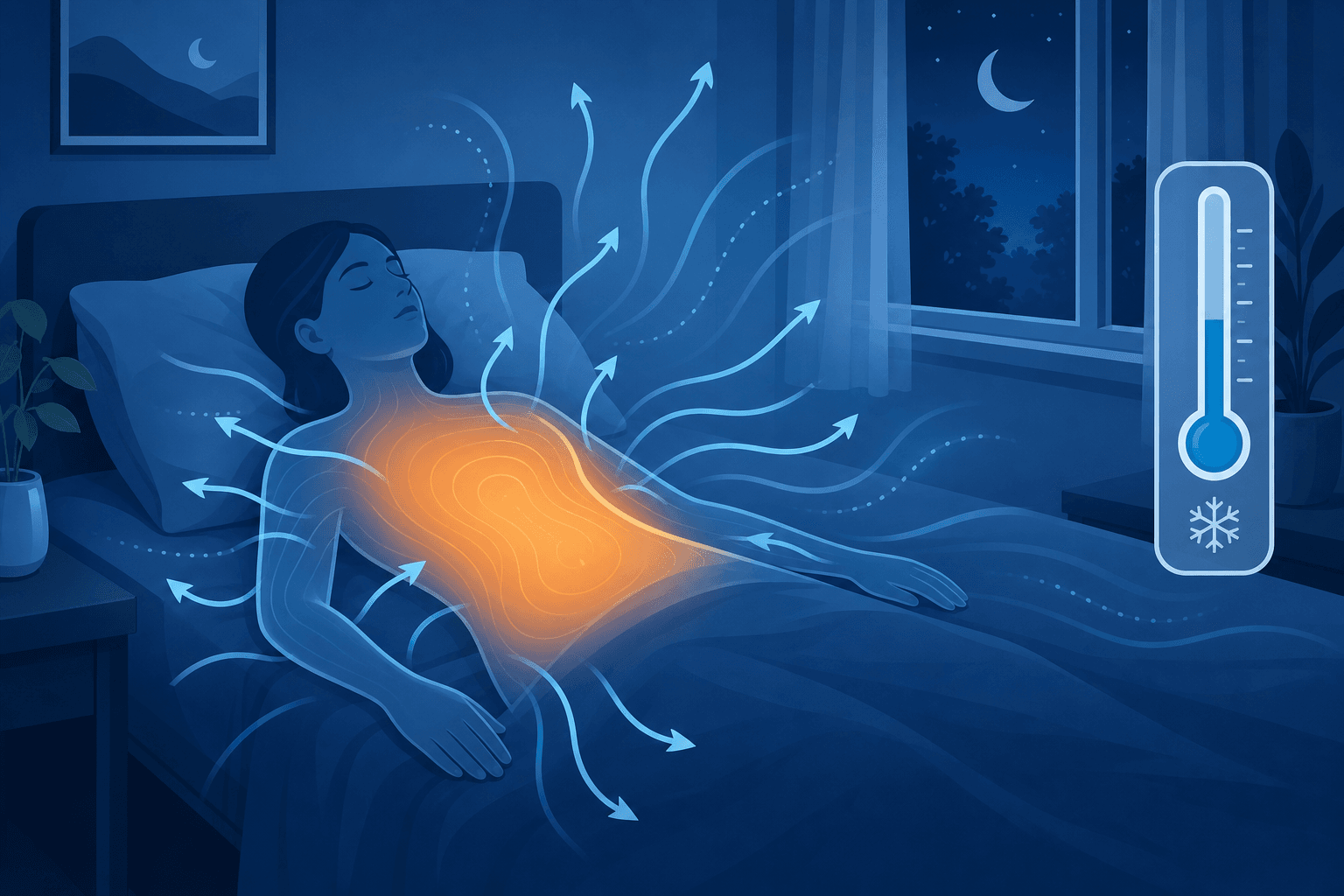
The most well-established environmental variable for sleep is temperature. The Sleep Foundation and Harvard Health both recommend a bedroom temperature between 65°F and 68°F. This is not a loose guideline — it is tied to a precise physiological requirement.
As you fall asleep, your core body temperature begins to drop by roughly 2°F over the course of the night. This decline is orchestrated by the circadian system: blood vessels in your hands and feet dilate, radiating heat away from your core. A cool room facilitates this heat dissipation. When the room is too warm, your body cannot shed heat efficiently, and the thermoregulatory system remains active — keeping you in lighter sleep stages and suppressing the deeper NREM and REM stages where physical restoration and memory consolidation occur.
Practical steps to hit the target:
| Strategy | How It Works | Best For |
|---|---|---|
| Set thermostat to 65–68°F | Directly controls ambient air temperature | Most people with central HVAC |
| Use breathable bedding (cotton, linen, bamboo) | Reduces moisture trapping and allows heat to escape | Side sleepers and hot sleepers |
| Try a cooling mattress topper or phase-change pad | Actively draws heat away from the body | Those who still overheat at 68°F |
| Take a warm bath 60–90 minutes before bed | Raises core temperature slightly, then triggers a rapid drop when you exit | People with trouble falling asleep |
| Keep feet warm with socks if needed | Promotes vasodilation in extremities, aiding heat dissipation | People with cold extremities who still want a cool room |
If you share a bed with a partner who prefers a different temperature, consider dual-zone bedding (separate blankets or a mattress with independent temperature controls) rather than compromising on the ambient room temperature. The 65–68°F target applies to the room itself, not just your side of the bed.
Light: Why Complete Darkness (<5 Lux) Matters
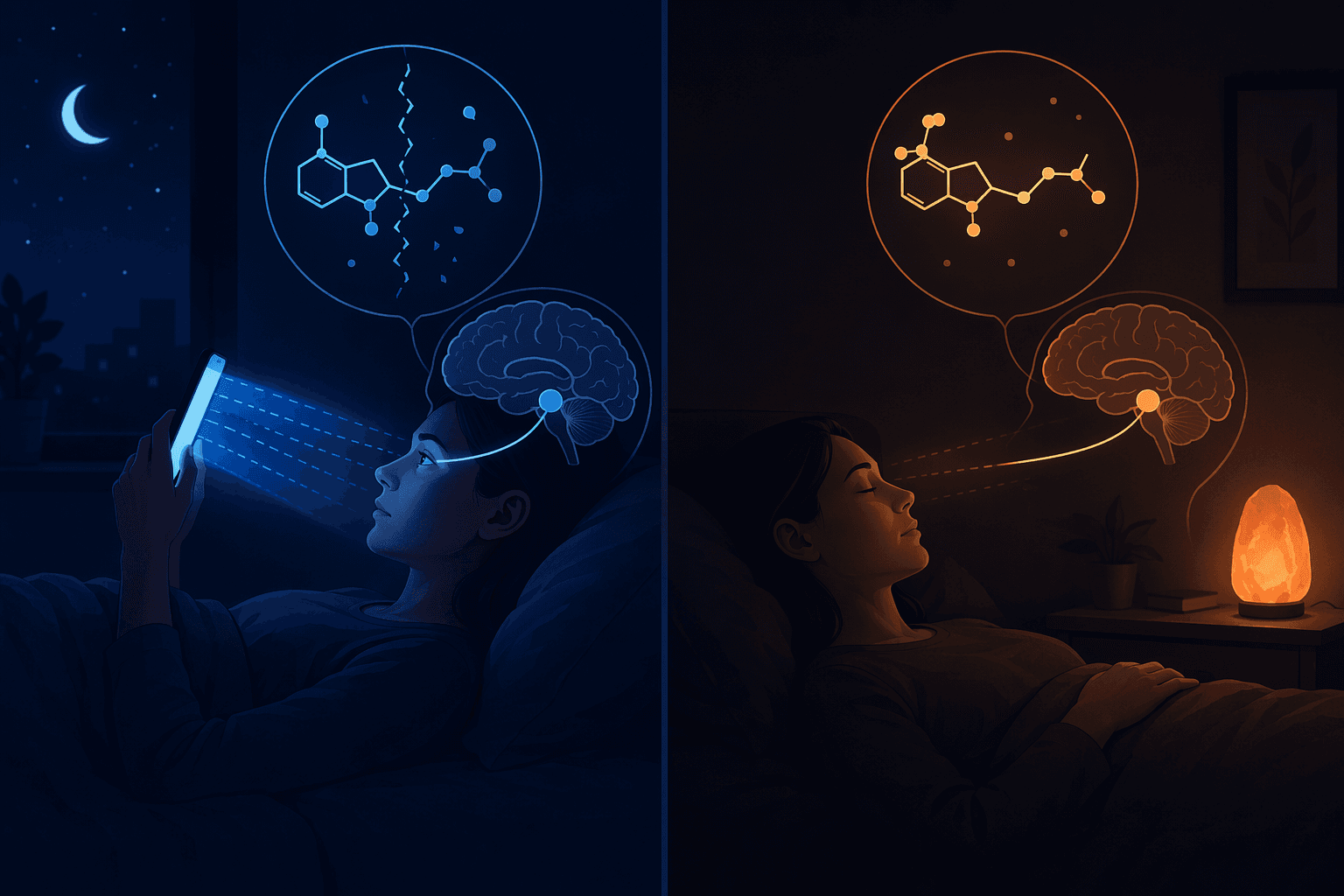
Light is the most powerful external cue for your circadian rhythm. Your eyes contain intrinsically photosensitive retinal ganglion cells (ipRGCs) that detect light and send signals directly to the suprachiasmatic nucleus — the brain's master clock. When these cells detect light, especially in the blue wavelength range (~460–480 nm), they signal the pineal gland to stop producing melatonin.
The target for sleep is less than 5 lux at eye level during the sleep period. For context, a typical living room at night is around 50–100 lux. A phone screen at typical brightness is 200–400 lux. Even a brief trip to the bathroom with the light on can expose you to 100+ lux — enough to suppress melatonin and make returning to sleep harder.
The problem is compounded by the fact that blue light suppresses melatonin roughly twice as strongly as other wavelengths. This is why the common advice to "stop using phones before bed" is incomplete — it is not just the screen time, but the spectral composition of the light that matters. A dim, warm-colored light (below 5 lux) has a fraction of the melatonin-suppressing effect of a bright, blue-rich light at the same intensity.
Practical steps to achieve <5 lux:
- Install blackout curtains or shades. These block external light from streetlights, car headlights, and neighboring buildings. Look for curtains labeled "100% blackout" or with a light-blocking liner.
- Eliminate or cover all electronic LEDs. Alarm clocks, smoke detectors, chargers, and routers often have small but bright LEDs. Use electrical tape or light-dimming stickers to cover them.
- Use red or dim amber nightlights for bathroom trips. Red light has the least impact on melatonin production. Place a dim red nightlight in the bathroom and keep the main light off.
- Install dimmer switches on bedroom lights. This allows you to gradually reduce light intensity in the hour before bed, mimicking natural dusk.
- Wear a sleep mask. A well-fitting mask blocks light completely, regardless of your partner's reading habits or unavoidable external light sources.
For a deeper dive into how light affects your circadian system, see our guide on Circadian Rhythm and Light Exposure.
Noise: The <30 dB Target and How to Achieve It
The World Health Organization recommends that background noise levels for sleep not exceed 30 dB — roughly the sound of a whisper or leaves rustling. This is not a comfort preference; it is a physiological threshold.
When noise exceeds 30 dB during sleep, the body responds with a cascade of stress-related changes. Research cited by the Sleep Foundation shows that noise above this level can increase production of cortisol and adrenaline, elevate heart rate and blood pressure, and cause micro-arousals — brief awakenings that you may not remember but that fragment your sleep architecture. These micro-arousals are particularly damaging to deep NREM sleep and REM sleep, the stages most critical for physical recovery and cognitive processing.
The problem is widespread. 69% of men and 76% of women over age 40 get up to urinate at least once per night, according to the Sleep Foundation. Each trip to the bathroom involves exposure to light, movement, and often noise from flushing or running water — all of which can trigger the same cortisol response and make returning to sleep harder.
Noise mitigation strategies ranked by effectiveness:
| Strategy | How It Works | Best For |
|---|---|---|
| White noise machine or app | Produces a consistent, broadband sound that masks sudden noises by raising the ambient noise floor | Masking traffic, snoring, or neighborhood sounds |
| Pink noise machine or app | Similar to white noise but with more energy in lower frequencies; some evidence suggests it may enhance slow-wave sleep | Those who find white noise too harsh |
| Earplugs (foam or silicone) | Physically block sound waves from entering the ear canal | Sudden, unpredictable noises (car horns, dogs barking) |
| Heavy curtains or rugs | Absorb sound and reduce echo in the room | Reducing overall noise level in the bedroom |
| Soundproofing (weather stripping, door seals) | Seals gaps that let noise in from outside or other rooms | Chronic noise from traffic or neighbors |
If you share a bed with a snoring partner, a white noise machine placed between you and the snorer can be highly effective. Alternatively, consider separate sleep spaces if snoring is severe and persistent — sleep quality for both partners often improves.
Air Quality: The Underappreciated Variable (Humidity, Ventilation, CO₂)
Temperature, light, and noise get most of the attention in sleep environment discussions. Air quality is the variable that is most often overlooked — and it may be the one that makes the biggest difference for people who have already optimized the other three.
Humidity: 30–50% is the target range. When humidity drops below 30%, the nasal passages and throat can become dry and irritated, leading to snoring, coughing, and micro-arousals. When humidity exceeds 50%, the air feels heavy, promotes mold and dust mite growth, and can make breathing feel labored. A simple hygrometer (often under $15) can tell you where you stand.
Ventilation and CO₂ levels. In a closed bedroom with two people sleeping, CO₂ concentrations can rise significantly over the course of the night. Elevated CO₂ (above 1,000–1,500 ppm) has been linked to reduced sleep depth, increased number of awakenings, and next-day drowsiness. The solution is simple: crack a window, use a fan to improve air circulation, or keep the bedroom door slightly open.
Practical steps for better air quality:
- Use a humidifier or dehumidifier. If your hygrometer reads below 30%, add a cool-mist humidifier. Above 50%, use a dehumidifier. Clean both regularly to prevent mold and bacterial growth.
- Improve ventilation. Open a window for 10–15 minutes before bed to exchange stale air. If outdoor noise or allergies prevent this, use a fan to keep air moving.
- Consider an air purifier with a HEPA filter. This can reduce airborne allergens (pollen, dust, pet dander) that may cause nasal congestion and disrupt sleep.
- Keep bedroom doors slightly open. This allows CO₂ to dissipate and prevents the room from becoming stuffy.
For more on how air movement affects sleep, see our article on What Actually Happens to Your Respiratory System When You Sleep With a Fan On.
Your Sleep Environment Optimization Checklist
Use the following checklist to systematically optimize each variable. Start with the ones that are easiest to change (temperature and light) and work toward the more involved adjustments (noise mitigation and air quality).
| Variable | Target | Quick Wins | Deeper Investments |
|---|---|---|---|
| Temperature | 65–68°F | Set thermostat; use lighter bedding | Cooling mattress topper; dual-zone bedding |
| Light | <5 lux at eye level | Blackout curtains; sleep mask; cover LEDs | Dimmer switches; red nightlights; smart bulbs |
| Noise | <30 dB background | White noise machine; earplugs | Soundproofing (weather stripping, door seals) |
| Air Quality | 30–50% humidity; low CO₂ | Hygrometer; open window before bed | Humidifier/dehumidifier; air purifier; fan |
One-week implementation plan:
- Day 1–2: Set thermostat to 65–68°F. Buy a hygrometer and measure your bedroom humidity.
- Day 3–4: Install blackout curtains or use a sleep mask. Cover all electronic LEDs in the bedroom.
- Day 5–6: Add a white noise machine or try earplugs. Open a window for 10 minutes before bed.
- Day 7: Assess your progress. If humidity is outside 30–50%, order a humidifier or dehumidifier. If noise is still an issue, consider soundproofing.
When Environment Fixes Aren't Enough: Distinguishing Hygiene from Disorders
Optimizing your sleep environment is one of the most effective things you can do for better sleep — but it is not a cure-all. If you have addressed all four variables (temperature, light, noise, air quality) and still experience significant sleep difficulties, the problem may be clinical rather than environmental.
Consider whether any of the following apply:
- Chronic insomnia: Difficulty falling or staying asleep at least three nights per week for three months or longer, despite adequate opportunity for sleep.
- Sleep apnea: Loud snoring, gasping or choking during sleep, excessive daytime sleepiness, and morning headaches.
- Restless legs syndrome: An irresistible urge to move the legs, especially at night, often accompanied by uncomfortable sensations.
- Circadian rhythm disorders: A persistent mismatch between your internal clock and the external environment, such as delayed sleep phase syndrome or shift work disorder.
If you suspect a sleep disorder, start with our Sleep Hygiene Fundamentals guide for a comprehensive behavioral approach, then explore the Sleep Conditions section for detailed information on specific disorders and their first-line treatments.
Comments
Join the discussion with an anonymous comment.