
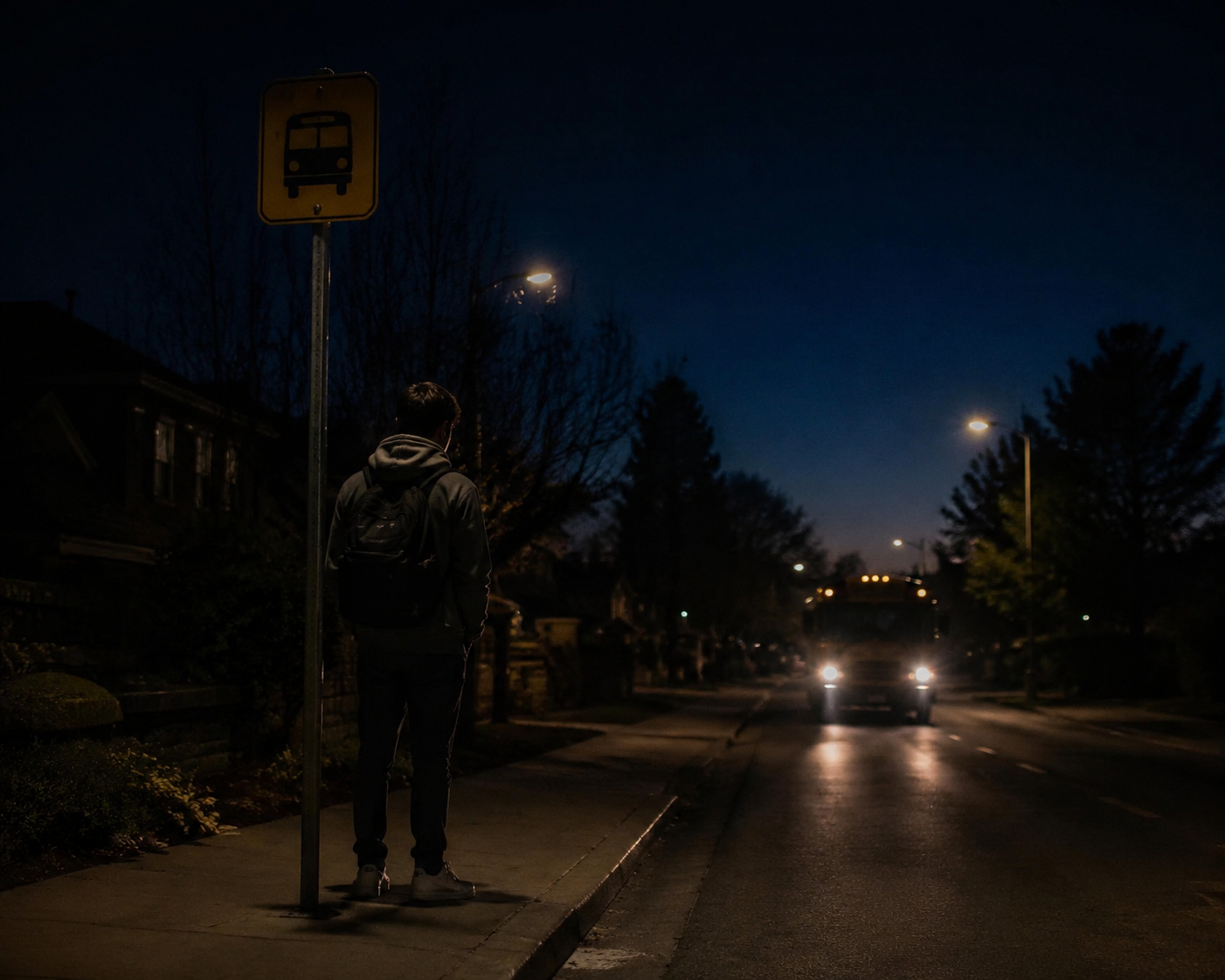
The sleep problem starts long before anyone argues about clocks. CDC data show that 71-84% of high school students already fail to get the recommended 8 hours on school nights, with especially high rates among female students, 12th graders, and Black students.[1] Permanent daylight saving time would add another layer of morning darkness to that shortage: later winter sunrise, darker commutes, and a schedule that asks adolescents to be alert before their bodies are ready.
Dark mornings are the point
Adolescence brings a natural phase delay. Teens tend to get sleepy later, which is why so many of them struggle to fall asleep early even when they want to, and why early school bells often collide with biology instead of correcting it. Morning light is the strongest daily cue for setting the circadian clock, so pushing sunrise later makes the already-misaligned school morning harder to recover from.
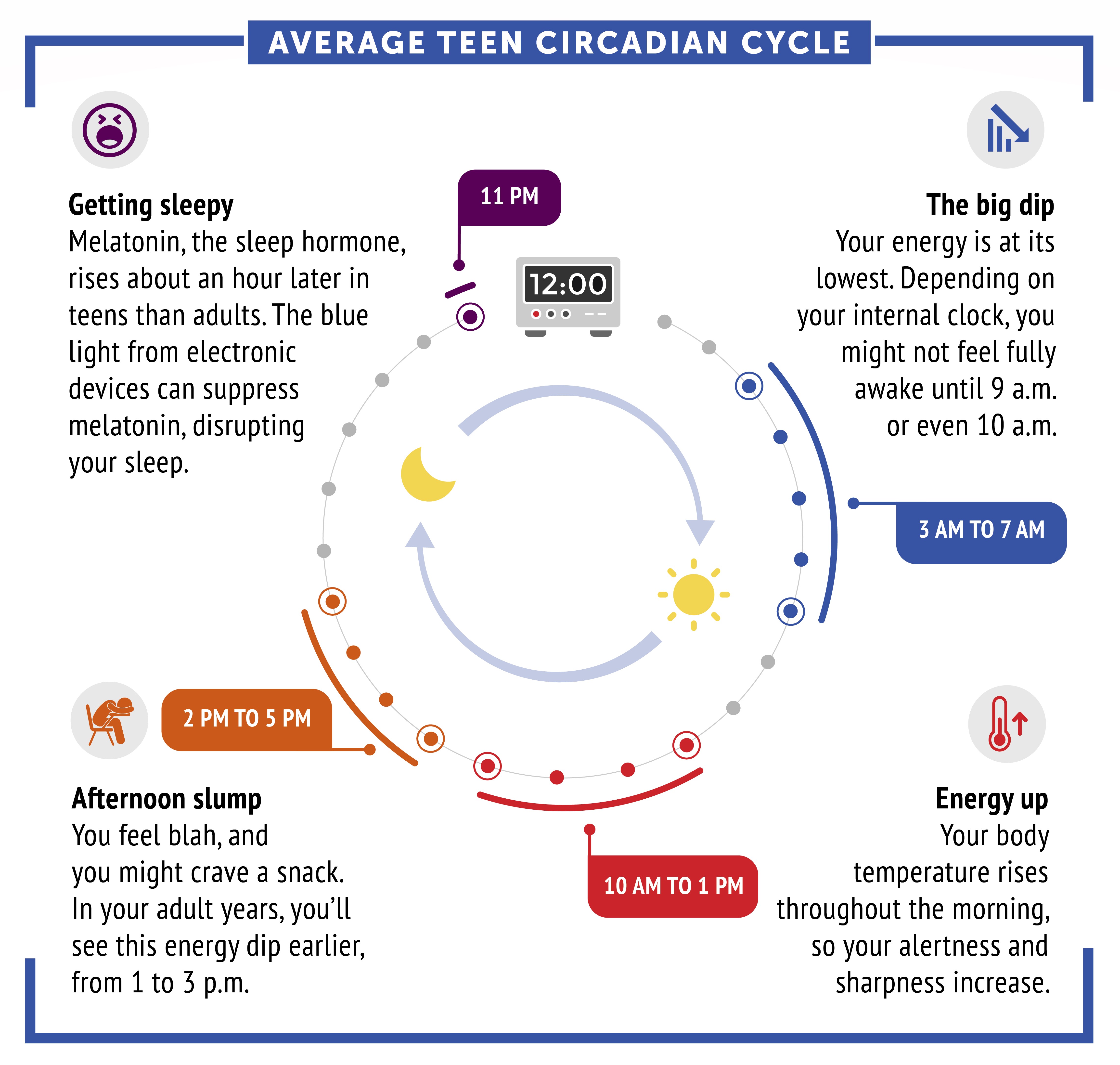
That is the basic problem with permanent DST. It does not merely move the clock on the wall. It changes when light arrives at the start of the day, and for students that means more commutes in the dark, less time for the body to reset, and a higher chance that school begins before the brain is fully awake. The appeal of extra evening light is real; the biological cost lands in the morning.
What the evidence says about the clock change itself
The most direct teen-specific evidence comes from a Weill Cornell study summarized by the American Academy of Sleep Medicine. High school students lost an objectively measured 32 minutes of sleep per night after the DST change, adding up to 2 hours 42 minutes across the school week, and they also showed more attention lapses and slower reaction time.[2] That is not just feeling groggy. It is a measurable hit to the parts of the school day that depend on focus, speed, and staying engaged.
Once sleep is shortened, the damage is cumulative. A student who starts the week behind does not get that debt back by Friday afternoon; the lost sleep keeps showing up as first-period fog, weaker concentration, and less reliable classroom performance. Permanent DST would not create that pattern from scratch, but it would make the morning conditions that reinforce it harder to escape.
Why the after-school light is real, but secondary
The attraction of permanent DST is easy to understand. More light after school helps with sports, jobs, errands, and the trip home, and many teens naturally prefer that. Public opinion is also divided, which is part of why the debate keeps resurfacing. But evening light does not solve the part of the day that most strongly anchors the circadian system. Morning light does that work, and adolescence already makes the system reluctant to move earlier.
That is why the sleep field is so consistent here. The American Academy of Sleep Medicine, joined by the AMA, National Sleep Foundation, Sleep Research Society, and more than 20 other organizations, endorses permanent standard time over permanent DST.[3] The judgment is not that evening light has no value. It is that the morning cost is bigger for sleep health.
What real-world experiments warned us about
Russia's permanent-DST experiment gave a useful cautionary signal. During the country's 2011-2014 permanent DST period, adolescents in northern communities experienced more social jetlag, more sleep deprivation, and worse winter mood, according to the analysis summarized by The Conversation and UBC.[4] The policy was eventually abandoned. That does not prove every country would react identically, but it does show what happens when darker mornings meet winter school schedules in the real world.
For student sleep, the policy question is not whether people like lighter evenings. They do. It is whether a clock system protects the time of day when adolescent biology most needs light. On that standard, permanent standard time is the better fit for student health because it restores morning light instead of subtracting it. For the broader adult comparison, see Permanent DST vs standard time: which is better for sleep?, and for the biology behind morningness and eveningness, see the chronotype guide.
References
- Sleep in High School Students - CDC
- Study shows that teens lose sleep after change to daylight saving time - American Academy of Sleep Medicine
- Sleep experts urge adoption of permanent standard time to protect public health as Americans prepare to spring forward - American Academy of Sleep Medicine
- B.C.'s switch to permanent DST adds to the perfect storm for poorer adolescent sleep and mental health - The Conversation / UBC
Comments
Join the discussion with an anonymous comment.