
When the power goes out at bedtime, the first useful question is not how to keep your normal routine. It is whether the room is moving too hot or too cold for sleep. A bedroom around 65–68°F is generally considered the best range for sleep, while sleep tends to get harder above about 75°F or below about 60°F because the body has more trouble regulating the temperature changes that support sleep onset and maintenance.[1][2]
That may sound narrow until you are lying awake in an 82°F room with no fan, or waking at 4 a.m. because the heat has been off for hours. U.S. customers averaged about 11 hours of outage time in 2024, nearly double the 2022 average, so this is no longer a once-in-a-decade household problem for many people.[3] The way through the night is practical: check the temperature direction, remove immediate hazards, then use the right playbook.
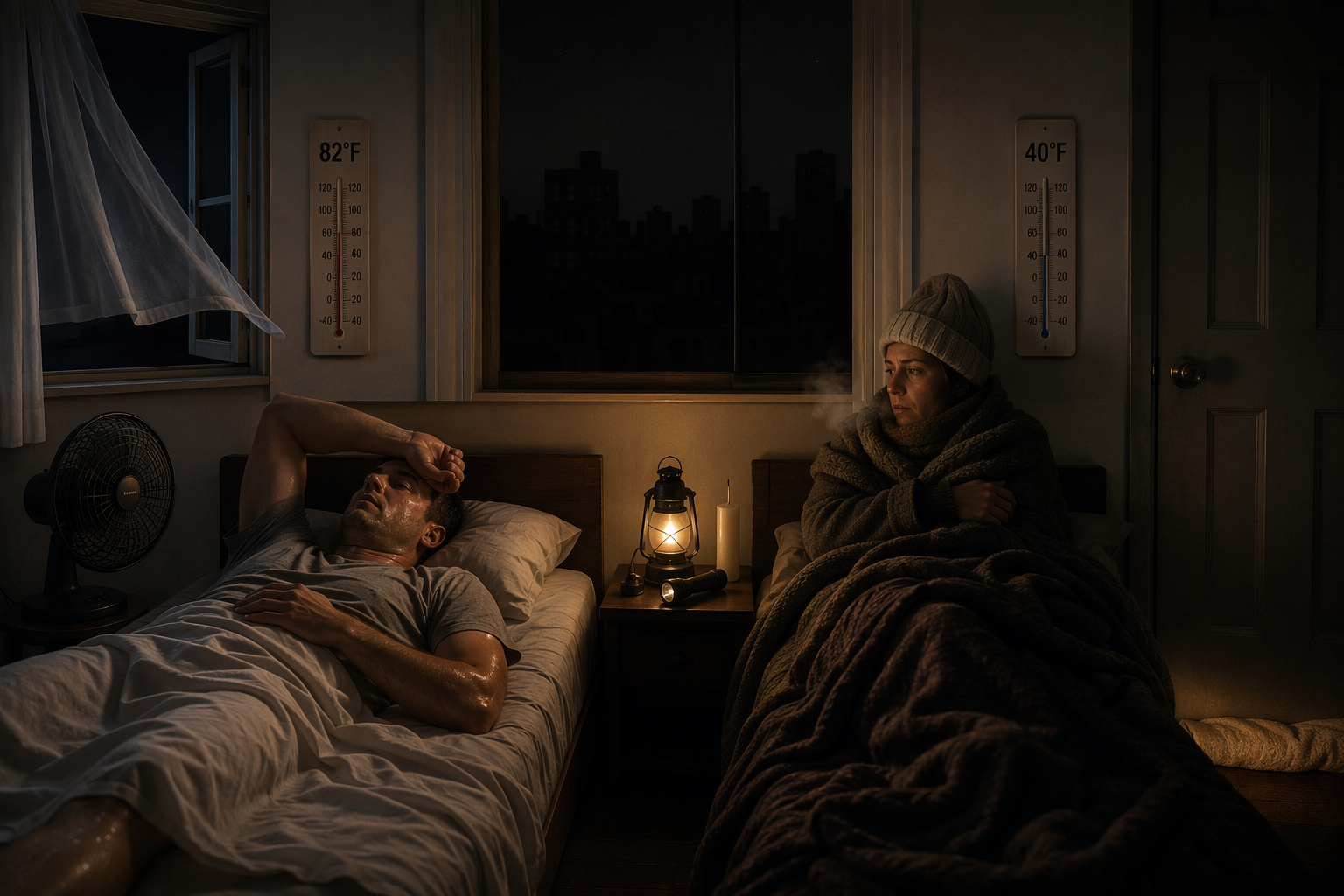
| If the room is... | Your sleep goal | Do first |
|---|---|---|
| Getting hotter | Help your body release heat | Create airflow, move lower, strip bedding down, cool skin with water and air |
| Getting colder | Help your body retain heat | Shrink the heated space, block drafts, layer clothing and bedding, keep warmth near the body |
| Unsafe for anyone in the home | Stop trying to sleep through it | Make a plan for backup power, a cooling or warming location, medical support, or evacuation |
Before rearranging the bedroom, take care of the hazards that become worse when people are tired. Use flashlights, headlamps, battery lanterns, or phone lights instead of candles where possible; public-safety guidance warns that candle use increases fire risk during outages.[4][5] If anyone starts a generator, it belongs outdoors and far from windows, doors, and vents, never in a garage, porch, basement, or near an open window. The CDC says generators should be at least 20 feet away from doors, windows, and vents, and every sleeping area should have working carbon monoxide detection.[4]
If the House Is Getting Hot
A hot outage asks the body to do something it already has to work hard to do at night: shed heat. Heavy bedding, closed rooms, stored attic heat, and still air all push the wrong way. Your job is to move heat away from skin and out of the room, even if you cannot make the room feel like an air-conditioned bedroom.
Start with airflow if the outdoor air is cooler than the indoor air, or if there is any breeze to use. Open windows on opposite sides of the room or home to create cross-ventilation. If you have a battery fan, place it where it helps move air across skin or pull cooler air through the room; do not waste the battery stirring hot air around a closed bedroom. HealthPartners and Amerisleep both recommend low-tech heat strategies such as breathable bedding, airflow, and cooling the body directly when sleeping without air conditioning.[2][6]
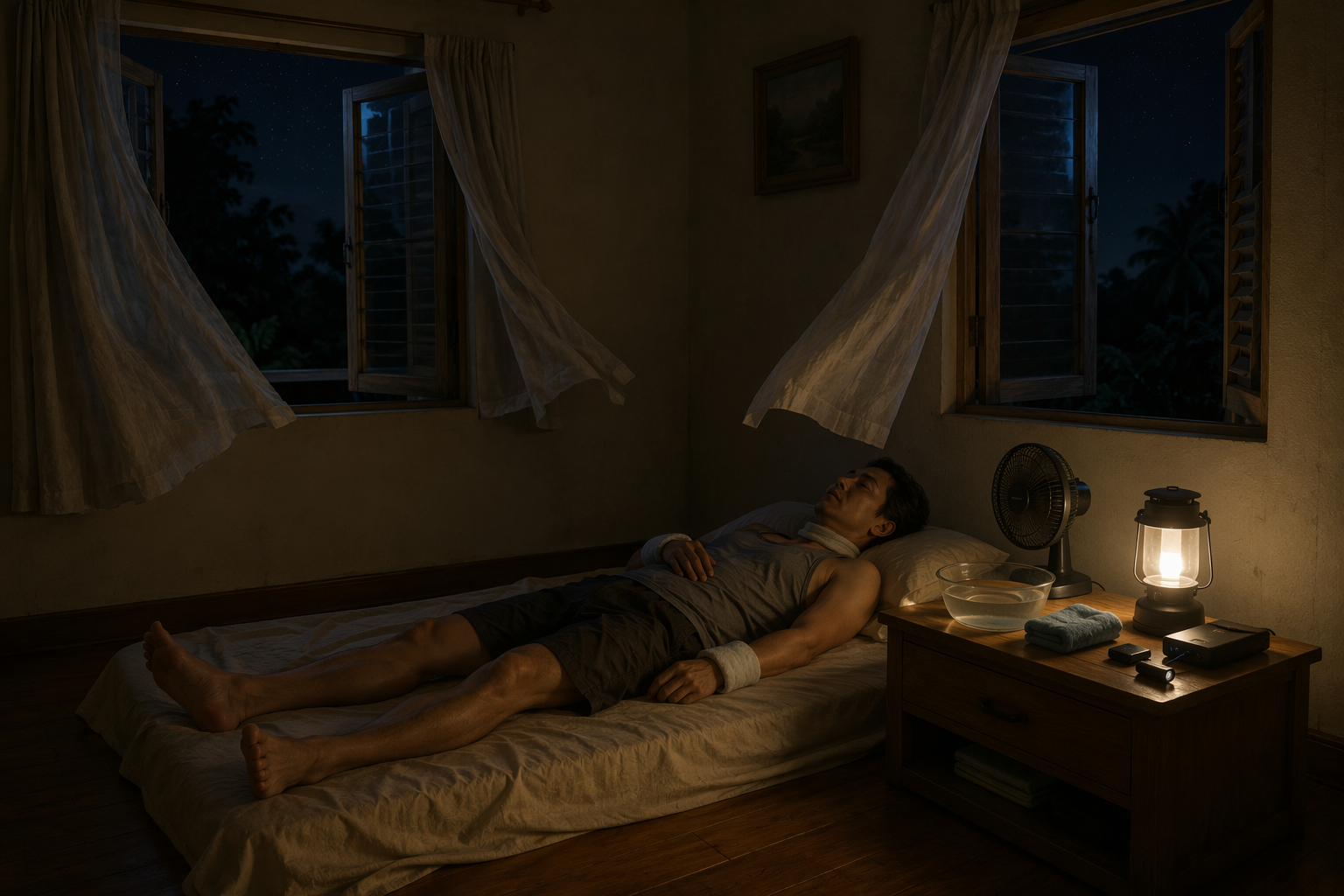
Move lower if you can do it safely. A downstairs room, basement, or shaded interior room is usually a better bet than an upstairs bedroom that has been collecting heat all day. Keep the sleep surface simple: a cotton or linen sheet, loose sleepwear, and no foam topper if it traps heat against the body. This is not the night for a weighted blanket unless the room is already cool enough.
Water helps because evaporation carries heat away from skin. A lukewarm shower 60–90 minutes before bed can support the body’s normal cooling process without shocking you awake the way a cold shower can.[2] If the air is moving, a damp sheet or damp washcloth can help; keep it damp, not dripping, and stop if it makes the bedding clammy without cooling you. Put cool cloths on the neck, wrists, ankles, or behind the knees, where blood vessels run close enough to the surface for the sensation to matter. These are physiologically sensible tactics, not guaranteed sleep medicine.
- Open opposite windows only when it improves airflow or brings in cooler air; close sun-facing windows and curtains during the hottest part of the day.
- Sleep on the lowest safe floor, especially if upstairs rooms hold heat.
- Use breathable bedding and remove layers that trap heat.
- Cool skin with damp cloths and moving air rather than soaking the mattress.
- Save battery power for fans, lights, medical devices, and communication rather than background comfort.
Do not treat heat as just an annoyance for older adults, infants, people with chronic illness, or anyone taking medications that affect hydration, sweating, or alertness. Harvard Health notes that older adults are more vulnerable during outages because temperature extremes, medication needs, and medical devices can all become harder to manage.[7] If the indoor temperature is still climbing and someone is confused, faint, very weak, no longer sweating in intense heat, or cannot cool down, comfort tactics are no longer the right category of response.
For broader background on why temperature is one of the sleep variables that actually matters, keep a separate tab for sleep hygiene fundamentals. Tonight, though, the practical point is simpler: in heat, the bed should help you lose heat, not hold it.
If the House Is Getting Cold
A cold outage is the opposite problem. Opening windows, creating airflow, and dampening fabric now work against you. The goal is to trap body heat in the smallest practical space and slow the leaks. A well-insulated home may hold meaningful warmth for 8–12 hours in moderate winter conditions, but that depends on the house, outdoor temperature, wind, and how often doors open.[6]
Choose one room before the house gets cold enough to make decisions unpleasant. Interior rooms are better than rooms with big exterior walls or many windows. Close doors. Put rolled towels or blankets at the base of doors. Close curtains or hang blankets over windows if you can do so safely. You are not trying to heat the whole home with body warmth; you are reducing the volume of air your body has to compete with.
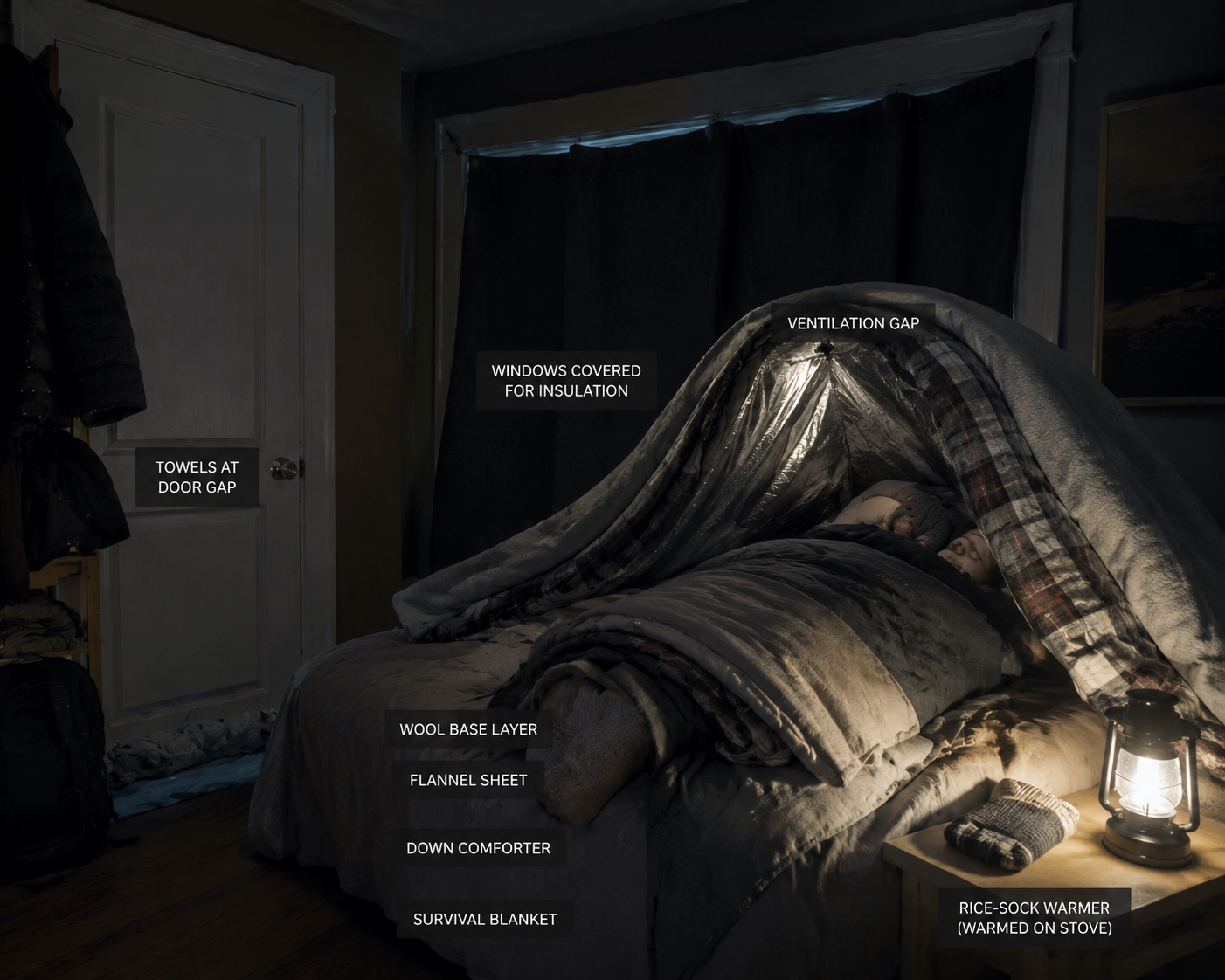
Layer clothing before piling on every blanket you own. Dry socks and a warm hat matter because feet and head discomfort can wake you even when your torso is covered. A wool or synthetic base layer, warm socks, and a hat under layered blankets usually works better than sleeping in bulky clothes that bunch up and leave gaps. If you have an emergency blanket, use it as part of the layering system rather than directly against bare skin if it feels clammy or noisy enough to keep you awake.
Shared body heat can help, especially for children who are old enough to sleep safely with an adult, partners, or household members who are comfortable sharing a room. Pets may help warm the bed too, but do not let that replace checking on people who cannot report how cold they are. Cold rooms are harder on older adults, and the usual advice to “just add a blanket” can miss the fact that some people sense and respond to cold less reliably.[7] Readers caring for an older relative may want the longer discussion in why sleep hygiene advice often fails older adults.
A rice-sock warmer is useful if you have a safe way to heat it, such as a gas stove that still works and is properly ventilated. Fill a clean sock with dry rice, tie it securely, warm it cautiously, and test it with your hand before putting it near skin. It should be warm, not hot. Place it near feet or under blankets, not against numb skin or where a sleeping child cannot move away.
The blanket-tent method can also help: drape blankets over the bed or a simple support so they trap a pocket of warmer air around the sleeper. Leave a small ventilation gap. A completely sealed cocoon is not the goal, and it can make the air feel stale or unsafe. Keep battery lights outside the fabric tunnel where they will not overheat, tip, or get buried.
- Pick one small, interior sleeping room and keep its door closed.
- Block drafts at door bases and cover cold windows with curtains or blankets.
- Dress in dry layers, including socks and a hat, before adding heavy bedding.
- Use warm objects cautiously, keeping heat mild and away from numb skin.
- If you make a blanket tent, leave a ventilation gap.
The Safety Rules That Should Interrupt the Sleep Plan
The worst outage mistakes are often made after midnight, when someone is tired enough to compromise. Generator placement is the obvious one. Consumer Reports cites federal safety concerns around generator-related carbon monoxide poisoning, and the CDC’s practical rule is clear: keep generators outside, at least 20 feet from doors, windows, and vents, with exhaust directed away from the home.[4][8] A carbon monoxide alarm is not an optional upgrade in this situation; it is the device that tells you the invisible hazard has entered the room where people are trying to sleep.
Food and medication need attention before everyone goes to bed. The CDC says food in an unopened refrigerator is safe for about 4 hours, while a full freezer can hold temperature for about 48 hours and a half-full freezer for about 24 hours if unopened.[4] The Red Cross gives the same basic freezer timelines and emphasizes keeping refrigerator and freezer doors closed as much as possible.[5] If you will need medication in the night, put it where you can reach it without repeatedly opening the refrigerator.
Insulin is a special case. Harvard Health notes that insulin generally needs cold storage, and power outages may require a cooler with ice packs while avoiding freezing.[7] Do not put insulin directly against ice. If you are unsure whether a medication is still usable after warming or freezing, that is a pharmacist or clinician question, not a sleep-hack question.
CPAP users need a plan that is more concrete than “try to sleep without it.” Battery backup, a charged power station, or a medically appropriate alternative should be arranged before storm season when possible. Dream Sleep Respiratory notes that CPAP power needs vary by machine, pressure, humidifier use, and battery capacity, so runtime estimates should be checked against the actual device rather than guessed at bedtime.[9] If the outage is already happening and you cannot use prescribed breathing equipment, follow your clinician’s emergency guidance or seek a powered location.
Candles deserve a second mention because they are so tempting when phone batteries are low. Use battery-powered light sources instead. If candles are the only option, keep them away from bedding, curtains, children, pets, oxygen equipment, and anything that might shift while people sleep. Then make replacing them with battery lights part of the next-day list.
When the Outage Is Part of a Storm
Storm outages add noise, alerts, humidity, pressure changes, and worry to the temperature problem. Those factors can fragment sleep even when the bedroom is not dangerously hot or cold. If the weather itself is what keeps waking you, the useful next layer is understanding how tropical storms affect sleep, then separating what can be controlled tonight from what simply has to be monitored.
Be cautious with sleep aids during an outage, especially if there is heat stress, cold stress, alcohol use, medical equipment, or a need to wake for emergency alerts. Sedation that feels helpful at 10 p.m. can become a problem if someone must respond to a carbon monoxide alarm, check on an older adult, or leave because the house is no longer safe. If you are weighing medication during a storm, use a conservative source such as safe sleep aids during a tropical storm rather than improvising with whatever is in the cabinet.
A Tonight-Only Standard for Sleep
During a power outage, good sleep does not mean perfect sleep. It means lowering thermal stress enough that the body can doze, while avoiding the mistakes that turn an uncomfortable night into a dangerous one. If the room is hot, move lower, create airflow, lighten bedding, and cool skin with water and moving air. If the room is cold, shrink the sleeping space, block drafts, layer dry fabric, and trap body heat without sealing off ventilation.
Keep light battery-powered. Keep generators far outside with working carbon monoxide alarms. Keep refrigerator and freezer doors closed unless you have a reason to open them. Protect temperature-sensitive medications. Make a separate plan for CPAP users, older adults, infants, and anyone whose body cannot handle heat or cold well. If those protections cannot be met, the next step is not another damp cloth or another blanket; it is getting to a safer powered, cooled, or heated place.
References
- The Best Temperature for Sleep — Sleep Foundation
- Tips for sleeping in hot weather without AC — HealthPartners
- Blackout Statistics (2026) — SunergyHub
- What to Do to Protect Yourself During a Power Outage — CDC
- Power Outage Safety — American Red Cross
- How to Sleep Comfortably Without Electricity — Amerisleep
- How to protect your health in a power outage — Harvard Health
- How to Survive a Prolonged Power Outage — Consumer Reports
- How To Use Your CPAP Machine During Power Outages — Dream Sleep Respiratory
Comments
Join the discussion with an anonymous comment.