
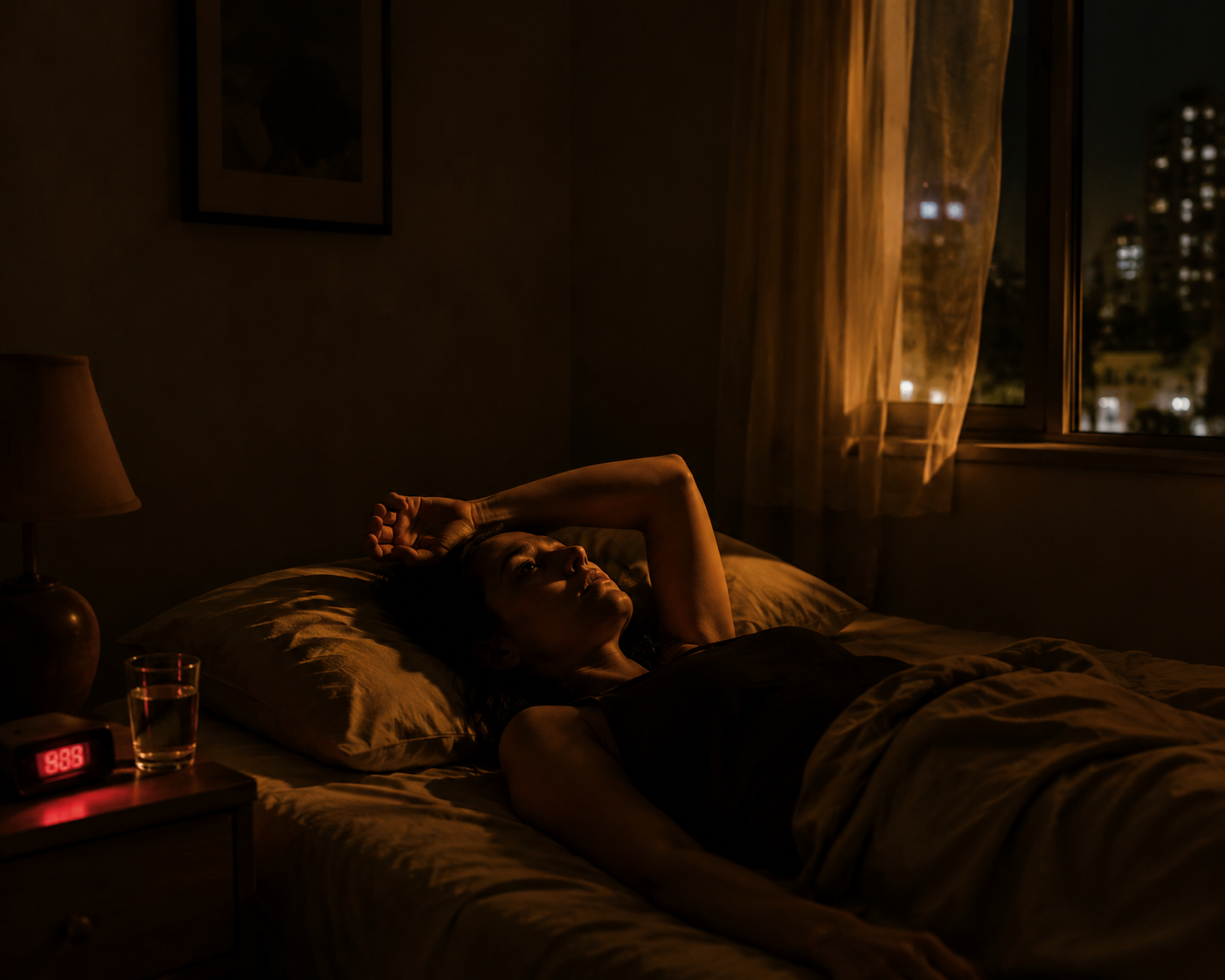
A heat dome does not just make sleep feel harder. It can stop the body from doing the one thing sleep onset depends on: dropping core temperature and pushing heat out through the hands and feet so the skin can dump it into the air.
That cooling sequence is not optional. Sleep onset typically needs a core-temperature drop of about 0.5°C to 1°C, and distal vasodilation in the hands and feet helps create the gradient that lets heat leave the body; the distal-to-proximal skin-temperature pattern is a strong predictor of how quickly sleep begins [1].
What the June 2026 data showed
This is not just a bad-night feeling. In Terra Research's June 2026 wearable analysis, 1.4 million nights from 34,360 users across 7 European regions were tracked during the heatwave. Each 1°C rise in nighttime minimum temperature cut sleep by 1.4 minutes within the same person, and the loss came mostly from the sleep window shrinking rather than from more awake time in bed; REM also took a disproportionate hit, losing about 0.6 minutes of the total 1.4-minute reduction [2].
The pattern matches what people feel at 2 a.m.: heat is squeezing the window the body needs to cool down before sleep, not just making the room unpleasant [2].
It is still one wearable dataset, drawn from people who owned the devices and stayed GPS-active, so it should be read as strong directional evidence rather than a census of everyone who sleeps through heat.
Why a hot shower works better than a cold one
The most counterintuitive fix is also the most coherent one: take a hot shower or bath 1 to 2 hours before bed. The point is not comfort in the moment. The point is to trigger vasodilation so that, after you step out, your body can shed heat more efficiently and drive core temperature down on the way toward sleep. UW Medicine's guidance endorses this approach, and it explicitly frames cold showers as the less useful option because they can be stimulating instead of sleep-promoting [3].
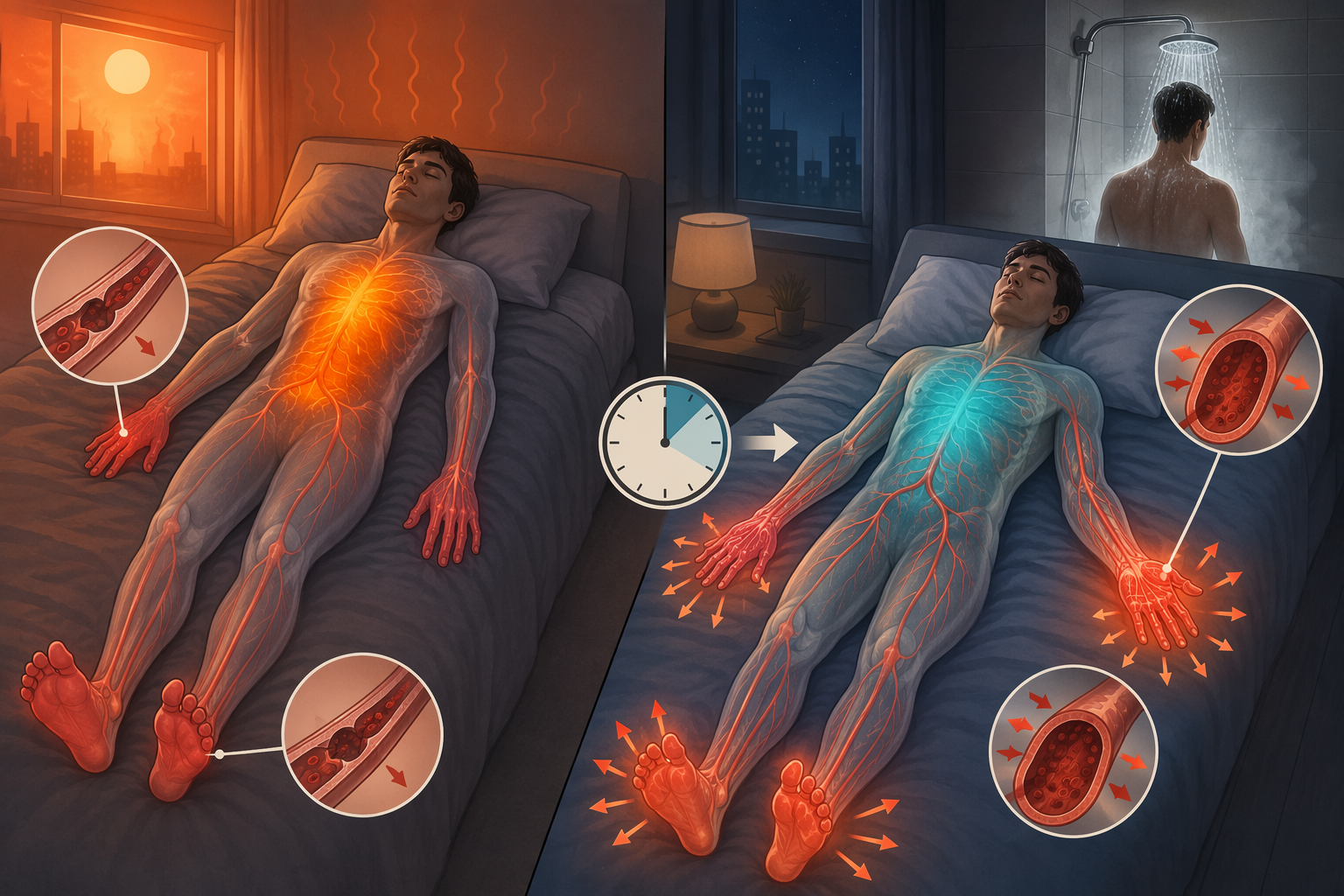
That is why the cold-shower reflex often disappoints. It can feel refreshing for a minute, but refreshing is not the same thing as creating a better cooling gradient for sleep onset.
What to stack around the shower
Once the shower is doing the main job, the other moves are support work. The stronger-backed ones are the boring ones: pre-cool the bedroom during the day so it does not store as much heat, time cross-ventilation for the part of the night when outside air is actually cooler, and keep airflow moving across skin with a fan rather than just stirring the room [4].
- Use breathable bedding such as cotton or linen so the body is not trapped under a warm, damp layer.
- Put the fan where it creates cross-breeze across the body, not just noise in the corner.
- If the room still holds heat, local cooling at the feet can help: a chilled bottle, cool socks, or an ice pack near the ankles is a smaller version of the same distal-heat-loss idea [4].
The familiar one-line advice does less because it treats the room as the whole problem. During a heat dome, the room may never become ideal, and exact thermostat targets vary by source anyway. The practical goal is to make the body cool enough to complete sleep onset, even if the room never reaches the textbook range.
References
- Effects of thermal environment on sleep and circadian rhythm — PubMed Central, 2012
- Do heatwaves make you sleep less? — Terra Research
- Hot weather sleep tips — UW Medicine Right as Rain
- Eight ways to sleep well in hot weather — The Conversation
Comments
Join the discussion with an anonymous comment.