
Mechanism explainer
Heat wave sleep myths that don't work (and the alternatives that do)
Common heat-wave sleep fixes like cold showers, sleeping naked, and keeping windows open all day can actually make things worse. This article explains why popular hacks backfire and which evidence-based cooling strategies align with how your body naturally prepares for sleep.
The worst heat-wave sleep advice has one thing in common: it feels right for about five minutes. A cold shower shocks the skin awake. An open window looks merciful. Sleeping naked sounds like removing the problem. A glass of wine feels like a shortcut to unconsciousness. Then it is 2 a.m., the sheets are damp, the room is still hot, your skin feels clammy instead of cool, and the fan is pushing warm air across your face like a small, judgmental hair dryer.
The real question on a hot night is not whether a trick feels cold at the moment you do it. It is whether that trick helps your body do the thing it already has to do before sleep: move heat away from the core, send more blood flow toward the skin and extremities, and let moisture evaporate instead of trapping it next to you.
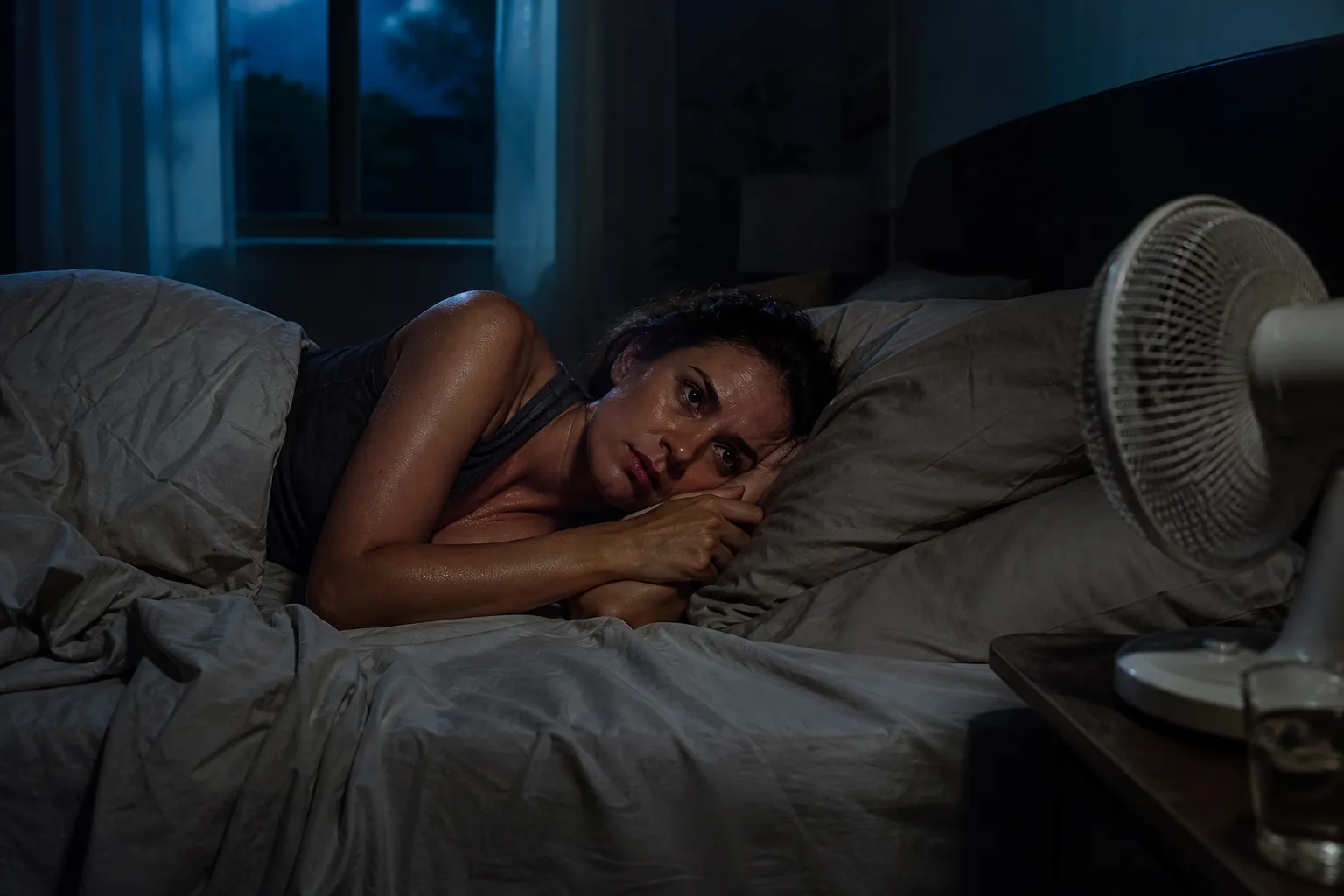
That distinction matters because hot nights are not just uncomfortable; they are measurably bad for sleep. A 2025 Nature Communications study using more than 23 million sleep records from 214,445 Chinese smartwatch users found that each 10°C rise in ambient temperature was associated with 9.67 fewer minutes of total sleep and a 2.82% reduction in deep sleep.[1] That is not a universal forecast for every bedroom or every body; wearable users skew younger and more tech-owning than the general population. But as a large observational signal, it matches what overheated sleepers already know: heat does not politely wait outside the bedroom door.
The Cooling Cascade Is Quiet, Not Dramatic
Sleep onset depends on a gradual thermoregulatory shift. Your core temperature trends downward, blood vessels in the skin and extremities open up, and heat leaves through the surface of the body. Sweat helps only if it can evaporate. A room can feel less punishing when air moves across the skin, but airflow is not the same as lowering the room temperature.
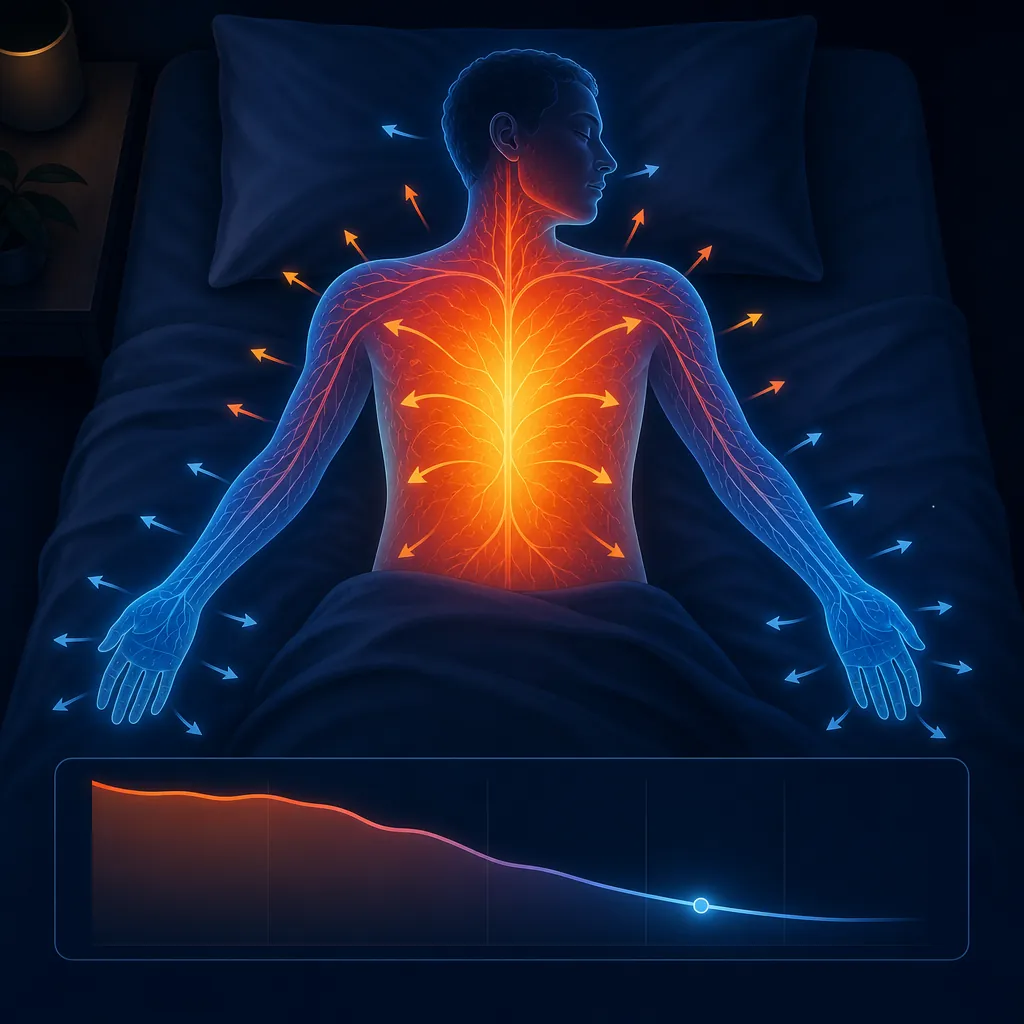
Most bad heat-wave sleep hacks fail because they interrupt one of those steps. They clamp down blood vessels when you need heat to leave. They trap sweat when evaporation is your friend. They bring hot air indoors when the room needed shading. Or they sedate you while making the second half of the night lighter, drier, and more fragmented.
A useful heat-wave sleep fix does not have to feel heroic. In fact, the heroic ones are often the problem.
Myth: Take An Ice-Cold Shower Right Before Bed
A cold shower is the classic bad bargain: intense relief at the skin, followed by a body that interprets the shock as a reason to conserve heat. Cold water can narrow blood vessels near the skin. That vasoconstriction reduces heat loss from the body surface just when you are trying to offload heat before sleep.
This is why people can step out of a cold shower feeling victorious, towel off, get into bed, and then feel strangely hot again. The skin was cooled; the whole thermoregulatory job was not necessarily helped. If the shower also wakes you up, adds a little adrenaline, or leaves you rushing through the rest of your bedtime routine, it has solved the wrong problem with impressive confidence.
The better option is boring and far more compatible with sleep: a lukewarm shower or bath about 60 to 90 minutes before bed. Warm enough to increase skin blood flow, not so hot that you raise your heat load, and not so cold that your body protects the core. After you get out, evaporation from damp skin and increased blood flow at the surface help the body continue shedding heat as bedtime approaches.
If the room is brutally hot, a short lukewarm rinse closer to bed can still be reasonable. The point is not to obey a timer with religious precision; it is to avoid the icy shock that feels decisive while pushing the body in the wrong direction. For a deeper look at this mechanism, see why a warm or lukewarm shower can help before bed.
Myth: Sleep Naked Because Less Fabric Must Mean Less Heat
Sleeping naked is not automatically wrong. Some people sleep comfortably that way, especially in dry heat with breathable bedding and enough air movement. The myth is the blanket claim that bare skin is always cooler.
The problem is moisture management. In a hot bedroom, sweat that sits on bare skin under a sheet can create a humid microclimate. Once the air trapped around the body is damp, sweat evaporates less effectively. You may have technically removed clothing while accidentally building a small, sticky weather system under the covers.
Loose cotton or linen sleepwear can work better because it absorbs some sweat and spreads moisture so it can evaporate. The same principle applies to bedding: breathable natural fibers are usually more useful than slick synthetics that feel cool for a minute and then trap dampness. This is not a trial-level certainty for every fabric blend on the market; it is a physiology-and-consensus recommendation that fits how evaporative cooling works.
Perimenopause makes this more obvious. A hot flash plus sealed bedding can turn a slightly warm bed into a damp enclosure very quickly. If that is your pattern, the priority is not simply wearing less. It is giving sweat somewhere to go: loose natural-fiber sleepwear, a breathable top sheet, and bedding you can easily adjust without fully waking yourself. For more population-specific adjustments, see heatwave sleep tips for pregnancy, menopause, and older adults.
Myth: Keep The Windows Open All Day
Opening a window feels like doing something civilized. On a hot afternoon, it can also be an efficient way to invite the heat in and let the room store it for later.
The useful routine is less emotionally satisfying during the day and much more helpful at night: close windows, blinds, and curtains while the outdoor air and sun are heating the room; then open windows strategically after sunset if the outdoor air is cooler than indoor air. Cross-ventilation matters more than one symbolic cracked window. Air needs an entry and an exit.
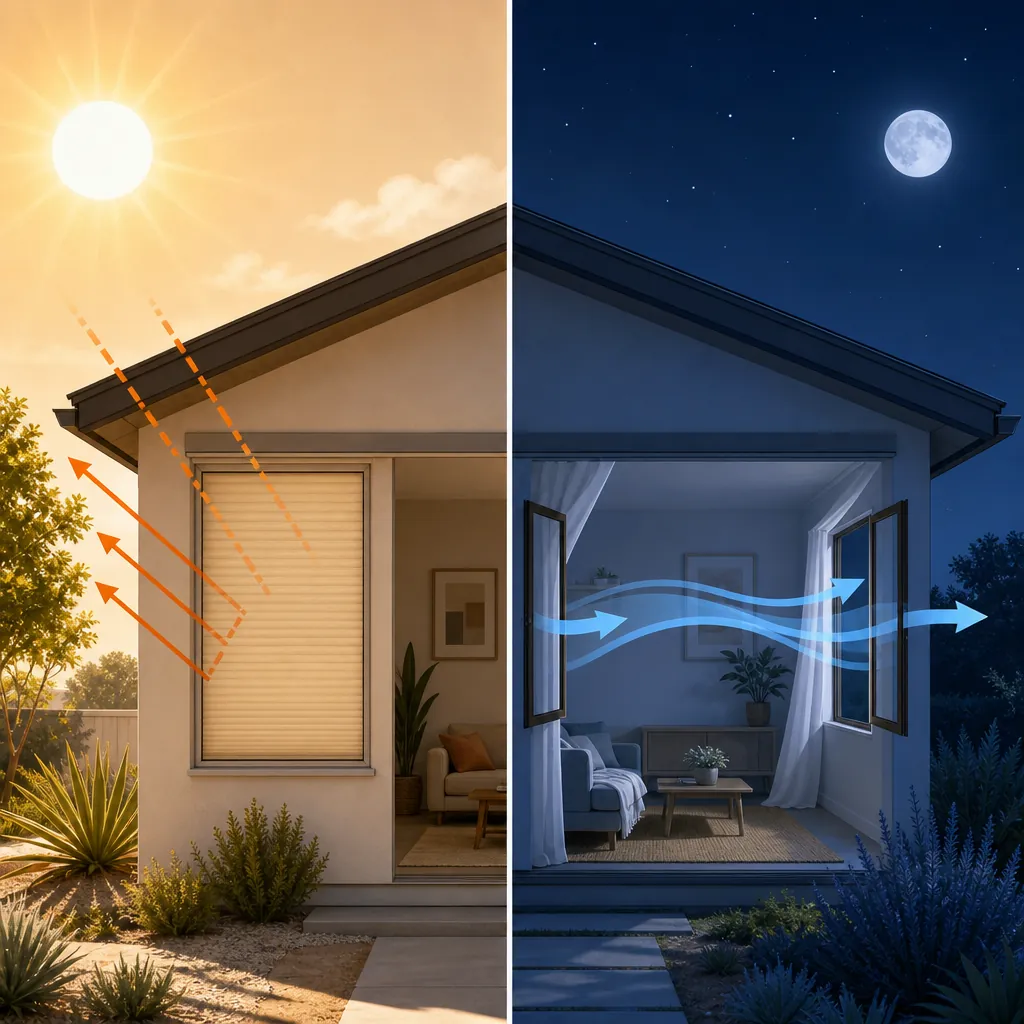
In an ordinary flat or bedroom, that can look like this: close the sun-facing curtains before the room heats up; keep internal doors positioned so the coolest part of the home is not cut off; open windows on opposite sides of the space after the outside temperature drops; and use a fan to help pull cooler evening air through, rather than blasting warm indoor air at your face all night.
If outdoor air stays hotter than indoor air, or if smoke, pollution, noise, or safety makes open windows impractical, the rule changes. Do not ventilate just because it is nighttime. Ventilate when the air you are bringing in is actually helping.
Myth: A Nightcap Helps Because At Least You Fall Asleep
Alcohol can make you feel sleepy. That is not the same as protecting sleep. In heat, the trade-off gets worse: alcohol adds dehydration pressure, can make sleep more fragmented, and often leaves the second half of the night lighter and more restless. Sedation is not a cooling strategy.
The alternative is not glamorous: drink water steadily earlier in the evening, avoid arriving at bedtime both thirsty and overfull, and be cautious with alcohol when the bedroom is already hot. If you do drink, treat it as an added heat stressor rather than a sleep aid.
Myth: Point A Fan At Your Face And Let It Run
Fans are useful. They are also overcredited. A fan moves air; it does not cool the air. If the room is moderately warm and sweat can evaporate, moving air across the body can make a real difference. If the room is extremely hot, humid, or sealed, the same fan may mostly circulate warm air, dust, and allergens while drying your eyes, throat, and nasal passages.
Use the fan as airflow support, not as the whole plan. Aim it across the room rather than directly into your face. Pair it with night ventilation when outdoor air is cooler. Place a bowl of cool water or a damp cloth near the body if that is comfortable, but do not mistake the sensation of breeze for a safe indoor temperature.
This is especially important for older adults, people taking medications that affect sweating or fluid balance, pregnant people, and anyone sleeping in extreme indoor heat. Fans may still help comfort, but comfort is not the same as heat-illness protection. If you are near dangerous indoor temperatures, use extreme-heat sleep safety red lines rather than trying to tough it out with airflow. Older readers can also use heatwave sleep tips for older adults for medication and risk-specific guidance.
A Smaller Heat-Wave Sleep Plan That Actually Fits The Body
The better plan is not a new pile of hacks. It is a sequence that reduces heat gain during the day, supports heat loss before bed, and avoids trapping moisture overnight.
| When | What to do | Why it helps |
|---|---|---|
| Morning to late afternoon | Close sun-facing blinds, curtains, and windows while outdoor heat is building. | Reduces solar heat gain and keeps the bedroom from storing heat for bedtime. |
| After sunset | Open windows only if outdoor air is cooler; create cross-ventilation where possible. | Moves cooler air through the room instead of relying on one stagnant opening. |
| 60 to 90 minutes before bed | Take a lukewarm shower or bath, then let the skin cool naturally. | Supports surface blood flow and gradual heat loss without cold-shock vasoconstriction. |
| Bedtime | Wear loose cotton or linen sleepwear and use breathable bedding. | Helps sweat spread and evaporate instead of pooling against bare skin. |
| In bed | Cool feet, ankles, wrists, or the neck with a damp cloth or cool pack wrapped in fabric. | Targets areas where cooling can feel efficient without chilling the whole body. |
| Overnight | Use a fan for air movement, angled away from the face when possible. | Supports evaporation and ventilation without drying the airway as aggressively. |
Cooling the feet is worth singling out because it is modest, cheap, and often more sensible than trying to freeze the whole bed. Feet and hands participate in heat exchange; if cooling them helps you feel less trapped under the sheet, use that. A cool foot bath earlier in the evening, a damp cloth at the ankles, or a wrapped cool pack near the feet can be enough. Skip direct ice on skin, especially if you have reduced sensation or circulation problems.
Hot drinks sometimes get mentioned as a cooling trick because they can promote sweating. That only helps when sweat can evaporate. In a humid bedroom or under heavy bedding, adding warmth and sweat is a dubious favor. If you enjoy a warm, nonalcoholic drink and your room is dry enough for evaporation, fine. It does not deserve top billing in a heat-wave sleep plan.
The test for any future tip is simple: does it help the body move heat outward, let sweat evaporate, keep airways comfortable, and reduce the room’s heat load? If yes, it may be useful. If it only creates a dramatic cold sensation while trapping heat or moisture afterward, it belongs in the same drawer as the icy shower at midnight.
For a broader ranking of cooling strategies by evidence strength, see evidence-based cooling strategies for sleep during a heat advisory. If heat is interacting with hot flashes, pregnancy, older age, or medical vulnerability, use more specific guidance rather than a generic list of summer sleep tips.
References
- Rising ambient temperature diminishes human sleep globally, Nature Communications, 2025, https://www.nature.com/articles/s41467-025-57781-y
Supports these guides
Spot an error or have clinical feedback?
Because this article covers clinical, medication, or safety information, we use a moderated correction channel instead of open public comments. Let us know if something about “Heat wave sleep myths that don't work (and the alternatives that do)” needs a closer look.
Send feedback on this article