
Beat Perimenopause Night Sweats with These IKEA Sleep Tips
Learn which IKEA products target the six ways perimenopause disrupts sleep, from cooling mattress pads to blackout blinds, so you can build an affordable sleep sanctuary that works with your changing body.
The bedroom did not change. The sheets are the same, the thermostat is set where it has always been, and the duvet that used to feel cozy now feels like a trap. Then, somewhere after midnight, you wake hot, damp, alert, and irritated enough to start stripping layers off the bed at 3 a.m.
That sudden hostility from a formerly workable room is one of the more maddening parts of perimenopause sleep. It is not simply that the room is “too warm.” Estrogen changes can affect thermoregulation and narrow the thermoneutral zone, the range in which the body can stay comfortable without working hard to shed or conserve heat. Sleep disruption is common during the menopausal transition, with reviews estimating that roughly 40% to 60% of women report sleep problems during this life stage.[1]
That is why sleep advice for perimenopause should not start with a cart. It should start with a job description for the room: absorb more temperature instability than it used to, create less friction after an awakening, and make it easier to return to sleep when a hot flash has already happened.
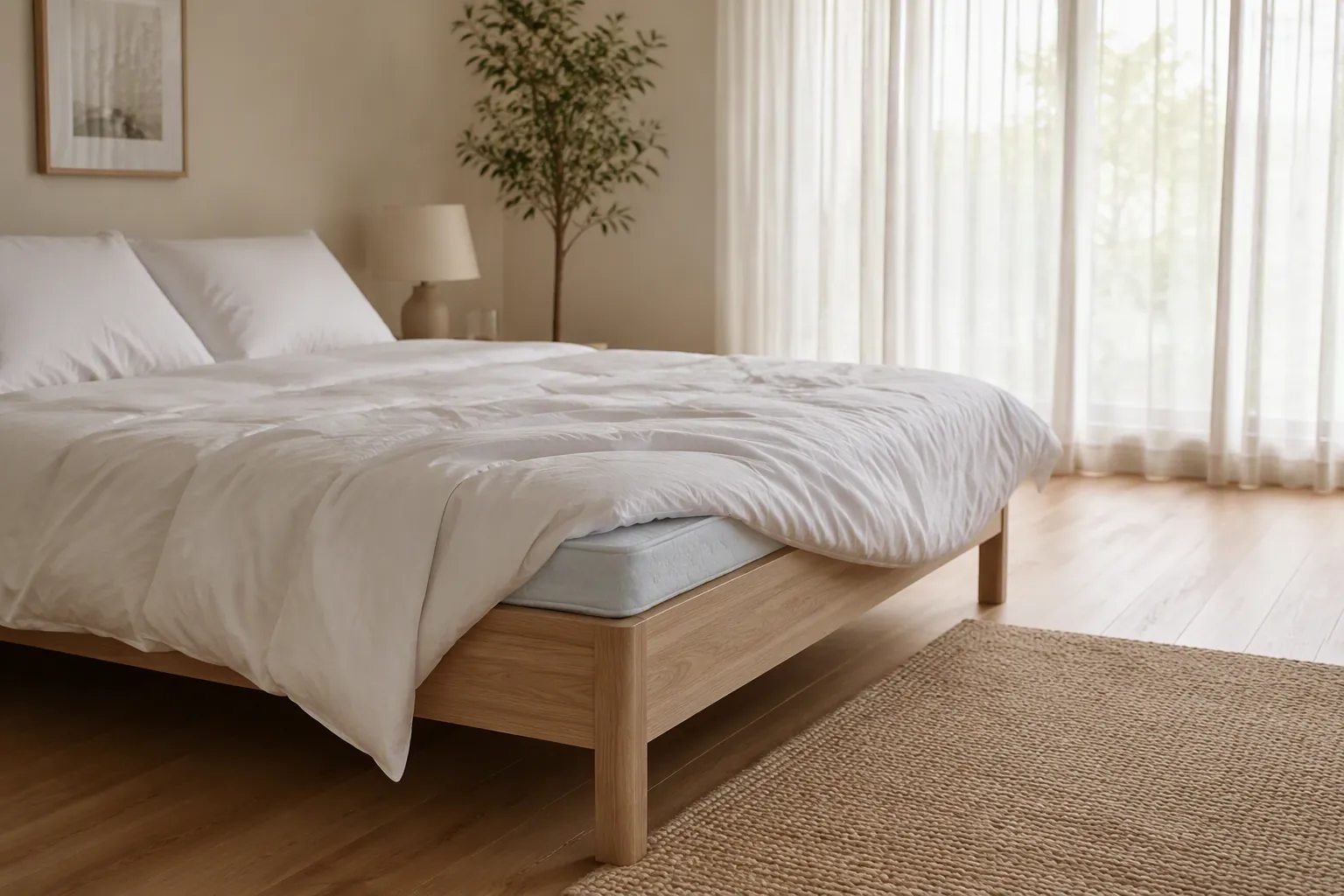
Use IKEA’s Six Sleep Essentials as a Room Checklist, Not a Shopping List
IKEA’s own sleep framework is useful here because it breaks the bedroom into six levers: comfort, darkness, temperature, sound, air quality, and decluttering.[2] Those are ordinary categories, but perimenopause changes their order of importance. Temperature moves to the front because it can trigger the wake-up; comfort matters because you may be repositioning more often; darkness and sound matter because a hot flash can leave you wide awake enough for small disturbances to take over.
| IKEA sleep essential | Perimenopause sleep problem it can absorb | What to look at first |
|---|---|---|
| Temperature | Hot flashes, night sweats, a narrower comfort range | Cooling mattress pad, breathable duvet, pillow surface, blinds that reduce heat gain |
| Comfort | Pressure, joint sensitivity, neck and shoulder tension, repeated repositioning | Mattress support, topper feel, ergonomic pillow |
| Darkness | Early waking and alertness after night sweats | Blackout blinds or curtains, especially on sun-exposed windows |
| Sound | Difficulty falling back asleep after a hot flash | Soft furnishings, rugs, curtains, door gaps, consistent background sound if helpful |
| Air quality | Stuffy rooms, heat-trapping bedding, poor ventilation | Washable textiles, less dust, breathable layers, air movement |
| Decluttering | Mental activation after waking | Clear bedside area, fewer visual tasks waiting for you at night |
This is the useful way to think about IKEA: not as a miracle aisle, and not as a full-room makeover you have to buy in one weekend. It gives you modular places to intervene before you escalate to a specialty mattress, a whole-room cooling system, or a medical appointment.
Temperature Comes First Because Hot Flashes Steal Real Sleep Time
The reason to prioritize cooling is not aesthetics. In a laboratory study of perimenopausal women, nocturnal hot flashes accounted for an average of 27% of objective wake-after-sleep-onset time, and 69% of hot flash events coincided with awakenings.[3] That does not mean every woman loses exactly that amount of sleep to hot flashes; individual patterns vary. It does mean temperature is not just one decor preference among many.
IKEA’s U.S. better-sleep guide recommends an ideal bedroom temperature of 60–62°F.[4] That sits at the cooler end of the broader 60–67°F range commonly recommended for sleep environments, and it makes practical sense for a body that has become less forgiving of small heat shifts. If you are dealing with summer nights, poor insulation, or a bedroom that holds heat after sunset, the deeper cooling strategies in how to sleep in extreme heat with perimenopause night sweats may be more relevant than bedding changes alone.
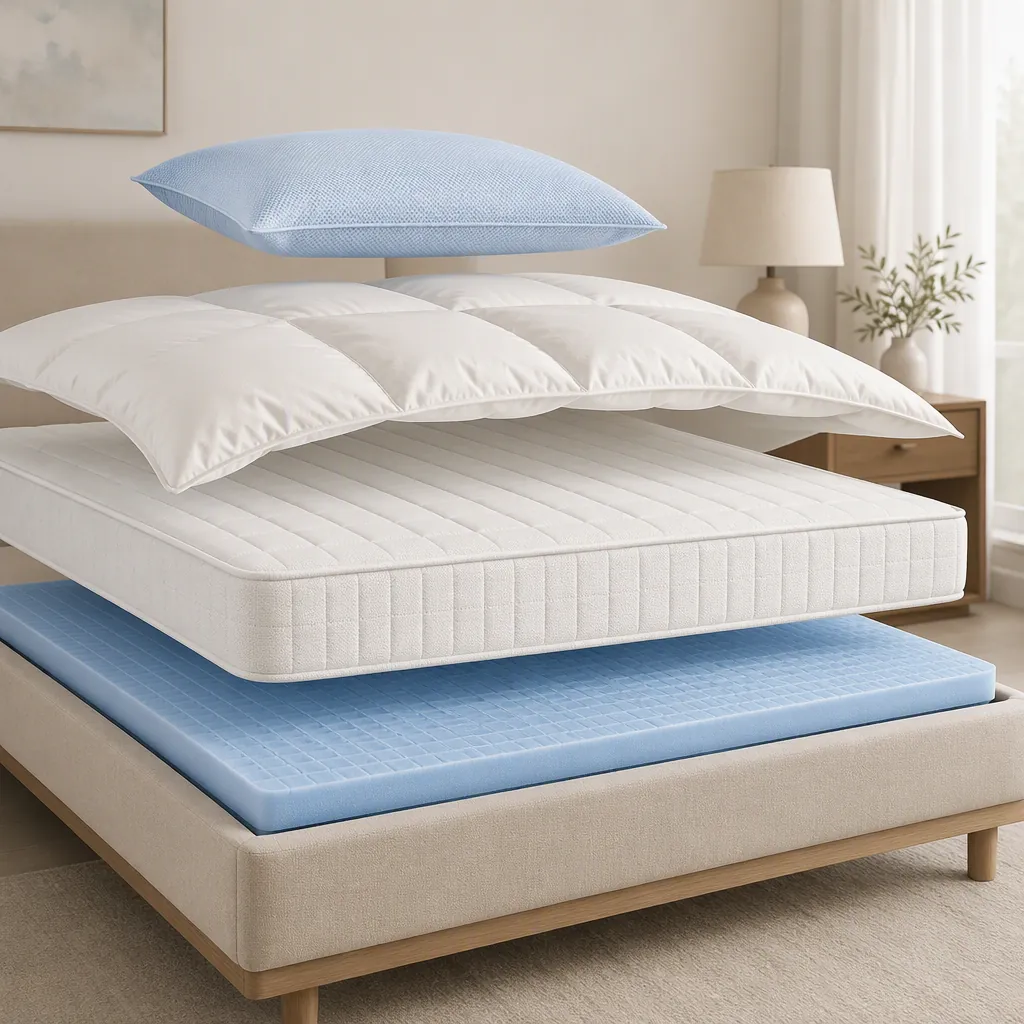
The practical mistake is cooling only the air while leaving the bed itself built like a heat pocket. A perimenopause-friendly IKEA setup should cool in layers: window, room, mattress surface, duvet, and pillow. Each layer gets a chance to prevent heat buildup before your body has to fight it.
Start With the Window Before You Blame the Mattress
Blackout blinds are usually sold as a darkness fix. In a perimenopause bedroom, they are also heat management. A sunny room can bank heat all afternoon and hand it back to you at midnight. If your bedroom faces west or gets strong afternoon sun, closing blackout blinds before the room heats up can matter as much as closing them at bedtime.
IKEA options such as blackout roller blinds or room-darkening curtains are worth considering first in hot rooms because they are cheaper and less disruptive than replacing a mattress. The buying criterion is not only whether they block light. Look at whether they cover the full window, reduce side gaps, and can be used earlier in the day without making the room awkward to live in.
Then Fix the Bed Surface
If the room is reasonably cool but the mattress surface feels warm, the problem may be heat trapped under your body. A cooling mattress pad is the less drastic test before a new mattress. IKEA has sold cooling-oriented mattress pads such as NÄSTABERG in some markets, with product language outside the U.S. describing a cooling layer that is most active during the first part of the night. Because IKEA product names, materials, and availability change by country, check the current IKEA U.S. listing before treating that claim as applicable to the version in your local store.
That timing matters. Many people notice the first wave of heat as they are trying to fall asleep or shortly after, when the bed has warmed around them. A pad that buys you a cooler entry into sleep will not treat vasomotor symptoms, but it may reduce the amount of heat your body has to dump into the mattress at the worst moment.
If the mattress itself is old, sagging, or consistently heat-retentive, then it may be time to compare IKEA’s cooling-oriented mattresses. ÅBROTTEN has been identified in mattress reviews as IKEA’s dedicated cooling foam model, with a cooling top layer over high-resilience foam.[5][6] Do not buy it only because “cooling” appears in the description. Lie on it long enough to notice whether your hips, shoulders, and lower back are supported, because a cooler surface that creates pressure pain will simply trade one awakening for another.
Make the Duvet Easy to Escape
A heavy duvet can feel comforting at 10 p.m. and punishing at 2 a.m. For perimenopause, the better IKEA duvet is often the one that gives warmth without trapping too much humidity and can be shifted off quickly without dragging the whole bed apart. Look for lighter warmth ratings, breathable fills, and covers that wash easily after night sweats.
If you share a bed, two twin duvets can be less glamorous and more effective than one compromise duvet. One person can sleep warm, the other can vent fast, and nobody has to negotiate bedding at 3 a.m.
Do Not Ignore the Pillow
The pillow is a small heat source that sits against your face, neck, and hair all night. IKEA’s KVARNVEN ergonomic pillow is worth a look because it combines support foam with a cooling fabric side. That combination matters for midlife sleep because a hot flash may wake you, but neck tension can keep you awake after the heat passes.
Choose pillow height by sleep position, not by the strongest cooling claim. A side sleeper usually needs more loft than a back sleeper; a stomach sleeper often needs less. If the pillow tips your neck out of alignment, the cooling surface will not compensate for the strain.
Comfort Is the Second Priority Because Awakenings Multiply Pressure
Once hot flashes start waking you, the bed has to pass a harder test. You are no longer judging comfort only at bedtime. You are judging it at 1:40 a.m., after you have thrown off the duvet, cooled down, and tried to settle again without noticing every shoulder, hip, and lower-back complaint.
This is where mattress comfort deserves more respect than most quick cooling articles give it. A too-firm surface can make repositioning feel necessary; a too-soft surface can make turning over harder; a worn mattress can keep pulling you back into the same hot depression. IKEA’s mattress range makes it possible to test firmness without jumping straight to premium specialty pricing, but the practical test is simple: can you change positions without bracing, and do your pressure points quiet down within a few minutes?
If the mattress is mostly fine, a topper or pad can be the more sensible intervention. If it is sagging, unsupportive, or making pain worse, a cooling pad is a patch on the wrong problem. Perimenopause can explain why sleep became lighter and hotter; it does not make an exhausted mattress suddenly adequate.
Darkness Helps Most After the Hot Flash Has Already Won
Darkness will not stop a vasomotor event. It can, however, reduce the number of things that keep your brain switched on after one. If you wake overheated and then catch light from a streetlamp, hallway, charger, or early sunrise, the room starts giving your nervous system instructions you did not ask for.
IKEA’s sleep materials identify darkness as one of the six essentials, and the brand’s better-sleep guidance puts the bedroom environment alongside habits rather than treating sleep as pure willpower.[2][4] For perimenopause, blackout blinds, lined curtains, and dimmable bedside lighting are less about creating a hotel mood than protecting the return-to-sleep window.
- Use blackout blinds or curtains on windows that bring in streetlight, sunrise, or afternoon heat.
- Keep a low, warm bedside light available so a sheet change does not become a full-brightness event.
- Move bright chargers, clocks, and device lights out of direct view from the pillow.
Sound, Air, and Clutter Are Smaller Levers, But They Still Matter
Sound becomes more intrusive when sleep is already fragmented. IKEA cannot change a snoring partner, traffic pattern, or upstairs neighbor, but soft textiles can reduce sharp room echo. Curtains, rugs, upholstered storage, and fabric panels are not medical interventions; they are ways of making a post-hot-flash bedroom less alerting.
Air quality deserves the same plain treatment. A room that smells stale, holds dust, or traps humidity will feel worse after sweating. Washable duvet covers, pillow protectors, mattress protectors, and fewer dust-catching surfaces can make the bed easier to reset. If you do not have air conditioning, the advice changes; use heat-wave sleep strategies for perimenopause without AC before spending heavily on bedding that cannot overcome a hot, sealed room.
Decluttering sounds cosmetic until you are awake and annoyed. The chair piled with clothes, the basket waiting to be folded, the stack of returns by the door: none of these causes a hot flash, but all of them can give a wakeful brain somewhere to go. IKEA storage is useful when it removes decisions from the night. A clear bedside surface, a place for damp sleepwear, and a spare pillowcase within reach are more relevant than a perfectly styled room.
A Sensible IKEA Order of Operations
Do not replace everything at once. Vasomotor symptoms can last long enough that the bedroom needs sustainable changes, not a panic purchase; in the SWAN study, the median total duration of frequent vasomotor symptoms was 7.4 years.[7] That argues for patient layering: change the most biologically relevant parts first, then see what remains.
- Cool the room and block heat gain: thermostat, blackout blinds, curtains, and daytime window management.
- Cool the bed surface: mattress pad or cooling-oriented mattress only after checking whether the existing mattress still supports you.
- Lighten and simplify bedding: breathable duvet, washable covers, and separate duvets if bed-sharing causes heat conflict.
- Fix the pillow: cooling surface plus neck support, chosen by sleep position.
- Protect return-to-sleep conditions: darkness, softer sound, cleaner air, and fewer visual reminders of unfinished tasks.
If you want the biology behind why heat now wakes you faster than it used to, this explanation of heatwaves and perimenopause sleep goes deeper into estrogen decline and thermoregulation. The short version for shopping is enough for now: give your body more ways to shed heat before it has to wake you up to do it.
When a Bedroom Makeover Is Not Enough
Environmental changes can make the room less punishing. They do not diagnose night sweats, treat persistent insomnia, or replace care when symptoms do not fit the usual pattern. If sleep does not improve after 4–6 weeks of consistent changes, or if sweating comes with unexplained weight loss, fever, or drenching sweats unrelated to room temperature, it is time to talk with a clinician.
There is also a second problem that can remain after the room improves: conditioned wakefulness. If your brain has learned that the bed is where you sweat, worry, check the clock, and brace for another bad night, cooling the bed may help but not fully reset the pattern. That is where cognitive behavioral therapy for insomnia can be useful; CBT-I for perimenopause sleep during heat events explains that path in more detail.
The calm hierarchy is this: start with temperature because hot flashes are the highest-yield disruptor, then layer comfort, darkness, sound, air quality, and decluttering according to your room and budget. An IKEA bedroom makeover can make a temperature-sensitive body less likely to be cornered by its own bed. It does not have to pretend to be more than that to be worth doing.
References
- Sleep and Sleep Disorders in the Menopausal Transition, Sleep Medicine Clinics, 2018, link
- 6 sleep essentials for better sleep, IKEA, 2024, link
- Nocturnal hot flashes are associated with nocturnal awakenings in perimenopausal women, Fertility and Sterility, 2014, link
- 7 steps to better sleep, IKEA U.S., link
- IKEA ÅBROTTEN Mattress Review, Sleepopolis, link
- IKEA ÅBROTTEN Mattress Review, Dorm Therapy, link
- Duration of Menopausal Vasomotor Symptoms Over the Menopause Transition, JAMA Internal Medicine, 2015, link
Explore the mechanism
Next step
Spot an error or have clinical feedback?
Because this article covers clinical, medication, or safety information, we use a moderated correction channel instead of open public comments. Let us know if something about “Beat Perimenopause Night Sweats with These IKEA Sleep Tips” needs a closer look.
Send feedback on this article