
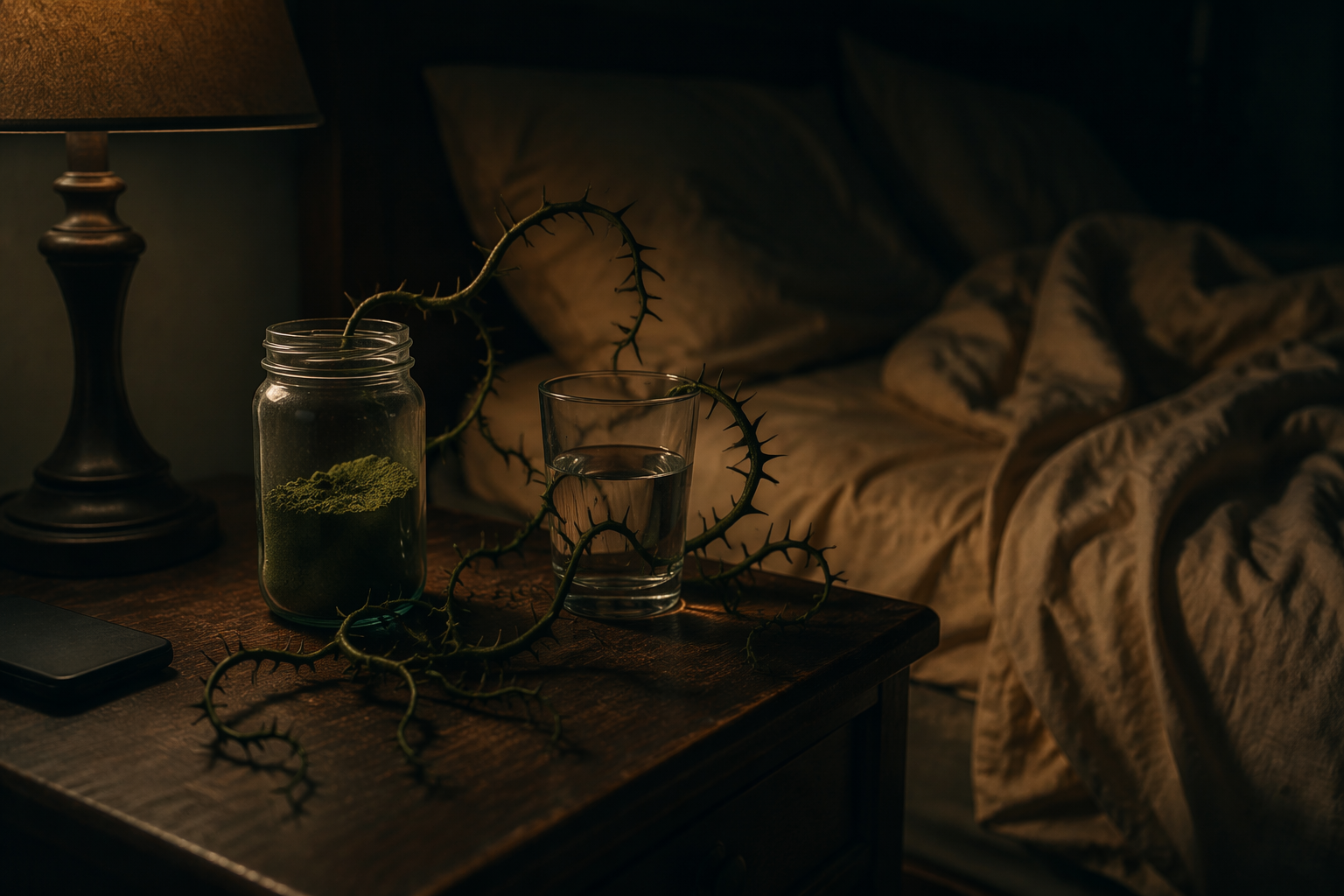
When insomnia gets stubborn, kratom can look like the kind of natural workaround that feels gentler than another prescription. Mun et al.'s 2025 ecological momentary assessment is the first peer-reviewed sleep-specific study to show a signal: among regular users, bedtime kratom was associated with about 13 extra minutes of sleep and a 5.93-point improvement in sleep quality on a 100-point scale [1].
The small sleep signal
That result deserves attention, but not more than it can carry. The sample was self-selected, 91% White, well educated, and recruited through kratom-engaged online communities; 93% had used kratom for more than a year, and bedtime use occurred on only 23.4% of days even in that experienced group [1]. In other words, this is a narrow picture of regular users, not a clean test of what a new user hoping for sleep tonight would experience.
The same paper also leaves a practical gap that matters more than the average score suggests: a modest observational benefit in a familiar user base is not the same thing as a durable sleep treatment. If the question is whether kratom is a safe sleep aid for a sleep-distressed person making a one-time decision, the study does not answer that.
Where the benefit stops helping
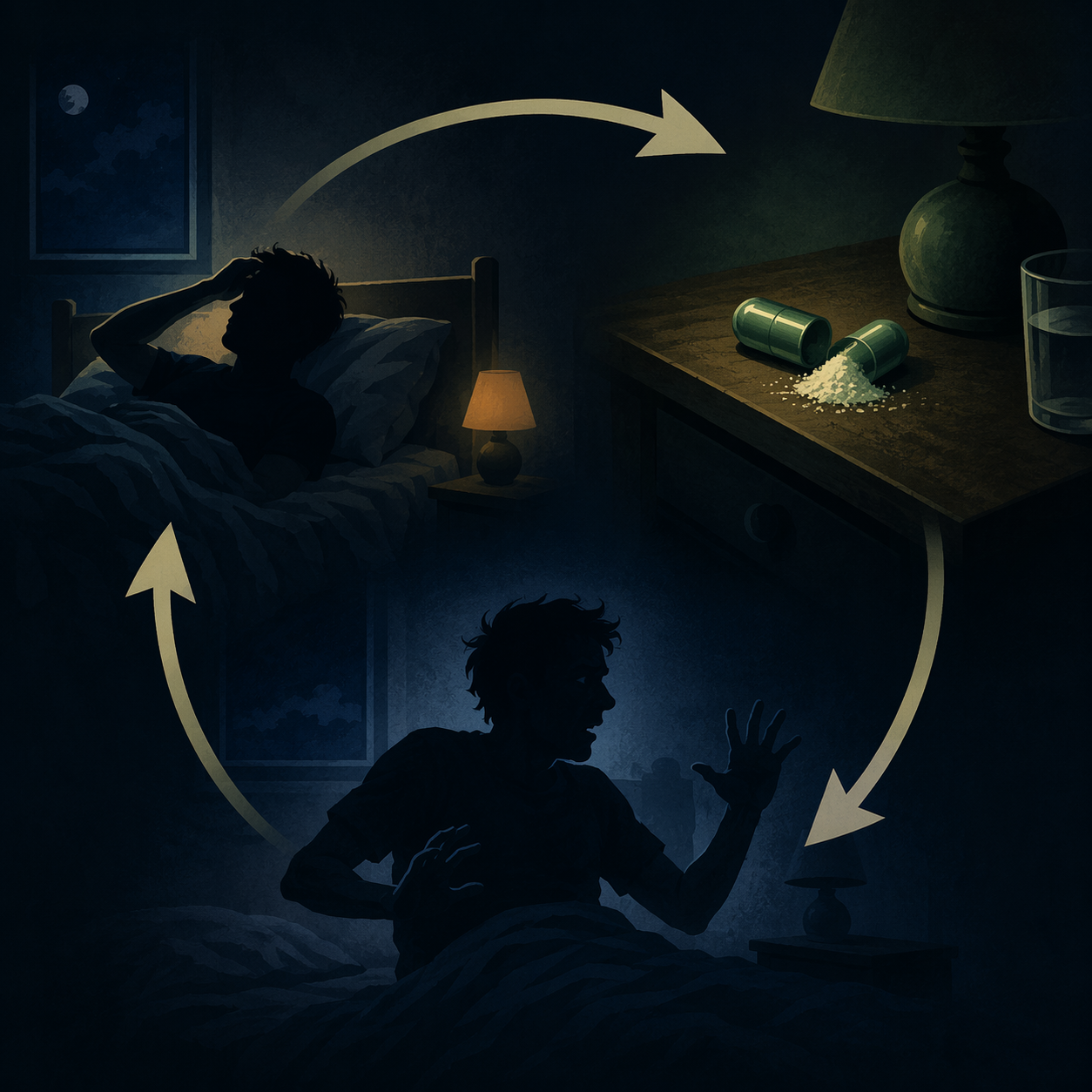
The biggest problem is that the sleep signal sits inside a use pattern that can turn on itself. A 2018 study on kratom cessation found that sleep problems, including insomnia, are core withdrawal symptoms [4]. If a substance is used to get through the night and then leaves sleep worse when it wears off, the next dose starts to function like a repair for the problem it helped create.
That cycle is made more unstable by the product market itself. Investigators testing a single bottle of MIT45 Super K Extra Strong found 367 mg of mitragynine, which they said was equivalent to more than 70 capsules, with no dosing instructions on the label; the Tampa Bay Times investigation also documented 46 kratom-only deaths in Florida over a decade [3]. A sleep aid with that kind of variability is not really a sleep aid in the ordinary sense.
The current market is even less comforting. CDC poison-center surveillance reported 3,434 kratom-related calls in 2025, a 1,200% increase from 2015; 60% of multiple-substance exposures ended in serious outcomes, and 233 kratom-associated deaths were identified from 2015 through 2025, with 79% involving multiple substances and opioids present in 62% of fatalities [2]. The surge coincided with the emergence of semisynthetic 7-hydroxymitragynine products, the kind that researchers have described as "legal morphine" [2][3].
Why the category is misleading
FDA has warned that kratom is unsafe and ineffective and says 7-OH can be up to 13 times more potent at mu-opioid receptors than morphine [5]. The agency has also warned about contamination concerns, including heavy metals and salmonella [5]. That matters because the words "natural" and "plant-based" do not fix undefined dosing, wildly variable potency, or the interaction risk that comes with opioid-like activity. For someone already desperate for sleep, the real danger is not just an extreme overdose story; it is the quieter pattern of dependence, mixed-substance harm, and withdrawal insomnia that keeps dragging the night back into the same problem.
So the fair answer to kratom sleep aid dangers is straightforward: a small observational sleep signal in a narrow group of regular users does not outweigh withdrawal insomnia, unstable potency, contamination concerns, interaction risk, and a rapidly escalating poison-center burden. For readers already vulnerable to insomnia or mixing substances, evidence-based insomnia care and safer sleep-aid options fit better.
References
- Is Bedtime Use of Kratom (Mitragyna Speciosa) a Sleep Aid or Disruptor? - PMC - 2025
- Kratom-Related Calls to Poison Centers - CDC MMWR - March 2026
- Deadly Dose - Tampa Bay Times - 2023
- Severity of Pain and Sleep Problems during Kratom Cessation - PubMed - 2018
- FDA and Kratom - FDA


Comments
Join the discussion with an anonymous comment.