
What the recall is actually about
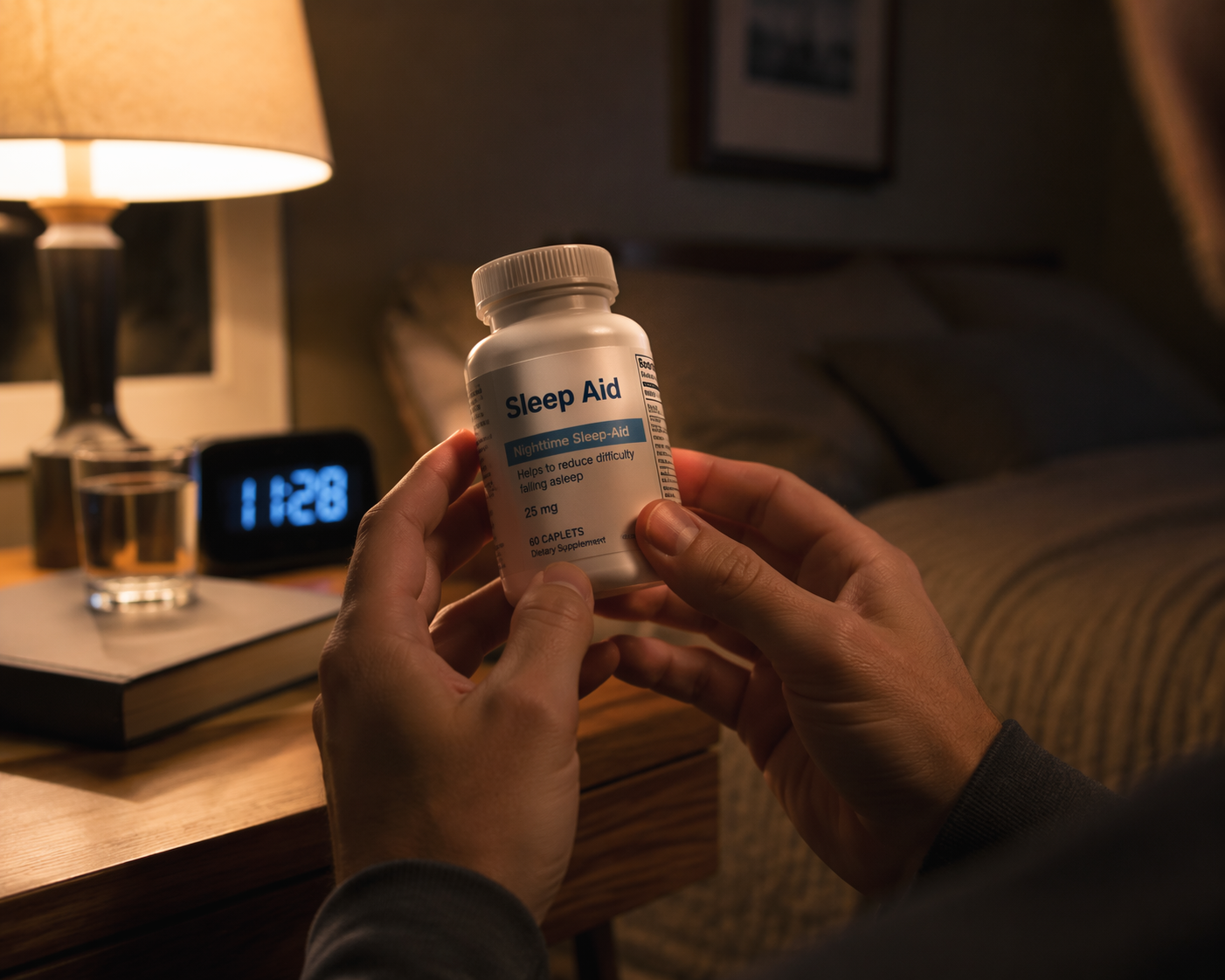
If you took a diphenhydramine sleep aid and are checking yourself for recall symptoms, pause there. The recent Unisom SleepMinis and SleepMelts recalls were about nitrosamine impurities in specific lots, not about a feeling you can notice in your body; the Benadryl Liquid Elixir recall was different again, because the problem was non-child-resistant packaging rather than a contaminated medicine [1][2].
How to verify your bottle
The only check that matters is the label: product name, manufacturer, and lot number. Reported Unisom SleepMinis lots included 22L603, 378999, and N02114; SleepMelts lots included 252807, 252808, 372560, 489576, and 493447, with more than 180,000 packages involved in that recall [1]. Because recall postings can change, use the FDA recall listing, not a social media screenshot, if you need the most current lot information.
- Find the exact product name and dosage form on the bottle and carton.
- Find the lot number and expiration date on the package.
- Compare them with the FDA recall listing.
- If the lot matches, stop using it and follow the recall instructions.
If the bottle is Benadryl Liquid Elixir, treat that separately. That recall was about packaging that was not child-resistant; it raised a child-poisoning risk, but it was not the same as a nitrosamine contamination issue [2].
Symptoms that mean different things
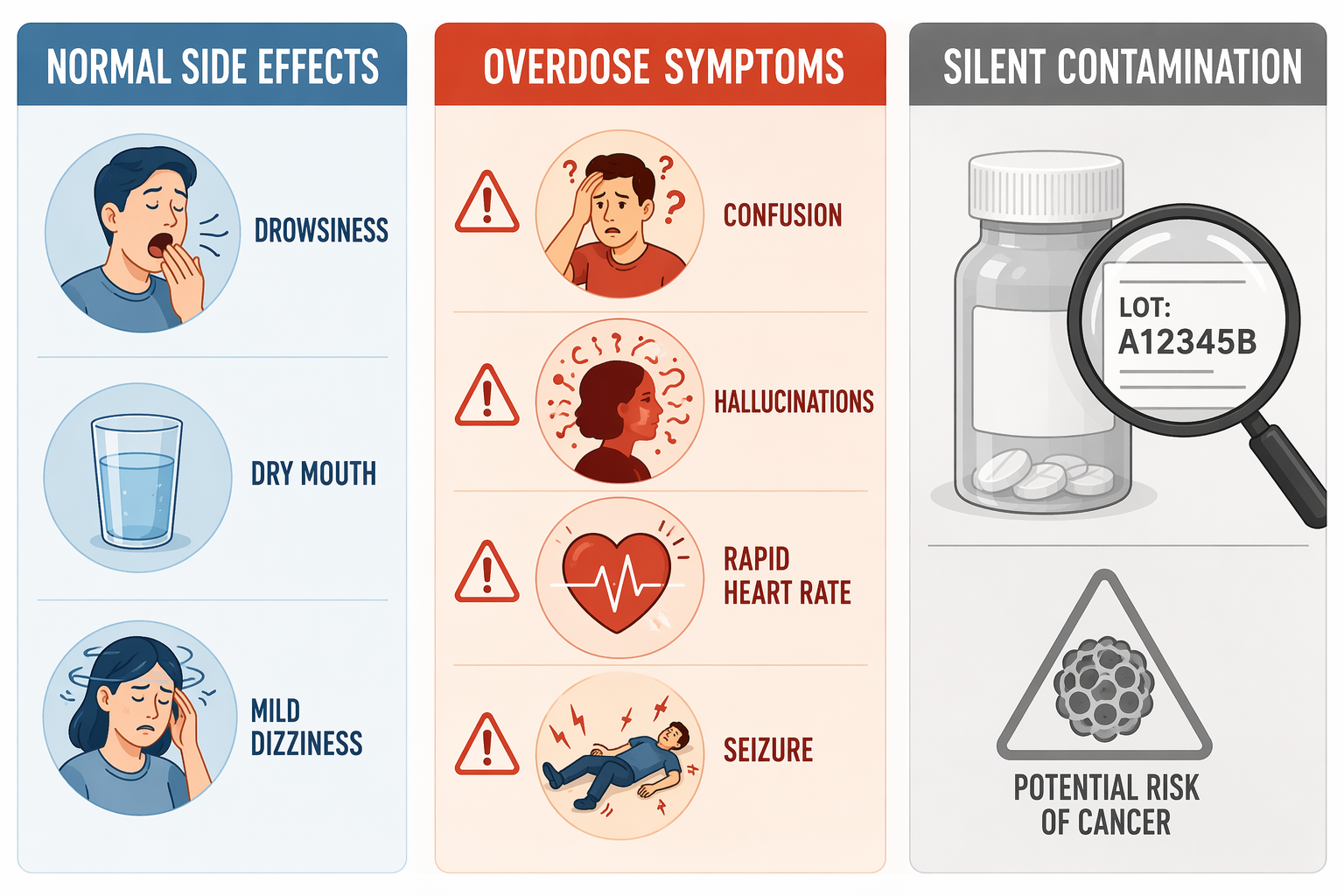
This is where headlines usually overreach. Drowsiness, dry mouth, dizziness, blurred vision, and urinary retention are ordinary diphenhydramine effects [3]. Confusion, hallucinations, rapid or irregular heartbeat, seizure, or inability to awaken are overdose signs, which need poison control or urgent medical care [4].
| What you're noticing | What it usually means | What to do |
|---|---|---|
| Sleepy, dry mouth, dizzy, blurred vision, or trouble urinating | Common diphenhydramine effects [3] | Do not drive, and do not stack it with alcohol or other sedatives. |
| Confused, hallucinating, fast or irregular heartbeat, seizure, hard to wake | Possible diphenhydramine overdose [4] | Call poison control at 1-800-222-1222 or get urgent help now. |
Those symptoms do not diagnose contamination. Nitrosamine risk is silent, so a normal dose can feel normal and a contaminated lot can also feel normal; the bottle has to be verified by lot number, not by watching your pulse or waiting for nausea to appear.
When a sleep aid stops being a good plan
Diphenhydramine can stop feeling sedating within days of regular use, which is one reason it performs poorly as a long-term insomnia solution [5]. If you are reaching for it most nights, the problem is no longer a recall headline; it is that this medicine was never a strong fit for chronic sleep trouble in the first place.
If you want a different long-term sleep plan, it helps to match the option to the actual problem instead of replacing one antihistamine bottle with another. Related guidance on morning grogginess, choosing the right sleep aid for your sleep problem, or the best adult sleep aid can help narrow that down.
What to do next
- If your exact product and lot are on the recall list, stop using it and follow the recall instructions.
- If you have confusion, hallucinations, a racing or irregular heartbeat, a seizure, or you cannot be awakened, call poison control at 1-800-222-1222 or seek urgent care now.
- If you only have the usual diphenhydramine effects, the product may simply be doing what diphenhydramine does; that is not a contamination test.
- If you want a better long-term plan, move toward a non-antihistamine option matched to the reason you cannot sleep.
References
- Drug Recalls — U.S. Food and Drug Administration
- Arsell Recalls Benadryl Liquid Elixir Because of Failure to Meet Child-Resistant Packaging Requirements — U.S. Consumer Product Safety Commission — March 2025
- Diphenhydramine (oral route) — Mayo Clinic
- Diphenhydramine — U.S. Food and Drug Administration
- Diphenhydramine for Sleep: Does It Work? — Sleep Foundation


Comments
Join the discussion with an anonymous comment.