
Kratom can feel sedating at bedtime, which is why the sleep claim persists. In a 2025 ecological momentary assessment of 357 regular users, bedtime kratom use was associated with about 13 extra minutes of sleep and a 5.93-point gain on a 0-100 self-rated quality scale [1]. That is a modest subjective benefit, not proof that sleep is actually better. The harder counterpoint is withdrawal: in Singh et al., 46% of regular users reported worsened sleep during cessation, and heavier daily use doubled the odds [2].
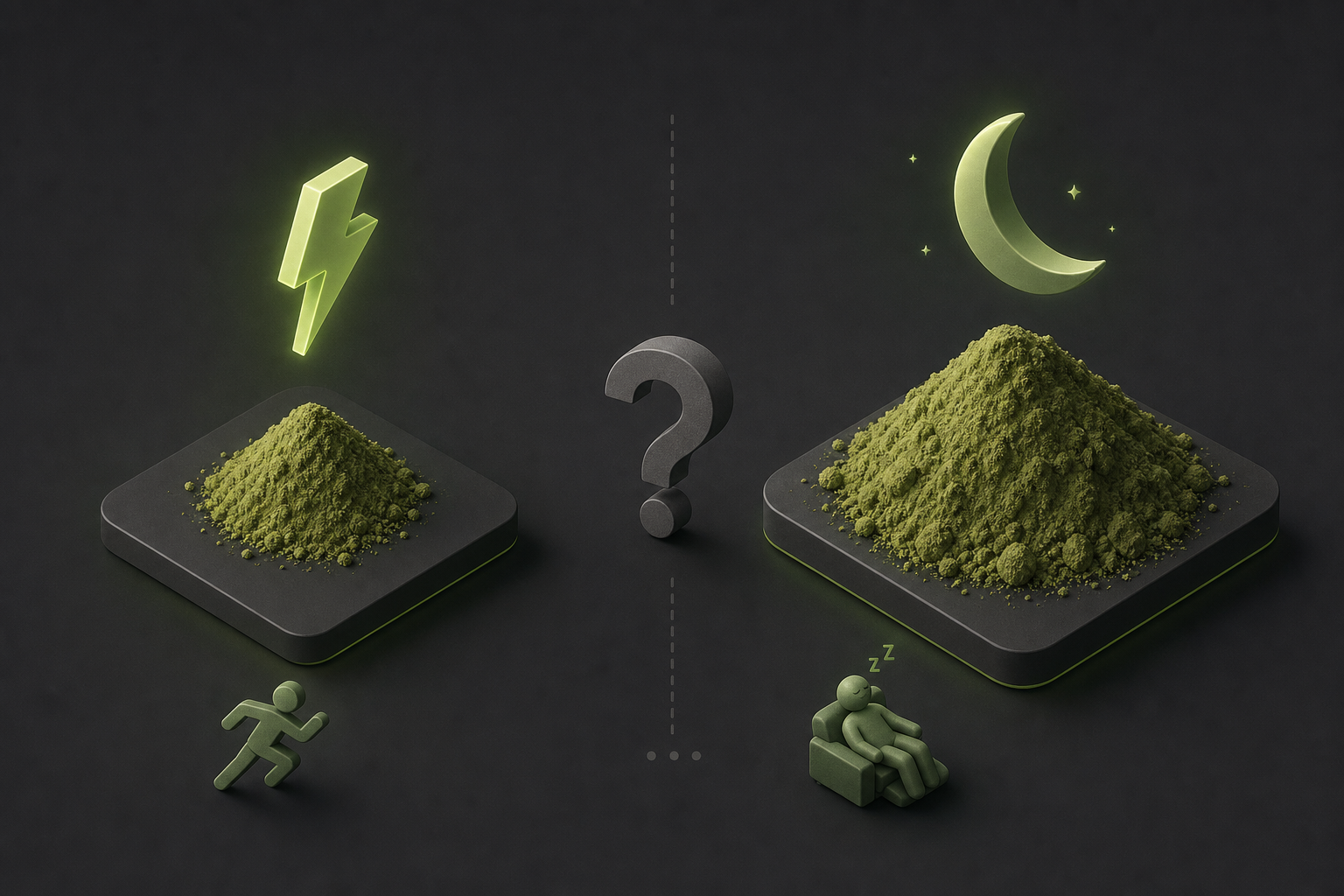
Why the bedtime effect is not a sleep solution
The appeal is understandable because kratom can feel sedating at the right dose, especially to someone who is tired, hurting, or already using it for something else. But feeling drowsy is not the same as improving sleep. The best human evidence here is still self-report from people who were already regular users, so it cannot show whether kratom improves sleep architecture, next-morning alertness, or long-term sleep continuity [1].
The dose-and-strain story breaks down quickly
The dose paradox is real: lower doses can feel more stimulating, while higher doses can feel more sedating. That is one reason the bedtime story sounds plausible at first and then turns slippery in practice. The more specific marketing claim — that a "red strain" is the sleep strain — does not hold up well, because chemical analysis has not found meaningful alkaloid differences between red, green, and white strains [3].
A few rat studies make the story more interesting, but not more convincing clinically. One found that mitragynine did not suppress REM sleep, and another suggested changes in delta or slow-wave power [4][5]. Those findings are worth noticing, but they are still animal data. Human polysomnography data are still missing, and they do not tell us whether a person falls asleep more easily, wakes fewer times, or functions better the next morning.
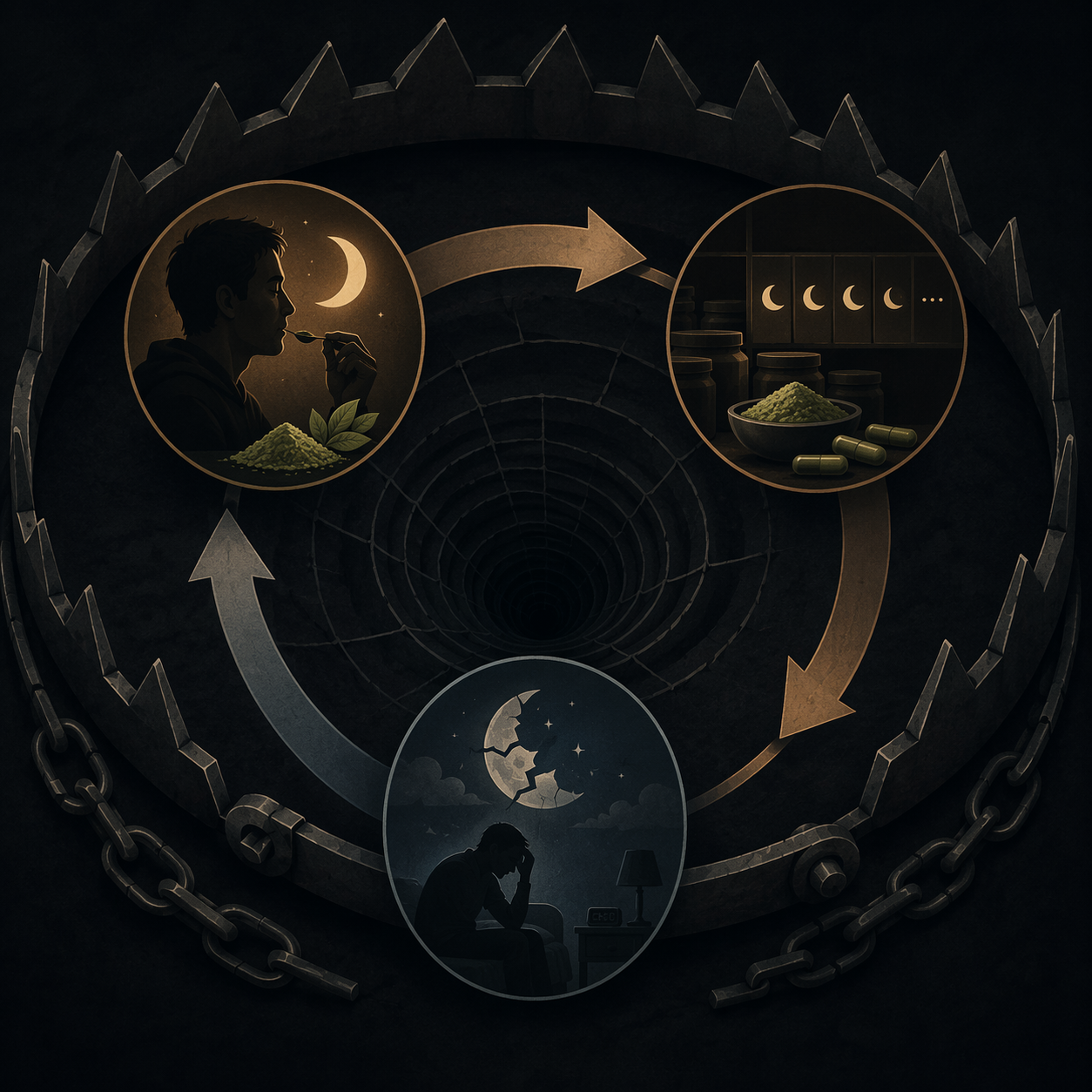
Withdrawal is where the sleep bill comes due
The part that matters most for sleep is what happens after routine use sets in. In Singh et al., 46% of regular users reported worsened sleep during cessation, and heavier daily intake was linked to about twice the odds of that problem [2]. Clinical timelines place withdrawal onset around 24 to 48 hours after the last dose, with symptoms peaking on days 2 to 5 and fading over roughly 1 to 3 weeks [8]. For someone who started kratom to sleep, that means the original complaint can get folded into a rebound pattern that is harder to ignore than the first one.
Safety issues that matter in real use
Kratom is not a stable sleep medicine. Products vary, concentrations vary, and the same amount can mean very different exposure from one product to the next. On top of that, the real-world risk profile includes contamination concerns, drug interactions, and liver toxicity [6][7]. Mayo Clinic's position is blunt: kratom is "unsafe and ineffective" [6].
Poison-control and case-report signals reinforce that risk pattern, especially when other substances are involved [7].
If sleep is the problem
If the goal is insomnia treatment, kratom is the wrong tool. Its best-documented sleep benefit is small and subjective [1], while the withdrawal insomnia pattern is common enough to change the whole equation [2][8]. The evidence-based first step for chronic insomnia is CBT-I, not an unregulated substance with unpredictable contents.
If kratom is already part of a nightly routine, or if sleep gets worse when use stops, the next move is to treat the dependence-and-sleep cycle directly rather than trying to outlast it.
References
- Is Bedtime Use of Kratom a Sleep Aid or Disruptor? — PMC
- Severity of Pain and Sleep Problems during Kratom Cessation — PubMed
- Examining the psychoactive differences between kratom strains — PubMed
- Effects of an alkaloid-rich extract from Mitragyna speciosa leaves ... on sleep profiles in rats — PubMed
- The effects of chronic mitragynine exposure on the EEG in rats — PubMed
- Kratom: Unsafe and Ineffective — Mayo Clinic
- Health Effects Associated With Kratom and Polysubstance Use — Narrative review
- Kratom Withdrawal Insomnia: Help & When to Get Care — DevotedDoc


Comments
Join the discussion with an anonymous comment.