
Perimenopause and Sleep Disruption: Causes, Symptoms, and Evidence-Based Solutions
Sleep problems affect up to 47% of perimenopausal women and are driven by four distinct biological pathways — not just night sweats. This guide explains the hormonal, circadian, and cognitive mechanisms behind perimenopause sleep disruption, identifies associated sleep disorders including underdiagnosed OSA, and presents an evidence-graded treatment hierarchy from CBT-I through hormone therapy and non-hormonal options.
What Perimenopause Sleep Disruption Actually Feels Like
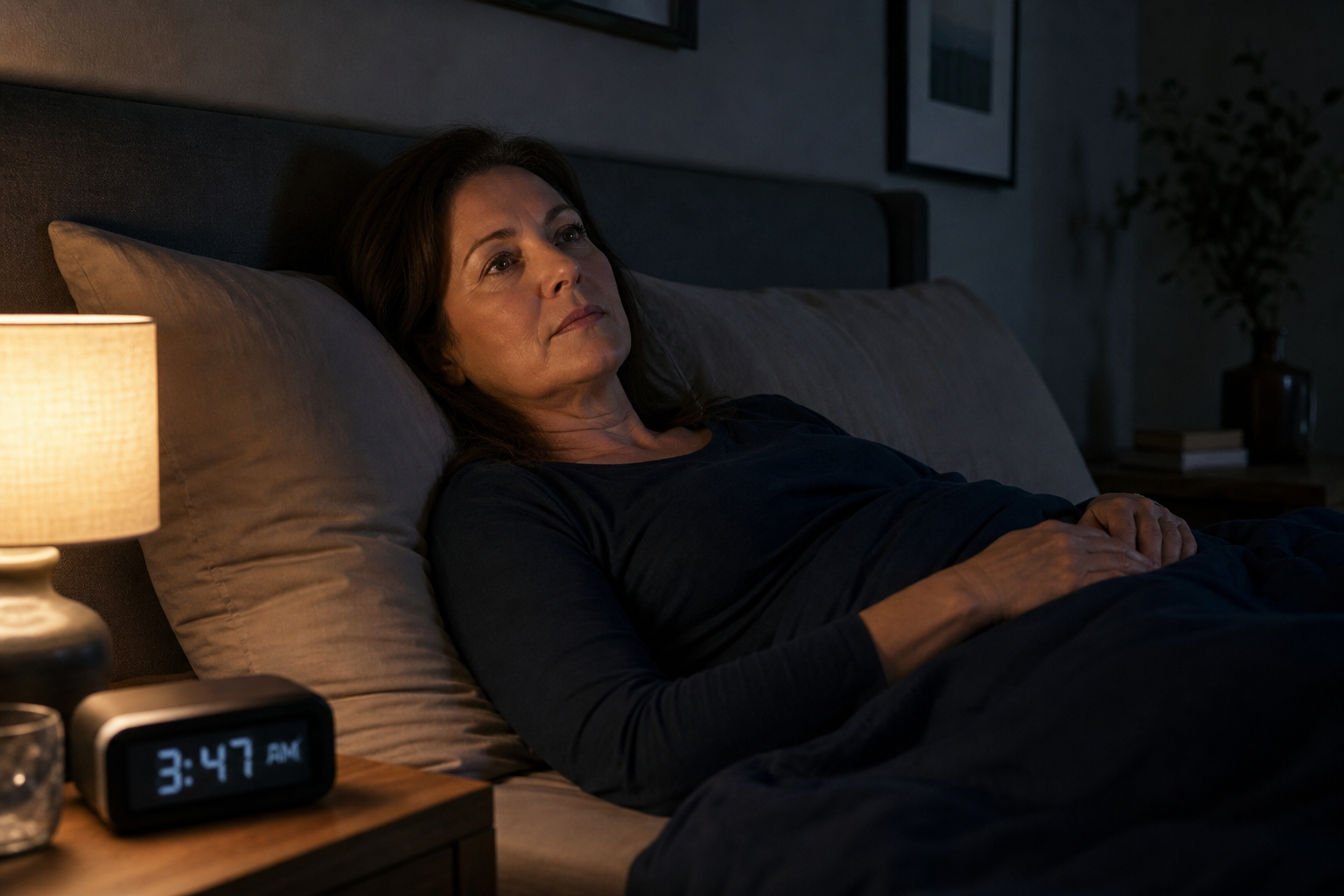
The sleep problem often starts subtly. You fall asleep without difficulty, then wake at 2 or 3 AM and lie there, mind active, unable to return to sleep for an hour or more. Or you notice that sleep feels lighter than it used to — more fragmented, less restorative — even on nights without obvious night sweats. Some women experience difficulty falling asleep in the first place. Others wake earlier than intended and cannot drift back.
These patterns — difficulty initiating sleep, frequent nocturnal awakenings, early morning arousal, and next-day fatigue that does not resolve with caffeine — are the hallmarks of perimenopause sleep disruption. They are common, they are biologically driven, and they are frequently dismissed as a normal part of aging or attributed entirely to night sweats.
The prevalence data from the Study of Women's Health Across the Nation (SWAN) makes the scale clear. Research drawing on SWAN cohort data finds that self-reported sleep difficulties affect approximately 40–47% of perimenopausal women, compared to 28–31% of premenopausal women of similar age. One analysis of over 12,600 middle-aged women found rates of 40.5–43.8% in the perimenopause group versus 31.4% in premenopausal women. This is not a small increment — it represents a meaningful increase in sleep difficulty coinciding with the menopausal transition. For a baseline reference on what adequate sleep duration and quality look like in adults, see how many hours of sleep adults actually need.
What the prevalence figures do not capture is how disorienting the experience can be. Many women in their 40s have slept well their entire adult lives and have no framework for understanding why sleep has suddenly changed. The assumption — often reinforced by clinicians — is that night sweats are the cause and that managing vasomotor symptoms will fix the sleep problem. The biology is considerably more complicated than that.
Four Biological Pathways Behind the Disruption
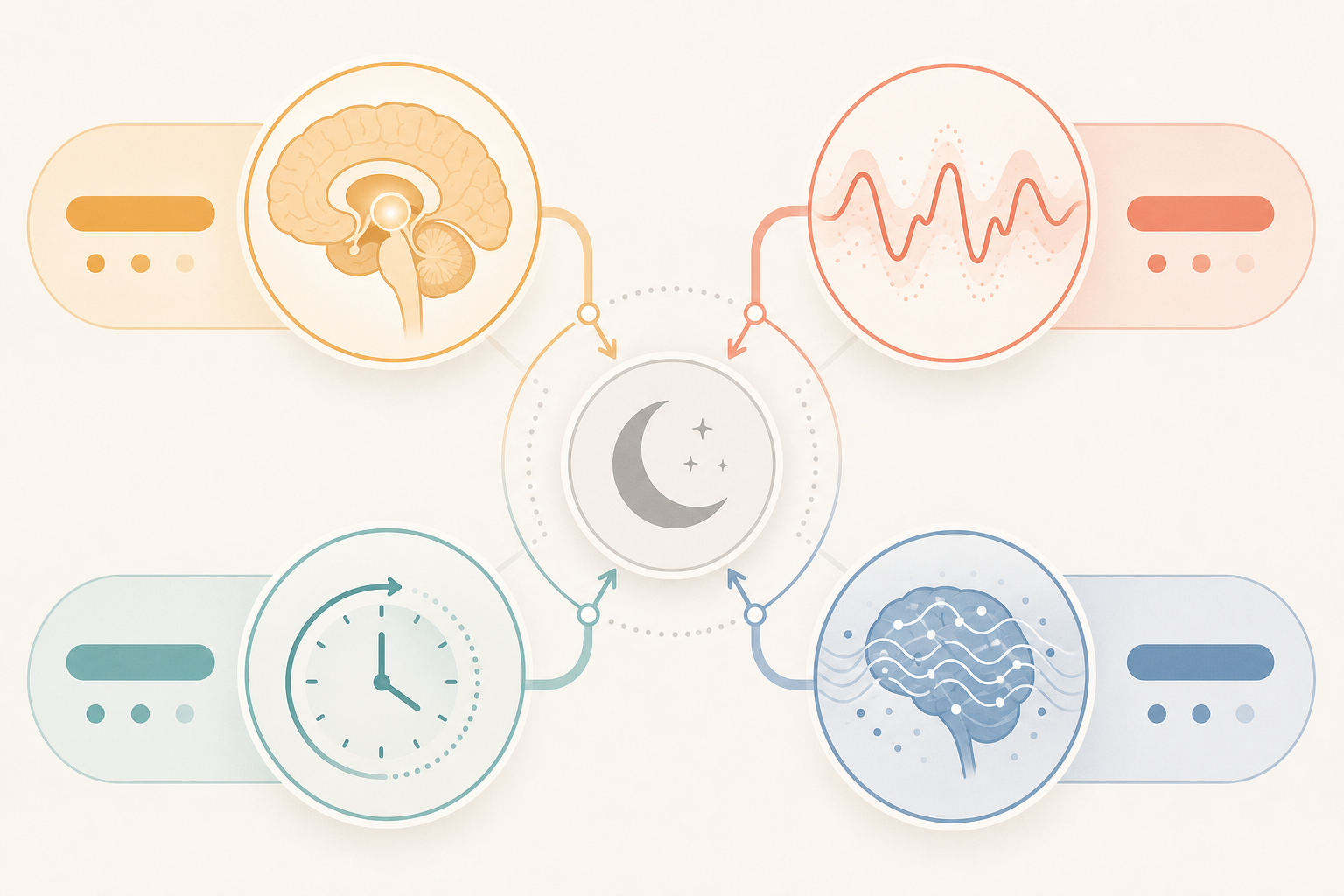
The central clinical insight driving this article is that perimenopause sleep disruption is not a single-mechanism problem. Four distinct biological pathways converge to produce it, and they can operate independently of one another. This is why treating hot flashes alone often fails to restore sleep: it addresses only one of the four pathways.
Pathway 1: Estrogen's Direct Role in Sleep-Regulating Brain Circuits
Estrogen does not just regulate reproductive function — it acts directly on the brain regions that control sleep and wakefulness. Estrogen receptors are present in the hypothalamic preoptic area (a key sleep-promoting region) and in the suprachiasmatic nucleus (the brain's master circadian clock). Through these sites, estrogen inhibits the wake-promoting neurotransmitters: acetylcholine, histamine, noradrenaline, serotonin, orexin, and dopamine. The net effect is to reduce sleep latency and decrease the number of nocturnal awakenings.
When estrogen declines during perimenopause, this inhibitory action weakens. Wake-promoting systems become easier to activate during the night, contributing to lighter sleep and more frequent awakenings. Critically, research suggests it is the dynamics of estrogen fluctuation — the irregular rises and falls characteristic of the menopausal transition — rather than simply the absolute hormone level that most strongly correlates with sleep disruption. Stable low estrogen in postmenopause is associated with less disruption than the erratic fluctuations of perimenopause, which helps explain why sleep problems are often most severe during the transition itself.
Pathway 2: Progesterone and the Loss of Endogenous Sedative Drive
Progesterone has a neuroactive metabolite called allopregnanolone, which binds to GABA-A receptors — the same receptors targeted by benzodiazepines and many sedative medications. This gives allopregnanolone sedative, anxiolytic, and hypnotic properties. In other words, progesterone contributes to endogenous sleep drive through a mechanism that is pharmacologically similar to how sleep medications work.
As progesterone declines during perimenopause, this natural GABA-A–mediated sedative drive is progressively removed. Research has found a negative correlation between allopregnanolone levels and sleep disorders in midlife women — lower allopregnanolone is associated with more sleep difficulty, independent of vasomotor symptoms. Sleep initiation becomes harder, and the sleep that does occur is lighter and more easily disrupted.
Pathway 3: Circadian System Weakening
The circadian system — the 24-hour biological clock that regulates sleep timing, hormone release, and body temperature — weakens during the menopausal transition in several measurable ways.
- Melatonin amplitude dampens, meaning the nighttime peak of melatonin — which signals the brain that it is time to sleep — becomes blunted.
- Circadian EEG power variation blunts: the normal 24-hour variation in brain wave spectral power flattens, reducing the clear distinction between sleep-promoting and wake-promoting phases of the day.
- Circadian phase advances: the internal clock shifts earlier, causing the sleep window to shift forward. Women may feel sleepy earlier in the evening but then wake earlier in the morning — often 4 or 5 AM — and cannot return to sleep.
These circadian changes are relevant to treatment selection. Interventions that target the circadian system — timed light exposure, melatonin at specific times — address this pathway specifically. They do not address the hormonal or hyperarousal pathways. For a deeper explanation of how sleep stages and circadian timing interact, see sleep architecture: NREM and REM stages explained.
Pathway 4: The Mood and Cognitive Hyperarousal Cascade
The fourth pathway is the most important for understanding why treating hot flashes alone does not fix the sleep problem for many women. SWAN EEG data and subsequent research have documented elevated NREM beta-power — a marker of cortical hyperarousal during sleep — in menopausal women. This is measurable even after statistically controlling for vasomotor symptoms. In other words, the brain remains in a more wake-like state during sleep regardless of whether hot flashes are occurring.
One mechanism driving this hyperarousal is the decline of estrogen's inhibitory effect on GABAergic tone, which increases cortical excitability. Another is the emergence of pre-sleep cognitive activity (PSCA) — the pattern of rumination, worry, and intrusive thoughts that prevents normal deactivation of wake-promoting neural networks at bedtime. Research characterizes this as a tripartite model of sleep vulnerability: hormonal withdrawal, circadian misalignment, and persistent mental overactivity interact to sustain hyperarousal and produce the wake-like brain dynamics characteristic of menopausal insomnia.
Depression adds a further amplifying effect. The Frontiers in Neurology 2025 meta-analysis of nearly 90,000 subjects found that depression carried an odds ratio of 2.73 for sleep disorders in perimenopausal women — the highest of any single risk factor examined. Hot flashes carried an OR of 2.70. Both are significant, but neither is the sole driver, and mood-related hyperarousal operates through mechanisms that vasomotor treatments do not address.
Sleep Disorders That Emerge or Worsen During Perimenopause
Perimenopause does not just worsen general sleep quality — it increases the risk of specific, diagnosable sleep disorders that require targeted treatment. Three are particularly important to recognize.
Clinical Insomnia
Not all perimenopause sleep difficulty meets the threshold for a clinical insomnia diagnosis, but a substantial proportion does. Under DSM-5 and ICSD-3 criteria, chronic insomnia requires sleep difficulty occurring at least three nights per week for at least three months, producing meaningful daytime impairment, despite adequate sleep opportunity. Research applying these formal criteria to perimenopausal populations finds that approximately 26% qualify for a chronic insomnia diagnosis — a rate substantially higher than in premenopausal women.
This distinction matters because clinical insomnia is a diagnosable condition with an evidence-based first-line treatment (CBT-I), not simply a symptom to be managed with sleep hygiene tips or supplements. Women whose sleep difficulty meets these criteria deserve the same diagnostic rigor and treatment access as any other insomnia patient.
Obstructive Sleep Apnea: The Underdiagnosed Risk
Obstructive sleep apnea (OSA) in perimenopausal and postmenopausal women is significantly underrecognized — and this matters clinically because OSA and insomnia require separate treatments. Hormone therapy does not treat OSA. CBT-I does not treat OSA. If a woman has both, both need to be identified and addressed.
The risk increase is substantial. Research documents approximately a threefold difference in OSA prevalence between premenopausal and postmenopausal women. One proposed mechanism is that declining estrogen and progesterone levels weaken upper airway muscle tone, increasing the risk of airway collapse during sleep. Additionally, the apnea-hypopnea index increases by approximately 4% for every additional year since entering the menopausal transition — meaning OSA risk compounds over time.
The underdiagnosis problem is well-documented. Among people in the general population who present with symptoms of sleep-disordered breathing, women are significantly less likely to receive a diagnosis than men — 25% versus 14% in comparable populations in one Swedish study cited in peer-reviewed literature. Women are also less likely to receive treatment once diagnosed.
Part of the problem is that women's OSA often presents differently from the classic male pattern. Loud snoring and witnessed apneas are less common. Instead, women more frequently report non-refreshing sleep, frequent nocturnal awakenings, morning headaches, and fatigue — symptoms that overlap substantially with both insomnia and perimenopause in general. This overlap makes OSA easy to miss if a clinician is not specifically looking for it.
Restless Legs Syndrome and Periodic Limb Movement Disorder
Restless legs syndrome (RLS) and periodic limb movement disorder (PLMD) both show elevated risk during the menopausal transition, likely related to hormonal effects on dopamine and iron metabolism. Because the existing site article covers RLS and perimenopause insomnia in depth — including the estrogen-dopamine-ferritin pathway and treatment options — this article does not replicate that content. The key point here is that RLS and PLMD are separate diagnoses from insomnia and OSA, require separate evaluation, and should be considered when leg discomfort or involuntary movements are part of the sleep disruption picture.
| Sleep Disorder | Risk in Perimenopause | Key Distinguishing Feature | Requires Separate Treatment from Insomnia? |
|---|---|---|---|
| Clinical Insomnia | ~26% meet formal criteria (DSM-5/ICSD-3) | Difficulty falling or staying asleep ≥3 nights/week for ≥3 months with daytime impairment | Yes — first-line is CBT-I |
| Obstructive Sleep Apnea | ~3× increase across menopausal transition | Non-refreshing sleep, multiple brief awakenings, snoring, morning headaches | Yes — OSA and insomnia need separate treatment |
| Restless Legs Syndrome / PLMD | Elevated risk; estrogen-dopamine pathway | Uncomfortable leg sensations at rest, urge to move, worse in evening | Yes — see dedicated RLS article |
First-Line Treatment: CBT-I and What the Evidence Shows
Cognitive behavioral therapy for insomnia (CBT-I) is the first-line treatment for chronic insomnia in perimenopausal women — not a lifestyle suggestion, not an adjunct to medication, but the primary recommended intervention with the strongest evidence base. This positioning is consistent with AASM and ACP guidelines and is supported by multiple RCTs specifically in menopausal populations.
The evidence is specific and worth naming. A 2018 MsFLASH pooled analysis of four RCTs demonstrated that CBT-I reduced insomnia symptoms and improved sleep quality more than pharmacological interventions in healthy middle-aged women with insomnia and moderate vasomotor symptoms. A separate RCT by McCurry and colleagues found that telephone-delivered CBT-I produced insomnia remission in approximately 70% of peri- and postmenopausal women — a remission rate comparable to what CBT-I achieves in general adult insomnia populations.
In May 2026, The Menopause Society published a pilot RCT confirming that CBT-I produces meaningful short-term improvements in insomnia severity, hot flash interference, sleep self-efficacy, and depressive symptoms in perimenopausal and postmenopausal women. The study's findings also reinforced a point that is clinically important: sleep disturbances can persist even in women using pharmacologic therapy to manage hot flashes, and CBT-I offers benefit as a standalone treatment or adjunct regardless of vasomotor symptom status.
CBT-I is a structured multi-component treatment that typically includes stimulus control (reestablishing the bedroom as a sleep-only environment), sleep restriction (temporarily consolidating the sleep window to increase sleep drive), cognitive restructuring (addressing unhelpful beliefs about sleep), and relaxation techniques. It is delivered over 6–8 sessions, either in person, by telephone, or via validated digital platforms. The 2026 Menopause Society pilot noted that benefits did diminish after 3 months, indicating that some women may benefit from maintenance strategies or follow-up sessions.
Sleep hygiene practices — consistent sleep timing, limiting caffeine, managing light exposure — are valuable adjuncts that support CBT-I's effectiveness, but they are not substitutes for the structured behavioral components. For a foundation in those practices, see sleep hygiene fundamentals and an evidence-based bedtime routine.
Menopausal Hormone Therapy: What It Does and Does Not Do for Sleep
Menopausal hormone therapy (MHT) is an appropriate second-line consideration for women whose sleep disruption is accompanied by significant vasomotor symptoms or mood disturbance. It is not a primary sleep treatment, and the evidence for its sleep benefits is more nuanced than is often communicated.
The evidence quality distinction matters here. Multiple studies, including a meta-analysis, confirm that combined hormone therapy improves subjective sleep outcomes — women report sleeping better. However, the objective polysomnography evidence remains conflicting. Studies using PSG have not consistently shown improvements in sleep architecture, sleep efficiency, or sleep stage distribution. This gap between subjective and objective outcomes is clinically meaningful: it suggests that MHT may improve the experience of sleep (partly through reducing hot flash awakenings and improving mood) without fully normalizing the underlying sleep architecture.
When MHT is indicated, formulation and route of administration matter for both safety and sleep benefit.
| Formulation | Sleep-Relevant Mechanism | Preferred Over | Key Consideration |
|---|---|---|---|
| Transdermal estradiol | Avoids first-pass hepatic metabolism; delivers stable estradiol levels | Oral estradiol | Lower VTE risk than oral; preferred for cardiovascular safety |
| Micronized progesterone (oral, nighttime) | Binds GABA-A receptors via allopregnanolone metabolite; improves sleep onset latency; drowsiness is a documented side effect | Medroxyprogesterone acetate (MPA) | Nighttime administration recommended to use sedative effect therapeutically; MPA does not share this GABA-A mechanism |
| Oral estradiol | Effective for vasomotor symptoms and subjective sleep | — | Higher VTE risk than transdermal; not preferred when transdermal is tolerated |
A direct RCT comparing CBT-I with hormone therapy in perimenopausal women (NCT06497894, published protocol in Trials, Springer 2026) had an estimated completion date of April 2026. As of this article's publication, results have not been peer-reviewed or published. This is the first RCT designed to directly compare these two approaches; prior comparisons came from pooled observational analyses. The findings, when available, will be important for refining the treatment hierarchy.
Non-Hormonal Pharmacological Options
For women who cannot use or choose not to use hormone therapy, or whose sleep disruption persists despite MHT, several non-hormonal pharmacological options have evidence in midlife populations. Evidence quality varies by agent.
Dual Orexin Receptor Antagonists (DORAs)
DORAs — suvorexant and lemborexant — work by blocking orexin signaling, the brain's primary wake-promoting neuropeptide system. This mechanism is mechanistically well-matched to perimenopause insomnia, given that estrogen decline reduces inhibition of orexin and other wake-promoting neurotransmitters.
Suvorexant has RCT evidence in midlife women. A post-hoc analysis of a 6-month phase 3 trial found that lemborexant showed consistent improvement across all sleep diary-based outcomes in midlife women for up to 6 months. DORAs are generally preferred over z-drugs (zolpidem, eszopiclone) for this population given a more favorable side-effect profile, lower dependence risk, and absence of the next-morning impairment concerns associated with some z-drug formulations at higher doses.
Gabapentin
Gabapentin has evidence for reducing hot-flash frequency and severity, and for improving sleep in women with hot-flash-associated insomnia. It is sometimes used as a non-hormonal option when vasomotor symptoms and sleep disruption are both present and hormone therapy is contraindicated. Evidence quality is moderate; it is not a first-line sleep treatment but is a reasonable consideration in specific clinical contexts.
Low-Dose SSRIs and SNRIs
Low-dose SSRIs and SNRIs — particularly paroxetine, escitalopram, and venlafaxine — have evidence for reducing vasomotor symptoms and are sometimes used when mood comorbidity is present alongside sleep disruption. Their direct effect on sleep architecture is variable and formulation-dependent; some SSRIs can suppress REM sleep at higher doses. These agents are most appropriate when depression or anxiety is a significant contributor to the sleep problem, rather than as primary insomnia treatments.
Melatonin: A Specific and Limited Role
Melatonin has a specific and limited role in perimenopause sleep disruption — specifically for the circadian disruption component. If the primary presentation is advanced circadian phase (falling asleep too early, waking too early), dampened melatonin amplitude, or difficulty maintaining circadian entrainment, timed melatonin may provide benefit. It is not a broadly effective treatment for perimenopause insomnia overall.
The regulatory and formulation context matters. Over-the-counter melatonin in the US is classified as a dietary supplement, not an FDA-regulated drug, meaning doses and purity vary widely between products. Prescription prolonged-release melatonin formulations (approved for insomnia in patients aged 55 and older in some markets) operate under a different regulatory framework. Population-specific evidence, dosage guidance, and safety considerations by demographic are covered in detail in the melatonin for sleep: evidence, dosage, and safety by population article.
| Agent | Evidence Quality for Perimenopause Sleep | Primary Indication | Notable Consideration |
|---|---|---|---|
| CBT-I | Strong — multiple RCTs in menopausal populations | First-line for chronic insomnia | Effective regardless of vasomotor symptom status |
| MHT (transdermal estradiol + micronized progesterone) | Moderate — improves subjective sleep; PSG evidence conflicting | Insomnia with significant VMS or mood symptoms | Not indicated for sleep alone; formulation matters |
| DORAs (suvorexant, lemborexant) | Emerging — RCTs and post-hoc analyses in midlife women | Insomnia without contraindications to MHT | Preferred over z-drugs; orexin mechanism well-matched |
| Gabapentin | Moderate — for hot-flash-associated insomnia | VMS + insomnia when MHT is contraindicated | Not a first-line sleep agent; use in specific contexts |
| Low-dose SSRIs/SNRIs | Moderate — primarily for VMS and mood | Insomnia with depression or anxiety comorbidity | Variable effects on sleep architecture |
| Melatonin (OTC or prolonged-release Rx) | Limited — specific to circadian disruption component | Advanced circadian phase, early morning awakening | Not broadly effective for perimenopause insomnia; OTC vs. Rx distinction important |
When to Seek Clinical Evaluation
Self-directed approaches — sleep hygiene, behavioral changes, circadian rhythm management — are appropriate starting points for mild, recent-onset sleep disruption. But several situations warrant clinical evaluation rather than continued self-management.
- Sleep disruption is interfering with daily function — work performance, mood, concentration, relationships — and has persisted for three months or more. This meets the threshold for clinical insomnia and warrants referral to a CBT-I provider or a clinician with sleep medicine expertise.
- You suspect obstructive sleep apnea. Relevant symptoms include non-refreshing sleep despite adequate time in bed, multiple brief awakenings that feel different from insomnia (more like surfacing suddenly rather than lying awake), snoring, morning headaches, or a bed partner reporting breathing pauses. Ask specifically about OSA screening — given the documented underdiagnosis in women, you may need to raise it explicitly.
- Thyroid dysfunction or another medical cause has not been ruled out. Both hypothyroidism and hyperthyroidism can produce sleep disruption that overlaps with perimenopause symptoms. A basic thyroid panel is a reasonable part of the workup for new sleep difficulty in midlife women.
- Mood symptoms are significant. If depression or anxiety is a meaningful part of the picture — not just mild sleep-related worry but persistent low mood, anhedonia, or anxiety that extends beyond bedtime — this warrants separate assessment and potentially separate treatment. Mood and sleep interact bidirectionally; treating one without the other often produces incomplete results.
- Self-directed approaches have not produced improvement after 4–6 weeks. If consistent sleep hygiene and behavioral adjustments have not moved the needle, this is a signal to seek structured CBT-I or clinical evaluation rather than continuing to try variations of the same approach.
Explore the mechanism
Next step
Spot an error or have clinical feedback?
Because this article covers clinical, medication, or safety information, we use a moderated correction channel instead of open public comments. Let us know if something about “Perimenopause and Sleep Disruption: Causes, Symptoms, and Evidence-Based Solutions” needs a closer look.
Send feedback on this article