
Restless Legs Syndrome and Perimenopause Insomnia: Causes, Symptoms, and Treatment Options
For women in perimenopause, restless legs syndrome is a biologically distinct sleep disruptor driven by estrogen fluctuations, dopamine signaling changes, and chronically low ferritin — not just general menopausal restlessness. This article explains the three-pathway mechanism behind RLS in midlife women, how it compounds hot-flash and circadian insomnia, and what the 2025 AASM treatment guidelines now recommend.
What Restless Legs Syndrome Actually Is
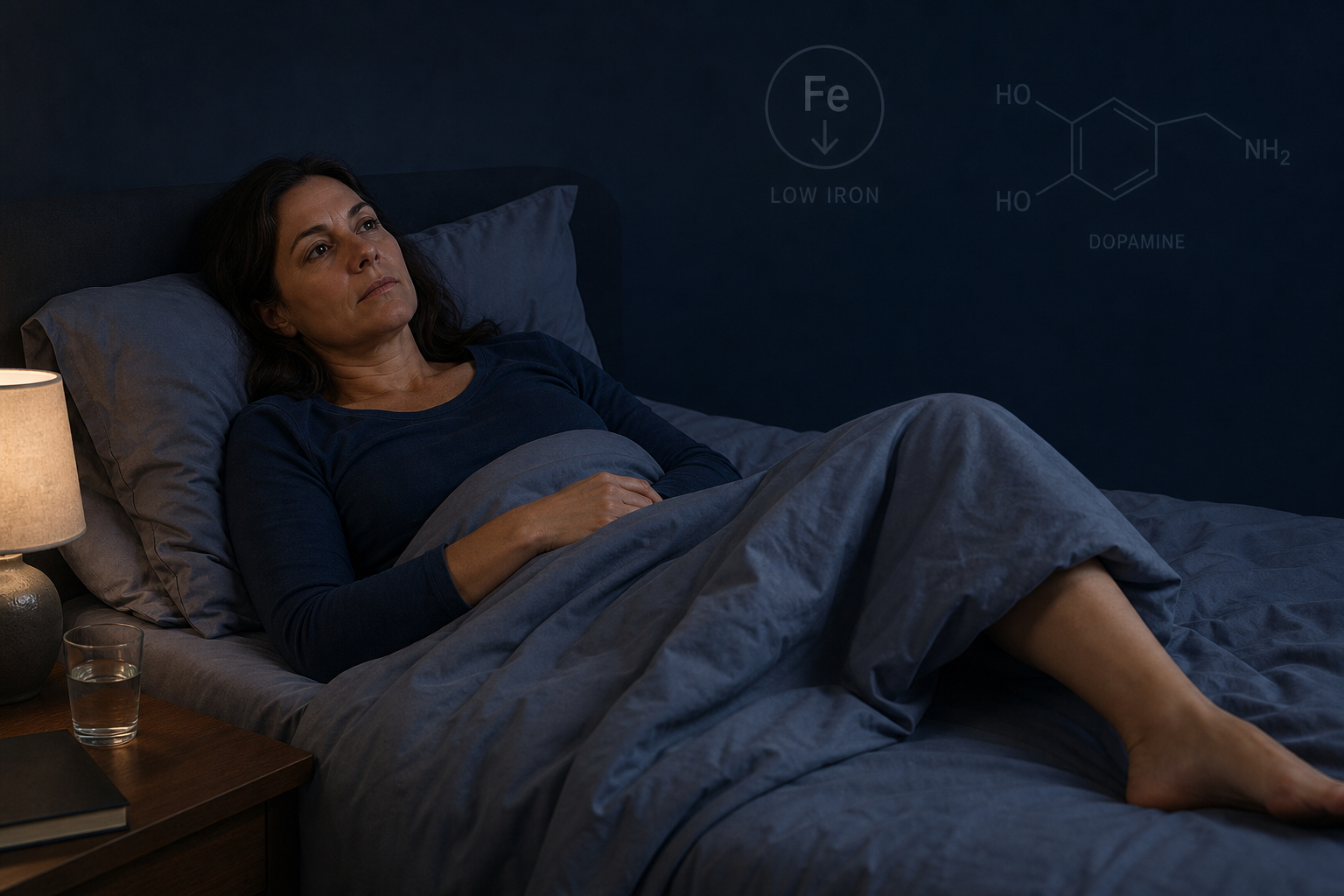
Restless legs syndrome is a neurological sensory-motor disorder, not a vague feeling of restlessness or muscle tension. The sensory experience is specific and recognizable: crawling, pulling, itching, aching, burning, throbbing, or an electric urge to move the legs — sensations that are irresistible rather than merely uncomfortable. The urge most often affects both legs equally and, in some people, extends to the arms.
The International Restless Legs Syndrome Study Group (IRLSSG) defines RLS by four core diagnostic criteria, all of which must be present:
- A strong, often irresistible urge to move the legs, usually accompanied by uncomfortable sensations.
- Symptoms begin or worsen during periods of rest or inactivity — sitting, lying down, or trying to fall asleep.
- Symptoms are partially or temporarily relieved by movement such as walking, stretching, or pacing.
- Symptoms are worse in the evening or at night than during the day, or occur only at night.
A fifth criterion — that symptoms cannot be explained solely by another medical or behavioral condition — is also applied clinically to rule out mimics.
How RLS Differs from PLMD, Leg Cramps, and Akathisia
RLS is frequently confused with several other conditions, and the distinctions matter for both diagnosis and treatment.
| Condition | Key Feature | Timing | Relieved by Movement? |
|---|---|---|---|
| RLS | Conscious sensory urge to move legs | Predominantly nocturnal; worsens at rest | Yes — temporarily |
| Periodic Limb Movement Disorder (PLMD) | Involuntary leg jerks during sleep; requires PSG to diagnose | Occurs during sleep; person is unaware | N/A — movement is involuntary |
| Leg cramps | Sudden painful muscle contraction | Any time; often nocturnal | Stretching helps; not the same relief pattern |
| Akathisia | Inner restlessness, often medication-induced | Worsens during the day; not nocturnal-predominant | No — movement does not relieve it |
| Peripheral neuropathy | Burning, tingling, numbness from nerve damage | Persistent; not necessarily worse at rest | No consistent pattern |
The overlap between RLS and PLMD is substantial: approximately 80% of people with RLS also have periodic limb movements during sleep. However, each condition can exist without the other. PLMD is defined by involuntary limb jerks that occur during sleep — the person is typically unaware of them — and requires polysomnography (PSG) to formally diagnose. RLS is a conscious, waking sensory experience. Treating one does not automatically resolve the other.
Prevalence: Why Perimenopausal Women Are Disproportionately Affected
RLS affects women at nearly double the rate of men. A large French population survey estimated one-year prevalence at 10.8% in women versus 5.8% in men. A mailed questionnaire study of 5,000 Swedish women found that 15.7% met criteria for RLS. General adult prevalence estimates range from 3.9% to 14.3% depending on methodology and population. Both the prevalence and severity of RLS increase during the menopausal transition — a pattern that points directly to the hormonal and metabolic changes driving it.
Why Perimenopause Triggers or Worsens RLS: Three Biological Pathways
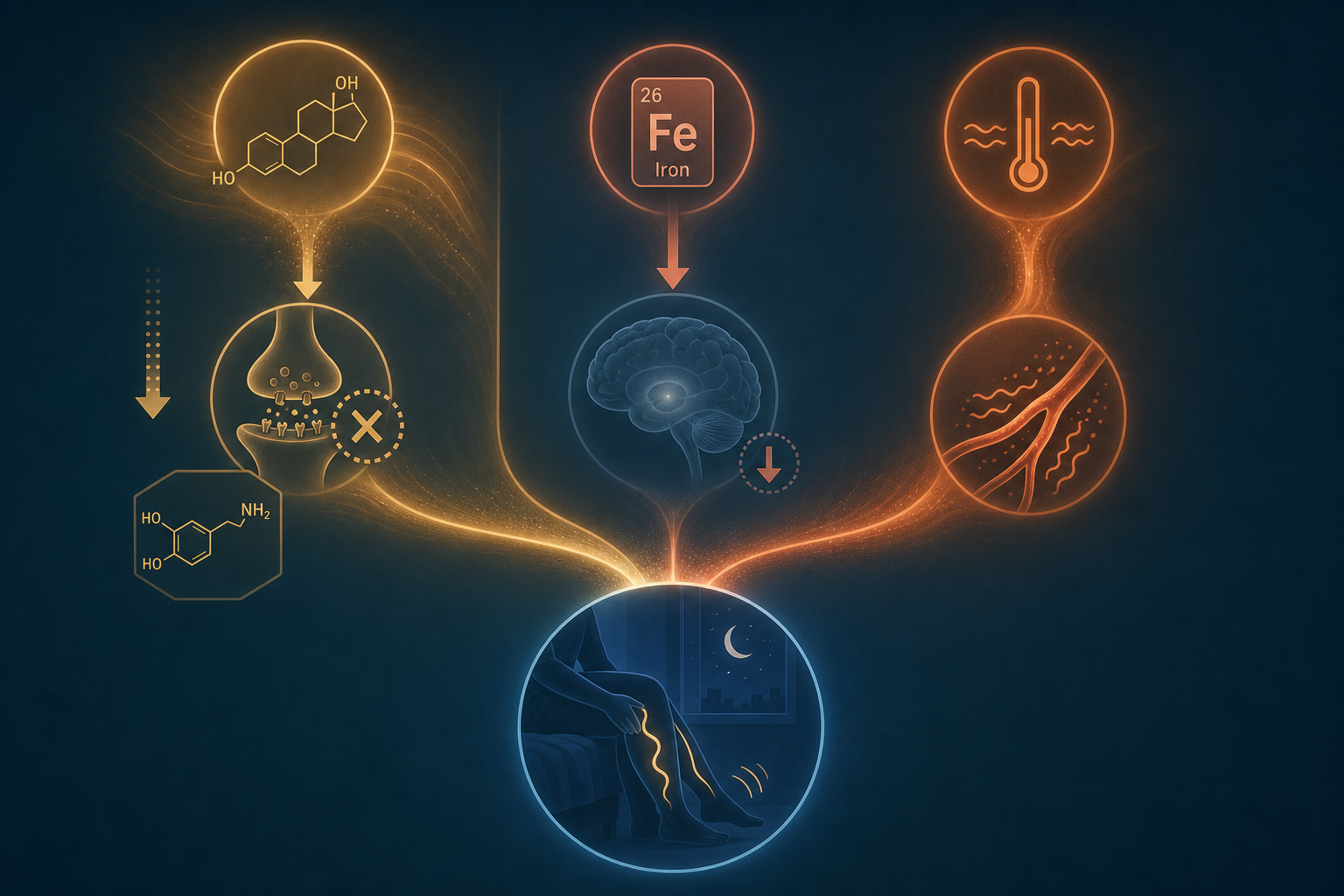
The elevated RLS burden in perimenopausal women is not coincidental. Three intersecting biological mechanisms explain why this life stage is a specific vulnerability window.
Pathway 1: Estrogen Fluctuations Disrupt Dopamine Signaling
The relationship between estrogen and RLS is not as straightforward as "low estrogen causes RLS." Current evidence suggests it is the changes in estrogen level — the fluctuations and instability — rather than the absolute hormone level that appear to precipitate RLS symptoms. Estrogen influences both dopaminergic and serotonergic systems, and the perimenopause transition is characterized by erratic hormonal swings, not a smooth linear decline.
This framing resolves an apparent paradox: RLS rates increase after menopause despite lower absolute estrogen levels. If low estrogen were the direct cause, RLS should improve post-menopause when levels stabilize at a consistently lower baseline. Instead, the instability of the perimenopausal transition appears to be the precipitating factor, with the post-menopausal period presenting its own sustained vulnerability.
Pathway 2: Low Ferritin Impairs Brain Iron — the Dopamine Cofactor Problem
Iron is a required cofactor for the enzymes that synthesize dopamine in the substantia nigra — the brain region central to RLS pathophysiology. When brain iron is insufficient, dopamine production and regulation are compromised. Low brain iron despite normal peripheral iron levels is the best-established neurobiological abnormality in RLS.
Perimenopausal women carry a specific biological disadvantage here. Years of menstrual blood loss produce chronically lower ferritin stores compared to men of the same age. These lower stores make the brain's dopaminergic system more vulnerable to the iron-deficit threshold that triggers RLS. Critically, a woman's standard blood iron panel may read as "normal" by general anemia criteria while her brain iron is functionally insufficient for dopamine synthesis — a distinction with direct clinical implications for how her RLS should be evaluated and treated.
Animal research directly supports the mechanism: adding iron to the ventral midbrain increases striatal dopamine levels, and iron deficiency alters the expression of dopamine-related genes. RLS prevalence is approximately five times higher in people with iron deficiency anemia than in the general population.
Pathway 3: Vasomotor Symptoms as Co-Disruptors
Hot flashes and night sweats are not just a separate sleep problem running in parallel with RLS — they interact with it directly. Periodic limb movements are specifically associated with vasomotor symptoms in perimenopausal and postmenopausal women. The physiological arousal triggered by a hot flash can precipitate or intensify limb movements, creating a compounding disruption pattern that neither condition alone fully explains.
How RLS Compounds Perimenopausal Insomnia
RLS does not simply make sleep uncomfortable — it actively disrupts the architecture of sleep through multiple mechanisms operating simultaneously.
Sleep-Onset Delay and Architecture Fragmentation
The movement urge intensifies at rest and at night — precisely when sleep onset requires stillness. Many women with RLS describe lying down as the moment symptoms become unbearable, forcing repeated leg movements, trips out of bed, or extended periods of wakefulness before sleep is possible. This produces significant sleep-onset delay that compounds over weeks and months into chronic sleep debt.
Once sleep is established, comorbid PLMD introduces a second disruption layer. Periodic limb movements trigger repeated micro-arousals throughout the night — brief awakenings that fragment sleep architecture across NREM and REM stages. The person may not be fully conscious of these arousals, but their cumulative effect is a night of shallow, non-restorative sleep despite adequate time in bed.
The Bidirectional Insomnia-RLS Loop
RLS and insomnia reinforce each other in a well-documented bidirectional relationship. Poor sleep quality and sleep deprivation worsen RLS symptom severity the following night; worsened RLS then produces worse sleep. Over time, this cycle can escalate both conditions independently of the original hormonal trigger.
When hot-flash awakenings are added to this picture, the result is a multi-mechanism insomnia that no single treatment addresses completely. A woman may experience sleep-onset delay from RLS, mid-night awakenings from PLMD micro-arousals, additional awakenings from hot flashes, and early-morning waking from the circadian dysregulation that declining estrogen produces — including reduced melatonin production and disrupted circadian signaling. Each mechanism requires its own targeted approach.
Medications That Aggravate RLS — A Critical Warning for Perimenopausal Women
Several medications commonly prescribed or self-administered during perimenopause are known RLS aggravators. This is one of the most clinically important — and most commonly missed — aspects of RLS management in this population.
- SSRIs and SNRIs — antidepressants frequently prescribed for mood symptoms and vasomotor symptoms during perimenopause are among the most consistently documented RLS aggravators.
- Antihistamine OTC sleep aids — products containing diphenhydramine or doxylamine, commonly reached for as a first-line sleep remedy, are known to worsen RLS symptoms. Women with RLS should avoid these products. For a detailed comparison of their mechanisms and risks, see diphenhydramine vs. doxylamine as OTC sleep aids — and note the RLS aggravation risk before using either.
- Antipsychotics and antinausea medications — dopamine-blocking agents used for nausea, psychiatric conditions, or adjunct mood management can precipitate or worsen RLS.
Getting a Diagnosis: What Evaluation Looks Like
RLS is a clinical diagnosis — there is no definitive blood test or scan that confirms it. The IRLSSG four-core criteria (described above) are the diagnostic framework. A clinician will apply these criteria, rule out mimics, and review the medication list for aggravators.
The Iron Labs That Actually Matter for RLS
Iron status evaluation is essential for anyone with RLS — and the thresholds used for RLS management differ from general anemia cutoffs. This distinction is clinically critical.
The reason these thresholds matter is mechanistic: brain iron can be functionally low for dopamine synthesis even when peripheral iron levels appear adequate. Peripheral ferritin is the best available proxy for brain iron stores, and the RLS-specific threshold of 75 ng/mL reflects the level below which brain iron availability becomes clinically relevant for dopaminergic function.
When Polysomnography Is Warranted
Most RLS diagnoses do not require a sleep study. However, polysomnography (PSG) is warranted in specific circumstances:
- When PLMD severity needs formal evaluation — to quantify how many limb movements per hour are occurring and how severely they are fragmenting sleep.
- When obstructive sleep apnea (OSA) is suspected as a co-disruptor. OSA prevalence increases during the menopausal transition, and untreated OSA both worsens RLS and independently fragments sleep. See obstructive sleep apnea: symptoms, causes, diagnosis, and treatment for evaluation criteria.
- When the clinical picture is ambiguous and other sleep disorders need to be ruled out before committing to an RLS treatment plan.
Treatment Hierarchy for Perimenopausal RLS: What the 2025 AASM Guidelines Recommend
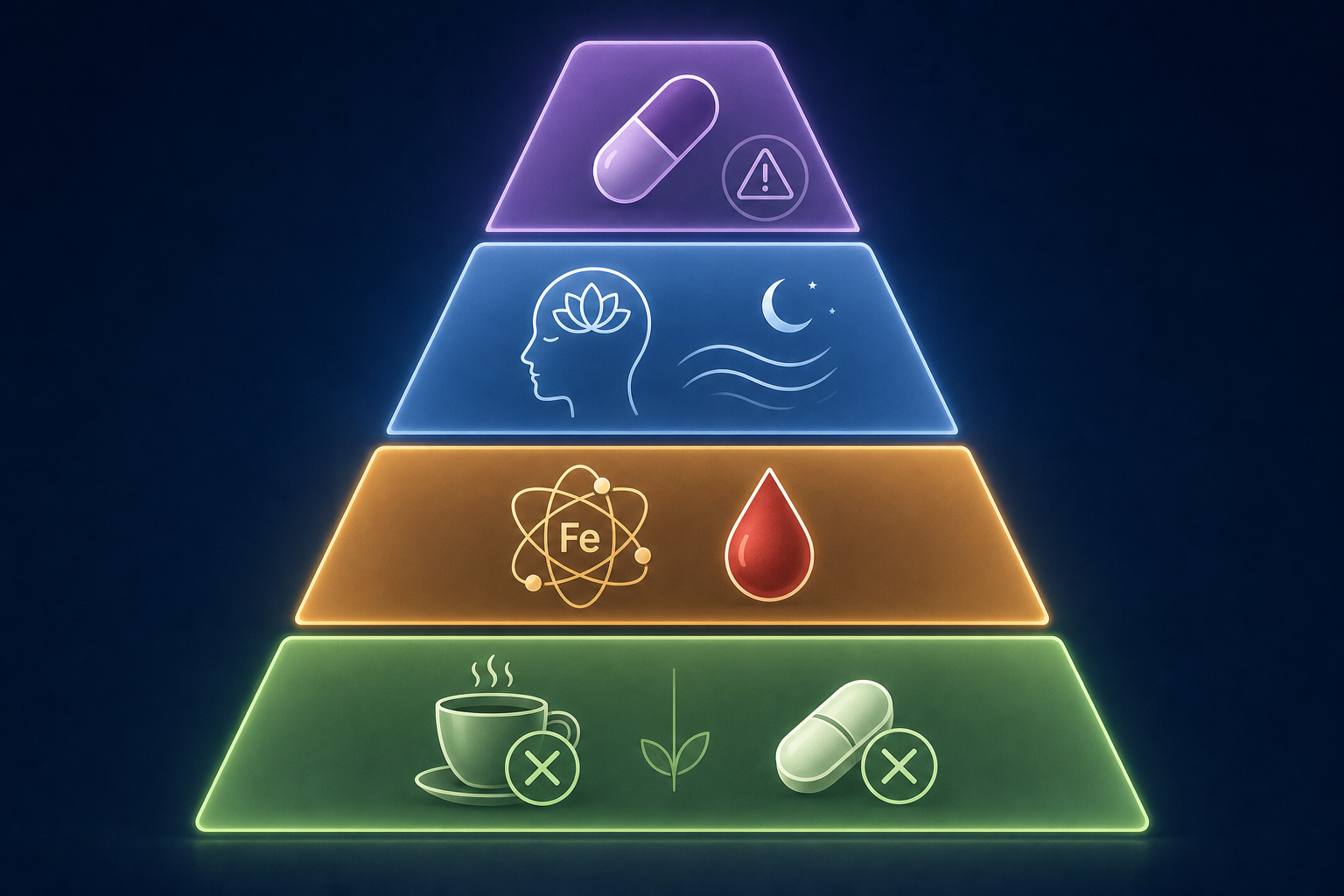
Step 1: Remove Aggravating Factors
The first step in RLS management is identifying and removing factors that worsen symptoms. This step costs nothing and, in some cases, produces substantial relief on its own.
- Reduce or eliminate caffeine and alcohol, both of which worsen RLS symptom severity.
- Review all medications for RLS aggravation potential — particularly SSRIs, SNRIs, antihistamines (including OTC sleep aids), and antinausea medications. Discuss alternatives with your prescriber.
- Evaluate for and treat untreated obstructive sleep apnea, which is an independent RLS exacerbating factor.
Step 2: Iron Evaluation and Supplementation
For any patient with RLS and ferritin below 75 ng/mL or transferrin saturation below 20%, iron supplementation is indicated. The route and formulation depend on symptom severity and clinical context.
- Oral ferrous sulfate: carries a conditional recommendation in the 2025 AASM guidelines. Appropriate as a first approach for mild-to-moderate RLS with iron deficiency. Target: ferritin ≥75 mcg/L.
- IV ferric carboxymaltose (FCM): carries a strong recommendation for adults with clinically significant RLS. A double-blind placebo-controlled trial of FCM 1,000 mg IV showed significantly reduced RLS symptoms; IV iron sucrose has not shown the same benefit, consistent with differences in macrophage uptake between formulations.
Step 3: CBT-I for the Insomnia Component
The insomnia that develops alongside RLS requires its own targeted intervention — addressing the movement disorder alone does not fully resolve the learned sleep-disruption patterns that accumulate over months of poor sleep. Cognitive behavioral therapy for insomnia (CBT-I) is the first-line treatment for the insomnia layer.
CBT-I is effective in perimenopausal women even in the presence of RLS and vasomotor symptoms. A pooled analysis of four MsFLASH randomized controlled trials found that CBT-I reduced insomnia symptoms and improved sleep quality more than pharmacological interventions in healthy middle-aged women with insomnia and moderate vasomotor symptoms. A separate RCT of peri- and postmenopausal women with insomnia and daily hot flashes found that 8 weeks of CBT-I produced greater reduction in insomnia symptoms, with improvements maintained at 6 months.
CBT-I addresses the behavioral and cognitive components of insomnia — conditioned arousal, sleep restriction, stimulus control, and sleep-related anxiety — that persist even after RLS is pharmacologically managed. For a structured overview of the full protocol, see the complete CBT-I protocol guide.
Step 4: Pharmacologic Treatment — What Has Changed
When aggravator removal, iron optimization, and behavioral treatment are insufficient, pharmacologic management is indicated. The 2025 AASM guidelines have substantially reorganized the medication hierarchy.
| Intervention | AASM 2025 Recommendation | Key Notes |
|---|---|---|
| IV ferric carboxymaltose | Strong recommendation FOR | First-line for clinically significant RLS with iron deficiency; requires IV administration |
| Oral ferrous sulfate | Conditional recommendation FOR | Appropriate initial approach; target ferritin ≥75 mcg/L |
| Gabapentin enacarbil | Strong recommendation FOR | Alpha-2-delta ligand; not associated with augmentation; preferred pharmacologic class |
| Gabapentin | Strong recommendation FOR | Alpha-2-delta ligand; not associated with augmentation |
| Pregabalin | Strong recommendation FOR | Alpha-2-delta ligand; not associated with augmentation |
| Bilateral high-frequency peroneal nerve stimulation | Conditional recommendation FOR | Non-pharmacologic device option; emerging evidence |
| Low-dose opioids (e.g., extended-release oxycodone) | Conditional recommendation FOR | Reserved for refractory cases; requires careful monitoring |
| Pramipexole (dopamine agonist) | Conditional recommendation AGAINST | Augmentation risk: gradual worsening of symptom intensity and duration over time |
| Ropinirole (dopamine agonist) | Conditional recommendation AGAINST | Augmentation risk; also associated with impulse control disorders |
| CBT-I | Recommended adjunct | First-line for insomnia component; effective in perimenopausal women with RLS |
Alpha-2-delta calcium channel ligands — gabapentin enacarbil, gabapentin, and pregabalin — are now the preferred first-line pharmacologic class. They have demonstrated sustained efficacy in reducing RLS symptom severity and improving sleep quality without the augmentation risk associated with dopaminergic agents.
What About Hormone Replacement Therapy?
HRT is a reasonable and frequently discussed option for perimenopausal symptom management, and its relationship to sleep is worth understanding precisely — because the evidence is more limited and more nuanced than its reputation in this context suggests.
On sleep broadly: combined hormone therapy improves self-reported sleep quality in perimenopausal women, but this improvement does not consistently appear on polysomnography sleep parameters. The subjective benefit appears to track closely with hot-flash reduction — when vasomotor symptoms improve, sleep feels better. The underlying sleep architecture may not have changed as substantially as the subjective experience suggests.
On RLS specifically: there is no statistical relationship between the use of hormone replacement therapy, the postmenopausal state, and RLS. HRT does not target the iron-dopamine mechanism underlying RLS. Some studies show modest sleep benefit that co-occurs with vasomotor improvement; others show no direct RLS effect. The evidence for a direct RLS effect of HRT is genuinely mixed and should not be flattened in either direction.
When to See a Sleep Medicine Specialist
Primary care evaluation is an appropriate starting point for RLS — for the initial clinical diagnosis, iron lab work, and aggravator review. A sleep medicine specialist adds value in specific circumstances, and earlier referral is better than waiting until symptoms become severe.
- Symptoms are severe enough to significantly impair daily functioning, mood, or cognitive performance — not just sleep.
- Iron supplementation and aggravator removal have not produced meaningful improvement after an adequate trial period.
- PLMD severity needs formal evaluation via polysomnography to understand how much sleep architecture fragmentation is occurring.
- Pharmacologic management is being considered — given the augmentation risks of dopamine agonists and the need for careful selection and monitoring of alpha-2-delta ligands, specialist oversight is clinically important.
- OSA is suspected as a co-disruptor — particularly relevant for perimenopausal women, in whom OSA prevalence increases and is frequently underdiagnosed.
- Symptoms have worsened over time while on a dopamine agonist — this pattern is consistent with augmentation and requires specialist reassessment of the treatment approach.
A sleep medicine specialist can also coordinate the multi-component treatment approach — iron management, CBT-I, pharmacologic selection, and OSA evaluation — that the multi-mechanism nature of perimenopausal RLS-related insomnia often requires.
Key Takeaways
- RLS affects approximately 15% of perimenopausal women — nearly double the rate in men — and the menopausal transition worsens both prevalence and severity.
- Estrogen fluctuations, not absolute estrogen levels, are the precipitant. This explains why RLS paradoxically worsens post-menopause and why HRT does not show a statistical relationship with RLS incidence.
- Iron is the dopamine cofactor. Ferritin below 75 ng/mL and transferrin saturation below 20% are the RLS-specific intervention thresholds — these differ from general anemia cutoffs, and a 'normal' iron panel may still indicate inadequate brain iron for RLS.
- The 2025 AASM guidelines are a paradigm shift: IV ferric carboxymaltose earns a strong recommendation; dopamine agonists pramipexole and ropinirole now carry conditional recommendations against due to augmentation risk; alpha-2-delta ligands (gabapentin enacarbil, gabapentin, pregabalin) are the preferred pharmacologic class.
- CBT-I is first-line for the insomnia component and is effective in perimenopausal women even with RLS present. RLS-specific treatment must address the movement disorder separately for full resolution.
- HRT provides indirect sleep benefit via hot-flash reduction only — it is not an RLS-targeted treatment and has no demonstrated direct effect on the condition.
- Common perimenopause medications aggravate RLS: SSRIs, SNRIs, and antihistamine OTC sleep aids (diphenhydramine, doxylamine) are among the most significant. Review all current medications with your clinician.
Explore the mechanism
Next step
Spot an error or have clinical feedback?
Because this article covers clinical, medication, or safety information, we use a moderated correction channel instead of open public comments. Let us know if something about “Restless Legs Syndrome and Perimenopause Insomnia: Causes, Symptoms, and Treatment Options” needs a closer look.
Send feedback on this article