
The Part Of Sleep New Parents Lose First
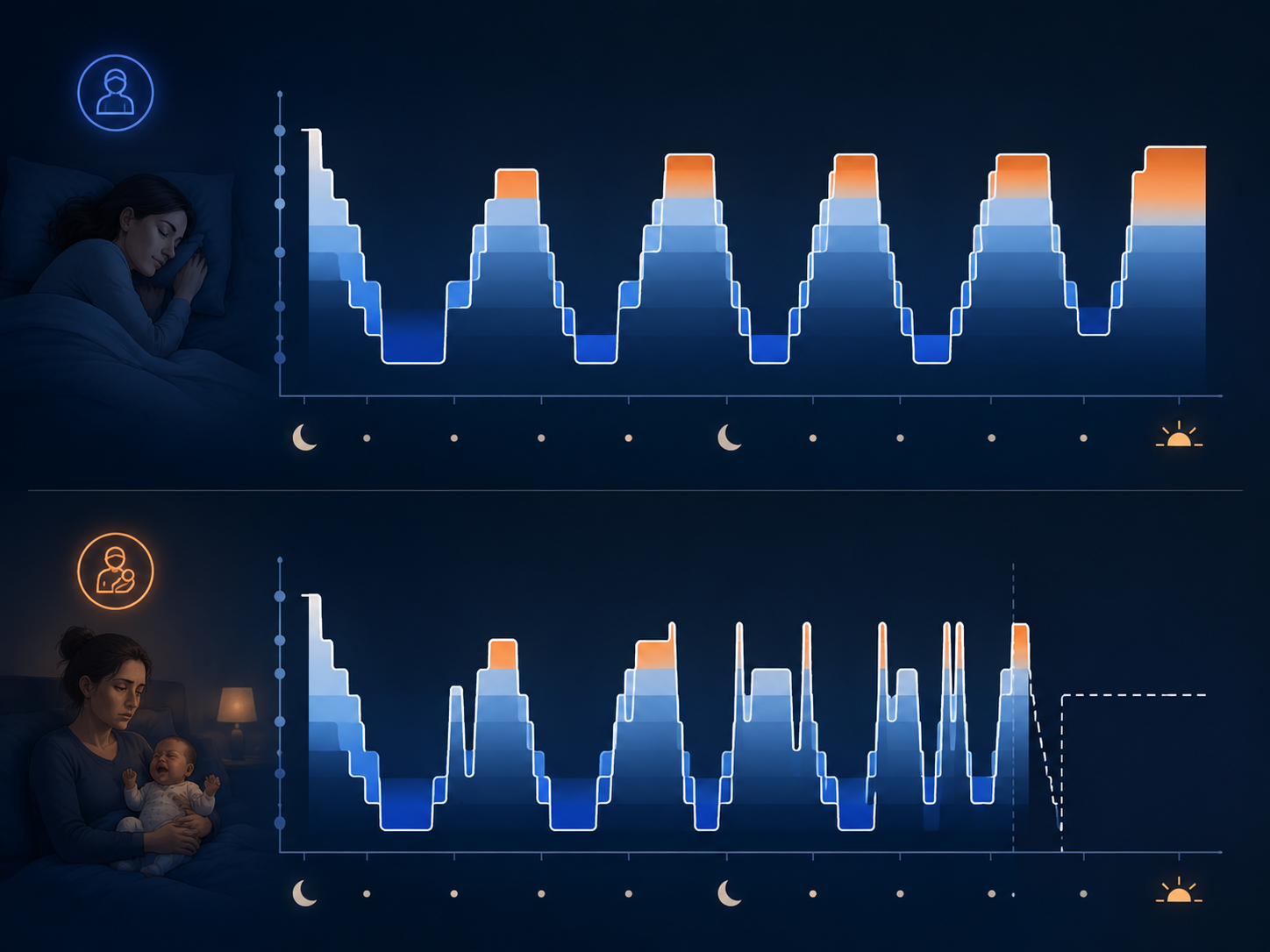
The part of new parent sleep loss that matters for golf is not just less sleep in general; it is the way the last stretch of the night gets cut off by early wakings, right when recovery sleep tends to do the most work on control and learning. A commercial survey reported that 7 in 10 new parents lose about 3 hours of sleep a night, adding up to roughly 133 nights of lost sleep across the first year, which is enough to recognize the pattern even if the survey itself is only suggestive [1].
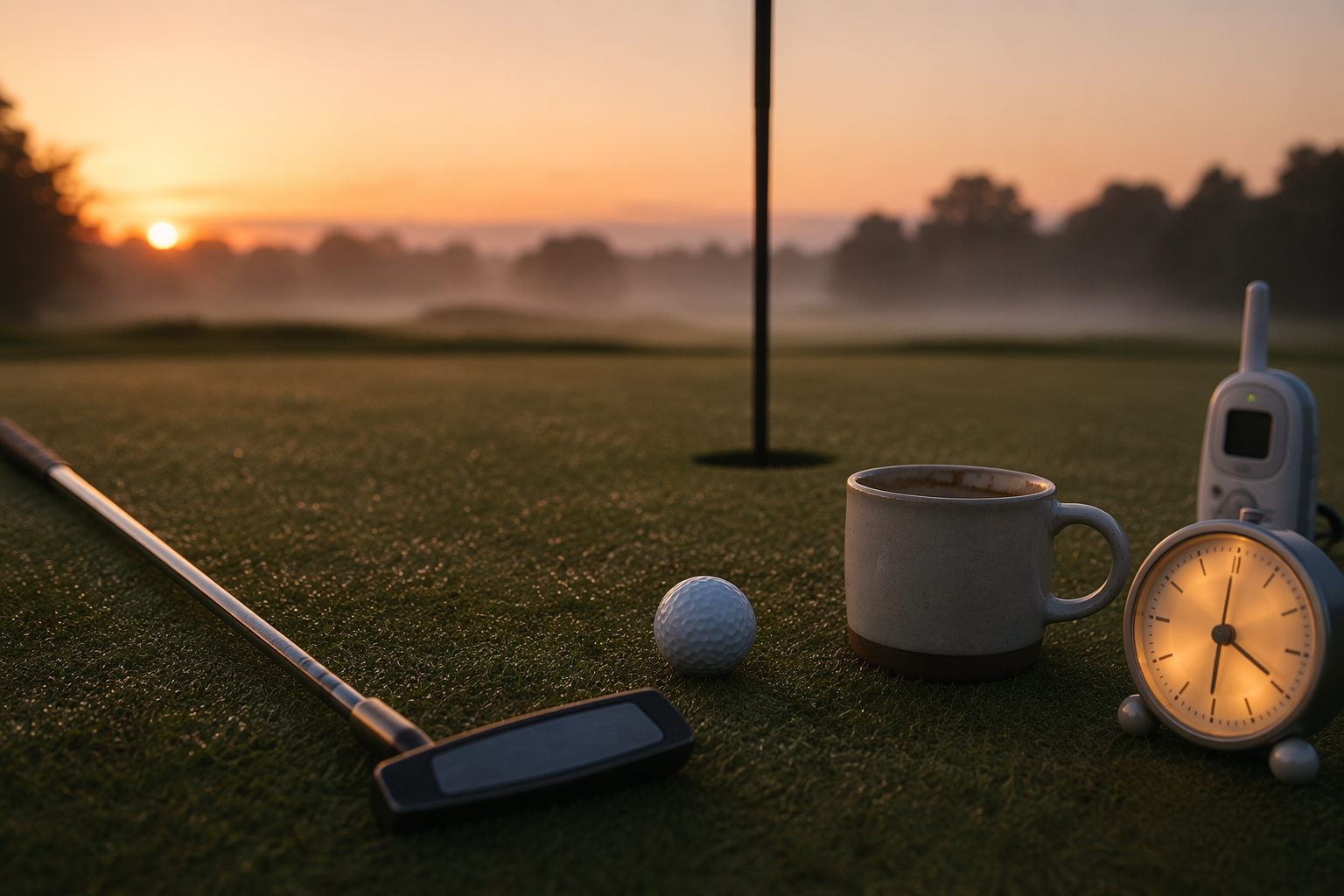
That pattern has a better name than "I'm tired": partial sleep deprivation at the end of the night, or PSDE. In a 2025 meta-analysis of 45 studies with 670 participants, sleep deprivation hit skill control hardest overall, and the PSDE pattern produced a very large drop in skill control, SMD = -2.12, p < 0.001 [2]. The important caveat is that most of that evidence comes from acute lab sleep loss, not the chronic stop-start sleep of early parenthood, so the numbers should be read as a mechanistic match, not a direct forecast for every exhausted golfer.
What The Scorecard Loses First
That mechanism lands in golf because the game does not separate "tired" from "slightly off." In a study of 389 PGA Tour golfers, each additional hour of sleep correlated with 0.522 fewer strokes per round, and within-athlete improvements tracked sleep consistency more than duration alone [3]. That is elite male-pro data, with golfers averaging 7.2 hours of sleep, so it is a useful signal rather than a clean translation to an amateur new parent.
- Fine motor control is where PSDE shows up first, which is why a three-footer can start feeling less automatic than it looked the week before [2][4].
- Decision-making gets sloppier under sleep loss, so a player is more likely to chase a shot they would normally lay up or rush a club decision after one bad swing [5].
- Emotional regulation weakens too, which is why one missed putt can leak into the next three holes instead of staying a single miss [5].
That is the part you can feel in your hands. Nishida et al. found that restricting collegiate golfers to 4-5 hours of sleep reduced self-reported putting performance [4]. Putting is a precision task, so a small loss of steadiness matters fast; the driver can still feel serviceable while the scoring clubs quietly go missing.
Why Lessons Feel Less Sticky
Sleep also helps swing changes stick after practice, so broken nights can make lessons feel useful in the moment and strangely absent when you return to the course. A small sleep-apnea study points in the same direction: 12 golfers treated for sleep apnea improved handicap by 11.3% on average, and by 31% among lower-handicap players, though the sample was tiny, older, and not built to prove the same mechanism [6].
The Narrow Conclusion
There is no study that directly tests new parent sleep patterns against golf performance, so the cleanest conclusion is a synthesis: early-morning wakings carve away the end-of-night sleep that supports skill control, motor learning, judgment, and emotional steadiness, and those are exactly the parts of golf that feel unstable first.
References
- Nights of Sleep Lost in the First Year — The Bump
- Effects of sleep deprivation on skill control: a meta-analysis — PubMed Central, 2025
- Sleep and stroke play in PGA Tour golfers — medRxiv / International Journal of Sports Physiology and Performance, 2025/2026
- Sleep restriction and putting performance in collegiate golfers — Perceptual and Motor Skills, 2022
- Lack of Sleep and Cognitive Impairment — Sleep Foundation
- Sleep apnea treatment and golf handicap — Journal of Clinical Sleep Medicine, 2013
Comments
Join the discussion with an anonymous comment.