
Why People Turn to Home Remedies for Insomnia
The desire to sleep without a prescription is widespread. A 2024 scoping review of 51 randomized controlled trials found that 28.7% of adults use natural products or over-the-counter sleep aids to manage their insomnia. The reasons are understandable: avoiding the side-effect profiles of prescription hypnotics, wanting something accessible that doesn't require a doctor's visit, and hoping for a gentler solution that works with the body's own sleep systems rather than overriding them.
The problem is that the market for natural sleep aids is vast, poorly regulated, and filled with conflicting claims. The FDA does not verify the safety, efficacy, or labeling accuracy of dietary supplements, which means a bottle labeled "melatonin 5 mg" may contain anywhere from 0.5 mg to 50 mg of the actual compound. Without a framework for evaluating the evidence, readers are left guessing which remedies are worth their money and which are harmless placebos at best.
This guide provides that framework. It organizes the most common home remedies for insomnia into three evidence tiers — from strongest scientific backing to traditional but unsupported — so you can make an informed decision about what to try, what to skip, and when it's time to escalate to first-line clinical care.
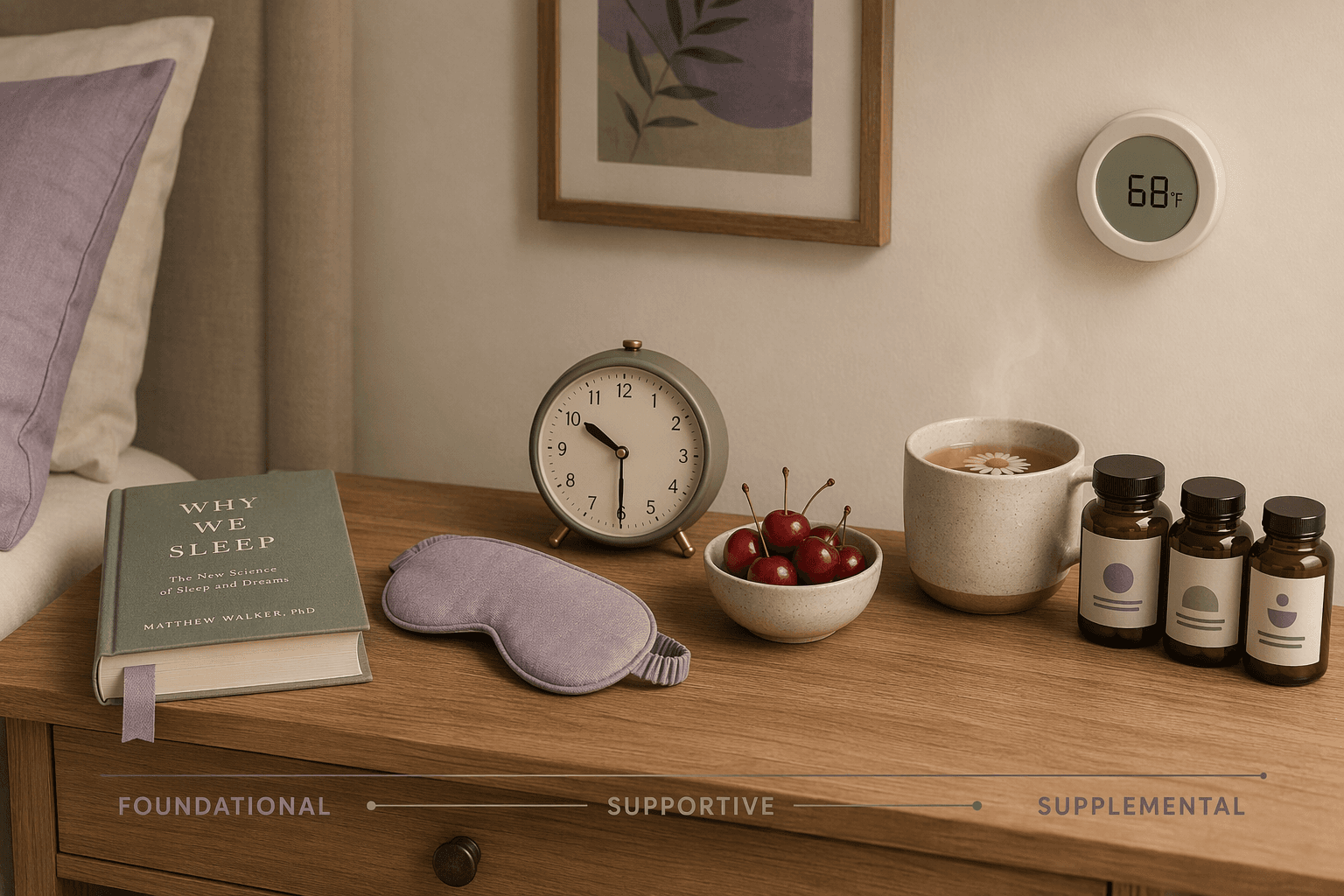
Tier 1: Remedies with the Strongest Evidence
These remedies have the most consistent support from meta-analyses and randomized controlled trials. They are not guaranteed to work for everyone, but the data are strong enough to justify a supervised trial when used for the right indication.
Melatonin: Best for Circadian Misalignment, Not Chronic Insomnia
Melatonin is the most studied natural sleep aid, but its effectiveness depends heavily on why you cannot sleep. A meta-analysis of 19 RCTs found that melatonin reduces sleep latency and increases total sleep time in people with primary insomnia, with the most pronounced effects seen in older adults and individuals with delayed sleep-wake phase disorder. For jet lag and shift work, the evidence is particularly strong — melatonin helps reset the circadian clock when timed correctly.
However, melatonin is not a general-purpose sedative. If your insomnia is driven by anxiety, racing thoughts, or poor sleep hygiene rather than a misaligned circadian rhythm, melatonin is unlikely to produce reliable results. The 2024 PMC literature review notes that melatonin supplements can contain 10 to 100 times the labeled dosage, making product selection critical. Stick with brands that carry a USP or third-party verified label and avoid purchasing from unknown online sources.
Valerian Root: Reduces Sleep Latency and Improves Sleep Quality
Valerian root has one of the stronger evidence bases among herbal sleep aids. A meta-analysis of 18 RCTs published in the 2024 PMC review found that valerian significantly reduced sleep latency (standardized mean difference [SMD] -0.71, 95% CI: -1.05 to -0.37) and improved overall sleep quality (SMD -0.46, 95% CI: -0.77 to -0.14) compared to placebo. These effect sizes are moderate to large, placing valerian ahead of most other herbal options in terms of statistical support.
The typical dose is 300–600 mg of a standardized extract taken 30–60 minutes before bed. Valerian does not work immediately — it may take 2 to 4 weeks of consistent use before benefits become noticeable. Rare cases of liver damage have been documented, so anyone with a history of liver disease should avoid valerian or consult a physician first.
Magnesium: Targeted Support for Older Adults
Magnesium plays a role in regulating the nervous system and melatonin production, but the clinical evidence is most compelling for a specific population: older adults with insomnia. A randomized controlled trial of 46 older adults found that taking 500 mg of magnesium per day for 8 weeks increased total sleep time, improved sleep efficiency, reduced the Insomnia Severity Index score, and lowered serum cortisol levels. The mechanism appears to involve both muscle relaxation and downregulation of the stress response.
For younger adults without magnesium deficiency, the evidence is less clear. Magnesium glycinate is the form most commonly recommended for sleep due to its high bioavailability and lower risk of gastrointestinal side effects compared to magnesium oxide or citrate. For a detailed breakdown of dosing, timing, and safety across different magnesium forms, see our magnesium glycinate for sleep guide.
If you are trying to decide between melatonin and magnesium for your specific sleep problem, our comparison of magnesium glycinate vs. melatonin can help you match the remedy to your symptom profile.
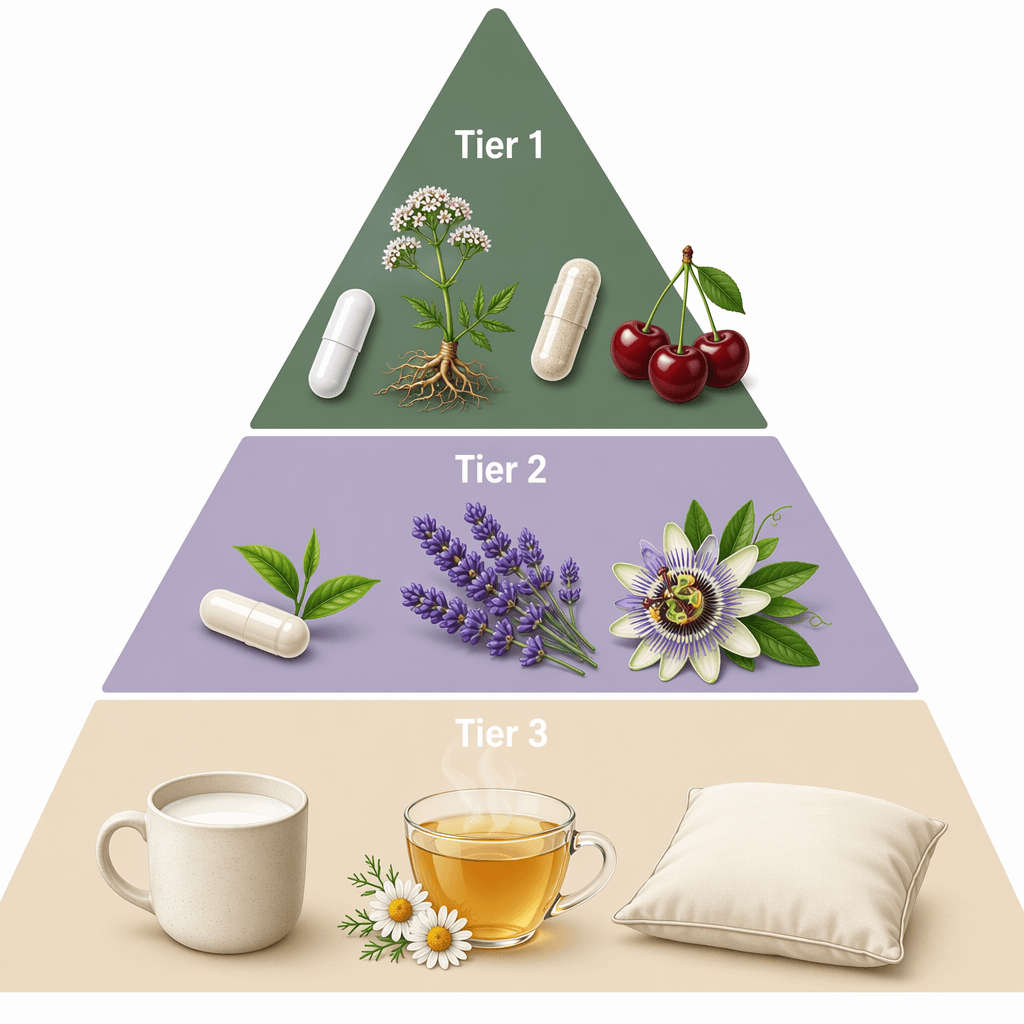
Tier 2: Promising but Limited Evidence
These remedies have supportive data — usually from small pilot studies or single trials — but the evidence is not yet robust enough to place them in Tier 1. They may be worth trying if the Tier 1 options are not suitable or have not worked, but expectations should be tempered.
Tart Cherry Juice: A Melatonin-Boosting Food
Tart cherries are one of the few natural food sources of melatonin. A pilot study of 15 older adults with chronic insomnia found that drinking tart cherry juice for two weeks produced significant improvements in sleep quality and insomnia severity, with an average increase in total sleep time of approximately 84 minutes. The mechanism is thought to involve both the melatonin content and the anti-inflammatory effects of cherry polyphenols.
The main limitation is the small sample size — 15 participants is far too few to generalize broadly. Larger, replicated trials are needed before tart cherry juice can be considered a first-line natural sleep aid. That said, it is a low-risk intervention: unsweetened tart cherry juice is a food, not a concentrated supplement, and carries minimal side effects beyond the sugar content.
L-Theanine: May Reduce Night Wakings
L-theanine is an amino acid found in green tea that promotes relaxation without sedation. The 2024 PMC review notes that doses up to 200 mg per day appear safe and produce no daytime sedation effect. Unlike melatonin, L-theanine does not seem to help people fall asleep faster. Instead, it may improve sleep quality by reducing the number of nighttime awakenings, making it a better fit for maintenance insomnia (waking up in the middle of the night and struggling to return to sleep) than for sleep-onset insomnia.
For a full review of the evidence, dosing protocols, and safety considerations, see our L-theanine for sleep guide.
Passionflower and Lavender: Aromatherapy and Herbal Infusions
Passionflower is sometimes used as a mild sedative, and lavender aromatherapy has shown some benefit for sleep quality in small studies. The Sleep Health Foundation rates the evidence for both as "Low" for insomnia treatment. Lavender's effects are most consistently observed when used as an inhaled essential oil rather than an oral supplement, which limits direct comparison with other oral remedies. Passionflower is generally well-tolerated, but the clinical trial data are too sparse to recommend it over valerian or melatonin.
Tier 3: Traditional but Unsupported by Research
These remedies have plausible biological mechanisms and deep cultural roots, but clinical trials have not demonstrated meaningful effects on insomnia. They are not harmful in moderate amounts, but they should not be relied upon as primary treatments.
Warm Milk
Warm milk contains tryptophan, an amino acid that the body converts into serotonin and then into melatonin. In theory, this should promote sleep. In practice, the amount of tryptophan in a glass of milk is far too small to produce a measurable sedative effect in most people. Johns Hopkins sleep medicine director Dr. Charlene Gamaldo notes that while the mechanism is plausible, the clinical evidence does not support warm milk as an effective insomnia treatment. The ritual of drinking something warm before bed may have a placebo-driven calming effect, but that is not the same as pharmacological efficacy.
Chamomile Tea
Chamomile contains apigenin, a flavonoid that can bind to benzodiazepine receptors in the brain, theoretically producing mild sedative effects. Despite this plausible mechanism, the PMC review and the Sleep Health Foundation both classify chamomile as having minimal or no trial evidence supporting its use for insomnia. A few small studies have shown modest improvements in sleep quality, but the effects are inconsistent and generally fall within the range of placebo. Like warm milk, chamomile tea is safe and pleasant, but it is not a substitute for evidence-supported interventions.
Safety, Dosing, and Drug Interactions at a Glance
The following table summarizes the key safety and dosing information for the remedies discussed in this guide. Remember that dietary supplements are not FDA-approved for safety or efficacy, and the actual content of active ingredients can vary dramatically between brands.
| Remedy | Typical Dose | Key Contraindications | Notable Drug Interactions | FDA Status |
|---|---|---|---|---|
| Melatonin | 0.5–5 mg, 30–60 min before bed | Autoimmune conditions; long-term safety in children unclear | Blood thinners (warfarin), immunosuppressants, diabetes medications | Dietary supplement (not FDA-reviewed) |
| Valerian root | 300–600 mg extract, 30–60 min before bed | Liver disease; avoid if taking sedatives | Benzodiazepines, alcohol, other CNS depressants | Dietary supplement (not FDA-reviewed) |
| Magnesium (glycinate) | 200–500 mg/day, typically with evening meal | Kidney disease; caution with diarrhea-prone individuals | Antibiotics (separate by 2+ hours), diuretics, bisphosphonates | Dietary supplement (not FDA-reviewed) |
| Tart cherry juice | 8–16 oz unsweetened juice, 1–2 hours before bed | Diabetes (sugar content); GERD (acidity) | Minimal known interactions | Food product (not regulated as supplement) |
| L-theanine | 100–200 mg/day | None known at recommended doses | May enhance effects of blood pressure medications | Dietary supplement (not FDA-reviewed) |
| Chamomile tea | 1–2 cups before bed | Ragweed allergy (rare cross-reactivity) | May enhance warfarin effects (theoretical, rare) | Food product (not regulated as supplement) |
When Home Remedies Are Not Enough: Signs to Escalate Care
Home remedies can be useful tools, but they are not replacements for evidence-based clinical treatment. The American Academy of Sleep Medicine (AASM) recommends Cognitive Behavioral Therapy for Insomnia (CBT-I) as the first-line treatment for chronic insomnia. CBT-I is a structured, multi-component program that addresses the behavioral and cognitive factors maintaining insomnia — stimulus control, sleep restriction, cognitive restructuring, and sleep hygiene education. It is not a home remedy; it is a clinical intervention with a strong evidence base, typically delivered over 6 to 8 sessions.
Consider escalating to professional care if any of the following apply:
- Your sleep difficulties have persisted for more than three months (chronic insomnia criteria)
- You experience significant daytime impairment — fatigue, mood changes, difficulty concentrating, or reduced performance at work or school
- You have a comorbid condition such as anxiety, depression, chronic pain, or a medical condition that affects sleep
- You have tried multiple home remedies consistently for 4–6 weeks without any improvement
- You are relying on alcohol or over-the-counter sleep aids every night to fall asleep
- Your sleep problems are accompanied by loud snoring, gasping, or breathing pauses (possible sleep apnea)
Home remedies are best thought of as adjunctive tools — they can support good sleep hygiene and provide modest benefits for mild or situational insomnia, but they should not delay access to treatments that have stronger evidence. For a comprehensive overview of the behavioral foundations that support all sleep interventions, see our guide to sleep hygiene fundamentals and an evidence-based bedtime routine.
Comments
Join the discussion with an anonymous comment.