
The CPAP Adherence Problem: Why You're Looking for Alternatives
If you have been prescribed a continuous positive airway pressure (CPAP) machine and found yourself searching for a way out, you are not alone. According to Harvard Health, up to 83% of people who try CPAP do not stick with the treatment long-term. The reasons range from mask discomfort and noise to claustrophobia and skin irritation. When the therapy that is supposed to save your life feels unbearable, the search for alternatives becomes not just reasonable but necessary.
This article is not a dismissal of CPAP. For many people, CPAP remains the gold standard and the only safe option. But for a specific subset of patients — those with mild-to-moderate obstructive sleep apnea (OSA), positional dependency, or the ability to achieve meaningful weight loss — evidence-based home remedies can reduce the apnea-hypopnea index (AHI) enough to reduce or even eliminate the need for machine therapy. The key is knowing which category you fall into and what the science actually says about each intervention.
Who Qualifies for Home-Only Management? A Patient-Segmentation Framework
The most important question you can ask yourself is not "Do home remedies work?" but "Do home remedies work for someone like me?" The answer depends on three key variables: your OSA severity, whether your apnea is position-dependent, and your weight-loss potential.
Home remedies are not a universal replacement for CPAP. They are a viable alternative only for a clearly defined patient subgroup. The table below summarizes who is a candidate and who is not.
| Patient Profile | AHI Range | Positional Dependency | BMI / Weight-Loss Potential | Likely Outcome with Home Remedies |
|---|---|---|---|---|
| Mild-to-moderate OSA, positional, overweight | 5–30 events/h | Yes (supine AHI ≥ 2× non-supine AHI) | BMI > 25, willing to lose ≥ 10% body weight | High chance of reducing or eliminating CPAP need |
| Mild-to-moderate OSA, non-positional, overweight | 5–30 events/h | No | BMI > 25, willing to lose ≥ 10% body weight | Moderate chance; weight loss is primary lever |
| Severe OSA, any position | > 30 events/h | Variable | Any BMI | Low chance; CPAP or other medical therapy still needed |
| Mild-to-moderate OSA, positional, normal weight | 5–30 events/h | Yes | BMI < 25, no weight to lose | Good chance with positional therapy alone |
| Severe OSA, non-positional, any weight | > 30 events/h | No | Any BMI | Very low chance; CPAP or alternative medical therapy required |
If you fall into the first or fourth row — mild-to-moderate OSA with positional dependency or weight-loss potential — the evidence suggests you have a realistic path to reducing or eliminating CPAP. If you fall into the third or fifth row, home remedies alone are unlikely to be sufficient, and you should continue CPAP or discuss other medical options with your sleep specialist.
The Evidence Ladder: What the Science Says About Each Home Remedy
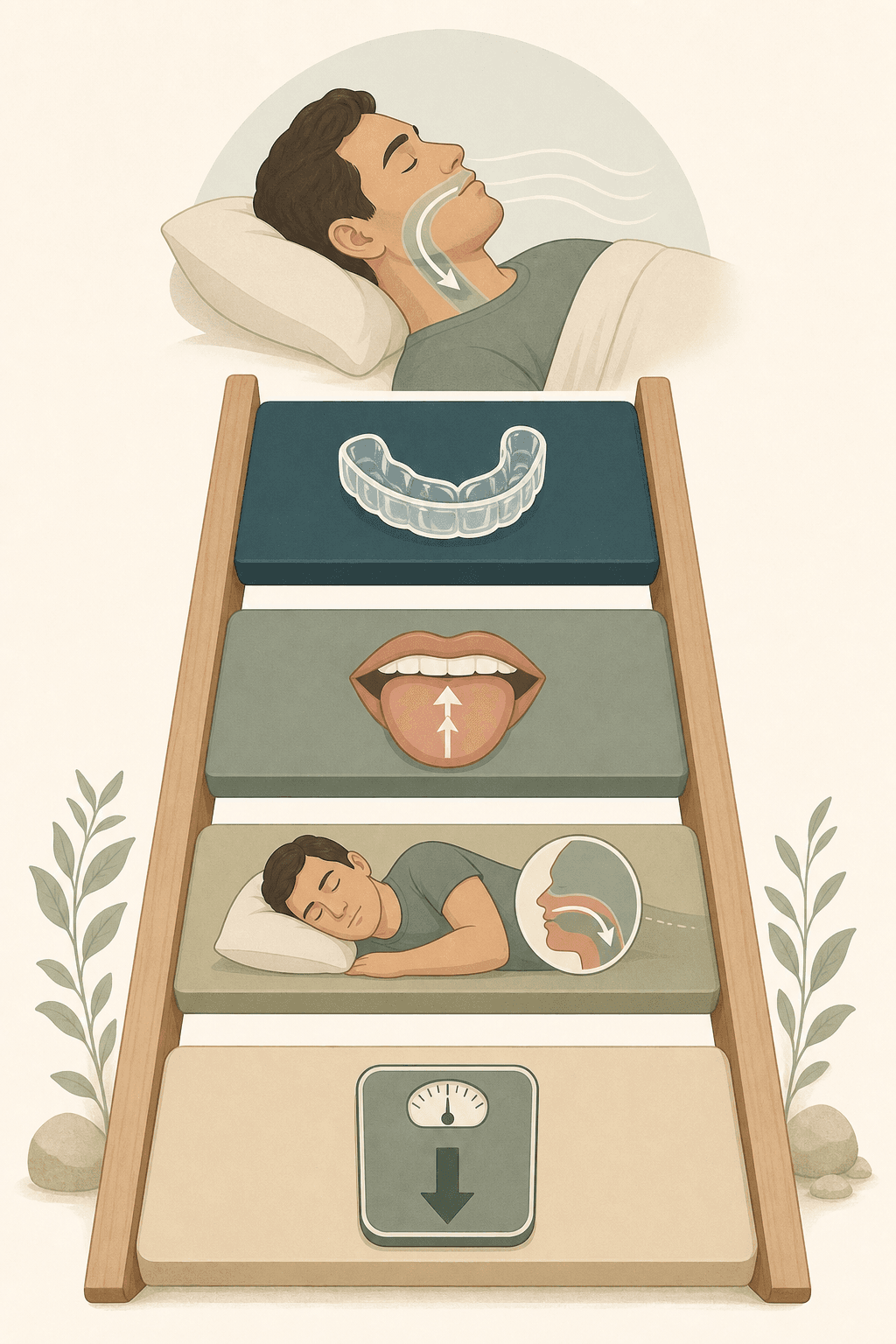
Not all home remedies are created equal. The evidence base for each intervention varies widely in quality, sample size, and generalizability. Below is a structured comparison of the four main evidence-based approaches, ranked by the strength of their supporting data.
| Intervention | Mechanism | Key Evidence | Best For |
|---|---|---|---|
| Weight loss (diet + exercise) | Reduces pharyngeal fat pad volume; decreases collapsibility | INTERAPNEA RCT: 45% no longer needed CPAP at 8 weeks; 62% at 6 months. Sleep AHEAD: 34.4% OSA remission at 10 years. | Overweight/obese patients (BMI > 25) with any OSA severity |
| Positional therapy | Prevents supine sleep, reducing gravity-driven airway collapse | Permut 2010: equivalent to CPAP for positional OSA with non-supine AHI < 5. ~56% of OSA patients are positional. | Position-dependent OSA (POSA) patients, especially those with normal weight |
| Oral appliance (mandibular advancement device) | Protrudes the mandible, increasing upper airway dimensions | ~90% compliance vs ~50% for CPAP. One-third achieve complete resolution (AHI < 5). Similar health outcomes to CPAP due to better adherence. | Mild-to-moderate OSA patients who cannot tolerate CPAP |
| Myofunctional therapy | Strengthens tongue and pharyngeal muscles to reduce collapsibility | Camacho 2015 meta-analysis: ~50% AHI reduction (from 24.5 to 12.3/h). More recent meta-analyses suggest weaker effects. | Mild-to-moderate OSA as an adjunct to other therapies |
Weight Loss: The Most Powerful Single Intervention
If you can only commit to one home remedy, weight loss is the one with the strongest evidence. The relationship between body weight and OSA is well established: excess weight is the single strongest risk factor for OSA severity. A 10% reduction in body weight predicts a 26% decrease in AHI, according to Peppard et al. (JAMA 2000).
The most compelling recent data comes from the INTERAPNEA randomized controlled trial, published in JAMA in 2022. The study enrolled 89 Spanish men aged 18–65 with moderate-to-severe OSA and a BMI of 25 or higher who were already using CPAP. The intervention group completed an 8-week interdisciplinary lifestyle program that included nutrition counseling, aerobic exercise, sleep hygiene education, and alcohol and tobacco cessation. The results were striking:
- AHI decreased by 51% in the intervention group (a change of −21.2 events/h) compared to a slight increase in the control group (+2.5 events/h).
- 45% of participants in the intervention group no longer required CPAP at 8 weeks.
- At 6-month follow-up, 62% no longer required CPAP, and 29.4% achieved complete OSA remission (AHI < 5).
- Mean weight loss was −7.1 kg in the intervention group versus −0.3 kg in the control group.
The Sleep AHEAD study provides even longer-term data. In a 10-year follow-up of 306 middle-aged and older adults with overweight or obesity and type 2 diabetes, those who received an intensive lifestyle intervention lost significantly more weight than the control group (−7.1 kg vs −3.5 kg). The mean AHI reduction favoring the intervention group was 7.4 events/h over all follow-up visits. At 10 years, OSA remission (AHI < 5) occurred in 34.4% of the intensive lifestyle group compared to 22.2% in the control group, with the strongest effects seen in those who started with mild-to-moderate OSA.
Importantly, weight loss alone does not explain the full AHI improvement. Research by St-Onge and Tasali (AJRCCM 2021) suggests that diet quality and exercise have weight-independent effects on OSA severity. This means that even if you lose only a modest amount of weight, improvements in diet and physical activity may still produce meaningful reductions in apnea events.
Positional Therapy: A Simple Fix for a Common Subtype
For a large subset of OSA patients, the problem is not just the airway — it is gravity. Position-dependent OSA (POSA) occurs when apnea events are significantly worse when sleeping on the back compared to sleeping on the side. According to a review by Ravesloot et al., approximately 56% of OSA patients have POSA, defined as a 50% or greater difference in AHI between supine and non-supine positions.
The landmark study on positional therapy comes from Permut et al., published in the Journal of Clinical Sleep Medicine in 2010. The study included 38 patients with positional OSA (defined as a non-supine AHI of less than 5 events/h) and compared positional therapy — using a vest with a bulky mass on the back to prevent supine sleep — against CPAP. The results showed that positional therapy was equivalent to CPAP at normalizing overall AHI to fewer than 5 events/h (92% vs 97%, P = 0.16). Median AHI decreased from 11 events/h to 2 events/h with positional therapy, and supine sleep time dropped from 40% to 0%.
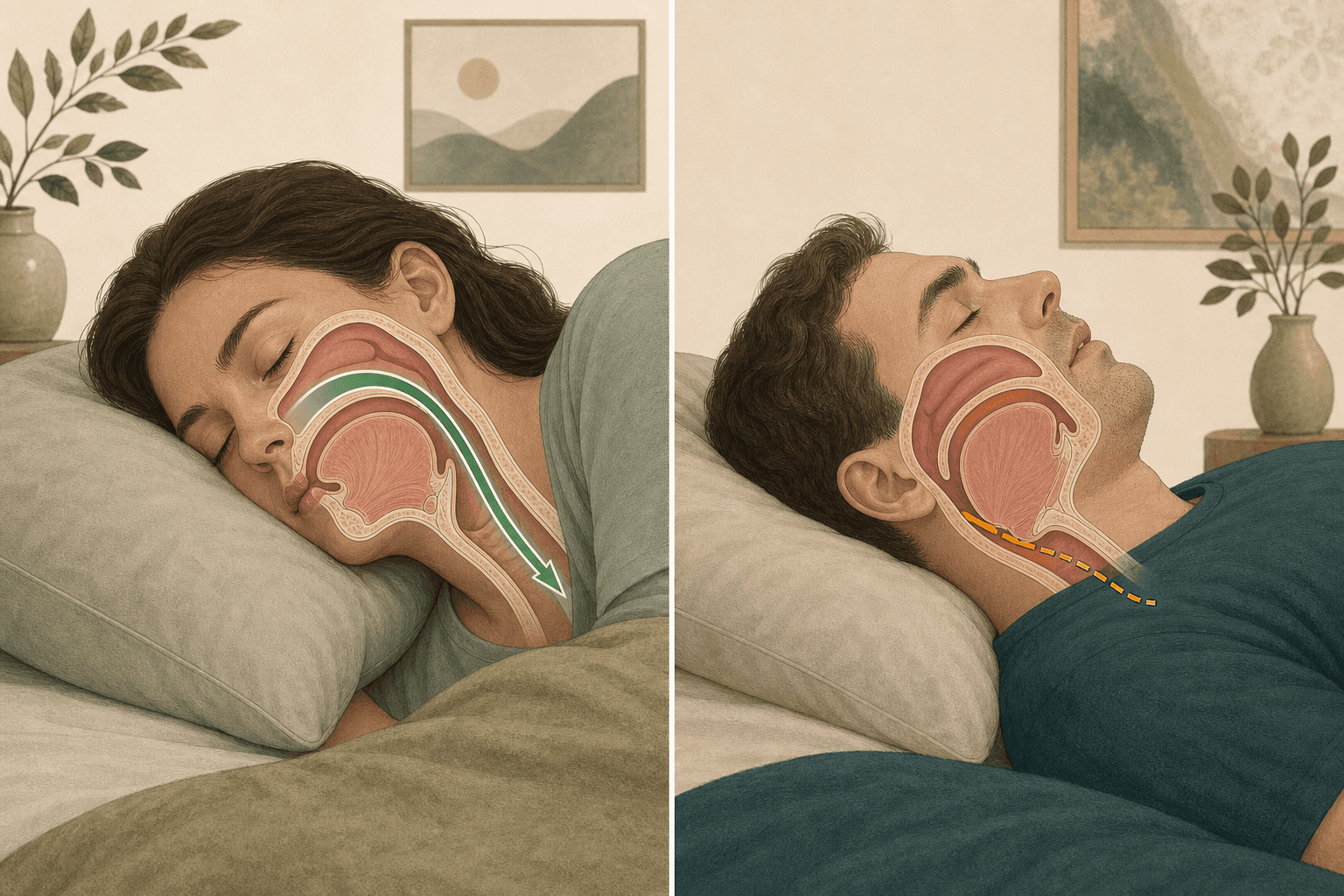
The challenge with positional therapy has always been compliance. The classic "tennis ball technique" — sewing a tennis ball into the back of a pajama shirt — shows poor long-term adherence, with only 6% of patients still using it at 2.5-year follow-up (Bignold et al., JCSM 2009). However, modern vibrotactile devices that gently vibrate when the user rolls onto their back show much better compliance, with approximately 85% adherence over 3 weeks in short-term studies.
Myofunctional Therapy and Oral Appliances: Adherence vs. Efficacy
Two additional home-based approaches — myofunctional therapy and oral appliances — occupy an interesting middle ground. Neither is as powerful as weight loss for most patients, but both offer meaningful benefits, particularly for those who cannot tolerate CPAP.
Myofunctional Therapy
Myofunctional therapy involves a series of exercises designed to strengthen the tongue, soft palate, and pharyngeal muscles. The idea is that stronger upper airway muscles are less likely to collapse during sleep. A systematic review and meta-analysis by Camacho et al. (Sleep 2015) examined 9 adult studies involving 120 patients and found that myofunctional therapy reduced mean AHI from 24.5 ± 14.3 events/h to 12.3 ± 11.8 events/h — a mean difference of −14.26 events/h, representing approximately a 50% reduction. The therapy also improved lowest oxygen saturation (from 83.9% to 86.6%), reduced snoring (from 14.05% to 3.87% of total sleep time), and decreased Epworth Sleepiness Scale scores (from 14.8 to 8.2).
However, these results come with important caveats. Most of the studies in the Camacho review were small case series, and more recent meta-analyses published in 2025 suggest weaker effects than initially reported. Myofunctional therapy is best viewed as an adjunctive treatment — something to add to other interventions rather than a standalone replacement for CPAP.
Oral Appliances (Mandibular Advancement Devices)
Oral appliances, specifically custom-made titratable mandibular advancement devices (MADs), are the most clinically established non-CPAP option. They work by protruding the mandible forward, which increases the dimensions of the upper airway and reduces collapsibility.
The efficacy of MADs varies widely between individuals. According to a review by Dieltjens and Vanderveken (Healthcare 2019), approximately one-third of patients achieve complete resolution (AHI < 5) with MAD therapy, one-third show a 50% or greater reduction in AHI, and one-third show negligible improvement. The individual response range is broad — from 19% to 80% efficacy — which means that some patients will do very well while others will see little benefit.
What makes MADs particularly interesting is the adherence factor. Subjective compliance with MAD therapy is approximately 90%, compared to roughly 50% for CPAP. This higher adherence rate can offset the lower efficacy: even though MADs are less effective at reducing AHI on paper, the fact that patients actually use them means that overall health outcomes — including blood pressure and cardiovascular risk — are similar between MAD and CPAP therapy.
| Therapy | Efficacy (AHI Reduction) | Compliance Rate | Overall Health Outcomes |
|---|---|---|---|
| CPAP | High (typically normalizes AHI) | ~50% | Gold standard when used consistently |
| Mandibular Advancement Device | Variable (19–80% efficacy; one-third achieve AHI < 5) | ~90% | Similar to CPAP due to better adherence |
| Positional Therapy | High for positional OSA subgroup | ~85% (modern devices, short-term) | Equivalent to CPAP for positional OSA |
| Weight Loss | High for those who achieve ≥ 10% loss | Variable (depends on lifestyle adherence) | Best long-term outcomes when sustained |
Combination Approaches: When One Remedy Isn't Enough
For many patients, the most effective strategy is not a single intervention but a combination of two or more. The rationale is straightforward: if your apnea has multiple contributing factors — excess weight, positional dependency, and reduced muscle tone — addressing only one factor may not be enough to bring your AHI below the threshold where CPAP is needed.
The Dieltjens 2019 review specifically examined combination therapy with MADs and positional therapy. For patients with residual positional OSA — meaning their AHI is still elevated on MAD therapy primarily because of supine sleep — adding positional therapy can produce better results than either treatment alone. Similarly, combining weight loss with myofunctional therapy may produce synergistic effects, as reduced pharyngeal fat and stronger airway muscles together create a more stable airway.
- MAD + positional therapy: Best for patients with residual positional OSA on MAD alone.
- Weight loss + myofunctional therapy: Targets both structural (fat) and functional (muscle tone) contributors.
- Weight loss + positional therapy: Effective for overweight patients with positional OSA.
- All three (weight loss + positional therapy + myofunctional therapy): For patients who want to maximize their chance of eliminating CPAP.
The key principle is that combination therapy should be guided by your specific OSA profile. A sleep physician or dentist specializing in sleep medicine can help you design a personalized combination strategy based on your sleep study results, BMI, and positional dependency.
Who Still Needs CPAP: When Home Remedies Are Not Enough
It is equally important to know when home remedies are not enough. For a significant portion of the sleep apnea population, CPAP — or an alternative medical therapy such as hypoglossal nerve stimulation or upper airway surgery — remains the only safe and effective option.
You should not expect home remedies to replace CPAP if any of the following apply:
- Your AHI is greater than 30 events/h (severe OSA). The INTERAPNEA trial showed that even with significant weight loss, complete remission was more likely in those with moderate rather than severe disease.
- Your OSA is non-positional — meaning your AHI is elevated in all sleep positions. Positional therapy will not help, and weight loss alone may not be sufficient.
- You have significant comorbidities such as heart failure, atrial fibrillation, or uncontrolled hypertension. In these cases, untreated OSA poses a higher cardiovascular risk, and CPAP is the most reliable way to ensure adequate treatment.
- You have tried weight loss, positional therapy, and an oral appliance for at least 3–6 months and your AHI remains above 15 events/h or you continue to experience significant symptoms.
Your Practical Action Plan: Milestones for Reducing or Replacing CPAP
If you have determined that you are a candidate for home-based management — mild-to-moderate OSA, positional dependency, or weight-loss potential — here is a structured, milestone-based plan to guide your efforts.
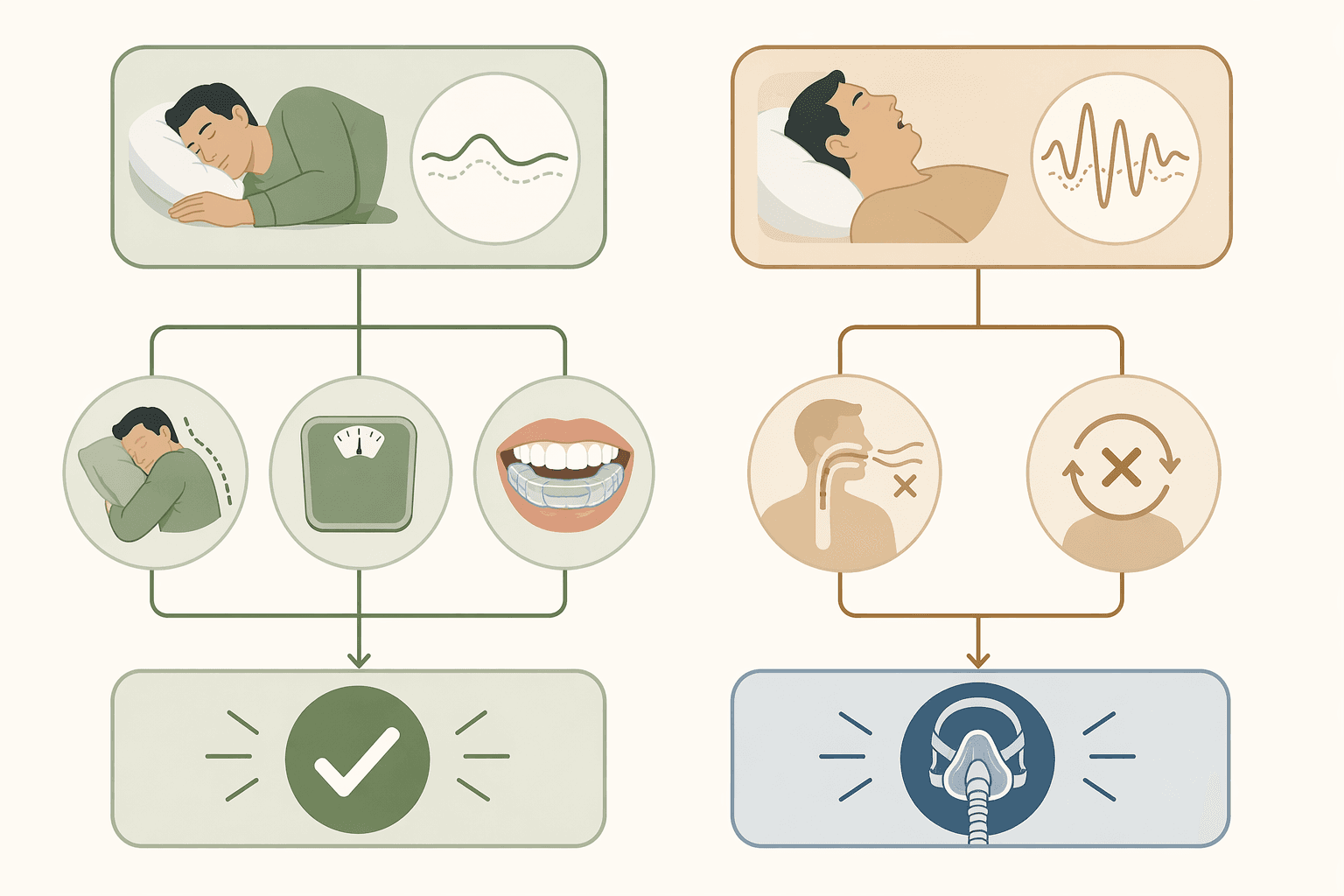
- Confirm your OSA severity and positional dependency. Review your sleep study report. Look for your overall AHI and the supine vs. non-supine AHI. If the non-supine AHI is less than 5 and the supine AHI is significantly higher, you are likely a candidate for positional therapy.
- Set a weight-loss target of 10% of your current body weight. The evidence from INTERAPNEA and Sleep AHEAD shows that this level of weight loss produces the most meaningful AHI reductions. Combine calorie restriction with aerobic exercise for the best results.
- Try positional therapy for 2–4 weeks. If you have positional OSA, use a modern vibrotactile device or a simple side-sleeping aid. Track your symptoms and, if possible, use a home sleep test to measure your AHI before and after.
- Consider an oral appliance evaluation. If positional therapy and weight loss are not enough, or if you have non-positional mild-to-moderate OSA, consult a dentist or sleep physician about a custom-fitted mandibular advancement device. Avoid over-the-counter boil-and-bite devices, which are not titratable and may worsen symptoms.
- Reassess your AHI after 3–6 months. The most reliable way to know if your home remedies are working is to repeat a sleep study. If your AHI has dropped below 5 events/h and your symptoms have resolved, you may be able to discontinue CPAP under medical supervision. If your AHI remains elevated, continue CPAP and discuss other options with your specialist.
Comments
Join the discussion with an anonymous comment.