
Can you sleep during a tornado watch?
Yes, most people can sleep during a tornado watch if they have layered alerts in place, a clear path to shelter, and no higher-risk condition that changes the decision. A watch means conditions favor tornado development; a warning means a tornado is imminent or happening, and shelter should start immediately [1].
That is the first thing to get right at night, because the watch-warning gap is the difference between a reasonable bedtime and a situation where sleeping becomes the wrong call. If severe weather is already active nearby, local officials are telling people to stay awake, or you live in a mobile home without a sturdy shelter plan, do not treat this as a normal night.
Night tornado risk is one reason people feel uneasy about going to bed during a watch: about 27% of tornadoes are reported to occur between 6 PM and 6 AM, and nocturnal tornadoes are reported to be about twice as likely to cause fatalities as daytime tornadoes. Those figures are commonly cited through secondary coverage of the research rather than direct journal verification here, so the safest takeaway is directional rather than overly precise: after dark, your margin for delay is smaller.
Housing changes the answer, too. Mobile homes are a small share of U.S. housing but account for a much larger share of tornado fatalities, so “sleep with alerts on” is not enough if you have no sturdy shelter option arranged before storms arrive.
What has to be true before you lie down
- It is still a watch, not a warning, and local officials are not advising people to stay awake [1].
- You have more than one alert that can wake you reliably, not just one that can notify you if you happen to be checking your phone [2].
- You can get to shelter quickly from the bed you are in.
- Your housing situation is not making the risk obviously worse, especially if you live in a mobile home and do not already have a sturdier shelter option arranged.
If those conditions are not true, the safer choice is to stay up and get the setup right before trying to sleep.
Set up alerts that can actually wake you
The strongest overnight layer is a NOAA Weather Radio with battery backup, because it works independently of cell networks and uses a loud alarm designed to wake sleepers [2]. Treat Wireless Emergency Alerts on your phone as a second layer, not the only one. Outdoor sirens are helpful for people awake enough to hear them, but they are not enough to rely on for waking someone indoors [4].
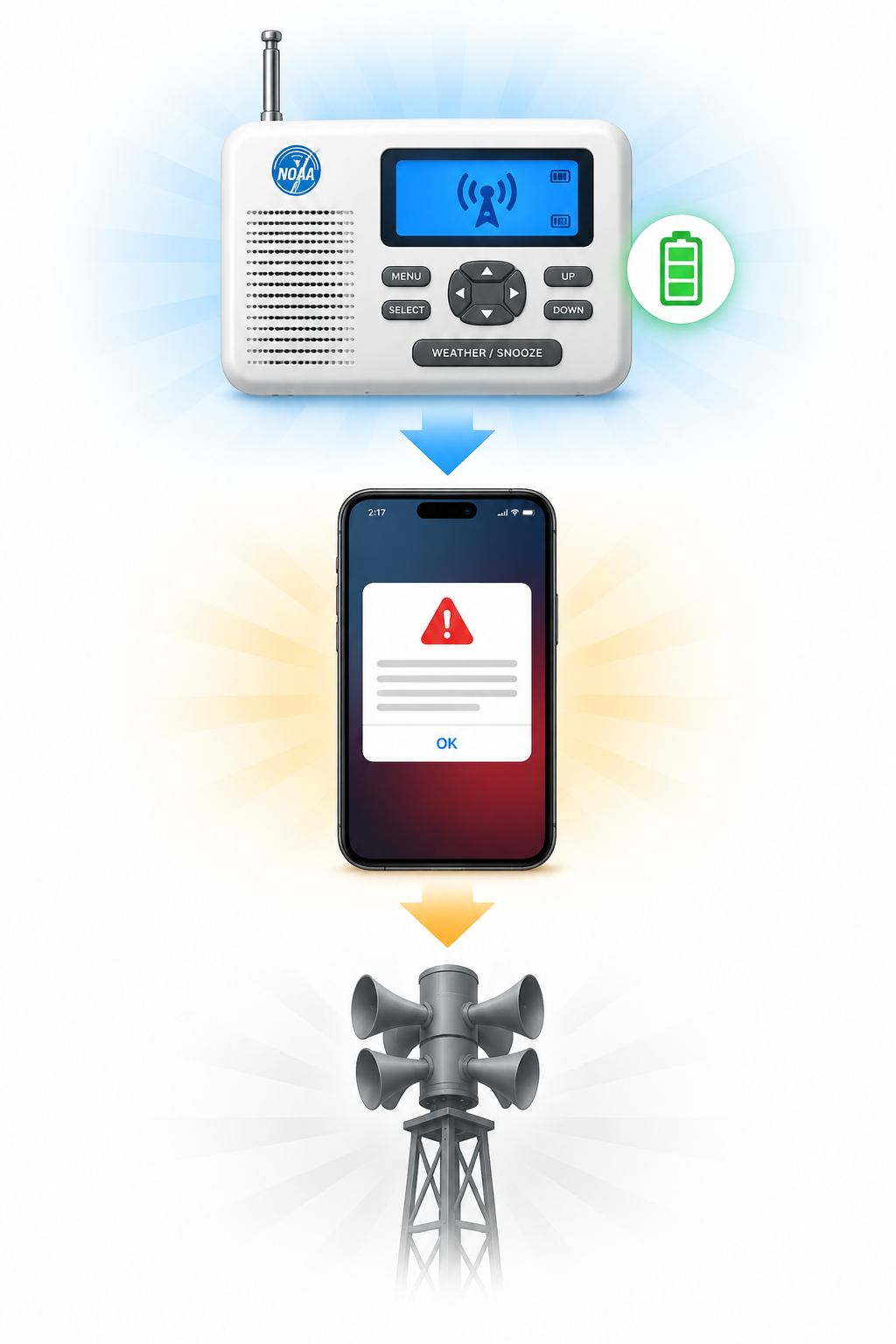
If you only change one thing before bed, make it this stack: radio on, phone charged, alerts enabled, volume up, and the devices close enough to matter if you are half asleep.
Prepare the room before you try to sleep
- Sleep on the lowest floor you can use safely, near an interior room or hallway without windows [3].
- Put shoes and a flashlight beside the bed so you do not have to search for them in the dark [3].
- Clear the path to your safe room before you lie down, so you are not stepping over clutter if you have to move quickly [4].
- Keep a helmet nearby if you have one [4].
- Charge your phone and keep it within reach.
- Make sure children, pets, or another adult in the house are part of the same plan, not separate afterthoughts.
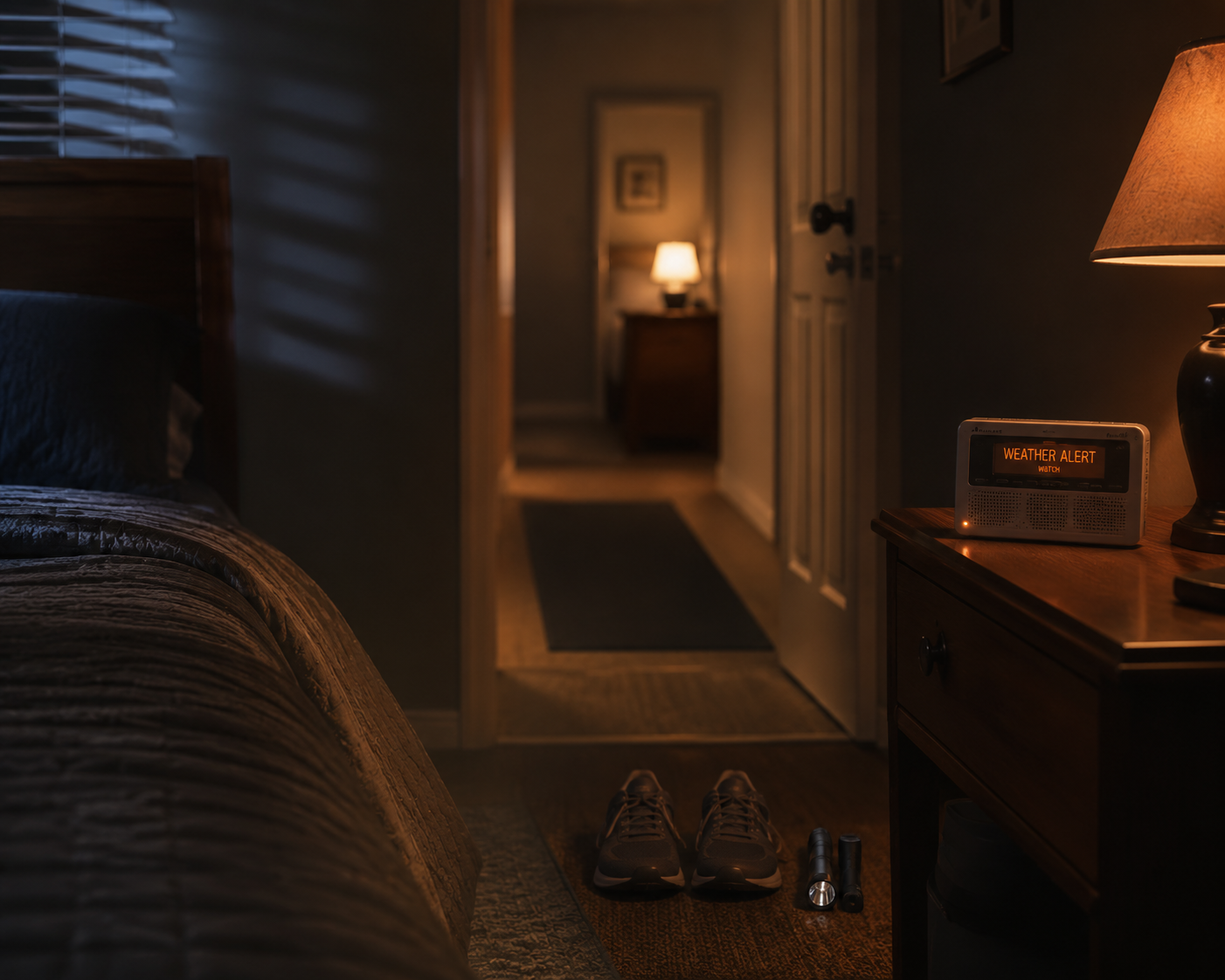
For people with mobility limitations, the key question is not whether the bedroom looks prepared but whether the route to shelter is realistic in the dark. If it is not, the plan needs to be simplified before sleep.
When the watch is making you too anxious to sleep
If you are stuck refreshing radar every few minutes, the problem may be the anxiety as much as the weather. Do the setup once, then stop trying to solve the forecast from bed. If storm anxiety is what keeps you awake, our guide to What to Do When Anxiety Keeps You Up at Night may help, and a compact sleep hygiene checklist for insomnia can give you a simple wind-down routine to follow while the alerts stay on.
If you like this kind of safety-plus-sleep planning, the same basic approach also applies to How to Sleep Well During an Air Quality Health Advisory.
If a warning is issued, sleep is over. Wake everyone, get to shelter immediately, and do not wait to see whether the siren or phone alert was serious [1].
During a watch, sleep is reasonable only after the alert system and shelter path are ready, and only when your housing, the current weather, and local guidance do not make staying awake the safer choice.
References
- Understand Tornado Alerts — National Weather Service — weather.gov/safety/tornado-ww
- Severe Storms Overnight Safety Rules — National Weather Service — weather.gov/lmk/ref_night
- Tornado Safety — American Red Cross — redcross.org/get-help/how-to-prepare-for-emergencies/types-of-emergencies/tornado.html
- How to Stay Safe When Tornadoes Strike at Night — AccuWeather — accuweather.com
Comments
Join the discussion with an anonymous comment.